Published September 8, 2026. Source-based launch analysis; Kingy has not performed hands-on tests of the Muse personal agent.
Meta introduced Muse on September 8, 2026, as a personal AI agent for adults aged 18 and over, initially in the United States. People can communicate with it through its own app or WhatsApp and delegate everyday tasks, including email and travel arrangements. Associated Press launch coverage.
The appeal is easy to understand. Much of everyday administration consists of small jobs that cross several services: finding a date, reading a confirmation, comparing options, remembering a preference, and following up. An assistant that handles those steps competently could save time even without making a spectacular intellectual breakthrough.
Muse should be judged by how much supervision it requires to finish those jobs. A persuasive conversation is useful, but an incorrect booking or an overlooked deadline can erase the benefit. The relevant comparison is therefore with other products that execute tasks, maintain context, and return completed work.
The Muse name covers several different products
Today’s announcement concerns the personal agent. Meta has also used Muse for a family of models and related tools. Keeping those names straight prevents misleading specifications and comparisons.
| Name | What it refers to |
|---|---|
| Muse | The personal AI agent introduced today. |
| Muse Spark | Meta’s reasoning model family, first announced April 8, 2026. The original model supported multimodal reasoning, tools, and multiple agents. Original announcement. |
| Muse Spark 1.3 | The model update released September 2, 2026, with improvements targeting coding and extended agent workflows. Model announcement. |
| Muse Code | Meta’s coding agent, offered separately from the personal Muse experience. Developer overview. |
| Muse Image / Muse Video | Media generation models. Their capabilities and availability should be checked separately from the personal agent. Media model announcement. |
| Muse Glimmer | A separate 30-billion-parameter model released with Apache 2.0 weights for local agent use. Its specifications do not describe the hosted Muse product. Glimmer announcement. |
For more detail on the underlying model, see Kingy’s Muse Spark 1.3 coverage. Readers considering a local deployment can also consult our Muse Glimmer guide.
This distinction matters when someone asks whether Muse is open source, how many parameters it has, or how much its API costs. Those questions may concern different layers: the consumer service, the underlying model, or a developer product.
The practical specification sheet
For a personal agent, useful specifications include execution environment, permissions, integrations, persistence, and output formats. A model’s context window alone says little about how well the finished service manages a week of tasks.
| Specification | What the reviewed sources establish |
|---|---|
| Launch platforms | US rollout on iOS, Android, and web; WhatsApp messaging. Meta launch announcement. |
| Price structure | Free access with subscriptions for additional use. Exact subscription prices and quotas were not verified. Meta launch announcement. |
| Model reference | Meta identifies Muse Spark 1.3 in its technical explanation. Exact production routing and reasoning settings remain unverified. Technical explanation. |
| Execution tools | Its own computer, filesystem, terminal, and browser. Product design explanation. |
| Persistence | Scheduled and event-driven background work; memory across conversations. Product design explanation. |
| Outputs | Documents, PDFs, webpages, and interactive artifacts. Product design explanation. |
| Connections advertised | Email, calendar, Instagram, Facebook, and user-selected financial and wellness information. A complete service-by-service connector list was not verified. Meta’s App Store listing. |
| Parameter count and architecture | Not verified for the model configuration serving the consumer agent. |
| Consumer context limit | No numerical limit verified. Persistent memory is a separate concept from a model’s token context window. |
| Task limits and speed | No verified consumer concurrency ceiling, completion-time guarantee, or comparable latency measurement. |
| Developer access | Spark 1.3 is available through Meta Model API and Muse Code. That does not establish a public API for the complete personal Muse service. Spark 1.3 announcement. |
How the experience is designed to work
Meta’s designers describe a main conversation that accepts interruptions and multiple requests, with side chats for separate context. A Goals view tracks ongoing work; activity logs and editable memory files expose more of what the agent is doing. Its proactive notifications can be adjusted. How We Designed Muse.
Meta describes a Linux VM containing an isolated agent environment and separate security services. The agent can execute tools, while host-side services handle credentials and permissions. Browser tasks use a Chromium browser through a restricted interface. This structure aims to keep an agent processing untrusted content from controlling its own safeguards. Muse technical architecture.
The combination is significant because long-running tasks create a coordination problem. If a user changes a travel date while an agent researches hotels, the agent must attach that correction to the right job. If another task finishes at the same time, its update should remain understandable. These are product reliability problems as much as language-model problems.
Three illustrative tasks show what to evaluate:
- Manage a small event: Gather constraints, propose dates, build a supply list, and prepare invitations. Check whether the agent preserves the guest count, budget, and dietary requirements through revisions.
- Research a purchase: Compare three products using a fixed specification and total delivered cost. Check whether the result distinguishes available stock, shipping fees, and optional accessories.
- Maintain a project tracker: Turn an objective into milestones, update progress from new information, and surface overdue dependencies. Check whether completed work stays completed and changed requirements propagate correctly.
For each task, the important result is an accurate deliverable with a clear status. An agent should distinguish “prepared,” “submitted,” and “confirmed.” Those states have very different meanings to the person relying on it.
Meta’s store description advertises scheduling, subscription reviews, price tracking, fitness planning, and continued work after the app closes. These establish the intended use cases; they do not provide independent completion rates or evidence that every supported service works equally well. Muse from Meta listing.
Permissions and privacy deserve precise language
Axios reports that a separate Sentinel system decides whether proposed access to the internet and connected services is allowed, blocked, or referred to the user for approval. That separation is an architectural feature, not independent evidence that every harmful action will be caught. Axios launch coverage.
Meta says credentials are concealed from Muse, sensitive actions require approval, service access is revocable, and users can opt out of training. It also says conversations and VM data are excluded from its advertising systems. The stronger Confidential VM, with a user-held encryption key intended to prevent Meta access, is planned for later in 2026. It is a future feature. Meta’s privacy and security description.
Meta’s developer-declared App Store privacy label lists data that may be linked to a user for third-party advertising and developer marketing, including purchase and financial information, contact details, user content, and search and browsing history. Apple says it has not verified these developer disclosures and that practices may vary by features or age. The listing does not explain whether these categories overlap with the conversations and VM data Meta says are excluded from its ad systems.
The technical explanation adds two material qualifications. Launch-day protections restrict employee access through operational policies; they do not cryptographically prevent Meta from accessing data to operate, support, or secure the service. Sanitized interaction trajectories may be used for model training unless users opt out. Although VM data is excluded from Meta’s ad systems, activity Muse performs on external websites can indirectly influence advertising. Meta’s data policy explanation.
These statements concern different protections. Limiting what an agent can do, restricting how a provider uses information, and preventing the provider from reading information are separate properties. Describing all three as “completely private” would obscure the distinction readers need to assess.
The practical test is whether an approval makes the proposed action understandable: the recipient, information being shared, item being purchased, and applicable amount. Asking for confirmation helps only when the person can understand what they are authorizing.
The most relevant alternatives
The following is a comparison of documented capabilities and product emphasis. The suggested fit is editorial judgment, not a measured ranking.
| Product | Documented emphasis | Where to evaluate it first | Access and pricing evidence |
|---|---|---|---|
| Meta Muse | Personal administration through conversational delegation and connected services. | Ongoing household and personal tasks. | Free access plus paid expansion; exact paid limits unverified. |
| Gemini Spark | Personal workflows across Google services, connected apps, schedules, and browser tasks. | Work that already depends on Gmail, Calendar, Drive, Docs, and Sheets. | Google’s help page lists AI Pro or Ultra and regional exclusions. US AI Pro pricing is $19.99/month. Spark help, US pricing. |
| ChatGPT Work | Research, analysis, and completed documents, spreadsheets, presentations, reports, and Sites. | A defined research question or substantial deliverable. | Eligible paid plans; availability depends on plan and workspace. Work documentation. |
| Claude Cowork | Knowledge work across files and tools, with recurring work and browser capabilities. | Document-heavy projects and repeatable office workflows. | Included in Pro at $20/month when billed monthly; higher usage plans available. Desktop plus web/mobile beta. Cowork product and pricing. |
| Manus | Research, slides, websites, and browser-based task execution. | Projects with a concrete output such as a researched deck or website. | Free and paid options; its help page lists Pro from $20/month. Confirm current pricing at checkout. Product, Pricing help. |
Listed dollar amounts are US-dollar reference prices, not Canadian quotes, and do not normalize allowances or the work completed per subscription.
Gemini Spark is the closest comparison in product intent. Google’s documentation describes scheduled and event-triggered tasks, personal context, and local or remote browsing. It also publishes a limit of 15 simultaneous tasks. Its help page lists broader eligibility than its marketing overview, which still emphasizes Ultra; this comparison follows the detailed help page and treats actual account access as the final check. Gemini Spark help, Spark overview.
For ChatGPT, the current product name matters. OpenAI’s help center says the old ChatGPT agent mode is no longer available and directs users toward Work. Work is therefore the relevant current comparison; older references to Operator or agent mode describe earlier offerings. ChatGPT agent status.
Claude Cowork also extends beyond a local desktop session: Anthropic documents cloud tasks started from mobile, alongside desktop access to local folders and applications. Calling it a desktop-only assistant would miss a material part of the current comparison. Cowork documentation.
Choose evaluation tasks based on the work to be delegated, then give each eligible product the same inputs, constraints, and approval rules. A price comparison becomes useful after measuring how many satisfactory jobs fit within each allowance.
What the model performance claims do and do not establish
Meta reports that Spark 1.3 used approximately 20% fewer tool calls and 25% fewer tokens than Spark 1.2 in comparisons by its engineers. It also describes improvements in instruction following, multitasking, and recognizing when user help is needed. These are vendor-reported model improvements, not independently measured Muse app results. Spark 1.3 release.
Fewer tokens can reduce computational work, but do not directly tell a consumer how long a booking takes or how often a task succeeds. Browser delays, integrations, approval interruptions, retries, and the product’s chosen model settings all affect the experience. A coding evaluation also cannot establish that an agent is better at managing a family calendar.
A useful comparison would report task completion, factual errors, constraint violations, interventions, elapsed time, and cost or allowance consumed. It would also count false success reports, where the agent says a job is finished but the external service or deliverable shows otherwise.
The launch-day assessment
Muse presents a coherent proposition: delegate ongoing personal administration in a conversational setting, then review the consequential decisions. Its strongest potential advantage is reduced coordination effort. The value would come from remembering the right constraints, keeping track of work, and bringing a person back in at the right moment.
There is not enough evidence in the reviewed launch material to declare it the best personal agent or assign a defensible numerical rating. Nor does the announcement establish generally available access outside the US. The next useful evidence would be repeated, comparable tasks showing how often Muse completes work correctly and how much attention it needs along the way.
Disclosure: Exact Muse subscription prices, consumer quotas, and production reasoning settings were not verified as of September 8, 2026. Vendor descriptions establish intended capabilities; they do not establish independent task-completion results.
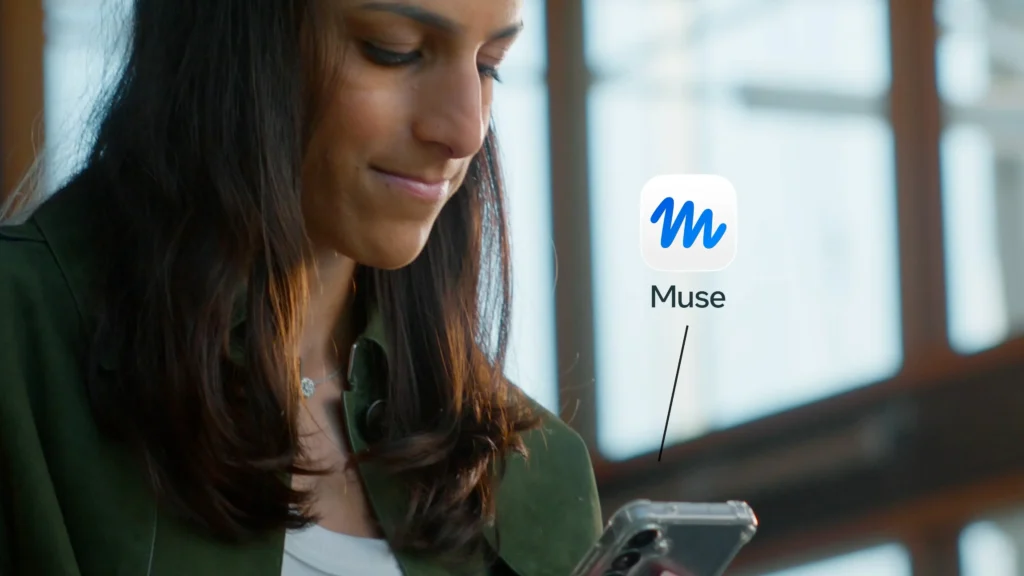
Featured image: Meta, from How We Designed Muse. Official promotional artwork, used to illustrate this launch report.
The Kingy Brief
Get The Kingy Brief.
AI changes, original tests and one practical thing to try. Fridays at 09:00 Vancouver time.
Free · Double opt-in · Unsubscribe anytime
Sign up for The Kingy Brief on Beehiiv.
Signup help and newsletter schedule
Signup form provided by Beehiiv. After submitting, check your inbox for "Confirm your subscription to The Kingy Brief" and open its confirmation link. Check Spam or Promotions if you cannot find it.
Fridays at 09:00 Vancouver time: source-checked AI changes, original tests and one practical thing to try. We skip a week when there is not enough verified material. Free. Unsubscribe anytime.