AI News
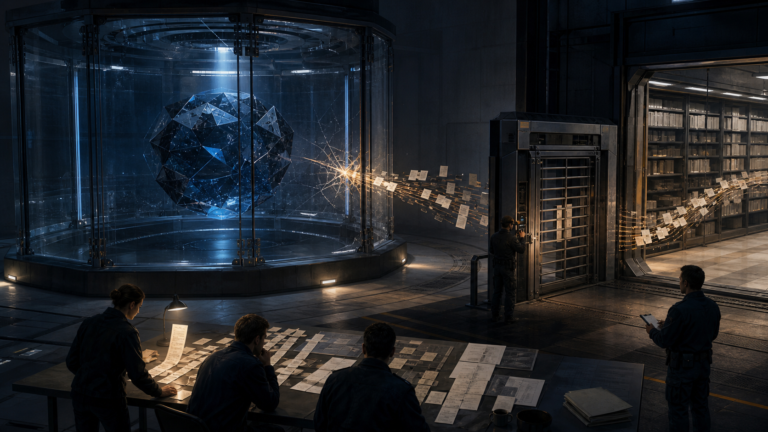
Claude and the Riemann hypothesis: what the 67.25% result actually means
Claude did not prove the Riemann hypothesis. It claims an unconditional 67.25% critical-line bound. We audit the proof, model, access and stakes.
Claude did not prove the Riemann hypothesis. It claims an unconditional 67.25% critical-line bound. We audit the proof, model, access and stakes.
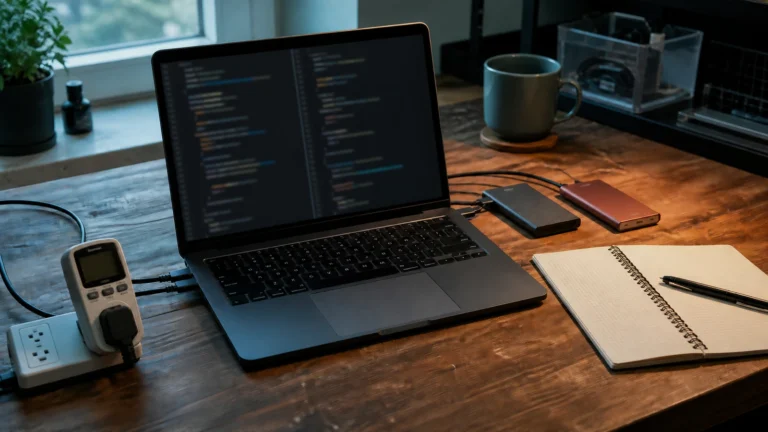
Muse Glimmer ran on a 24GB M4 Pro. Qwen3.6 failed that fit test, then completed a qualified A100 rerun and passed two of seven agent tasks.
Meta’s Muse Glimmer can power a useful local agent on a 24 GB Mac without a paid model API. Our hands-on build also exposed launch-day limits: slow agent loops, an OpenClaw vision timeout, a 24 GB memory ceiling, and a DFlash regression.
Meta's 30B open-weight agent explained: benchmarks, 24-64GB hardware, GGUF setup, pricing, runtimes, risks and who should use it.
GPT Image 2 won Kingy’s testable comparison and Nano Banana 2 was much faster. Grok’s original Quality and Speed checks were gated, but a signed-in Quality follow-up later completed the exact frozen Test 1 prompt. The single follow-up remains unscored.
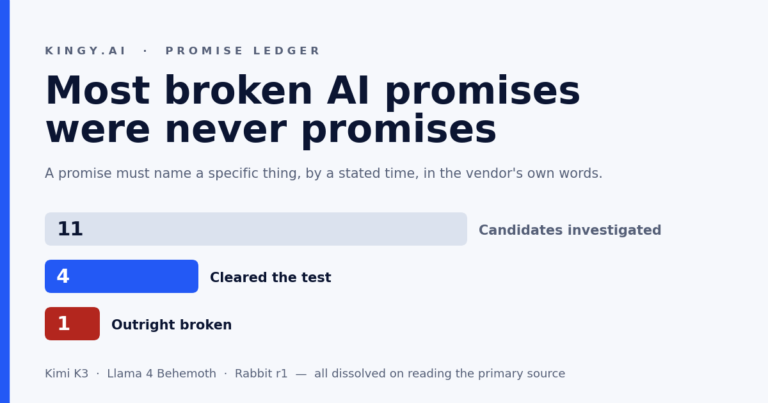
We set out to build a ledger of broken AI promises. The first three we investigated — the most notorious ones we…
Daily Kingy AI Launch Radar for 2026-08-07: source-checked AI launches, product updates, pricing notes, use cases, and risks worth watching.
OpenAI says upcoming model Astra may approach its Critical cyber threshold. Here is what the warning means, what the Hugging Face incident shows, and how defenders should prepare.
OpenAI’s Agent Plugins is a new open standard for packaging Agent Skills and MCP servers so compatible AI clients can discover and load the same plugin directory. Here is what it standardizes, what it leaves to clients, and why v1.0.0 still needs a security layer.
Wan 3.0 is real, priced and callable — but it is not 4K, not open weights, and not independently benchmarked. A source-verified breakdown, plus how it compares to Seedance 2.5 and MiniMax H3.