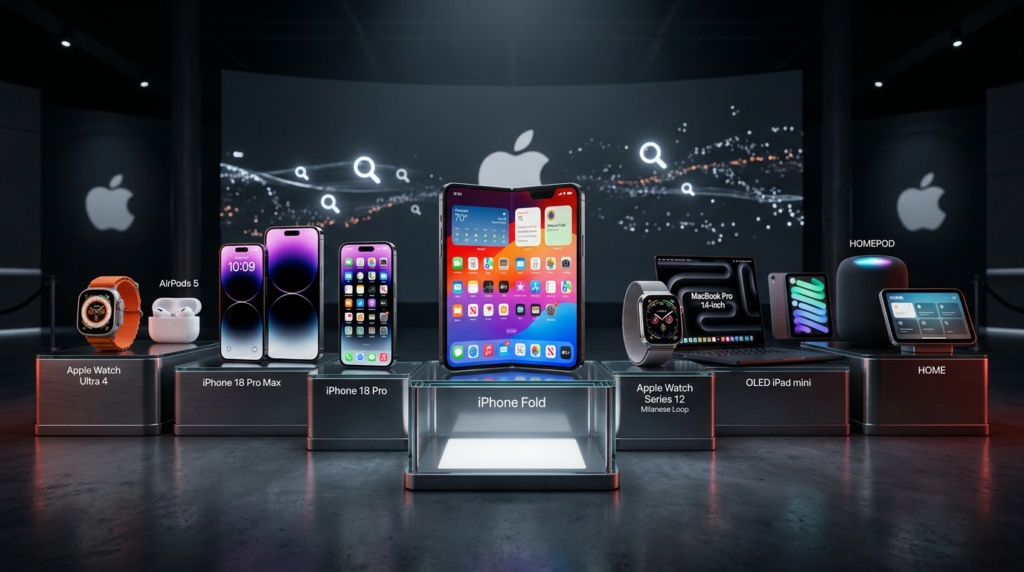
Apple’s Fall Avalanche Is Almost Here
Apple’s fall calendar usually arrives with the subtlety of a marching band entering a library. This year, the noise could be louder than usual.
Apple has confirmed a special event for Wednesday, September 9, and the rumor mill expects far more than a routine iPhone refresh. Depending on which report you read, Apple could reveal six major products at the keynote, squeeze in a seventh surprise, or launch more than 15 devices across the entire fall season.
Those numbers use different time frames. The Daily Tech Feed’s event preview focuses on six highly probable keynote products. Its earlier September forecast casts a wider net. Meanwhile, 9to5Mac’s 15-plus tally covers the entire season.
In other words, September 9 is the opening act. Apple may keep pulling hardware from backstage long after the keynote music stops.
“Surprise and Shine” Sets the Stage
Apple’s event carries the tagline “Surprise and Shine.” The company has confirmed the date, but not the products. That distinction matters. Everything beyond the event itself remains expectation, reporting, or rumor until an Apple executive holds it up onstage.
The presentation starts at 10 a.m. Pacific Time. Apple will stream it through its usual channels.
The timing gives Apple a familiar runway into the holiday shopping season. Yet the expected lineup feels less familiar. The company may skip a standard base iPhone launch in September, introduce its first foldable phone, refresh two watches, split AirPods into two versions, and then return later with Macs, iPads, and a small army of home products.
That is not a simple annual refresh. It is a product strategy arriving in chapters.
September should concentrate on portable devices. Later launches may broaden the story toward computing, artificial intelligence, and the connected home.
The iPhone 18 Pro Leads the Familiar Half
The iPhone 18 Pro and Pro Max lead every serious September prediction. They represent the recognizable part of the show: premium slabs, powerful chips, and expensive cameras.
According to the reports, both phones could gain an A20 Pro chip and a smaller Dynamic Island. Rumors also point to a simplified Camera Control button and a new color, often described as Dark Cherry. The Pro Max may grow slightly thicker to accommodate a larger battery. It could also receive an exclusive variable-aperture camera, though Apple has confirmed none of those details.
The biggest scheduling twist may involve the phone that does not appear. 9to5Mac reports that the standard iPhone 18 is expected in early 2027, rather than beside the Pro models this September.
Splitting the lineup would give Apple’s premium phones more oxygen and extend iPhone launch chatter across the calendar.
The Foldable iPhone Is the Real Main Event
The most consequential rumored device is Apple’s first foldable iPhone. Reports commonly call it the iPhone Ultra, although the final name remains unconfirmed.
If it appears, the device would push Apple into a category already shaped by Samsung, Google, and several Chinese manufacturers. Apple would arrive late, as it often does, then argue that the party did not properly begin until it walked through the door.
Reporting describes a book-style phone with outer and inner displays. Some rumors suggest Touch ID in the power button, two rear cameras, and side-by-side apps. Exact dimensions vary between reports.
The strategic meaning is clearer than the spec sheet. A foldable gives Apple a new ultra-premium tier and a fresh reason for longtime users to upgrade. It also tests whether Apple can make folding hardware feel durable, practical, and unmistakably its own.
The first version may be costly and scarce, yet even a niche debut could reshape the iPhone’s future.
Apple Watch Keeps Moving Beyond Notifications
The Apple Watch Series 12 and Apple Watch Ultra 4 complete the likely wrist-worn portion of the September lineup.
The Series 12 could bring a newer S-class chip, longer battery life, improved fitness tracking, and a ceramic case option. Small gains in endurance and health tracking can matter more than a theatrical redesign.
The Ultra 4 should remain the bruiser of the family. Reports point to faster silicon, fitness improvements, and expanded satellite capabilities. Possible additions include Apple Maps access through satellite and richer satellite messaging features on supported models. Earlier rumors linked Touch ID to the watch, but more recent reporting has cast doubt on that feature.
Apple increasingly wants its watch to remain useful when a phone is absent or disconnected. Better satellite tools fit that direction. Hikers get reassurance. Milk-run explorers get bragging rights.
Buyers should separate reported possibilities from confirmed specifications. Apple has announced an event, not these upgrades.
AirPods 5 Could Arrive in Stereo—Figuratively
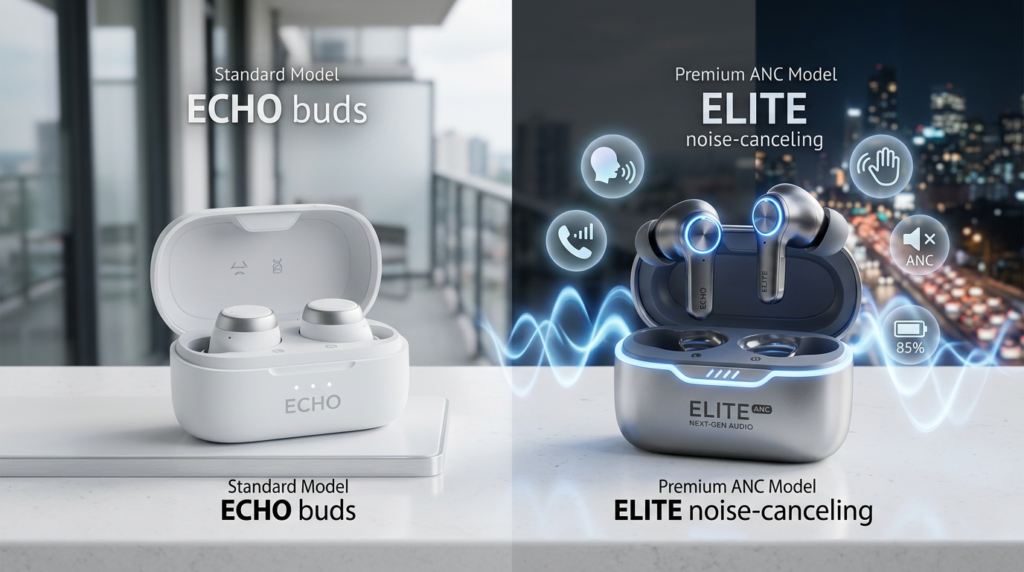
AirPods 5 are also widely expected, but Apple may not treat them as one simple product.
Reports suggest two versions: a lower-priced model without active noise cancellation and a more capable version with it. That approach would let Apple cover a wider price range while keeping the familiar AirPods silhouette in millions of pockets. It also makes the buying decision delightfully Apple-like: simple at first glance, followed by ten minutes of comparing tiny feature boxes.
The split would create familiar price steps. Buyers could start with standard earbuds, pay more for quieter commutes, or climb toward the Pro tier. Wallets get character development.
AirPods also serve calls, Siri, accessibility features, and Apple’s intelligent services. New hardware could support the larger iOS 27 and Siri AI story.
Two variants are expected, and active noise cancellation may distinguish them. Reports generally place rumored camera-equipped AirPods further out.
October May Belong to Macs and iPads
Once the September spotlight cools, Apple could pivot toward desks, backpacks, and creative workflows.
The forecast includes a 14-inch M6 MacBook Pro and an M6 iMac with refreshed colors. A rumored MacBook Ultra could add an OLED display, touch support, and a thinner body, although it may slip into early 2027.
That uncertainty is exactly why the 15-plus figure should not be read as a September keynote checklist. 9to5Mac’s roundup gathers products expected across the season, not fifteen guaranteed stage appearances on one Wednesday morning.
The iPad mini could also receive an OLED display and a faster chip. A base iPad may gain an A18 chip, which would position it for Apple Intelligence support. Neither device is certain for September.
Separating phone and computer announcements would stop the foldable iPhone from swallowing every other headline.
Apple’s Home Ambitions Are Getting Crowded
The most crowded rumor category is not the iPhone. It is the home.
Apple reportedly has a new Apple TV 4K, a full-size HomePod 3, a HomePod mini 2, a touchscreen home hub sometimes called HomePad or HomePod Touch, and an Apple security camera in development. A Face ID-equipped video doorbell has also surfaced in older reporting, though recent updates appear limited.
Some could arrive this fall. Others may slip. The home hub appears tied to Apple’s next Siri and may launch later.
Apple already has devices, services, and a smart-home framework. It lacks a compelling center that makes the home feel coherent rather than like a group project where every accessory missed the meeting.
A screen-equipped hub could coordinate cameras, calls, controls, media, and Siri requests. New HomePods and Apple TV hardware could extend it across rooms.
Yet this category carries the most timing risk. Treat the home lineup as a pipeline, not a promise that five boxes will land before the leaves do.
Spotlight Explains the Invisible Work
Amid the hardware frenzy, Apple also published a surprisingly useful explanation of Spotlight indexing. It sounds unrelated. It is not.
MacRumors highlighted Apple’s new guidance after beta users encountered lengthy indexing following updates to iOS 27, iPadOS 27, macOS 27, and visionOS 27. Apple says the process can take hours or even days, depending on the volume of stored data.
Spotlight indexes files, apps, messages, email, photos, contacts, notes, settings, and more. Apple says the index stays on-device and is not shared with Apple or other devices.
Indexing runs after setup, following updates, and as data changes. It finishes faster when the device sits unused, connects to power, and goes online to download cloud-based material before local indexing.
On a new device, users may initially see incomplete results or an “optimizing” notice. The machine may simply be alphabetizing their digital attic.
Local Search Is Becoming AI Infrastructure
Spotlight’s indexing details also reveal where Apple’s hardware and software stories meet.
Apple says Siri can use content from the local Spotlight index when answering requests. That makes indexing more than an old-fashioned file-search chore. It becomes part of the foundation for assistants that must understand messages, photos, documents, and personal context without casually shipping an entire digital life to remote servers.
This explains why faster chips and efficient on-device processing matter even when a product barely changes outside. Personal intelligence needs organized data, with much of that work happening locally.
Local processing can protect privacy, but preparation takes time and power. Apple asks users to let updated devices rest while plugged in and online—sensible, if spectacularly unrealistic, advice.
New devices can feel temporarily less capable while rebuilding databases. Early buyers should let that work finish before judging search, battery behavior, or Siri’s access to personal information.
Six, Seven, or Fifteen? Here Is the Honest Answer
So, how many products is Apple actually launching?
The honest answer is that Apple has confirmed the event, not the rumored inventory. Six devices form the strongest September core: iPhone 18 Pro, iPhone 18 Pro Max, the foldable iPhone, Apple Watch Series 12, Apple Watch Ultra 4, and AirPods 5. Even that count can become seven if the two expected AirPods configurations are counted separately.
The totals expand with timing. Add a surprise iPad or home product, and September rises. Extend through fall, then include Macs, iPads, home products, and two AirPods variants, and 15-plus becomes plausible.
This is the cleanest way to read the supplied reports: they describe concentric circles, not competing realities.
Six likely products sit at the center. Plausible September additions form the next circle. The outer circle covers fall, where dates remain fluid.
Rumor roundups flatten those circles. Apple’s supply chain may leak plenty, but it never promised to obey our spreadsheets.
A Launch Season About More Than Hardware
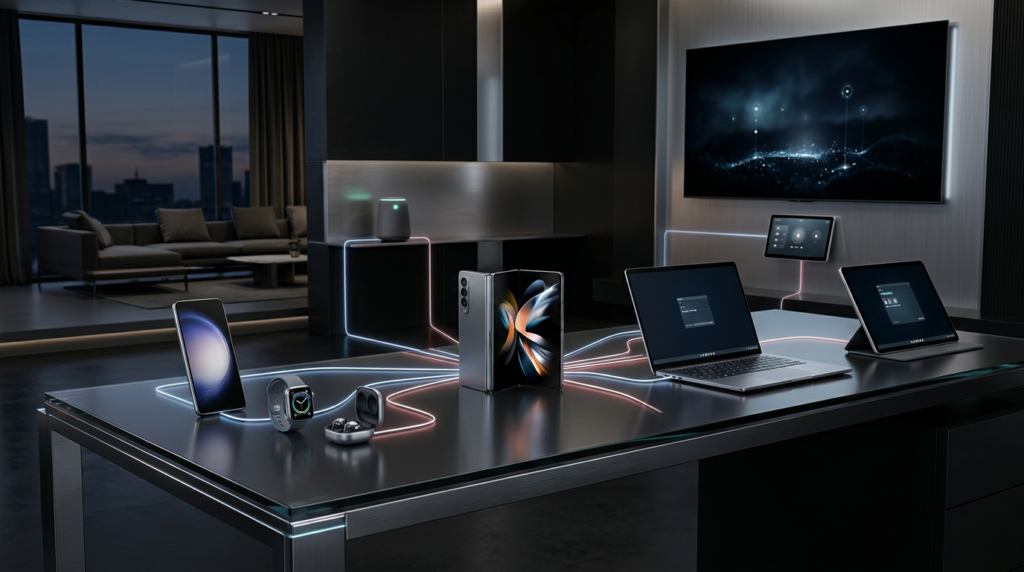
Apple’s fall 2026 story could begin with a foldable phone, but its real theme is coordination.
The iPhone Ultra would add a new format. Pro phones would carry the flagship business. Watches and AirPods would deepen wearables. Macs and iPads would spread new chips. Home products could give Siri a permanent address. Spotlight would organize data underneath it all.
That does not mean every rumored product will arrive. Some will likely move to October. Others could drift into 2027. Names, specifications, prices, and availability may change right up to their announcements.
Still, the outline is ambitious. Apple appears ready to stretch launch season across categories. If most reporting proves accurate, buyers face a packed menu—and dangerous “one more upgrade” decisions.
The stakes reach beyond novelty. Apple must show that shapes and software solve real problems, rather than merely creating upgrade cycles. A foldable needs durability. Siri needs reliability. Home hardware needs a reason to exist. The fall lineup will be judged less by its size than by how well its pieces work together.
September 9 should answer the first questions. The rest of fall will answer the bigger one: Is Apple merely refreshing its ecosystem, or beginning a new chapter built around foldable screens, local intelligence, and a much smarter home?
Either way, charge your current devices. Spotlight apparently has homework.
Sources
- 9to5Mac: Apple will launch 15+ new products this fall, here’s what’s coming
- MacRumors: Apple Explains Why Spotlight Indexing Can Take Days After an Update
- The Daily Tech Feed: Apple Set to Unveil Seven Major Devices in September
- The Daily Tech Feed: Apple Confirms Sept. 9 Event With Six Major Products Expected
The Kingy Brief
Get The Kingy Brief.
AI changes, original tests and one practical thing to try. Fridays at 09:00 Vancouver time.
Free · Double opt-in · Unsubscribe anytime
Sign up for The Kingy Brief on Beehiiv.
Signup help and newsletter schedule
Signup form provided by Beehiiv. After submitting, check your inbox for "Confirm your subscription to The Kingy Brief" and open its confirmation link. Check Spam or Promotions if you cannot find it.
Fridays at 09:00 Vancouver time: source-checked AI changes, original tests and one practical thing to try. We skip a week when there is not enough verified material. Free. Unsubscribe anytime.