
The Deal That Made Silicon Valley Blink

SpaceX just made a move so large it practically arrived with its own launch plume.
The company has agreed to buy Anysphere, the San Francisco startup behind the AI coding assistant Cursor, in a deal valued at $60 billion. That number does not merely raise eyebrows. It grabs them, straps them to a Falcon rocket, and sends them into low Earth orbit.
Cursor helps developers write, edit, and navigate code using artificial intelligence. In plain English, it acts like a very fast programming partner that never sleeps, rarely complains, and does not ask where the snacks are kept. Developers use tools like Cursor to speed up software work, automate repetitive coding tasks, and get help building complex systems.
SpaceX’s move turns Cursor from a hot AI startup into a strategic weapon inside Elon Musk’s expanding empire. The reported target is clear: enterprise AI. That is the big-money market where companies pay serious sums for software that can help their teams work faster.
The timing also matters. This deal follows SpaceX’s blockbuster public-market debut. Freshly armed with public-market momentum and a gigantic valuation, SpaceX appears ready to spend aggressively.
This is not a cute little tuck-in acquisition. This is a cannonball into the AI coding pool.
Why Cursor Matters
Cursor matters because coding has become one of the first places where generative AI actually earns its keep.
A chatbot that writes poems about lasagna is fun. An AI coding assistant that helps engineers ship software faster is a business product. Companies understand that. Investors understand it too. So do OpenAI and Anthropic, which have pushed hard into AI coding tools.
Cursor built its reputation by placing AI directly inside the developer workflow. Instead of asking users to jump between a code editor and a chatbot, Cursor brings the assistant into the place where programmers already live. It can suggest edits, explain code, rewrite sections, and help users move through big software projects.
That matters because developers do not just need answers. They need context. They need the tool to understand the project, the files, the bugs, the dependencies, and the weird ancient function named “final_final_real_fix_v3.” Every company has one. Don’t lie.
By acquiring Cursor, SpaceX does not simply buy a product. It buys a user base, a brand, engineering talent, and a shortcut into a market where speed matters brutally.
In AI, being late is expensive. Being irrelevant is fatal.
The xAI Angle
The deal also looks like a giant turbocharger for xAI, Musk’s artificial intelligence division.
According to the reporting, SpaceX wants to close the gap with OpenAI and Anthropic in AI-assisted coding. That is no small gap. Anthropic has gained traction with Claude Code, while OpenAI has its own coding-focused tools. Both companies want developers to build with their models, inside their ecosystems, every day.
That daily habit is powerful. Once a coding assistant becomes part of a developer’s routine, it becomes sticky. It sits in the workflow. It learns the project. It becomes annoying to replace. That is exactly the kind of software position every AI company wants.
Musk’s AI ambitions have been huge, loud, and expensive. But ambition alone does not ship a polished coding product. For that, you need model quality, product taste, infrastructure, talent, and developer trust.
Cursor gives SpaceX and xAI a serious injection of all four. It also gives them a product people already use, which beats trying to build a beloved developer tool from scratch while rivals sprint ahead.
In tech, buying your way into a market can look lazy. It can also look rational. This deal looks like both.
The Price Tag Is Absurd—Until It Isn’t
Sixty billion dollars is a preposterous amount of money.
It is also the kind of number AI has trained markets to swallow with a straight face.
The reported deal values Cursor at a level that would have sounded deranged a few years ago. But AI coding has become one of the clearest commercial use cases for generative AI. Companies will pay if a tool helps engineers move faster, reduce grunt work, and ship more software with the same team.
That last part is the golden goose. Software engineers are expensive. Engineering delays are expensive. Bad code is expensive. If an AI tool can shave time from development cycles, companies will listen.
The Decoder reported that Cursor had more than 3,000 customers paying at least $100,000 a year and had reached $3 billion in annualized revenue by the end of April. Those figures help explain why SpaceX might tolerate a monstrous price.
Still, the valuation raises hard questions. Can Cursor keep growing that fast? Can it maintain loyalty if OpenAI, Anthropic, Google, and Microsoft keep pushing deeper into code? Can SpaceX integrate it without smothering what made it popular?
Huge acquisitions do not fail because the spreadsheet looked boring. They fail because culture eats synergy for breakfast.
Stock, Not Just Cash
The deal reportedly gives Anysphere’s investors SpaceX stock rather than a simple cash payout.
That matters.
Stock turns Cursor’s backers into believers in the larger SpaceX story. They are not just taking money and walking away. They are tying their return to SpaceX’s future market value. That future now includes rockets, satellites, AI infrastructure, enterprise software, and whatever other category Musk decides to invade before breakfast.
This kind of stock-based deal can make sense when the buyer’s shares are hot. SpaceX’s public-market debut gave the company a powerful acquisition currency. If investors believe SpaceX will keep climbing, they may prefer shares over cash.
But stock also carries risk. If SpaceX’s valuation cools, the deal looks different. A $60 billion headline depends partly on confidence that the shares hold their value.
That confidence is currently high. The Independent reported that SpaceX shares rose sharply after the IPO and were trading above their opening price. The company’s market capitalization also reportedly surged into the multi-trillion-dollar range.
In other words, SpaceX is using Wall Street heat to buy AI firepower.
That is bold. It is also very Musk.
The IPO Glow-Up

The Cursor deal landed right after SpaceX’s massive IPO, and that timing gives the story extra drama.
An IPO changes a company’s options. Before going public, a company must manage private investors, limited liquidity, and a tighter circle of financing choices. After going public, especially at a sky-high valuation, it can use its shares as a kind of corporate currency.
SpaceX appears to be doing exactly that.
The Independent reported that SpaceX’s IPO valued the company at around $2 trillion on its first trading day. The stock then kept rising, pushing the company’s market value even higher. That made Musk, at least on paper, even richer and gave SpaceX more room to make spectacular moves.
The Cursor purchase fits this new phase. SpaceX is no longer just the rocket company that made reusable boosters look routine. It now looks more like a sprawling technology conglomerate with ambitions across space, communications, artificial intelligence, and enterprise software.
That creates a weird but compelling picture. A company known for launching hardware into orbit now wants to own the tools that help programmers launch code into production.
Different rockets. Same obsession with velocity.
Compute Meets Coding
AI needs talent. AI also needs compute.
Cursor brings the talent and product. SpaceX brings the infrastructure muscle.
The Decoder reported that Cursor could gain access to SpaceX’s large chip stockpile. That matters because modern AI systems burn through computing resources like a bonfire made of graphics cards. Training models, serving customers, testing agents, and improving coding tools all require serious hardware.
Compute has become one of the great chokepoints in AI. You can have brilliant researchers and a clever product, but if you cannot secure enough chips and data-center capacity, you eventually hit the wall.
SpaceX may help Cursor avoid that wall.
At the same time, Cursor helps xAI in the talent war. Skilled AI engineers are scarce, expensive, and frequently poached. A major acquisition can bring experienced teams inside the building quickly.
This is the trade: Cursor gets scale and compute. SpaceX gets product momentum and developer credibility.
That is the theory, anyway. The execution will decide whether this becomes a masterstroke or a very expensive fireworks show.
The Enterprise AI Prize
Why would a rocket company care so much about coding software?
Because enterprise AI may be one of the biggest money machines in tech.
Consumer AI gets attention. Enterprise AI gets invoices. Businesses pay for tools that improve productivity, cut costs, automate workflows, and help employees move faster. Coding assistants sit near the center of that opportunity because software development touches almost every modern company.
Banks need code. Hospitals need code. Retailers need code. Governments need code. Logistics firms need code. Even companies that claim they are not tech companies usually run on enormous piles of software.
That gives AI coding tools a huge market.
SpaceX’s prospectus reportedly highlighted business-focused AI products as a major opportunity. Cursor fits that ambition with suspiciously neat precision. It gives SpaceX a product that companies already understand and a category where buyers can calculate value more easily than with vague “AI transformation” pitches.
Nobody wants another slide deck about innovation. They want fewer bugs, faster releases, and engineers who can spend less time wrestling boilerplate.
Cursor sells that dream.
The Competitive Message
This acquisition sends a blunt message to OpenAI and Anthropic: Musk does not plan to watch the coding market from the cheap seats.
OpenAI and Anthropic already have strong positions. Their models power many developer workflows. Their brands carry weight. Their tools keep improving. They also have enormous research machines behind them.
SpaceX needed a leap, not a stroll. Cursor gives it one.
The deal also puts pressure on every other AI coding company. If Cursor joins SpaceX, smaller rivals may face a tougher market. They will compete not only with standalone startups, but with giant AI labs, cloud platforms, and now a public SpaceX with a massive balance sheet and a taste for big swings.
This is how markets consolidate. First, a category explodes. Then everyone rushes in. Then the giants arrive with trucks full of money.
The fun garage-band phase ends. The stadium tour begins.
That does not mean independent AI coding tools disappear. Developers are picky. They reward speed, quality, and trust. But the bar just got higher.
The Big Risk
The biggest risk is not the price. It is integration.
Developer tools live or die by feel. If Cursor becomes bloated, politicized, over-managed, or warped into serving internal SpaceX priorities before customer needs, users may leave. Developers can be loyal, but they are not hostages. They will switch if the tool gets worse.
SpaceX must also navigate model dependence. Cursor has relied heavily on models from companies that now compete with Musk’s AI ambitions. If SpaceX pushes Cursor too aggressively toward xAI models before they are ready, quality could suffer.
That would be a classic own goal.
Then there is the talent problem. Acquisitions often trigger departures. Engineers who loved startup speed may not love life inside a giant public company. If key people leave, SpaceX may end up buying the building after the band has left town.
The deal can work. But it needs discipline. It needs restraint. It needs product humility.
That last one may be the rarest commodity in billionaire-led tech empires.
What Happens Next
The deal is expected to close in the third quarter of 2026, assuming it clears the usual hurdles.
After that, watch three things.
First, watch whether Cursor keeps supporting the best available models or shifts toward xAI’s stack. Users will notice quickly.
Second, watch enterprise sales. SpaceX wants business AI revenue, and Cursor gives it a front door. If large customers expand contracts, the deal starts to look smarter.
Third, watch the developer reaction. Developers can smell corporate nonsense from three time zones away. If Cursor stays fast, useful, and flexible, the community may accept the new owner. If the product turns into a billboard for Musk’s broader ambitions, the backlash will come quickly.
For now, the acquisition makes one thing clear: SpaceX no longer wants to be defined only by rockets. It wants the software layer too.
And in 2026, the software layer increasingly writes itself.
Bottom Line
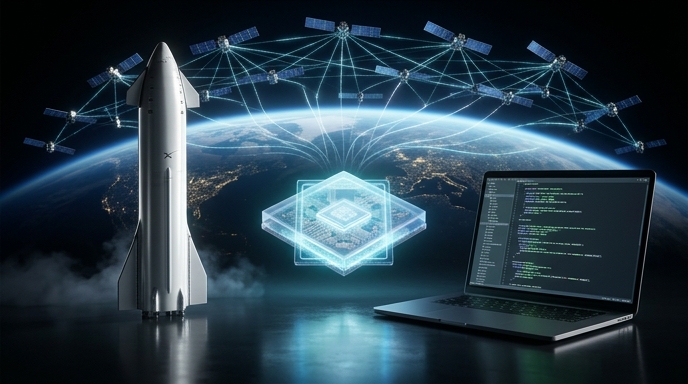
SpaceX’s $60 billion Cursor deal is wild, but it is not random.
It combines a hot AI coding product, a newly public mega-cap buyer, xAI’s need to catch up, and a market where enterprise customers may spend heavily for real productivity gains. The deal gives Cursor more compute and reach. It gives SpaceX a serious coding platform. It gives Musk another battlefield.
The price is enormous. The risks are real. The strategic logic is obvious.
SpaceX built its reputation by making rockets reusable. Now it wants to make software development faster, cheaper, and more automated. That is a very different launchpad.
But the mission profile looks familiar: move fast, spend big, absorb risk, and dare competitors to keep up.
The countdown has started.
Sources
- The Verge: “SpaceX is officially buying Cursor for $60 billion”
- The Decoder: “SpaceX bets $60 billion on Cursor to catch OpenAI and Anthropic”
- Heise: “SpaceX acquires AI coding tool Cursor for $60 billion”
- The Independent: “Elon Musk’s SpaceX to buy AI coding firm in $60bn deal as valuation rockets after IPO”
- BBC: SpaceX/Cursor report
- PCMag: “SpaceX Acquires AI Coding Platform Cursor for $60 Billion”
Compare
- Cursor / Cursor SDK vs. Claude Code vs. Codex: The Deepest Practical Comparison of Modern AI Coding Tools
- Cursor 1.0 Review: The AI-First Code Editor Comes of Age
Recent Launches
Latest News
- Aman Sanger, Cursor, and the $60 Billion AI Coding Deal That Just Made Silicon Valley Blink
- Cursor Wants to Stop Being Just an AI Coding App. Now It’s Acting Like a Frontier Lab
Continue Reading
The Kingy Brief
Get the next Kingy Brief.
Source-checked AI changes, original tests and one practical thing to try.
Free · Choose your subjects · Double opt-in · Unsubscribe anytime