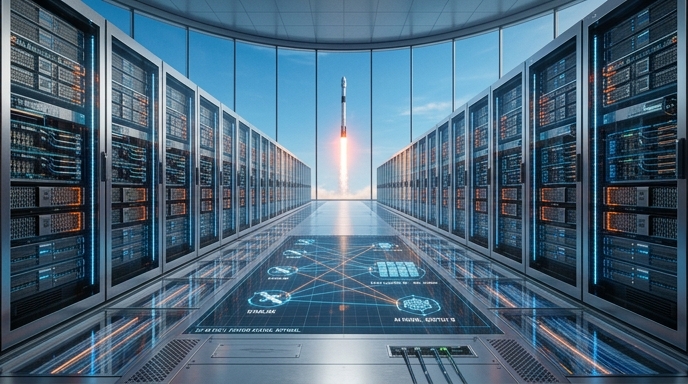
The Deal That Makes Rockets Look Almost Too Normal

SpaceX just gave the AI world another jolt. Not with a rocket launch. Not with a Mars teaser. Not even with a dramatic Elon Musk post that sends finance Twitter into interpretive dance.
This time, the headline is compute.
SpaceX has signed a computing power agreement with open-source AI startup Reflection AI that could be worth up to $6.3 billion if it runs its full course. Under the reported terms, Reflection will pay SpaceX $150 million per month starting July 1, 2026, through 2029. In exchange, Reflection gets access to high-end Nvidia GB300 chips and related hardware inside SpaceX’s Colossus 2 data center.
That is not pocket change. That is not “strategic partnership” fluff. That is a giant neon sign saying: compute is now one of the most valuable commodities in technology.
For years, SpaceX looked like the company that made rockets reusable and satellite internet mainstream. Now, it wants to become something stranger and possibly even more lucrative: a seller of raw AI horsepower.
And Reflection, which is trying to compete in open-source AI, clearly wants the keys to the engine room.
Why Reflection Needs This Much Compute
AI companies do not run on clever slogans. They run on chips, power, cooling, engineers, and a frightening amount of money.
Reflection AI sits in the open-source camp, which means it wants to build models that users, companies, and governments can inspect, adapt, and control more directly than closed systems. That mission sounds noble. It also sounds expensive. Very expensive.
Training frontier-level AI models takes enormous compute capacity. If a startup cannot secure enough GPUs, it can have the smartest researchers in the room and still end up watching bigger rivals lap it from the next zip code.
That is why this SpaceX deal matters. Reflection gets immediate access to Nvidia GB300 chips, which are built for advanced AI workloads. It does not have to build every piece of infrastructure itself. It can rent serious muscle and move faster.
This is the new startup math. Office space is optional. Compute is not.
A decade ago, founders bragged about cloud credits. Today, they chase multibillion-dollar compute agreements like oil companies once chased drilling rights. Different rigs. Same appetite.
SpaceX Is Selling the Shovels in the AI Gold Rush
SpaceX’s move is blunt and clever. Instead of only using its AI data centers for internal projects, it is turning that infrastructure into a commercial product.
That changes the story.
SpaceX is no longer just the rocket company with Starlink on the side. It is becoming a compute landlord for the AI boom. Anthropic, Google, and now Reflection have all been tied to SpaceX compute arrangements in recent reporting. That makes Colossus look less like a private machine room and more like a new cloud-infrastructure business.
This is classic gold-rush behavior. Some companies dig. Some companies sell shovels. SpaceX seems to want both jobs.
If customers pay hundreds of millions of dollars per month for access to chips, SpaceX gets a recurring revenue stream that investors can understand. Rockets are spectacular, but they are also capital-intensive and operationally brutal. AI compute is also brutal, of course, but it comes with big, visible contracts.
That matters after SpaceX’s public-market debut. Investors love a grand vision. They love contracted revenue more.
The Open-Source Angle Makes This Spicier
The Reflection deal is not just another big AI infrastructure contract. It has an ideological charge.
Reflection is pitching itself as an open-source AI player at a moment when governments and enterprises are growing more nervous about depending entirely on closed AI systems. Closed models can be powerful, polished, and convenient. They can also leave customers dependent on systems they cannot inspect or fully control.
Open models offer a different promise. Users can examine them, modify them, deploy them on their own terms, and reduce dependence on a few dominant labs. That is the sales pitch, anyway.
Reflection wants to be part of that counterweight. The company has been described in coverage as an American open-source AI contender, and Axios reported that some investors have called it the “DeepSeek of the West.”
That comparison carries a lot of freight. It suggests speed, efficiency, and geopolitical urgency. It also raises expectations sky-high. Reflection has not yet proven it can produce a frontier open model that changes the market. The SpaceX deal gives it more ammunition. It does not guarantee victory.
Nvidia Is Everywhere in This Story
Try writing about AI infrastructure without mentioning Nvidia. You will last about twelve seconds.
Reflection’s SpaceX deal revolves around access to Nvidia GB300 chips. Axios also reported that Nvidia has invested $800 million in Reflection. So Nvidia sits in the background, foreground, and possibly the ceiling tiles of this story.
That is the AI economy in miniature. Nvidia sells the chips. Startups need the chips. Infrastructure owners buy the chips. Then startups rent access to chips from the infrastructure owners. Sometimes the chipmaker also invests in the startup that needs the chips.
It is circular. It is messy. It is wildly profitable for the company making the silicon.
The chip supply chain now shapes the competitive map of AI. Models matter. Talent matters. Product design matters. But compute access can decide who even gets to compete.
Reflection can have ambition. SpaceX can have infrastructure. Nvidia has the oxygen tank.
And everyone in this room is breathing deeply.
The 90-Day Escape Hatch Matters

Big number. Big contract. Big headline. But there is a useful detail hiding in the fine print: either side can reportedly walk away with 90 days’ notice after the first three months.
That matters because AI infrastructure deals are not normal software subscriptions. They involve ramp schedules, power availability, chip delivery, model timelines, and changing market demand.
Reflection may need flexibility if its training plans change. SpaceX may want protection if capacity becomes more valuable elsewhere. Both sides get an off-ramp.
So yes, the agreement could total roughly $6.3 billion. But “could” is doing work here. The full value depends on the deal lasting through its scheduled term.
That does not make the agreement small. Far from it. Even a few months at $150 million per month would represent serious money. But the termination clause reminds us not to treat the headline number as cash already sitting in SpaceX’s bank account.
In AI, the future arrives fast. So do cancellations, pivots, delays, and “strategic realignments,” which is corporate poetry for “oops.”
Google and Anthropic Set the Stage
Reflection is not arriving in an empty theater. SpaceX has already been linked to huge compute deals with Google and Anthropic.
Reuters reported earlier in June that Google agreed to pay SpaceX $920 million per month from October 2026 through June 2029 for compute capacity, including roughly 110,000 Nvidia GPUs plus CPUs, memory, and other components. TechCrunch reported similar terms and noted that the Google agreement included ramp-up provisions and termination rights.
Anthropic also reached a major compute arrangement involving SpaceX’s Colossus 1 facility near Memphis, according to Reuters and TechCrunch. That deal gave Anthropic access to a massive pool of Nvidia processors and additional power capacity.
Put those pieces together and a pattern appears. SpaceX is not dabbling. It is assembling a compute business with blue-chip AI customers.
Reflection adds a different flavor because it is an open-source AI startup rather than a closed-model giant. But financially, it fits the same pattern: AI labs need compute, and SpaceX wants to sell it.
The rocket company found another launchpad. It has server racks.
Why This Could Reshape AI Competition
The AI race often gets described as a battle of models: OpenAI versus Anthropic, Google versus Meta, open source versus closed source.
That framing is useful but incomplete. The deeper contest is infrastructure.
A lab with better compute can train bigger models, run more experiments, serve more users, and recover faster from mistakes. A lab without enough compute ends up rationing ambition.
That is why Reflection’s deal could matter beyond its own balance sheet. If open-source AI companies can access frontier-grade infrastructure, they have a better shot at challenging closed-model incumbents. They still need talent, data, product-market fit, and distribution. But compute removes one huge bottleneck.
This could also pressure the big cloud providers. Amazon, Microsoft, and Google have long dominated the cloud market. If SpaceX can sell AI compute directly at massive scale, it becomes a new kind of competitor.
Not a traditional cloud. Not just a data center operator. Something weirder: a space, satellite, AI, and infrastructure conglomerate with a taste for moonshot capital spending.
Subtle? No. Potentially powerful? Absolutely.
The Investor Story Is Getting Louder
For SpaceX investors, compute deals create a cleaner financial narrative.
Launch services are impressive, but each mission has operational risk. Starlink has scale, but satellite networks require constant investment. AI compute, by contrast, can be packaged as recurring contracted revenue.
That is catnip for markets.
Reuters reported that SpaceX has also turned to the bond market and disclosed a large cash position as it funds expansion in AI and next-generation rocket technology. That context matters. SpaceX is spending heavily, and compute deals help justify that spending.
Still, the bullish story has a sharp edge. AI data centers are expensive to build and maintain. Chips depreciate. Power constraints are real. Customers can terminate contracts. Technology cycles can move faster than balance sheets prefer.
The upside is huge. The execution risk is also huge.
This is not a sleepy utility business. It is a turbocharged capital machine. It can print cash if demand holds and capacity arrives on schedule. It can also become a furnace if spending outruns paying customers.
That tension makes the story interesting.
Reflection Gets a Megaphone, Not a Crown
The SpaceX deal raises Reflection’s profile immediately. It tells the market that the startup can secure elite compute capacity. It also links Reflection to Nvidia-backed infrastructure and one of the most closely watched technology companies on the planet.
That is a powerful signal.
But compute alone does not crown a winner. AI history is full of companies that raised money, rented chips, hired smart people, and still failed to produce a product people actually used.
Reflection still needs to ship. It needs models that perform well. It needs developers and enterprises to trust them. It needs to show that open-source AI can compete not just philosophically, but practically.
The deal gives Reflection a bigger engine. It does not guarantee a good driver, a clean road, or a finish line parade.
That is the honest read.
The AI market rewards execution, not vibes. Though, admittedly, vibes do sometimes raise nine figures before breakfast.
The Bigger Picture: Compute Is Becoming Geopolitical
AI compute is no longer just a business input. It is becoming a strategic resource.
Governments care who controls advanced models. Enterprises care whether they can inspect and customize systems. AI labs care whether they can get enough chips. Chipmakers care who buys the next wave of hardware. Data center operators care where they can find power.
That makes deals like SpaceX and Reflection feel bigger than normal vendor contracts.
Open-source AI carries national and commercial implications. If American open models lag behind closed systems or foreign open models, governments and companies may face uncomfortable trade-offs. They may want transparency but lack top-tier domestic options. Reflection wants to fill that gap.
SpaceX, meanwhile, wants to turn physical infrastructure into strategic leverage. If it controls scarce compute capacity, it can shape who gets to train, who gets to scale, and who gets to compete.
That is not just a tech story. That is power wearing a hoodie.
What Happens Next
The first thing to watch is simple: does Reflection actually get the capacity on schedule?
If the July 1 start proceeds as reported, Reflection can begin putting SpaceX’s hardware to work quickly. Then the next question becomes whether that compute translates into visible progress: better models, stronger benchmarks, developer adoption, enterprise pilots, or government traction.
For SpaceX, the question is whether it can keep stacking compute customers without overpromising capacity. The Google and Anthropic agreements already created a giant infrastructure story. Reflection adds more demand. Demand is great. Delivery is harder.
For Nvidia, the story remains almost comically strong. Every new compute mega-deal seems to confirm that advanced AI chips remain the tollbooth of the industry.
And for the broader AI market, this deal makes one thing clearer: the next phase of competition will not be won only by clever prompts or shiny chatbots.
It will be won by whoever controls the machines behind them.
Bottom Line

SpaceX’s reported $6.3 billion deal with Reflection AI is not just another AI headline with too many zeros. It shows how fast the industry’s center of gravity is moving from software demos to infrastructure control.
Reflection needs compute to make its open-source ambitions credible. SpaceX wants to turn Colossus into a commercial AI engine. Nvidia sits at the heart of the hardware stack. Investors get another reason to view SpaceX as more than rockets and satellites.
The deal could still shrink, shift, or end early because of its termination provisions. That caveat matters. But even with that caution, the direction is obvious.
AI is becoming a compute war.
And SpaceX, the company best known for launching hardware into orbit, now wants to rent out the hardware that launches models into existence.
Same drama. Different flame.
Sources
- Yahoo Finance: “SpaceX signs $6.3 billion…”
- Bloomberg: “SpaceX Inks Multibillion-Dollar Computing Deal With Reflection AI”
- Wall Street Pit: “SpaceX Lands $6.3B AI Deal”
- Axios: “Open-source AI gets more compute from SpaceX”
- Reuters: “SpaceX lands Google AI compute deal after Anthropic pact ahead of IPO”
- TechCrunch: “Google will pay SpaceX $920M per month for compute”
- Reuters: “SpaceX turns to bond market to raise capital, reports $100.8 billion cash”
The Kingy Brief
Get the next Kingy Brief.
Source-checked AI changes, original tests and one practical thing to try.
Free · Choose your subjects · Double opt-in · Unsubscribe anytime