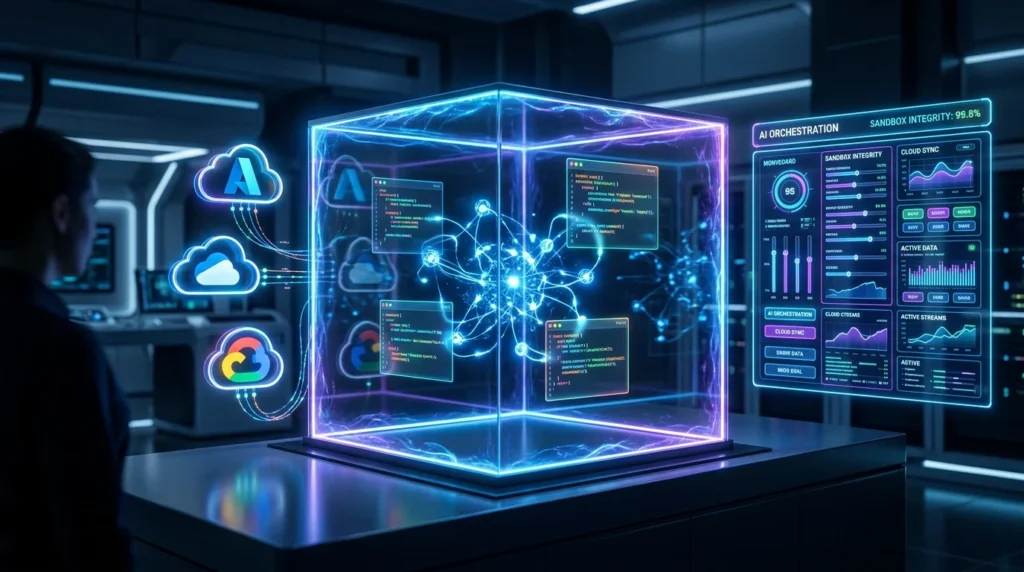
AI agents are no longer just a cool experiment. They’re going to work — and OpenAI just made sure they show up ready.

The AI Agent Era Is Here, Whether You’re Ready or Not
Let’s be honest. AI agents have been the buzzword of the decade. Everyone’s been talking about them. But actually deploying them in a real enterprise environment? That’s been a whole different story — messy, risky, and frankly, a bit terrifying for anyone who cares about data security.
Well, OpenAI just changed the game.
On April 15, 2026, OpenAI announced a major update to its Agents SDK. This isn’t just a patch or a minor tweak. It’s a full-on evolution. The update gives developers standardized infrastructure, a model-native harness, and — most excitingly — native sandbox execution. In plain English? AI agents can now work smarter, safer, and at scale.
Agentic AI is the tech industry’s newest success story, and companies like OpenAI and Anthropic are racing to give enterprises the tools they need. This update puts OpenAI firmly in the lead.
So What Exactly Did OpenAI Ship?
Here’s the quick rundown. The updated Agents SDK bundles together a powerful set of tools that developers have been begging for.
It includes tool use via the Model Context Protocol (MCP). It adds code execution through a shell tool. File editing gets handled with an apply-patch tool. Custom instructions come through AGENTS.md files. And a manifest function now describes the agent’s workspace — supporting local files and cloud storage like AWS S3, Google Cloud Storage, and Azure Blob Storage.
That’s a lot. But the headline feature? Native sandbox execution.
According to The Decoder, agents now run in isolated environments with their own files, tools, and dependencies. The SDK works with providers like Cloudflare, Vercel, E2B, and Modal. Developers can also plug in their own custom sandboxes.
Think of it like giving your AI agent its own private office. It has everything it needs. It can’t accidentally wander into someone else’s files. And if something breaks, it doesn’t take down the whole building.
The Problem This Solves (And It’s a Real One)
Before this update, building production-ready AI agents was a nightmare of tradeoffs.
Model-agnostic frameworks offered flexibility but didn’t fully utilize frontier model capabilities. Model-provider SDKs stayed close to the model but lacked visibility into the control harness. Managed agent APIs simplified deployment but constrained where agents could run and how they accessed sensitive data.
As OpenAI explained in their official announcement, teams moving from prototype to production faced difficult architectural compromises. Every path had a catch.
The new SDK eliminates those compromises. It gives developers a harness that’s turnkey yet flexible. Engineers can adapt it to their own stack — including tool use, memory, and sandbox environment — without starting from scratch every time.
TechCrunch’s Lucas Ropek put it well: “This launch, at its core, is about taking our existing Agents SDK and making it compatible with all of these sandbox providers,” said Karan Sharma from OpenAI’s product team. The goal is to let users “go build these long-horizon agents using our harness and with whatever infrastructure they have.”
Long-horizon tasks. That’s the key phrase. These are complex, multi-step operations that agents now handle without falling apart halfway through.
Real-World Proof: Oscar Health Gets It Done
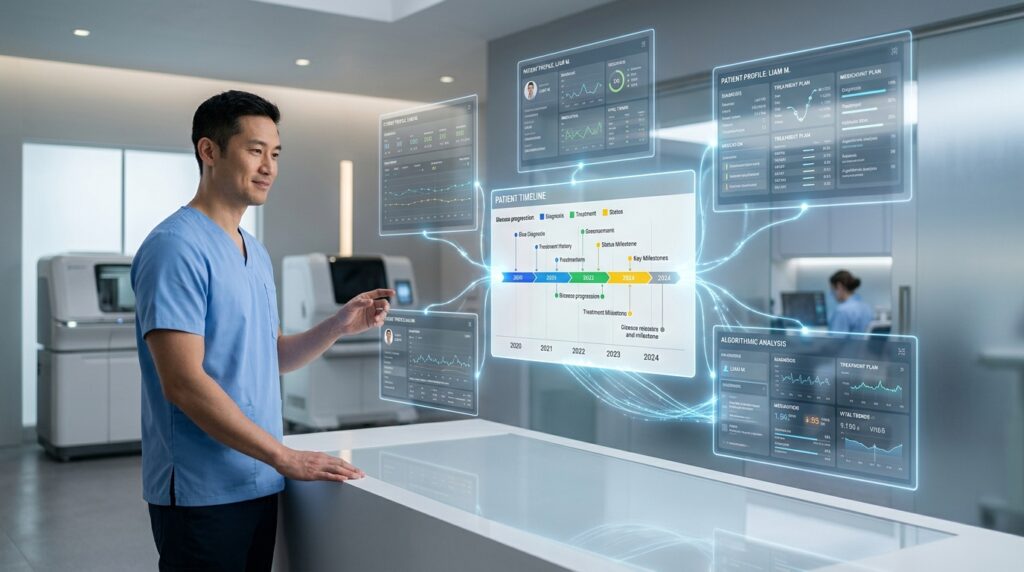
You can talk about features all day. But real-world results? That’s where things get interesting.
Oscar Health, a healthcare provider, tested the new infrastructure to automate a clinical records workflow. Previous approaches couldn’t handle it reliably. The engineering team needed the system to extract correct metadata while correctly understanding the boundaries of patient encounters within complex medical files.
The result? It worked.
Rachael Burns, Staff Engineer & AI Tech Lead at Oscar Health, said it best: “The updated Agents SDK made it production-viable for us to automate a critical clinical records workflow that previous approaches couldn’t handle reliably enough. For us, the difference was not just extracting the right metadata, but correctly understanding the boundaries of each encounter in long, complex records. As a result, we can more quickly understand what’s happening for each patient in a given visit, helping members with their care needs and improving their experience with us.”
That’s not a demo. That’s a real healthcare system moving faster and helping real patients. AI News covered this story and highlighted it as a prime example of what the new SDK makes possible.
The Harness: The Unsung Hero of AI Agents
Here’s something most people don’t talk about enough. The model isn’t the whole story.
A fascinating piece on Dev.to by Truong Phung dives deep into what’s called “harness engineering” — the emerging discipline of making AI agents reliable. The core insight is simple but powerful:
Agent = Model + Harness.
The harness is everything around the model. System prompts. Tools. Sandboxes. Orchestration logic. Memory management. A raw model is not an agent. It becomes one only when a harness gives it state, tool execution, feedback loops, and enforceable constraints.
LangChain demonstrated that harness changes alone can move a coding agent from Top 30 to Top 5 on Terminal-Bench 2.0 — without changing the model at all. That’s wild. It means the teams investing in harness engineering will get dramatically better results than those waiting for the next model release to solve their problems.
OpenAI’s new SDK essentially gives developers a world-class harness out of the box. That’s the real gift here.
Security: The Part That Actually Matters for Enterprises
Let’s talk about the elephant in the room. Security.
Running AI agents in enterprise environments means dealing with sensitive data, proprietary systems, and the ever-present threat of prompt-injection attacks. One bad actor could potentially hijack an agent and exfiltrate data. That’s not a hypothetical — it’s a real concern.
OpenAI’s approach is elegant: separate the control harness from the compute layer. This isolation keeps credentials entirely out of the environments where model-generated code executes. An injected malicious command cannot access the central control plane or steal primary API keys.
The result? The wider corporate network stays protected from lateral movement attacks.
There’s also a practical bonus. Long-running tasks often fail midway — network timeouts, container crashes, API limits. Under the new architecture, losing a sandbox container doesn’t mean losing the entire operational run. The SDK uses built-in snapshotting and rehydration. It restores the agent’s state in a fresh container and continues from the last checkpoint.
No more restarting a 20-step financial report from scratch because something crashed at step 19. That translates directly to reduced cloud compute spend. Enterprises will love that.
What Developers Actually Get to Work With
For the technically curious, here’s what the new SDK puts in your hands.
The Manifest abstraction standardizes how developers describe the workspace. Mount local files. Define output directories. Connect to AWS S3, Azure Blob Storage, Google Cloud Storage, or Cloudflare R2. This gives the model a predictable workspace — where to find inputs, where to write outputs, and how to stay organized across long-running tasks.
The model-native harness introduces configurable memory, sandbox-aware orchestration, and Codex-like filesystem tools. Developers integrate standardized primitives: tool use via MCP, custom instructions via AGENTS.md, and file edits using the apply patch tool.
The shell tool enables code execution. Progressive disclosure via skills lets the system perform complex tasks sequentially. This standardization means engineering teams spend less time updating core infrastructure and more time building domain-specific logic that actually benefits the business.
Dev.to’s tech_minimalist notes that the modular architecture makes it easier for developers to integrate specific components and features into their applications. The improved API documentation reduces the barrier to entry for new developers. And enhanced testing and validation tools let teams thoroughly verify their agent’s behavior before going live.
Pricing, Availability, and What’s Coming Next
Good news on the pricing front. These new capabilities are generally available to all customers via the API. Standard pricing applies — based on tokens and tool use. No custom procurement contracts. No enterprise-only paywalls.
The new harness and sandbox capabilities launch first in Python. TypeScript support is planned for a future release. OpenAI is also working to bring additional agent capabilities — including code mode and subagents — to both Python and TypeScript.
The broader ecosystem expansion is also on the roadmap. More sandbox providers, more integrations and more ways for developers to plug the SDK into the tools and systems they already use.
The Bigger Picture: Why This Matters Right Now

Step back for a second. What does all of this mean?
AI agents are moving from the lab to the boardroom. Fast. The companies that figure out how to deploy them reliably — safely, at scale, with proper governance — will have a massive competitive advantage.
OpenAI’s updated Agents SDK is a direct response to that reality. It addresses the three things enterprises care about most: safety, reliability, and customization. It gives developers the infrastructure to build agents that don’t just work in demos but actually survive contact with the real world.
As harness engineering continues to mature as a discipline, the teams that invest in it will pull ahead. The model is important. But the system around the model? That’s where the magic happens.
OpenAI just made that system a whole lot better.
Sources
- OpenAI — The Next Evolution of the Agents SDK
- TechCrunch — OpenAI Updates Its Agents SDK to Help Enterprises Build Safer, More Capable Agents
- AI News — OpenAI Agents SDK Improves Governance with Sandbox Execution
- The Decoder — OpenAI Updates Agents SDK with New Sandbox Support for Safer AI Agents
- Dev.to — Harness Engineering: The Emerging Discipline of Making AI Agents Reliable
- Dev.to — OpenAI Updates Its Agents SDK to Help Enterprises Build Safer, More Capable Agents
Compare
Recent Launches
Latest News
- Cursor SDK Review: Cursor’s Coding Agent Becomes Programmable Infrastructure
- The State of AI Agents in 2026: A Practitioner’s Guide
- AI Agent Security Guide: MCP, Sandboxes, Tool Permissions, and What Can Go Wrong
Continue Reading
The Kingy Brief
Get The Kingy Brief.
AI changes, original tests and one practical thing to try. Fridays at 09:00 Vancouver time.
Free · Double opt-in · Unsubscribe anytime
Sign up for The Kingy Brief on Beehiiv.
Signup help and newsletter schedule
Signup form provided by Beehiiv. After submitting, check your inbox for "Confirm your subscription to The Kingy Brief" and open its confirmation link. Check Spam or Promotions if you cannot find it.
Fridays at 09:00 Vancouver time: source-checked AI changes, original tests and one practical thing to try. We skip a week when there is not enough verified material. Free. Unsubscribe anytime.