A Billion Is a Very Google-Sized Number
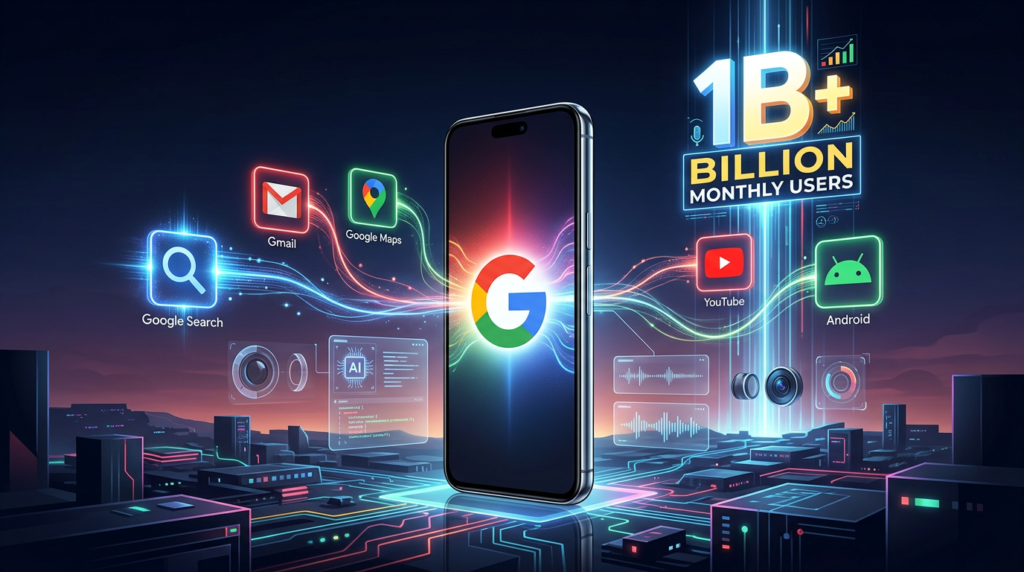
Google’s Gemini app has crossed one billion monthly active users, a milestone large enough to make even Silicon Valley’s favorite adjectives feel undersized. “Massive” sounds polite. “Explosive” needs a bigger fuse.
CEO Sundar Pichai announced the achievement on August 11, calling Gemini the fastest-growing product in Google’s history. It is also the company’s 14th product to enter the billion-user club, joining a rather intimidating alumni group that includes Search, Gmail, Android, Chrome and YouTube.
During Alphabet’s second-quarter earnings update on July 22, Google said the Gemini app had 950 million monthly active users. Less than three weeks later, it claimed more than one billion. That means the reported audience expanded by at least 50 million people in roughly the time it takes most of us to stop ignoring an operating-system update.
The timing looked deliberate. One day after announcing the landmark, Google staged its Made by Google event and unveiled the Pixel 11 family. The message practically wrote itself: Gemini is no longer an interesting chatbot sitting beside Google’s real products. Google wants it to become the intelligence running through them.
That makes the billion-user announcement more than a victory lap. It is the setup for Google’s next act.
First, Let’s Untangle the Billion
AI audience statistics can become slippery quickly. Google now has several enormous Gemini-powered audiences, and they should not be poured into one statistical smoothie.
The newly announced figure refers to people using the Gemini app each month. According to Google’s own announcement and reporting echoed by Times of Bangladesh, it excludes people who encounter Google’s AI through other channels.
Separately, AI Mode in Google Search has also surpassed one billion monthly users. AI Overviews—the summaries that appear above conventional search results—reach an even broader audience. Those products use Gemini models, but exposure to an AI-generated search summary is not the same as intentionally opening an assistant and holding a conversation.
FourWeekMBA rightly stresses the broader lesson: distribution numbers need context. A person who actively uses the Gemini app, someone who enters AI Mode and someone who merely sees an AI Overview represent different kinds of engagement.
Still, Google’s official statement is unambiguous about this particular milestone: more than one billion people use the Gemini app monthly. The surrounding ecosystem makes that growth easier, but it does not erase the achievement. If anything, it explains the machinery behind it.
From 750 Million to Ten Digits
Gemini’s recent growth curve resembles a rocket launch drawn by someone who misplaced the ruler.
Google reported about 750 million monthly active users for the app earlier in 2026. By its July earnings call, that number had reached 950 million. The company also said daily active users had tripled over the previous year. Then came August’s billion-user announcement.
The sequence matters. Monthly reach can rise because people try a product once. Growth in daily use suggests habit, which is far more valuable. Google wants Gemini to become the tool people call when they need to write, plan, research, translate, edit an image or work through a problem—not an app they opened once because a button suddenly appeared on their phone.
Google offered several clues about how those habits are forming. Sixty-three percent of Gemini users talk to the assistant aloud. One in five interactions uses live tools such as a camera feed or screen sharing. The app also generates more than 150 million images each day, while over 100 million monthly users access it on iOS.
Those figures show Gemini moving beyond the classic chatbot format. People are not only typing questions into a blank box. They are pointing cameras, sharing screens, speaking naturally and asking the system to manipulate media. The chatbot is slowly becoming an interface for the rest of the device.
Google’s Secret Weapon Is Not Secret
Google has something every AI startup dreams about: distribution everywhere, all at once.
It owns Android. It operates Search, Gmail, Maps, Chrome, YouTube and Workspace. It can introduce Gemini while someone writes an email, looks for a restaurant, edits a document or configures a new phone. No heroic app-store expedition required.
The reports from Heise, Blockchain.News and WE News English all place the milestone inside this larger competitive picture. Google is fighting OpenAI, Anthropic and Chinese developers, but it enters that contest with billions of existing customer relationships.
That does not mean every Android owner automatically becomes a devoted Gemini user. Placement can win attention; usefulness must win repetition. A preinstalled assistant that gives clumsy answers becomes digital wallpaper remarkably fast.
Yet distribution lowers the cost of experimentation. Google can place a Gemini feature in front of hundreds of millions of people, watch how they use it and refine the experience. Rivals often have to persuade users to visit a separate service first.
The billion-user threshold therefore measures two forces working together: improvements to Gemini itself and Google’s unmatched ability to put those improvements within arm’s reach.
Pixel 11 Becomes the Gemini Phone
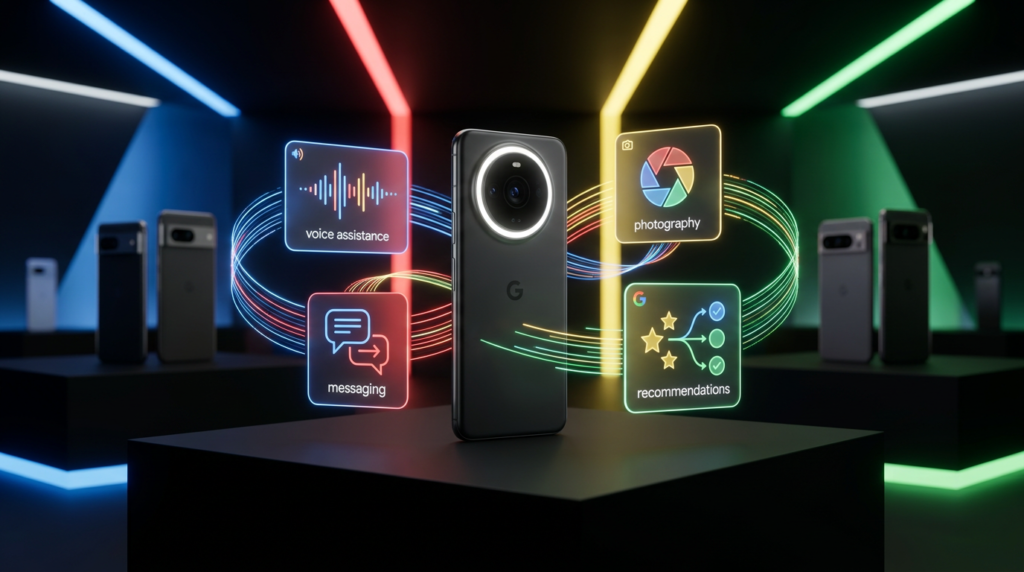
Google reinforced that strategy at Made by Google 2026. The company introduced four phones—the Pixel 11, Pixel 11 Pro, Pixel 11 Pro XL and Pixel 11 Pro Fold—but the event’s real leading character was software.
As Mashable’s event coverage emphasized, Gemini sat at the center of the Pixel story. The new Tensor G6 chip supports the phones’ expanding AI workload, while Gemini Intelligence connects camera tricks, speech features and proactive help.
Magic Capture offers the clearest example. A user can point the phone toward a birthday, concert or school performance and let Gemini analyze the scene, recording video and selecting promising still images. The pitch is wonderfully modern: use more AI so you can stare at your phone less.
The Pro models also feature HiLight, a glowing ring near the rear camera. It can illuminate while Gemini listens, thinks or responds, giving the otherwise invisible assistant a physical signal. It is a small design detail with a larger purpose. Google wants AI interaction to feel like part of the hardware, not a webpage trapped behind an icon.
Proactive Assistance pushes the idea further by surfacing relevant information when the phone believes it can help. The Pixel is evolving from a device that waits for taps into one that tries to anticipate the next tap.
The Camera Is Now an AI Colleague
Smartphone makers have used computational photography for years, but the Pixel 11 makes the relationship unusually obvious. The camera no longer just captures light. It watches, selects, repairs, reframes and occasionally volunteers for the role of family photographer.
Magic Capture can analyze hundreds of frames to identify peak moments and produce full-quality stills from a short recording. On the Pro phones, Instant Night Sight reduces the delay involved in low-light photography. Pro Zoom reaches up to 120x, using computational processing and AI-generated pixels to fill detail at extreme distances.
These tools sound convenient because they are. They also complicate the old assumption that a photograph simply records what the sensor saw. When software chooses the moment, adjusts the composition and generates missing detail, the output becomes a collaboration between the user and a model.
That is not automatically sinister or deceptive. Photography has always involved processing, from darkroom techniques to portrait mode. But Google will need to explain where enhancement ends and invention begins, especially as AI-created images become harder to recognize.
For everyday users, the test will be more practical. Does Magic Capture save the perfect smile, or does it choose the moment immediately after? Does 120x zoom reveal useful detail, or produce a confident watercolor? A launch demonstration can show possibility. Millions of chaotic family gatherings will deliver the real review.
ChatGPT Is Still in the Ring
Gemini’s milestone places it alongside ChatGPT, which reports also put at roughly one billion monthly active users earlier in 2026. That makes for an irresistible scoreboard, but a simple tie would be misleading.
Companies may define active users differently. Monthly and weekly figures measure different behavior. An assistant reached through a mobile ecosystem does not have the same acquisition path as one people deliberately seek out on the web. Raw audience totals also say little about session frequency, paid subscriptions, enterprise adoption or revenue per user.
What the numbers do show is that consumer AI now operates at genuine mass-market scale. The contest has moved beyond which model wins a benchmark or writes the least embarrassing limerick. The bigger fight concerns habit, integration and default status.
OpenAI built the category’s most recognizable consumer brand. Google possesses extraordinary distribution and owns key layers of the mobile and web experience. Anthropic has cultivated strength among professionals and developers, while DeepSeek and other Chinese companies add technical and pricing pressure.
No one gets to coast. Google must prove that integration creates value rather than clutter. OpenAI must keep users choosing ChatGPT when rival assistants arrive preloaded. Everyone must control enormous infrastructure costs while releasing better models at a pace that makes last quarter feel archaeological.
The billion-user club is prestigious. It is not peaceful.
The Hard Part Starts After the Confetti
Scale magnifies everything. A helpful Gemini feature can reach hundreds of millions of people quickly. So can a bad answer, a privacy mistake or an overconfident AI-generated detail.
Google must now improve reliability while expanding Gemini into more sensitive and proactive roles. Suggesting a restaurant is one thing. Reading messages, interpreting a camera feed or acting across several apps creates a larger blast radius when the system misunderstands intent.
The company also needs to prove that “proactive” does not become a cheerful synonym for intrusive. Users may welcome a boarding pass appearing at the right moment. They may feel differently when an assistant interrupts with a suggestion based on a conversation they forgot it could access.
Clear permission boundaries will matter. So will easy ways to inspect, correct and disable behavior. The smartest assistant in the room still needs to know when to stop talking—a skill that remains surprisingly rare in humans, too.
Competition should help. OpenAI, Anthropic and other developers will keep pushing model quality and product design. Regulators will keep questioning privacy, market power and transparency. Users will keep performing the most unforgiving evaluation of all: deciding whether a feature saves enough time to justify its annoyances.
Gemini has reached the scale at which it can shape everyday computing. Now Google must show it can handle the responsibility that arrives with the audience.
Google’s AI Era Moves From App to Environment
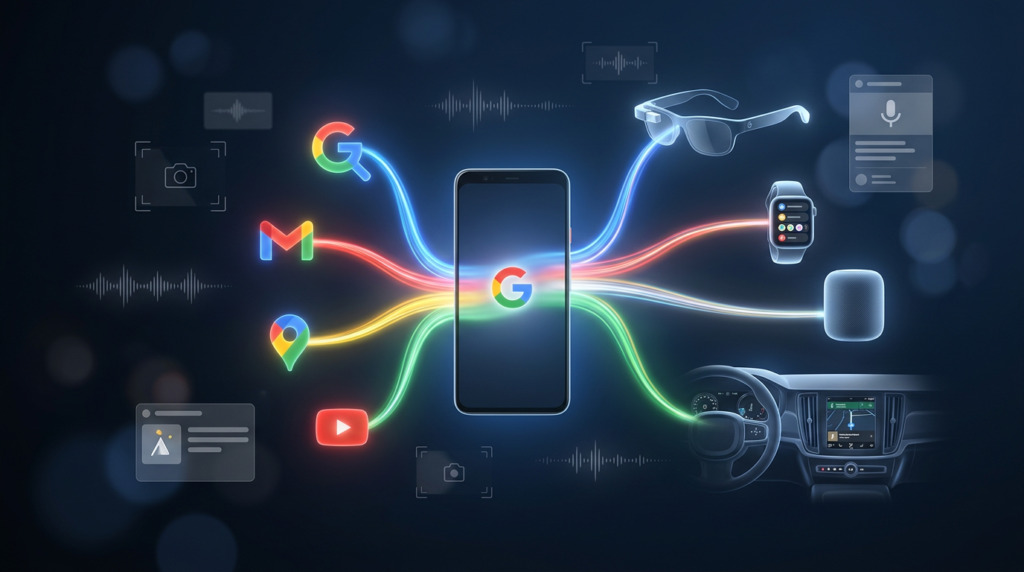
The one-billion milestone and the Pixel 11 launch tell the same story from different angles. Gemini is becoming less like a destination and more like an environment.
Google wants it present when people search, write, navigate, photograph, talk and plan. The Pixel 11 turns that ambition into something users can hold: an AI-centered phone whose camera can choose moments, whose lights show when Gemini is thinking and whose software tries to anticipate what matters next.
The strategy is powerful because it combines capable models with products people already use. It is also risky. Deep integration raises expectations. When an optional chatbot fails, users close the tab. When an assistant woven through a phone fails, it can interrupt a task, distort a memory or erode trust in the entire device.
Still, the direction is unmistakable. Google spent years answering the question, “What information do you want?” Gemini aims to answer a broader one: “What are you trying to do?” That transition—from finding pages to helping perform actions—could redefine the company as profoundly as mobile computing did.
One billion monthly users do not prove Google has built the perfect assistant. They prove the experiment is no longer small. Gemini has escaped the lab, moved into the phone and found an audience the size of a continent.
Now comes the entertaining part: watching Google convince those people that the AI everywhere button is something they actually want to press.
Sources
- Mashable — Made by Google, Gemini and the Pixel 11
- Heise — Gemini reaches one billion monthly users
- Times of Bangladesh — Gemini app surpasses one billion users
- Blockchain.News — Google Gemini app hits one billion monthly users
- WE News English — Gemini surpasses one billion monthly users
- FourWeekMBA — Why Gemini’s billion-user milestone is a distribution story
- Google — More than one billion people use the Gemini app every month
- Alphabet — Q2 2026 earnings remarks
The Kingy Brief
Get the next Kingy Brief.
Source-checked AI changes, original tests and one practical thing to try.
Free · Choose your subjects · Double opt-in · Unsubscribe anytime