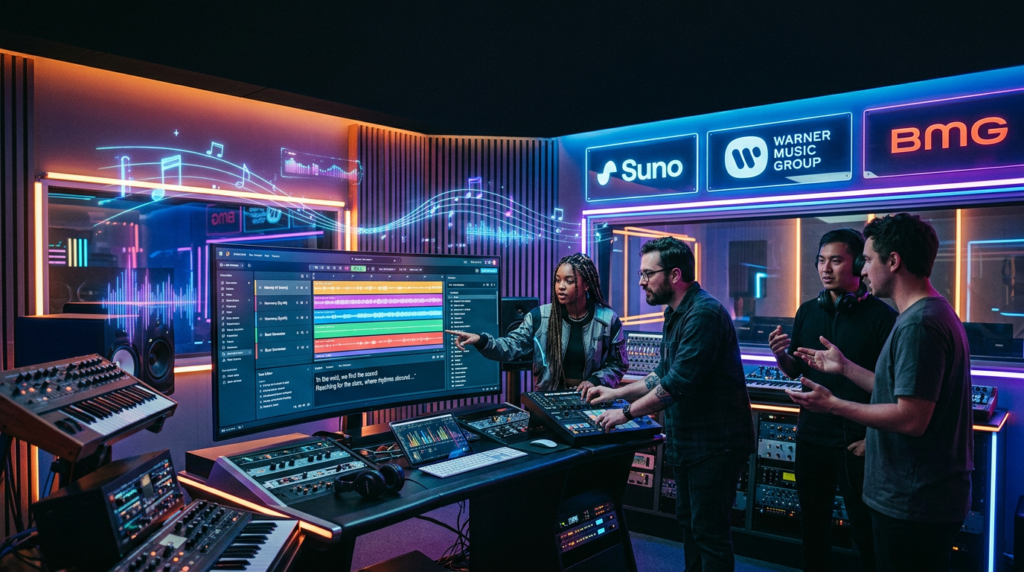
AI Music Changes Its Tune
The relationship between artificial intelligence and the music business has rarely sounded harmonious. For several years, AI companies and record labels argued over training data, copyright, compensation and whether machines should be allowed anywhere near an artist’s creative identity.
Now, Suno is attempting a dramatic key change.
The AI music company has launched a new family of music-generation models developed with licensed material from Warner Music Group, BMG and Believe. The lineup includes Suno v6, v6-Wild and v6-mini. Together, they represent more than a routine software upgrade.
They mark Suno’s attempt to build an AI music ecosystem in which record labels, distributors and participating artists contribute music with permission—and potentially share in the value created.
According to Reuters, the models will let users create new music inspired by licensed recordings from participating artists. Suno also plans to develop opt-in experiences that allow musicians to decide whether fans can interact with their work.
In other words, the company is trying to replace the industry’s most uncomfortable question—“Where did the training music come from?”—with a more constructive one: “How can everybody benefit?”
That is a much better chorus.
Three Models, Three Different Creative Personalities
Suno’s new generation does not arrive as a single, one-size-fits-all model. Instead, the company has divided it into three versions aimed at different creative needs.
The flagship, Suno v6, focuses on precision and control. It is built for musicians and creators who already know what they want and need the system to follow detailed instructions. Suno says users can revise individual lyrics, alter part of a chorus or reshape a specific section without rebuilding an entire song.
Then there is v6-Wild. As the name suggests, this model likes to wander off the musical footpath. It prioritizes experimentation, surprising combinations and ideas that the user might not have considered. That could make it useful during brainstorming sessions when a musician needs inspiration rather than obedience.
Finally, v6-mini offers faster and more efficient generation. Suno is making this version available to everyone for free, while v6 and v6-Wild are reserved for Pro and Premier subscribers.
Suno told Axios that all three models are faster, produce higher-quality music and follow instructions more effectively than their predecessors. Those remain company claims until users and independent reviewers put the models through their paces.
Still, the strategy makes sense: one model follows the map, one takes the scenic route, and one gets there quickly without charging admission.
V6 Wants to Be More Than a Song Generator
Earlier AI music systems often followed a simple formula. Type a prompt. Wait. Receive a finished track. If the chorus sounded wrong, your main option was to generate another song and hope the digital dice landed better.
Suno v6 aims to make that workflow more flexible.
According to TechCrunch, creators can use natural-language instructions to change a specific lyric, chorus or musical passage. The model can also accept text, audio, images and video as creative references.
That turns Suno from a musical vending machine into something closer to an interactive production partner. A creator could start with a visual scene, upload a rough melody, describe the intended mood and then refine individual sections through conversation.
The system can also isolate an instrument from a sample and use it to construct a new beat. For professional musicians, that could accelerate early experimentation. For beginners, it removes some of the technical barriers traditionally associated with digital audio workstations.
None of this makes musical judgment automatic. The user still needs taste, direction and enough patience to recognize when the AI has created a masterpiece—or accidentally invented elevator music for a haunted shopping mall.
But the creative process becomes more iterative, which matters.
Licensed Music Becomes Part of the Foundation
The most important change sits underneath the new features.
Suno says v6 was built from the ground up using a combination of licensed Warner Music material, Suno user data and lessons gathered from its earlier systems. Participating music from BMG, Believe and TuneCore is also being incorporated under newly negotiated agreements.
The company told TechCrunch that v6 did not use the same dataset that trained its older model generations. That distinction is central to Suno’s attempt to move past accusations that AI music companies built commercial products from copyrighted recordings without permission.
This does not mean every song controlled by Warner, BMG or Believe automatically enters the training pool. Participation depends on the relevant agreements, rights and artist choices. The word “licensed” is doing serious work here.
Suno also continues to block prompts that directly request a song imitating a known performer or an existing track, according to Axios. Users can ask for musical characteristics, moods and genres, but they should not be able to order “a new hit that sounds exactly like this living artist.”
That safeguard will require consistent enforcement. Creative users have a remarkable talent for finding loopholes, especially when the loophole comes with a catchy bass line.
Nevertheless, licensed training offers a clearer foundation than the legal fog surrounding many earlier generative-music models.
From Courtroom Opponents to Product Partners
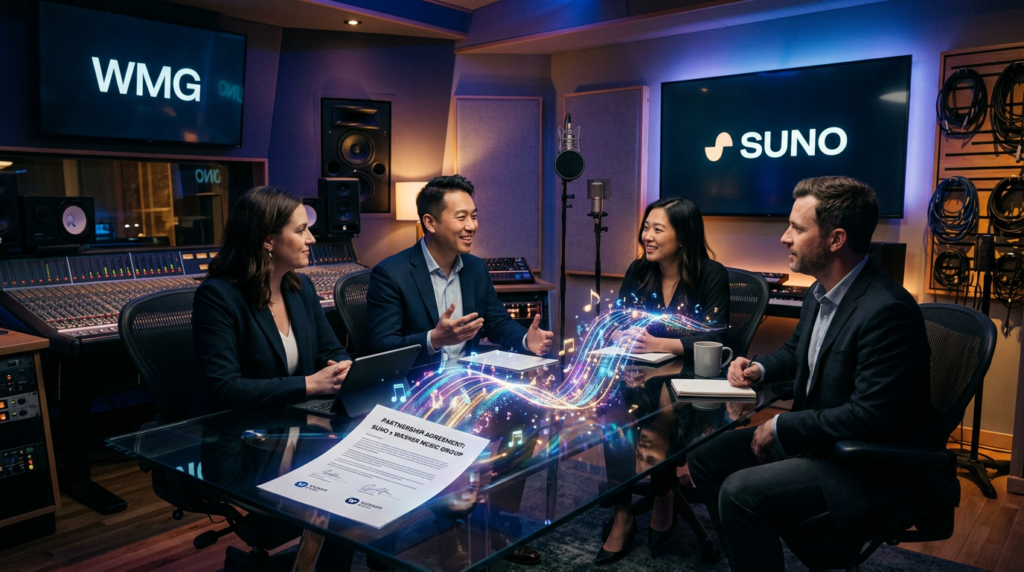
The partnership becomes more significant when viewed against Suno’s recent history.
In 2024, the Recording Industry Association of America sued Suno on behalf of major labels, including Warner Music Group, Sony Music Entertainment and Universal Music Group. The labels accused the company of using copyrighted recordings to train its models without authorization. Suno defended its technology and argued that its work qualified as fair use.
Warner and Suno eventually settled their dispute in 2025. The agreement called for new models trained on licensed content and provided mechanisms through which Warner artists could choose whether to participate.
Now those planned models have arrived.
Suno subsequently reached a licensing agreement with BMG, while Believe and TuneCore joined the expanding group of music companies contributing participating repertoire. A conflict that once looked destined to produce years of legal noise has started producing actual products.
That does not erase Suno’s remaining legal problems. TechCrunch reports that the company still faces lawsuits involving Sony, Universal, music publisher Round Hill and a group of musicians. Suno disputes the allegations against it.
Still, Warner’s progression from plaintiff to development partner demonstrates that cooperation is possible when licensing, consent and compensation enter the room.
It turns out the music industry and AI companies can share a studio. They simply needed a very detailed contract—and presumably several armies of lawyers.
Artists Can Choose—and Potentially Get Paid
Suno’s most promising idea is not a faster generator. It is the proposed opt-in system for artists.
Under this approach, musicians and rights holders could decide whether their work may support interactive AI experiences. Participating artists would receive compensation when their music contributes to eligible products or fan activities.
The exact financial structure remains undisclosed. Suno chief product officer Jack Brody confirmed to Axios that the agreements include revenue sharing with rights holders, but he did not reveal percentages, payment formulas or how revenue might flow to individual performers and songwriters.
Those details will ultimately determine whether the system becomes a meaningful income source or merely an attractive press-release sentence.
The concept, however, opens an interesting door. An artist could authorize fans to remix an official song, change selected lyrics or explore alternate production styles within controlled boundaries. The artist could gain exposure and revenue instead of watching unauthorized imitations circulate elsewhere.
Singer-songwriter Ali Gatie is already experimenting with this model by letting fans remix his music on Suno. He uses AI to turn rough concepts into demos before completing songs with human producers.
That example presents AI as a creative instrument rather than a replacement musician. The machine helps sketch the idea. People still decide what deserves to become a song.
Believe and TuneCore Make a Striking Reversal
Believe’s involvement gives the launch another layer of significance.
In April 2026, Believe blocked the distribution of music created with Suno’s existing models. Just months later, the company has entered a strategic partnership covering participating music from Believe and TuneCore artists and labels.
Under the Believe–Suno agreement, artists can choose whether to join forthcoming licensed AI products. Those who consent are expected to receive compensation, rights protections and access to Suno’s newer transparency measures.
Music created by artists through Suno’s industry-partner model can also become eligible for distribution through Believe and TuneCore. That creates a potentially valuable bridge between generating a track and releasing it commercially.
The reversal suggests Suno changed enough of its model, safeguards or business terms to bring a former critic into the tent. It also shows that music companies are not rejecting generative AI outright. They want systems that recognize consent, attribution and economic participation.
Believe operates in more than 50 countries and works extensively with independent musicians. TuneCore gives self-releasing artists access to global distribution. Their involvement could prevent licensed AI music from becoming an opportunity reserved only for superstars with stadium tours and teams of attorneys.
Independent artists need bargaining power too. Preferably before the robot drummer starts demanding a solo.
The Older Suno Models Are Heading for Retirement
Suno plans to retire its previous model generations and move users onto the v6 family.
That decision matters because the company is not simply adding a licensed option beside its controversial older technology. It is trying to rebuild the platform around its new agreements and product rules.
Retiring old models could reduce confusion over which systems use licensed material. It may also help Suno enforce consistent safeguards, watermarking and download restrictions across the platform.
However, migration always creates friction. Some users may prefer the sound or behavior of an earlier model. Songs built through old workflows may become harder to reproduce. Creators will need clear information about deadlines, project compatibility and whether older tracks remain editable after the models disappear.
Suno has also announced plans to watermark AI-generated songs and has introduced download limits tied to account tiers. The company argues that these measures can discourage bulk exports, streaming fraud and low-effort uploads to distribution services.
No safeguard will eliminate abuse completely. Watermarks can face removal attempts, while bad actors can spread generated music through multiple accounts and platforms.
Even so, product design can make abuse harder and responsible participation easier. That is a more realistic target than pretending one magical filter will solve every copyright and fraud problem before lunch.
Suno Has Become Too Large to Ignore
The debate carries weight because Suno is no longer an experimental website used by a tiny group of curious technologists.
The company says more than 100 million people have tried its platform. Axios reports that Suno has over two million paying subscribers and exceeded $300 million in annual recurring revenue by February 2026.
Suno also completed a funding round that valued the company at approximately $5.4 billion. Reuters reported that the round brought in more than $400 million, while PitchBook data cited by TechCrunch places Suno’s total funding above $819 million.
Those figures show why record labels cannot treat AI-generated music as a passing novelty. Millions of people now possess tools that can create vocals, instrumentation and complete arrangements from ordinary language.
The scale creates opportunity. Aspiring musicians can test ideas without owning expensive equipment. Video creators can produce custom soundtracks. Professional artists can generate demos, explore arrangements or break through the dreaded blank-page phase.
Scale also magnifies every unresolved problem. A questionable output made by 50 users remains small. The same weakness across 100 million accounts becomes an industry-level headache wearing headphones.
Licensed models therefore represent both a creative upgrade and a risk-management strategy. Suno needs the music business, and increasingly, parts of the music business appear willing to work with Suno.
The Remix Could Become a New Kind of Product
The next stage may blur the boundary between listening to music and participating in it.
Traditional recordings are fixed. Fans press play and hear the same performance. Licensed AI experiences could make certain songs interactive. A listener might legally change the production style, rewrite an approved section or create a personalized version while keeping the activity inside a platform governed by artist consent.
Spotify is reportedly developing its own AI-powered remixing technology for licensed music. That suggests Suno is not chasing an isolated curiosity. Major platforms see participatory music as a possible new category.
The commercial possibilities are substantial. Artists could release interactive versions of singles. Fans could buy authorized remix tools. Labels could create competitions, personalized releases and new merchandise-like experiences built around music rather than physical products.
The danger is dilution. If thousands of variations flood streaming platforms, the original artist could disappear beneath an avalanche of automated remixes. Clear labeling, distribution rules and sensible limits will become essential.
Suno’s planned opt-in structure offers a plausible starting point because it gives artists the ability to say yes, no or perhaps “yes, but please do not turn my ballad into polka metal.”
Control matters. So does compensation. Without both, interactive music risks becoming another method of extracting value from artists while calling it innovation.
A Blueprint, Not a Finished Peace Treaty

Suno’s v6 launch does not settle the argument over AI music. Lawsuits remain active. Compensation formulas remain private. Independent experts still need to test the models’ quality, safeguards and resistance to imitation prompts.
But the launch does show what a more workable future could look like.
Instead of scraping first and negotiating later, AI companies can license music. Instead of forcing every artist into the same system, platforms can require opt-in participation. Instead of treating musicians as obstacles, developers can involve them in creating products and sharing revenue.
Warner Music, BMG, Believe and TuneCore are not supporting generative AI out of pure technological enthusiasm. They see commercial possibilities. Suno, meanwhile, needs legitimate access to the creative material that makes powerful music models possible.
That mutual dependence may prove more effective than years of courtroom combat.
For users, the immediate result is a collection of faster and more controllable tools. For artists, the larger promise is a chance to influence how their work enters the generative era—and possibly earn money when it does.
Suno still has plenty to prove. Yet this release moves AI music in a healthier direction: away from unrestricted imitation and toward licensed experimentation.
The music industry has not declared peace with AI. But for the first time in a while, both sides appear to be playing in the same key.
Sources
- Reuters: Suno releases new AI music models in partnership with Warner Music and BMG
- Axios: Suno launches v6 AI music models with Warner Music Group and BMG
- TechCrunch: Suno replaces its models with a new generation trained on licensed music
- Believe: Believe and Suno announce strategic partnership
- Suno official website
The Kingy Brief
Get The Kingy Brief.
AI changes, original tests and one practical thing to try. Fridays at 09:00 Vancouver time.
Free · Double opt-in · Unsubscribe anytime
Sign up for The Kingy Brief on Beehiiv.
Signup help and newsletter schedule
Signup form provided by Beehiiv. After submitting, check your inbox for "Confirm your subscription to The Kingy Brief" and open its confirmation link. Check Spam or Promotions if you cannot find it.
Fridays at 09:00 Vancouver time: source-checked AI changes, original tests and one practical thing to try. We skip a week when there is not enough verified material. Free. Unsubscribe anytime.