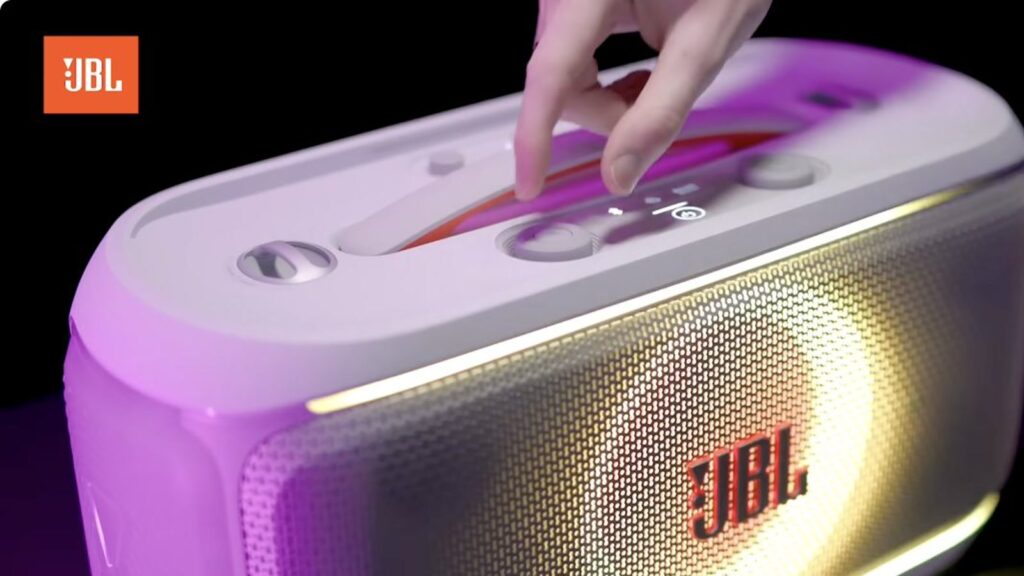
Quick verdict: The JBL PartyBox On-The-Go 2 Plus is a strong all-in-one karaoke speaker for people who want EasySing vocal reduction, an included wireless microphone, adjustable echo, and a portable-ish 100 W party system. Kingy’s filmed demo shows the controls, a brief listening sample, the light-ring interface, and a real indoor karaoke performance. It also exposes the main catch: maximum EasySing reduction can leave a faint “ghost” of the original singer. At 14.22 lb, this is better for short transfers than long shoulder carries.
Best for
- Casual karaoke at home or small events
- Buyers who want a microphone included
- Short car-to-venue or room-to-room moves
- People who value vocal controls more than maximum output
Skip it if
- You need studio-clean instrumental separation
- You want a light speaker for long walks
- You need EasySing while multiple speakers are linked
- You require independently measured battery, SPL, or water-resistance results
What Kingy actually tested
This review is based on Kingy’s 4:55 filmed evaluation and retained campaign material, checked against JBL’s current product page, owner’s manual, and spec sheet. The footage includes a brief music sample, hands-on EasySing and echo-control shots, the lightshow, and a short indoor karaoke performance using the wireless microphone.
The video supports comments about the controls, the product’s weight as a handling consideration, the light-ring interface, and occasional residual lead vocal at maximum reduction. It does not document lab measurements, a timed battery rundown, water exposure, a feedback-suppression stress test, wireless-range testing, Auracast pairing, app testing, or a direct A/B comparison with another PartyBox. Claims about those areas below are identified as JBL specifications, not Kingy test results.
Strongest benefits
- A complete karaoke package: the US package includes one EasySing wireless microphone, a mic holder, a shoulder strap, and the speaker.
- Useful vocal control: JBL provides normal playback plus three active reduction amounts, and Kingy’s video shows the microphone control in use.
- Clear physical feedback: the front light ring doubles as a settings gauge, which Kingy found easier to follow than menu-diving during a song.
- Modern party-speaker hardware: 100 W RMS, Bluetooth 5.4, IPX4 splash resistance, Auracast support, a replaceable battery, and a 3.5 mm aux input.
- Real use is shown: the final 25 seconds document an indoor singer using the wireless microphone with the speaker present.
EasySing: useful, fast, and imperfect
EasySing is the reason to choose the Plus model. JBL says the speaker reduces the lead vocal from ordinary music in real time while retaining backing vocals. Its current US page describes 25%, 50%, and 100% vocal reduction, plus normal playback. JBL’s owner’s manual labels four stepped “vocal levels” differently, so the safest buying takeaway is simple: you get four fixed positions rather than a studio-style continuous stem mixer.
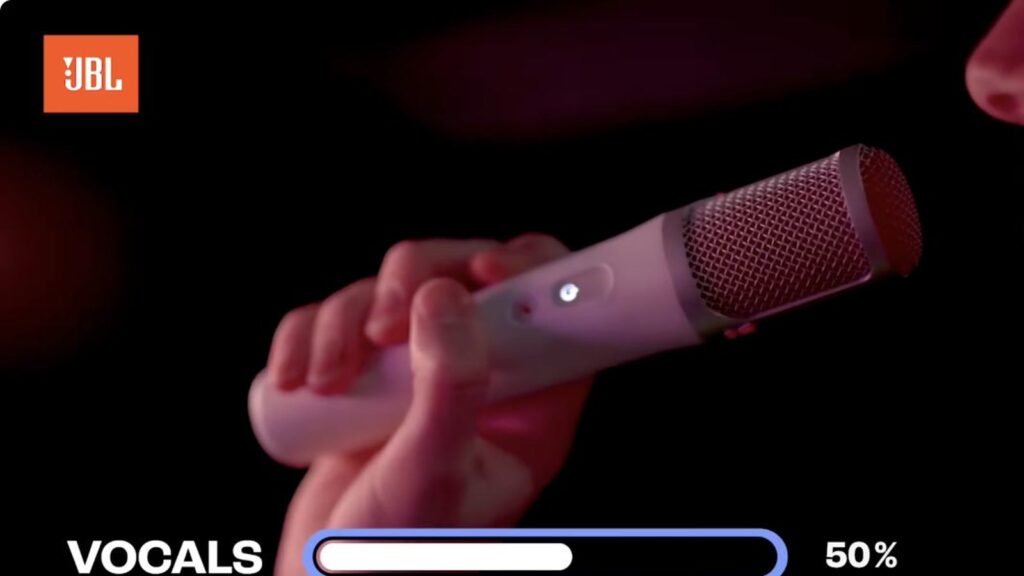
The limitation is audible enough that it belongs near the top of the review. At 2:01, Kingy reports that the original singer can sometimes ghost underneath the music even at maximum reduction. That residue became much less distracting once someone sang over it, but EasySing is not a replacement for a professionally produced karaoke track. Results will vary with the song and mix.
Two other limits matter. First, JBL’s manual says vocal removal is disabled during multi-speaker connection, so you cannot treat EasySing and an Auracast speaker chain as simultaneous features. Second, JBL specifies non-commercial use only and warns that copyright permissions and streaming-service terms may apply. Vocal reduction does not grant performance or music-use rights.
Echo, vocal enhancement, and the disputed pitch-shift claim
At 2:26, the video shows the speaker’s echo control and describes it as helpful for smoothing a casual vocal. The footage does not include a level-matched dry/wet comparison, so that is a reviewer impression rather than a measured result. JBL also advertises natural reverb, high-pitch enhancement, and feedback suppression. The video does not contain the deliberate feedback stress test that the old article claimed.
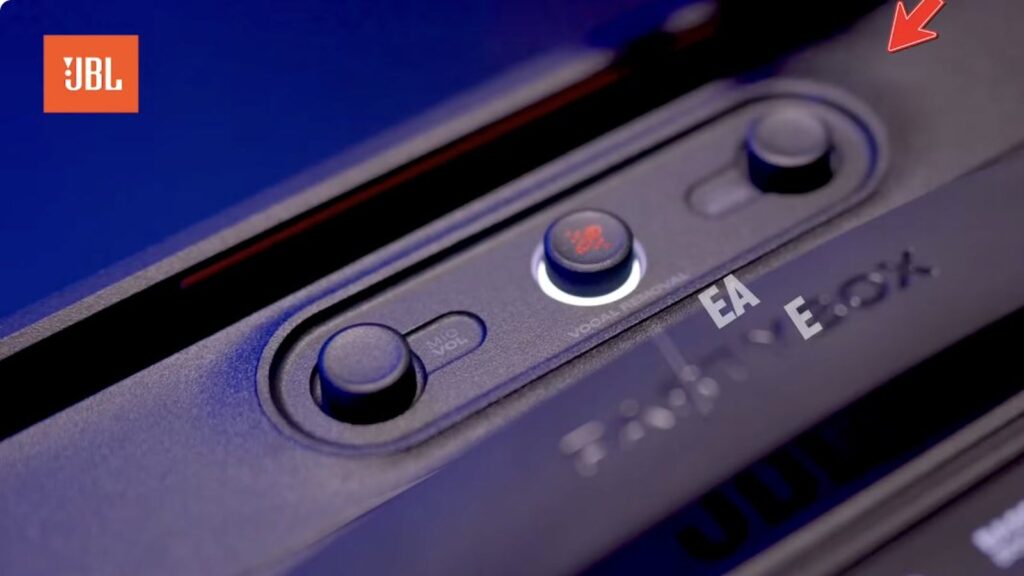
The video discusses pitch shifting from 2:46, but it does not show a performed before/after test. More importantly, JBL’s current Plus product page and owner’s manual do not document Smart Key Change for this model. JBL does document Smart Key Change for the non-Plus PartyBox On-The-Go 2. Because the retained evidence conflicts, do not buy the Plus on the assumption that song-key transposition is included unless JBL confirms it for your region and firmware.
Sound, size, and portability
JBL rates the PartyBox On-The-Go 2 Plus at 100 W RMS, using one 5.25-inch woofer and two 0.75-inch dome tweeters. The published frequency response is 40 Hz–20 kHz (-6 dB), with a signal-to-noise ratio above 80 dB. Kingy describes the filmed sample at 1:05 as punchy and clear, but the clip is too short and production-processed to support the old article’s claims about distortion, compression, or performance at specified volume levels.
The speaker measures 501 × 258 × 221 mm (19.72 × 10.16 × 8.70 inches) and weighs 6.45 kg (14.22 lb). Kingy’s “luggable, not wearable” line is fair: the centered handle and shoulder strap help with short transfers, but the video does not document a long carry. JBL describes the handle as better balanced and the strap as wider and thicker; those are manufacturer claims, not a side-by-side test in this review.
Battery, durability, and connectivity
JBL claims up to 15 hours of speaker playback, with actual runtime varying by volume and audio content. The 34 Wh JBL Battery 200 is replaceable, a 10-minute charge is advertised to add about 80 minutes, and a full charge takes under 3.5 hours with the speaker off. Kingy’s video does not include a timed rundown, so this review cannot confirm those figures. The included microphone is rated for up to 10 hours and charges through its own USB-C port; JBL says its charging cable is not supplied.
IPX4 means splash resistance, not waterproofing. Keep the port covers closed, let the charging area dry before connecting AC power, and do not immerse the speaker. Connectivity includes Bluetooth 5.4, 3.5 mm aux input, mic input, USB playback in supported regions, stereo pairing with a second On-The-Go 2 Plus, and multi-speaker linking through Auracast. Remember that EasySing vocal removal is disabled while speakers are linked.
JBL’s US page says the JBL One app controls music, EQ, and the lightshow. Its EasySing copy refers elsewhere to the JBL PartyBox app, while the owner’s manual uses JBL ONE. Those official references are inconsistent, so this review does not claim app-based EasySing control without a current device-and-app test.
Drawbacks
- Heavy for its name: 14.22 lb is manageable for short moves, not carefree all-day carrying.
- Song-dependent separation: maximum EasySing reduction can leave residual lead vocal.
- No EasySing in a multi-speaker link: JBL disables vocal removal when speakers are connected together.
- Different battery ceilings: JBL rates the mic for up to 10 hours and the speaker for up to 15.
- Official app language conflicts: JBL’s current materials do not give a single clear app-control story for EasySing.
- Pitch shifting is not verified for the Plus: the video discusses it, but current official Plus documentation does not support the claim.
Current price and value
Checked October 7, 2026, JBL US displayed the PartyBox On-The-Go 2 Plus at a US$349.95 sale price against a US$419.95 reference price and marked it in stock. The Canadian store showed C$499.98 when checked July 26; recheck your local store because promotions, prices and availability can change.
At that price, the value depends on whether EasySing and the included microphone matter. If karaoke is occasional and you only want 100 W JBL sound, compare the non-Plus model at the price available in your market. If vocal reduction is the reason you are shopping, the Plus is the more direct package.
What should you compare it with?
PartyBox On-The-Go 2 (non-Plus)
The non-Plus model shares the published 100 W rating, 40 Hz–20 kHz response, 15-hour maximum battery claim, IPX4 rating, Bluetooth 5.4, Auracast support, and nearly the same weight. It officially includes Smart Key Change but not the Plus model’s built-in EasySing vocal-reduction system. Choose the Plus for EasySing. Choose the non-Plus only if EasySing is unimportant and you find a meaningfully lower current price.
PartyBox Encore 2
The Encore 2 is another 100 W, IPX4, roughly 14 lb JBL option with an included wireless mic. Its upright body and guitar input make it a better fit when floor space or live-instrument input matters. The On-The-Go 2 Plus remains the clearer choice when built-in EasySing vocal reduction is the priority.
PartyBox Club 120
The Club 120 moves up to 160 W and adds dual mic/guitar inputs, but it weighs 24.4 lb, carries a 12-hour maximum battery claim, and does not list a microphone in the box. It is the stronger-output choice for buyers who can tolerate almost twice the weight. The On-The-Go 2 Plus is the more self-contained karaoke package.
Video timestamps
- 0:33 — weight and “luggable, not wearable” portability verdict
- 1:05 — subjective sound impression and brief sample
- 1:25 — EasySing explanation
- 1:45 — microphone control and vocal-level graphic
- 2:01 — residual “ghost vocal” limitation
- 2:26 — echo control
- 2:46 — pitch-shift discussion, not a performed test
- 3:20 — front light-ring interface
- 3:44 — lightshow and battery narration
- 4:01 — final verdict
- 4:30 — indoor karaoke performance

FAQs
Does EasySing completely remove the singer?
Not reliably. JBL advertises up to 100% vocal reduction, but Kingy reported occasional residual lead vocal at maximum reduction. The result depends on the recording, and it is not studio-grade stem separation.
Can EasySing work while multiple speakers are connected?
No. JBL’s owner’s manual says vocal removal is disabled during multi-speaker connection.
Does the Plus include Smart Key Change?
Current official Plus documentation does not confirm it. Kingy’s video discusses pitch shifting, but does not show a performed test. JBL documents Smart Key Change for the non-Plus On-The-Go 2. Confirm this feature with JBL for your region before buying.
How long does the battery last?
JBL claims up to 15 hours for the speaker, depending on volume and content, and up to 10 hours for the wireless microphone. Kingy did not run a timed battery test in the retained video.
Is the battery replaceable?
Yes. JBL identifies the replaceable pack as the JBL Battery 200. Spare batteries are sold separately.
Is the PartyBox On-The-Go 2 Plus waterproof?
No. It is rated IPX4 for splash resistance. Do not immerse it, and keep the port covers closed and charging area dry.
Which app controls it?
JBL’s US page identifies JBL One for music, EQ, and lightshow control. Its EasySing copy and owner’s manual use inconsistent app naming, so this review does not promise app-based EasySing control without a current hands-on check.
Can it be used for paid karaoke events?
JBL specifies non-commercial use for EasySing and says users are responsible for copyright permissions and streaming-service terms. Check the music licences required in your jurisdiction and venue.
Final verdict
Buy the JBL PartyBox On-The-Go 2 Plus for a self-contained, portable-ish karaoke setup with an included mic and a useful vocal-reduction feature. The physical controls and light-ring feedback are easy to understand in the filmed demo, and the indoor performance shows the package doing its intended job. Skip it if you need perfect instrumental tracks, long-distance portability, or EasySing across a linked speaker system.
Primary sources
- Kingy AI hands-on video
- JBL US product page and specifications
- JBL owner’s manual
- Harman/JBL launch announcement
The Kingy Brief
Get The Kingy Brief.
AI changes, original tests and one practical thing to try. Fridays at 09:00 Vancouver time.
Free · Double opt-in · Unsubscribe anytime
Sign up for The Kingy Brief on Beehiiv.
Signup help and newsletter schedule
Signup form provided by Beehiiv. After submitting, check your inbox for "Confirm your subscription to The Kingy Brief" and open its confirmation link. Check Spam or Promotions if you cannot find it.
Fridays at 09:00 Vancouver time: source-checked AI changes, original tests and one practical thing to try. We skip a week when there is not enough verified material. Free. Unsubscribe anytime.