Skip to content

Proof Lab 01 · Clips generated August 26, 2026 · Later review completed September 20, 2026 Pacific

Veo 3.1 Lite vs Seedance 2.0 Fast vs Kling 3.0 Standard: Exact Text Video Tested (Results + Cost)

The short answer

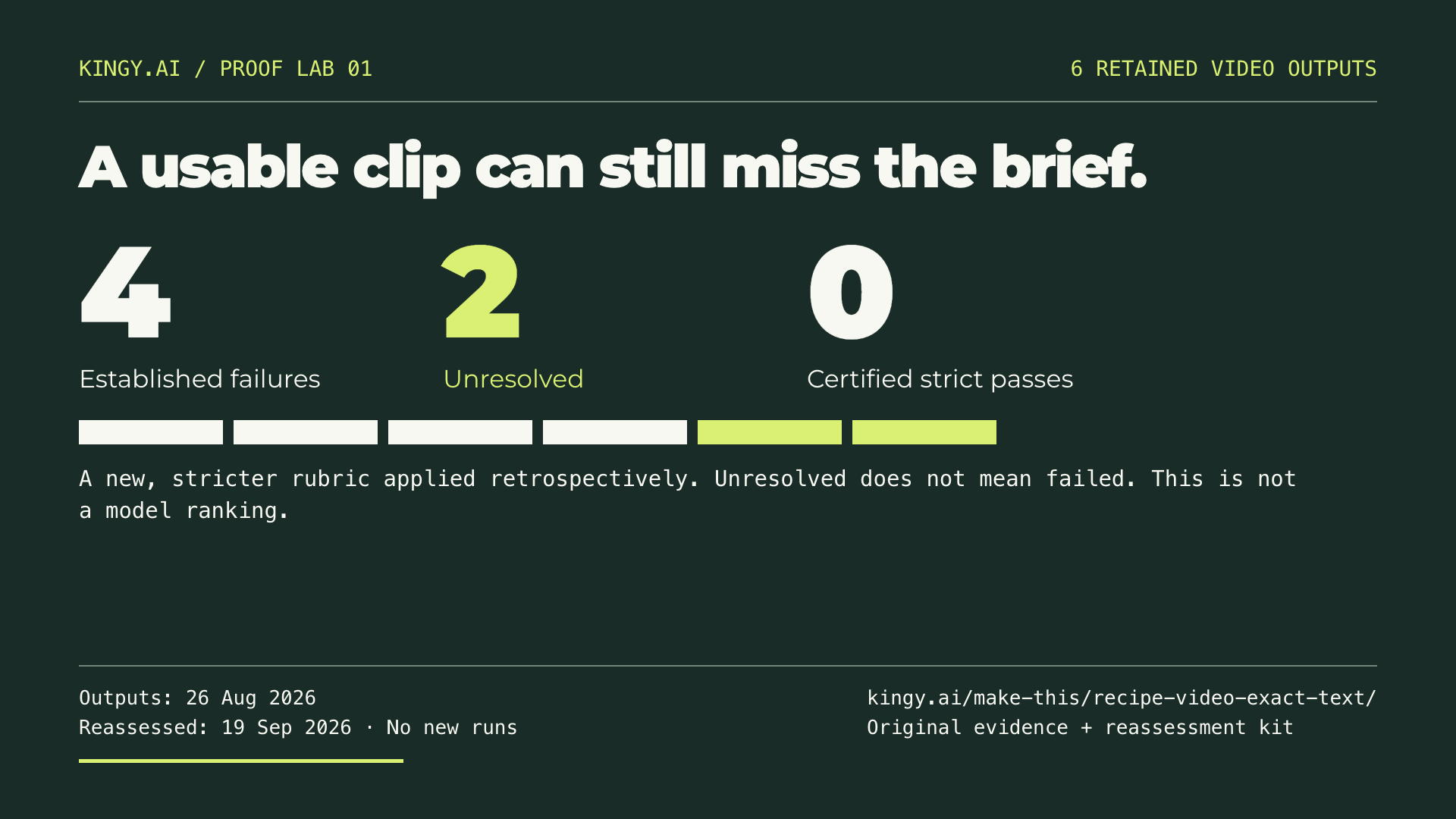
The later PL-01-v1 review found failures in all six August 26 clips. No clear model winner emerged; the clips missed movement, framing or corner-mark requirements. If exact text and marks matter, inspect the whole clip before using it. The six historical provider charges totaled US$1.81332; editing, hardware and electricity costs were not recorded. Use the downloads to inspect the original clips and repeat the local checks before paying for a new run.

This was a retrospective review using a stricter rule written after generation, not a fresh test or a full every-frame text check.

Results at a glance

These findings use the later PL-01-v1 rules. The original usability labels remain unchanged. Read the September 20 review or inspect the earlier September 19 assessment.

Six August 26 clips · findings after the September 20 review · not a general model ranking
AttemptWhat went wrongScope of the finding
Veo 3.1 Lite 1Card width changed from 1040→1011 px; 0.9721×.Failed: card shrank.
Veo 3.1 Lite 2Same-border endpoint measurements gave 1.0567–1.0712×.Failed the later 1.10× movement minimum; this does not establish failure under the wider original range.
Seedance 2.0 Fast 1Card width changed from 1040→1092 px; 1.0500×.Failed the later 1.10× minimum.
Seedance 2.0 Fast 2The final vertical card edges were outside the image.Failed: cropped card.
Kling 3.0 Standard 1Card width changed from 1040→1092 px; 1.0500×.Failed the later 1.10× minimum.
Kling 3.0 Standard 2Required corner crosses lost parts at frame 8 (0.3333s) and frame 32 (1.3333s).Failed: corner-mark preservation and geometry across time.

The original brief allowed a 5–25% increase in apparent sign size. The later rubric narrowed that to 10–20%. Keep those rules separate when comparing the findings.

Watch an original output, then inspect a failure frame

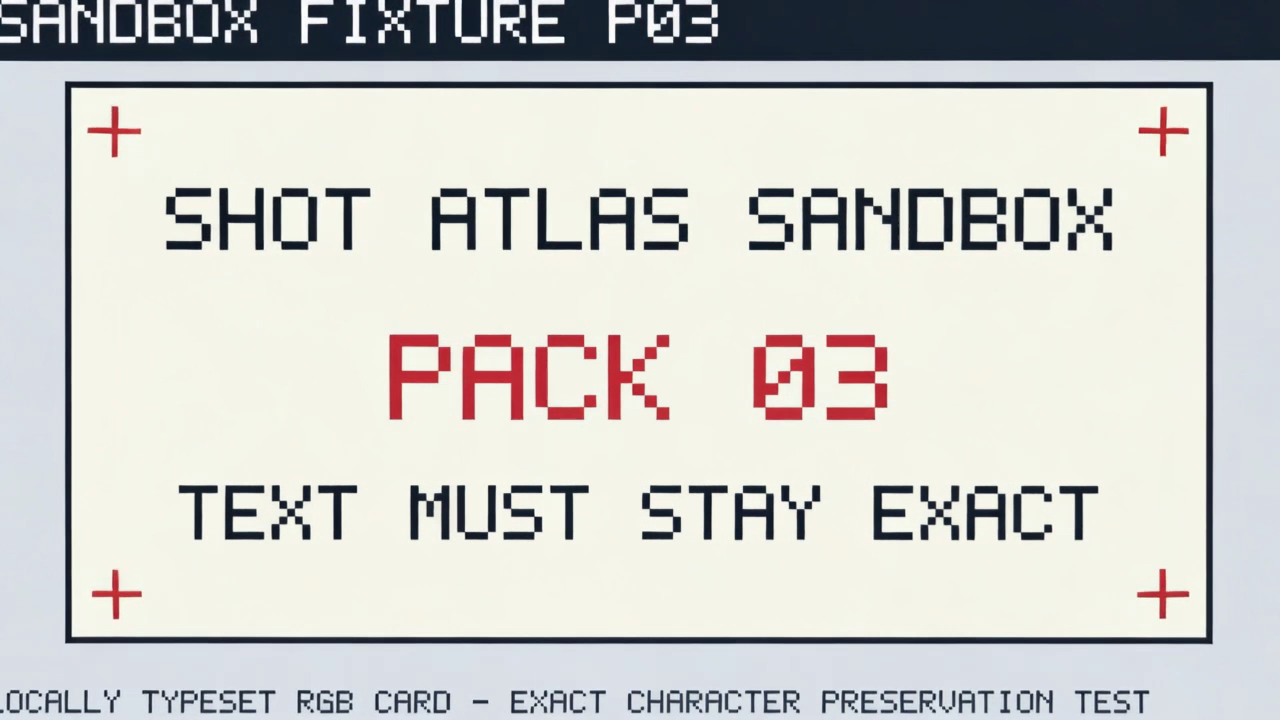
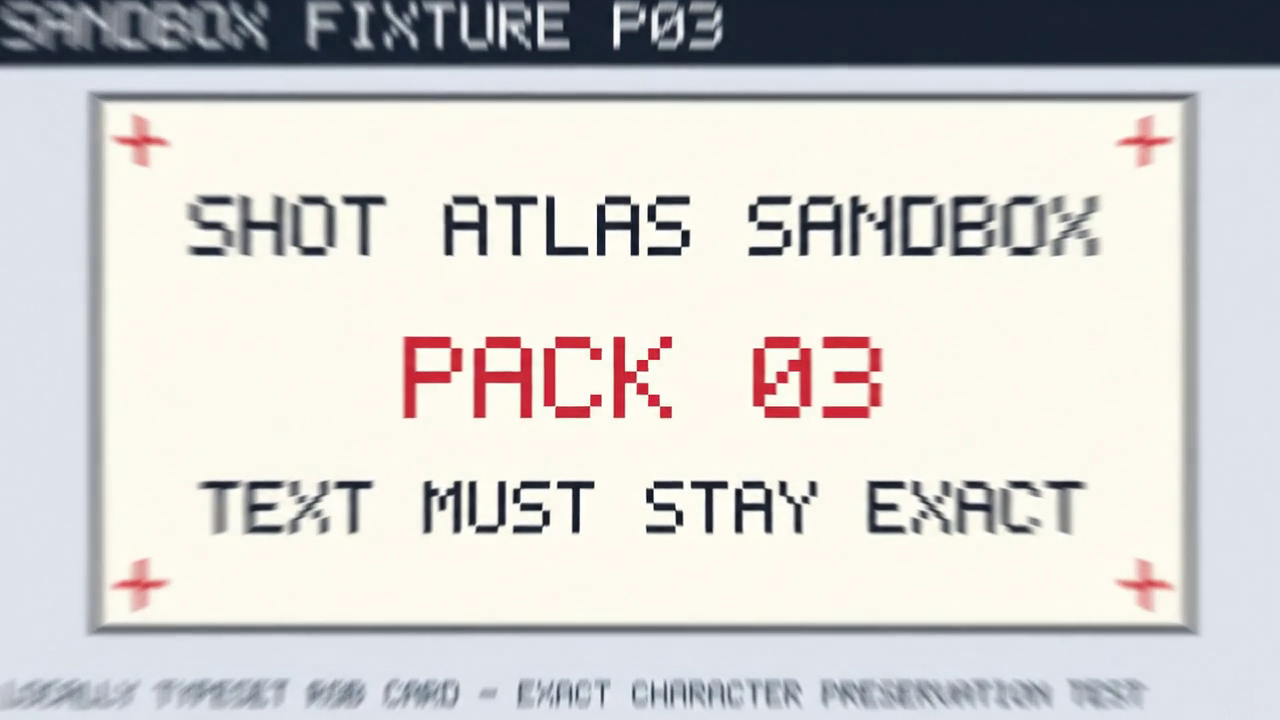
This player shows Veo 3.1 Lite, attempt 1. The image below shows Kling 3.0 Standard, attempt 2. They are different attempts.

Original generated output. View the recorded limitations before reproducing it.
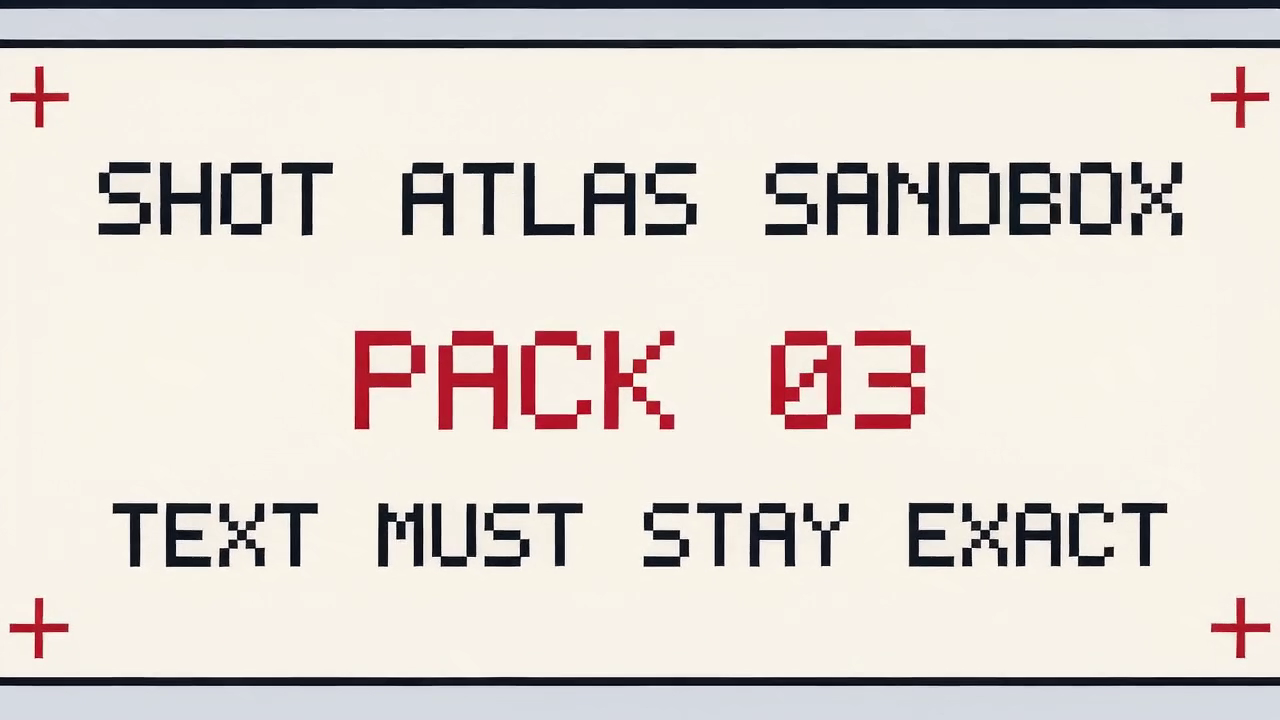
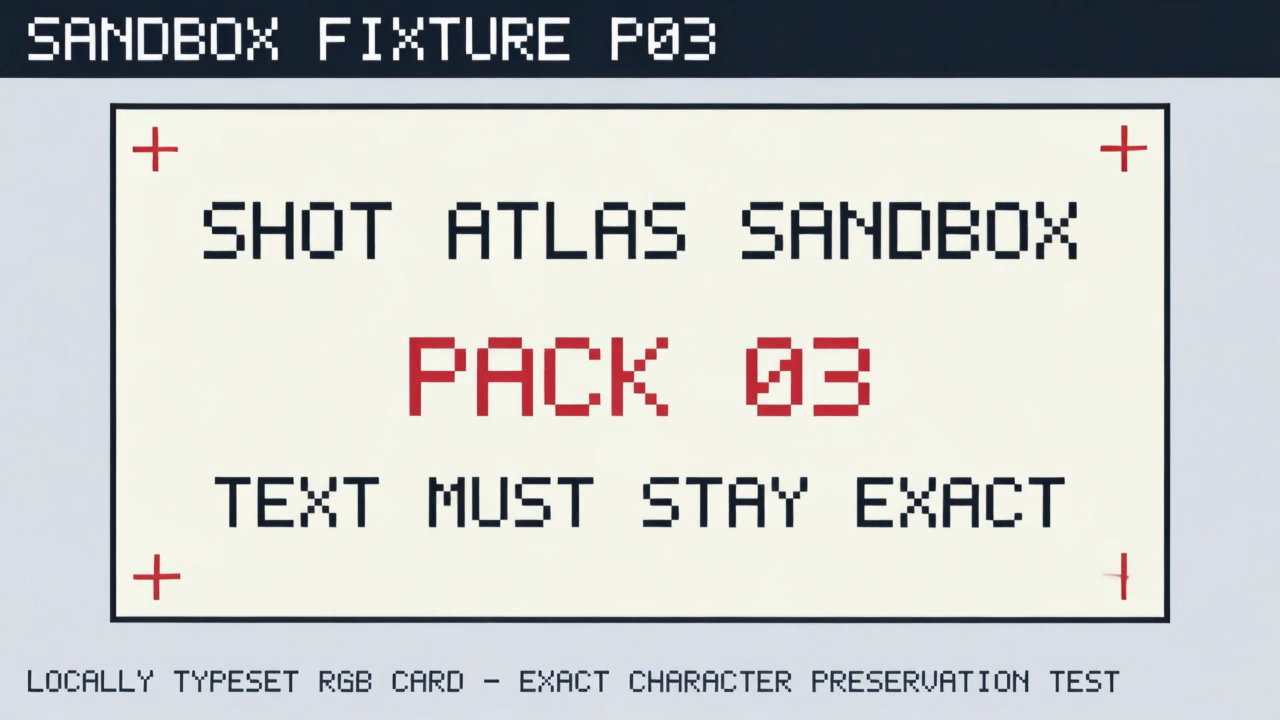
Kling attempt 2 at frame 8, 0.3333 seconds: the upper-left red cross has lost its right arm
Frame 8, at 0.3333 seconds. The upper-left corner mark is partly erased. Open the image for the native 1280 × 720 frame.

What we did

We reviewed six videos generated on August 26, 2026: two attempts each from Veo 3.1 Lite, Seedance 2.0 Fast and Kling 3.0 Standard. The original task used one procedural text card and asked for a continuous four-second shot, a slow 15 percent push-in, exact readable text and preserved corner marks.

The September 19 reassessment checked file properties and frame geometry under the later PL-01-v1 rubric. It found four failures and left two cases unresolved. The September 20 review examined those two clips and documented failures in both.

We used the existing files, checked measurements and inspected cited frames. We made no new generation or paid model calls. These were AI-assisted negative findings, not independent human judgments or a complete every-frame text acceptance test.

Try it yourself

Start with the original clips

Download all six clips, input, prompt and ledger ↓

Download the dated addendum kit for the six cited native frames, inspection script, measurements and checksums. It checks the original pack's ten file hashes and makes no provider requests. It requires installed Python, NumPy, Pillow, FFmpeg and ffprobe.

Download the September 19 reassessment kit to reproduce the earlier analysis with already-installed Node.js and FFmpeg.

To adapt the prompt or inspect exact route settings, open the original recipe controls below. Those controls prepare instructions; they do not generate video or prove an adaptation works. Check provider access, current prices and terms before paying for a new run.

How we tested and what this can't tell you

The records keep their original wording and dates. The September 19 report and sharing video describe four failures and two unresolved cases. The later addendum documents failures in those two cases under the later rubric. Neither record changes the original usability labels or charges.

Original recipe: prompt, settings, attempts, charges, rights and adaptation controls

Kingy / Make This

← All outcomes

Animate a slow push-in on an exact text card

Use the original text card and prompt to reproduce a short animation, with every output and historical charge available to inspect.

Original generated output. View the recorded limitations before reproducing it.

Output generated August 26, 2026; evidence reviewed 2026-09-13. Marked usable in an agent-assisted screen; some outputs deviate from the original brief. This is not a strict-compliance pass. Inspect the full cohort and assessment notes before reproducing it.

Selected model attempts
2
Selected model charges
$0.2400 USD
Human editing
Not recorded

kingy tested

Open the actual result ↗

Reproduce the outcome

  1. Download the complete task pack and inspect the original MP4s and input.png.
  2. Check the provider’s current route, pricing and terms before choosing to generate anything.
  3. Attach only the unchanged first frame, then copy the exact prompt and settings for a baseline.
  4. Preserve every original output and charge. Log active editing separately; do not replace failed outputs in the ledger.
  5. Inspect the result against the original brief. For an adaptation, use your own matching first frame and treat the result as a new, untested run.
Original input and exact settings
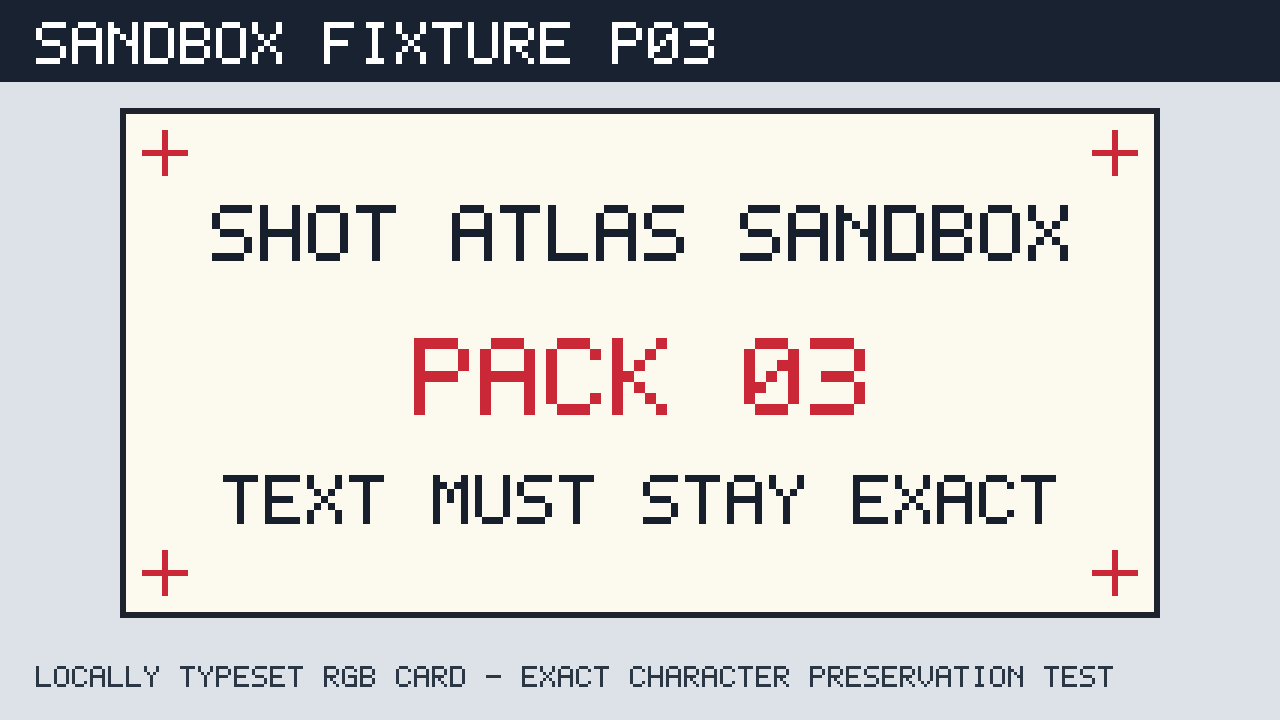
  • Original procedural first frame: video-exact-text-input.png (download below).
  • The exact prompt below and the recorded requested seed; only one image was supplied.
aspect_ratio
16:9
duration_seconds
4
first_frame_count
1
generate_audio
resolution
720p
seed
271828
prompt_enhancement
off
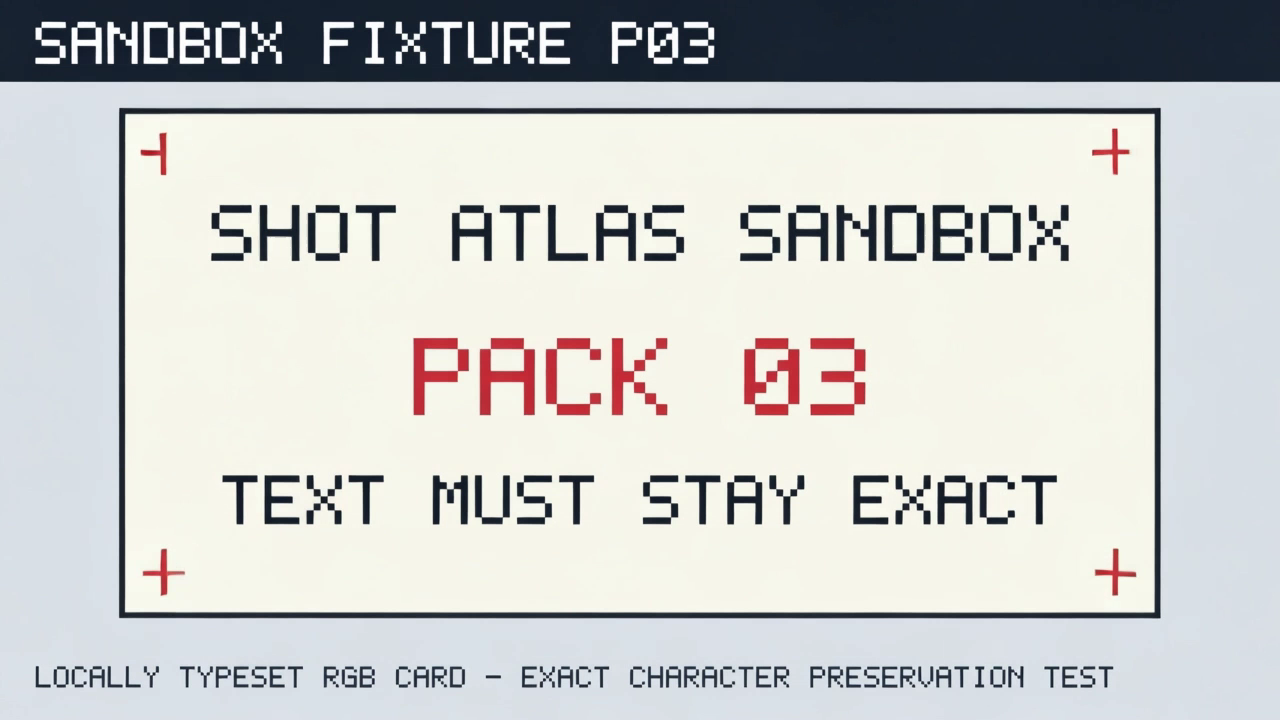
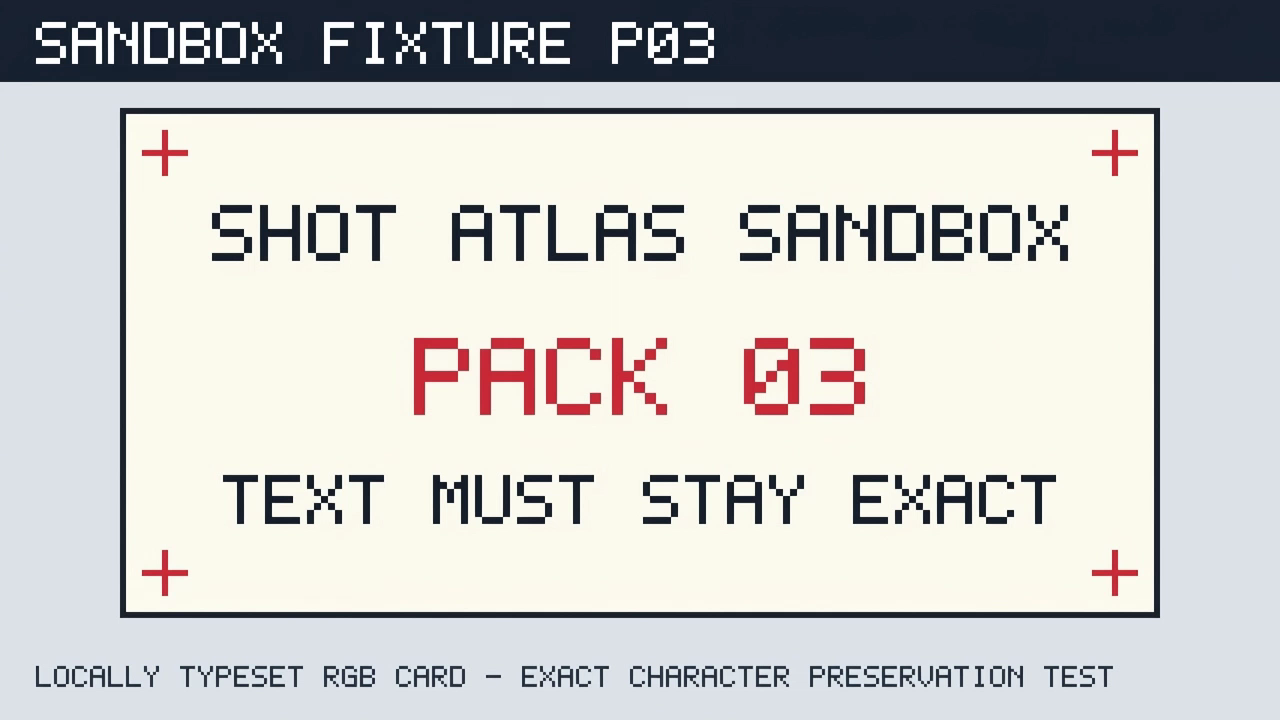
Original first-frame input PNG
Original prompt
A continuous four-second shot of the exact test sign shown. Perform a slow 15 percent camera push-in. Keep every character in SHOT ATLAS SANDBOX, PACK 03, and TEXT MUST STAY EXACT unchanged, correctly spelled, fully readable and geometrically stable in every frame. Preserve all corner fiducials. No cut, no added text, no crop.

Attribution and rights: Kingy provides its original procedural input cards, exact instructions and retained AI results for inspection and reproduction. Model/provider terms govern generated outputs. No claim of exclusive ownership or unrestricted third-party rights is made.

Sources & limits

Kingy AI Video Test Lab: retained controlled generations

Reviewed video inputs, result hashes and evidence boundaries

OpenRouter terms: model terms govern output rights

OpenRouter public video model catalog: availability checked September 13, 2026

Record checked 2026-09-13.

Two retained attempts per model for this task. This is too small to establish population-level reliability or a universal model ranking.

Marked usable means the historical agent-assisted screen marked the clip usable. It does not mean independent human approval or measured strict compliance with the original brief.

Historical provider charges include every attempt, including rejected outputs. They are not current prices.

Active human editing and repair time, hardware costs and electricity were not recorded; unknown values are not zero.

The first frame is a procedural non-human test card, not a camera photograph or production advertisement.

The three recorded routes were publicly listed by OpenRouter on September 13, 2026, with the same canonical model identifiers as these historical runs. Account-specific access, current prices and fresh generation were not verified. Re-running a route or seed may not recreate identical pixels; seed behavior was not independently established.

The first Kling output was marked usable by the retained screen even though its note says the motion brief was not met. That usability decision is preserved and is not strict push-in compliance.

Some clips marked usable show late softness or cropping of non-target fixture headings. No new every-frame OCR or geometric-motion measurement was performed.
Help improve this tool

Did this help you finish?

About Make This. Your self-reported outcome goes to Kingy’s private review queue; it is not an independently verified reproduction.

Your experience with Make This
What happened?

All Apps & Labs · Local Lab evidence · Check tool changes

Saved settings stay on this device. Shared links omit private text and actual spending. Reports enter a private review queue. No generated claims or automatic publication.

Contribute a reproducible result

Include the outcome, exact versions, prompts and settings, every attempt, failures, charges if recorded and active repair time. Supply files you own or have permission to share, an attribution and a public evidence link. Remove personal data, tokens and private prompts. Reports are reviewed before any public use; submitting does not publish your work.

Prepare a reproducibility report
September 20 review: full findings, measurements and limits

Proof Lab 01 addendum: the last frame hid damaged corner marks

Review completed September 20, 2026 Pacific (September 21 UTC). Addendum published . We reviewed the two unresolved clips from the September 19 reassessment using their retained August 26 files. Both now have documented failure evidence under the later retrospective PL-01-v1 rubric. Together with the four earlier findings, that makes six documented retrospective failures and zero certified strict passes.

The original brief allowed a 5–25% increase in apparent sign size. The September 19 rubric tightened that to 10–20%; it was created after these clips were generated. Both require the corner marks to survive. The original six usability labels and the September 19 report below remain unchanged. Its four-failure/two-unresolved count, and the older sharing video, record the state before this addendum.

New evidence from retained clips; no fresh generation
Retained attemptFindingRetrospective verdict
Veo 3.1 Lite, attempt 2Same-border endpoint measurements give 1.0567–1.0712× initial width, below the later 1.10× minimum.Fail: requested movement under PL-01-v1
Kling 3.0 Standard, attempt 2Parts of required corner crosses disappear at frame 8 (0.3333s) and frame 32 (1.3333s), then appear intact in the last frame.Fail: fiducial preservation and temporal geometry

Kling 2: inspect the middle of the clip

The endpoint size was close to the movement cutoff, but it did not establish acceptance. The prompt says to preserve all corner fiducials. At frame 8, the upper-left cross loses its right arm. At frame 32, the lower-right cross loses most of its horizontal arm. Both marks remain inside the uncropped card.

Kling attempt 2 at frame 8, 0.3333 seconds: the upper-left red cross has lost its right arm
Frame 8, at 0.3333 seconds. The upper-left corner mark is partly erased. Open the image for the native 1280 × 720 frame.
Kling attempt 2 at frame 32, 1.3333 seconds: the lower-right red cross has lost most of its horizontal arm
Frame 32, at 1.3333 seconds. The lower-right mark is damaged even though the card remains fully in frame.
Compare the intact first and last frames
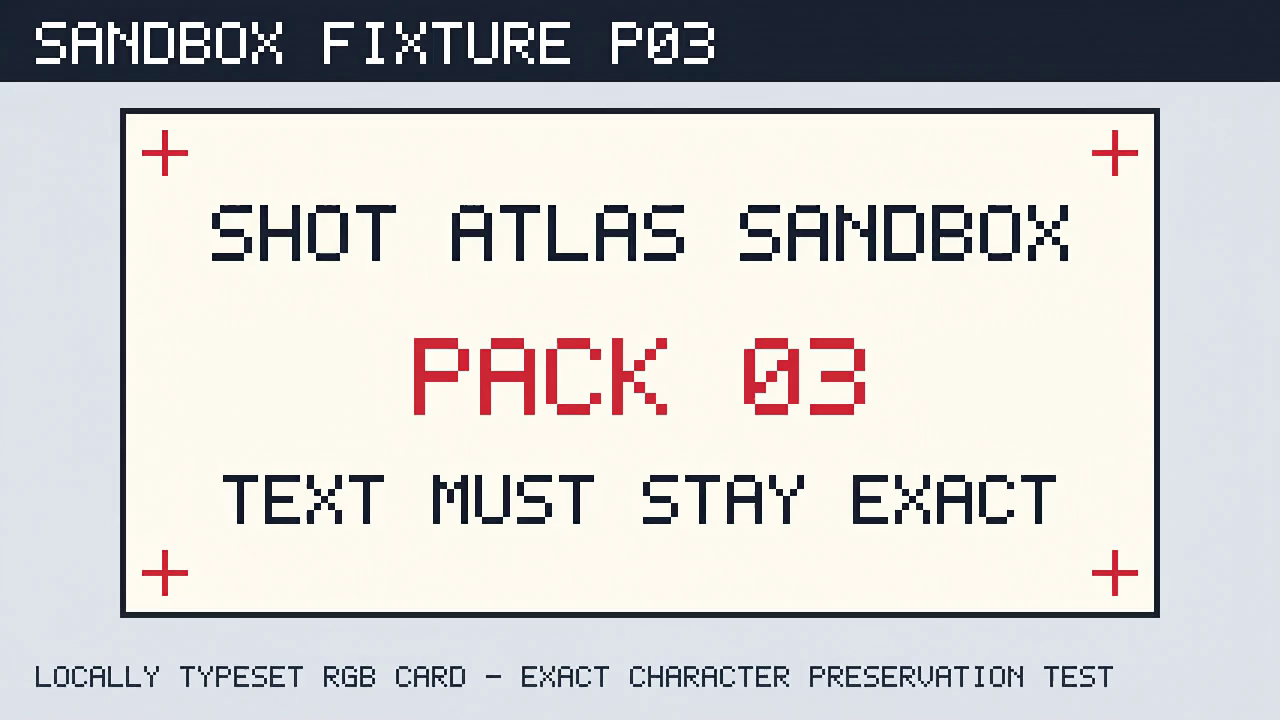
Kling attempt 2 first frame, showing four complete red corner crosses
Frame 0, at 0 seconds. All four crosses are complete.
Kling attempt 2 final frame, showing complete corner crosses again
Frame 96, at 4 seconds. The crosses appear intact again. Checking these endpoints alone missed the damage in between.

The earlier detector found red pixels in every corner on every frame. That checked for red regions, not the preservation of each full cross. We do not claim a spelling error or certify every-frame text accuracy.

Veo 2: a supplemental border measurement

Late blur defeated the original fixed dark-border detector. Its missing result remains preserved as null. The new diagnostic measures the same outer card edges at four blank-band scanlines across nine brightness thresholds. Of 36 endpoint pairs, 24 find both edges and 12 remain null. The initial width is 1040px; valid final widths range from 1099 to 1114px, or 1.0567–1.0712×.

This method was added after viewing the blur. It is a retrospective sensitivity check, not a preregistered measurement. Even an illustrative allowance of 8px per final edge and 2px per initial edge gives 1.0907×, below the later 1.10× minimum; that allowance is not a confidence interval. This does not establish a movement failure under the wider original 5–25% range. Inspect the native first and last frames, and the full method below.

Evidence, costs and limits

These are AI-assisted negative findings from retained files, with a second AI check of the cited frames and an independent rerun of the measurements. They are not two human judgments, full every-frame text acceptance, a current model comparison or a reliability estimate. The prospective PL-01-v1 study remains unrun.

The six historical provider charges remain US$1.81332. No new generation or paid model call was made for this review. Human repair time, hardware cost and electricity were not measured. Cost per strict accepted result remains undefined because no strict pass has been certified.

Download the dated addendum evidence kit: six native frames, the versioned Python inspection script, complete frame measurements, original detector results, verdicts, findings and checksums. Use it with the unchanged original six-attempt recipe pack. The script checks that pack’s ten file hashes and makes no network or provider requests; it requires installed Python, NumPy, Pillow, FFmpeg and ffprobe.

For your next video, check required marks throughout the clip. A complete mark in the first and last frames can still be damaged in between.

September 19 reassessment: original findings and methods

Proof Lab 01: usable is not the same as passing the brief

Retrospective reassessment: September 19, 2026. These six videos were generated on August 26. No new generation or paid run was performed. Their original usability labels and charge ledger remain unchanged.

All six retained files match their published checksums, decode without a reported error, and meet the new protocol’s 720p, 16:9 and four-second duration requirement. The stricter movement test requires a final card width 1.10–1.20 times its initial width, with the required text and corner marks retained throughout.

Retrospective PL-01-v1 assessment; not a model ranking
Retained attemptEndpoint findingStatus
Veo 3.1 Lite 11040→1011 px; 0.9721×Fail: card shrinks
Veo 3.1 Lite 2Late blur defeats the fixed border detector; marker-span proxy 1.0568×Needs review; no strict pass
Seedance 2.0 Fast 11040→1092 px; 1.0500×Fail: below 1.10×
Seedance 2.0 Fast 2Final vertical card edges are outside the imageFail: cropped card
Kling 3.0 Standard 11040→1092 px; 1.0500×Fail: below 1.10×
Kling 3.0 Standard 21040→1147 px; 1.1029×, near the cutoffNeeds review; endpoint geometry alone is insufficient

Four established failures, two unresolved, zero certified strict passes. Zero certified does not mean both unresolved clips fail. This was an AI-assisted endpoint inspection plus deterministic file and frame-geometry analysis, not independent human judging or an every-frame text/temporal acceptance test. The new retrospective rubric must not be presented as the original grading rule.

The input has enough margin for a centered 15% card enlargement without clipping the required card or corner marks. The separate outer fixture heading/footer are not among the three required text lines. Missing detector results remain unknown; marker spacing does not silently replace card width.

The six historical recorded charges total $1.81332. This is not current pricing or new spending. Human repair time and hardware/electricity costs were not recorded. With no certified strict pass, cost per accepted job is unavailable—not zero.

Inspect and reproduce without generating new video

Download the reassessment kit: methods, prospective protocol, media metadata, per-frame geometry and the local analysis script. Use it with the unchanged original six-attempt recipe pack. The kit makes no provider requests; it requires already-installed Node.js and FFmpeg. The original MP4s, prompt, input and charges remain in the original pack.

Retained Seedance 2.0 Fast attempt 2 endpoint, with the vertical edges of the card outside the frame
One observed framing failure: Seedance attempt 2. A failure example is not a population-level reliability estimate.

A later reviewer can resolve the two uncertain cases from the existing files. Any fresh paid generation remains a separate, unrun study. Report a reproduction through the existing recipe feedback control above; a submitted report is not independent validation until reviewed.

Earlier sharing video, transcript and limits

Share the result with its limits

24-second silent explainer. August 26 outputs, September 19 reassessment; not fresh generation.

Download the MP4 · Download the evidence card · Attribution and text transcript

Four established failures, two unresolved, zero certified strict passes. Full every-frame acceptance and independent review remain unfinished. Keep those limits with any excerpt, and link to the methods and retained evidence.

FAQ

Did any clip pass the later PL-01-v1 review?

No strict pass has been certified. The September 20 review documented failures in the two previously unresolved clips, bringing the total to six retrospective failures. This does not change their original usability labels or establish a general model ranking.

Was the later movement rule the original grading rule?

No. The original brief allowed a 5–25% increase in apparent sign size. The later PL-01-v1 rubric narrowed that to 10–20% after generation. Veo attempt 2’s movement finding applies to the later rule, not the wider original range.

Why can checking the first and last frames miss a failure?

Kling 3.0 Standard attempt 2 showed complete corner crosses in its first and last frames. Parts disappeared at frame 8 and frame 32. The earlier red-region detector did not check preservation of each full cross.

What did the six original attempts cost?

The six historical provider charges totaled US$1.81332. No new generation or paid model call was made for the review. Human repair time, hardware and electricity were not measured, so total production cost and cost per strict accepted result are unavailable.

Can I reproduce the checks without generating new video?

Yes. Use the unchanged original six-attempt recipe pack with the dated addendum kit or the September 19 reassessment kit. Their local analysis makes no provider requests. The addendum requires installed Python, NumPy, Pillow, FFmpeg and ffprobe; the earlier kit requires Node.js and FFmpeg.