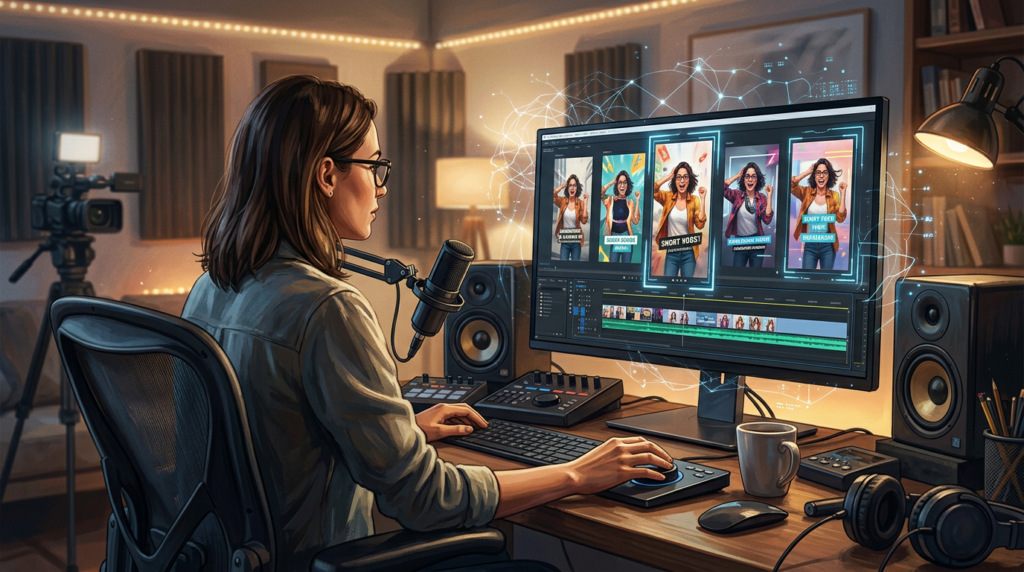
A Small Price With Creative Possibilities
Creative ideas have a habit of arriving in groups. Unfortunately, production budgets rarely show the same enthusiasm.
The Biological Computing Co., or TBC, has launched Mischief 1, an image-to-video model with a starting price of US$0.005 per generated second. Available through fal and OpenRouter, the product offers creators another way to turn still images into short moving scenes.
Its unusual ingredient belongs to the research process. TBC says experiments with living neurons helped inform the software improvements behind the model.
That combination gives the launch two interesting angles: affordable creative experimentation and an unconventional approach to AI engineering.
For a creator, the immediate attraction is straightforward. Lower generation costs could make it easier to try another camera movement, explore another mood, or rescue an idea that needs several attempts.
The science invites curiosity. The price invites arithmetic.
Together, they make Mischief 1 worth examining—particularly for people who want to explore video concepts without watching every experiment nibble through their budget.
What Actually Launched—and When
TBC’s launch announcement appeared on PR Newswire on October 30, 2026, at 8:00 a.m. Eastern Time. With daylight saving time still in effect, that converts to October 30 at 8:00 p.m. Philippine time.
The release explicitly announced public availability that day.
This places the announcement inside the roundup’s coverage window. It also distinguishes the event from a research preview or a promise of future access.
The product has marketplace listings that creators and developers can inspect. OpenRouter separately identifies October 30 as its release date.
That public access matters because it opens the door to practical evaluation. People can move beyond a company’s selected examples and examine whether a tool suits their own work.
A launch, however, establishes availability rather than universal usefulness.
Different projects ask different things of a video model. A quiet atmospheric shot and a complicated character interaction can present very different challenges.
The next stage is finding where Mischief fits comfortably into actual creative routines.
What Half a Cent Per Second Buys
OpenRouter lists Mischief 1 from $0.005 per second at 480p and $0.01 per second at 720p.
At those rates, a five-second generation costs $0.025 at 480p or $0.05 at 720p. One hundred five-second generations would therefore cost $2.50 or $5 respectively, assuming those listed rates apply throughout.
That arithmetic describes generation charges. It does not establish the complete cost of producing a finished video.
Starting images, editing, sound, additional processing, and a creator’s time may add to the total.
Still, the starting numbers explain the interest. Someone testing a short visual concept could explore several variations without committing a large generation budget.
The useful comparison is the cost of obtaining something worth keeping.
Imagine ten inexpensive attempts producing one suitable shot. The effective generation cost of that usable shot includes all ten attempts.
That is why a low headline price deserves attention alongside output quality. The bargain becomes meaningful when the results help a creator move forward.
Image-to-Video Gives the Idea a Starting Point
Mischief’s marketplace listings describe an image-to-video workflow. A starting image helps establish the scene, while a text prompt guides the intended movement.
OpenRouter lists 480p and 720p output, three- and five-second clips, and a 16:9 aspect ratio.
Those specifications suggest a tool suited to short visual experiments. They also establish boundaries that creators should consider before planning a project around it.
A landscape video can work as a concept shot or part of a wider edit. A vertical social campaign would require separate planning for framing and delivery.
The starting image deserves particular care.
If a creator wants a gentle movement around a product, the source picture should already communicate the desired composition. Clear lighting and an intentional background can make the request easier to judge.
A useful prompt can then concentrate on one main action.
For example, a creator might request a slow camera push toward a stationary object. That offers a cleaner experiment than asking an entire scene to perform an elaborate five-second circus.
Where the Living Neurons Enter the Story

TBC describes its research process in three broad stages: translating computational challenges into electrical signals, measuring neuronal responses, and turning useful findings into software.
The company says the resulting model runs on standard AI hardware.
That distinction helps explain the phrase “neuron-derived.” Living cells participate in discovery. Customers use the software developed from that work.
TBC’s website describes a lightweight layer added after a base model’s training, positioned around its diffusion transformer blocks. The company says this adds less than 0.1% to the underlying model’s parameter count.
For a general reader, the central idea is accessible: researchers study a biological system, then translate something they learn into an engineering method.
The interesting question concerns what survives that translation.
Can the measured behavior lead to improvements that remain useful across different scenes and workloads? Can other researchers reproduce the findings?
Those questions give the story substance beyond its memorable terminology. Biology supplies the research direction. The software still has to demonstrate its practical value.
The Earlier Research Offers Useful Context
TBC’s Neural Dynamics Adapter technical post provides a more concrete account of its approach.
That work examined Oasis, an interactive Minecraft world-generation model. Researchers described recording activity from cultured neural networks, converting responses into numerical representations, and incorporating a small adapter into the digital model.
The post reports improvements in maintaining visual structure during extended generation.
It also identifies limitations. The experiments focused on a Minecraft environment, and results depended on generation settings. TBC acknowledged that wider testing remained necessary.
This research offers context for understanding the company’s engineering direction.
However, Oasis and Mischief 1 are different systems. Results from one should not automatically become performance evidence for the other.
The useful takeaway concerns the method: biological measurements can inform a software modification that researchers then evaluate against alternatives.
For readers, that is more informative than treating “neuron-derived” as a magical quality stamp.
A promising research approach earns credibility through clear methods, appropriate comparisons, and results that hold up beyond an initial demonstration.
The Speed Claim Needs One Clear Qualification
TBC says Mischief 1 builds on Wan 2.2 and generates video five times faster than its base model while matching its quality.
That is a company-reported comparison. The launch material reviewed does not provide an independently controlled benchmark with enough detail to establish how the result transfers across workloads.
The qualification belongs here, clearly stated once.
For creators, speed has value when it shortens the journey from an idea to usable footage. Generation time forms one part of that journey. Uploading, waiting in a queue, reviewing outputs, revising prompts, and editing also matter.
A practical comparison would hold the starting image, resolution, duration, and hardware conditions as consistent as possible.
It would then assess both turnaround time and the proportion of acceptable clips.
A model that returns an attractive result quickly could improve creative momentum. A fast output requiring repeated repair might deliver less benefit.
The question is therefore concrete: how efficiently does the tool help someone complete the shot they intended?
Cheaper Attempts Could Change the Creative Mood
A low generation price can influence how people approach an idea.
Consider a hypothetical creator developing an atmospheric opening for a video essay. The first version feels too dramatic. The second lacks movement. The third finally finds the right balance.
When each attempt feels expensive, experimentation can become cautious. A creator may accept an adequate result simply to avoid another charge.
Lower costs could loosen that pressure.
Someone might test a warmer color palette, a quieter movement, or a different starting composition. Small variations can reveal an option that was difficult to describe before seeing it.
This is an interpretation of the potential workflow benefit, rather than a measured outcome for Mischief users.
It also has a practical limit. Endless generations can become their own distraction.
A useful approach gives each attempt a purpose. Change one meaningful element, compare the result, and keep a brief record of what improved.
Cheap experimentation works best when curiosity brings a little discipline along for the ride.
Small Teams Could Use It to Explain an Idea
Short generated clips could help a small team communicate a visual direction before committing to a larger production.
Imagine a local café discussing a promotional video. A still image establishes the setting. A brief animated version suggests how a camera might move through the scene.
That sample could help colleagues discuss pacing and atmosphere.
The same principle could apply to an independent filmmaker exploring a mood, a designer presenting a concept, or a creator assembling an early storyboard.
These are possible uses, rather than verified Mischief customer outcomes.
The value would come from making a conversation more specific. People can respond to a visible movement more easily than to a vague instruction such as “make it feel cinematic.”
An early concept also benefits from honest presentation. A team should understand whether it is seeing a rough visualization or finished material.
That clarity leaves room for experimentation while keeping expectations manageable. A useful draft helps people make the next decision.
Developers Get a Different Set of Questions
Marketplace access also makes Mischief relevant to developers who want video generation inside an application.
The fal listing includes a playground, an API section, and an input for a source image. That provides a visible route for exploring how the model could fit into a software workflow.
For a developer, low generation prices create possibilities. They also create arithmetic that needs testing at scale.
A hypothetical application offering several variations per user must account for all those generations. Failed requests, retries, and unused outputs can affect the economics.
Product design matters just as much.
Users need to understand what to upload, what movement to request, and how long a result might take. Clear progress messages can make waiting less confusing.
A developer should begin with a narrow use case and measure it carefully. For example, an application might offer a limited set of simple animation options rather than an unrestricted promise.
The strongest product would make a specific task easy to understand and reasonably dependable.
A Sensible First Test Starts Small
A creator evaluating Mischief could begin with a handful of images representing the work they actually do.
One might contain a landscape. Another could feature a product. A third might include a person performing a simple action.
Keeping the initial prompts modest makes the results easier to assess.
The reviewer can then examine whether the subject remains recognizable, the motion follows the request, and distracting changes appear across frames.
Recording the number of attempts matters. So does noting how much editing a selected clip needs afterward.
This creates a practical picture of usefulness without pretending that one attractive example proves everything.
A creator can also compare different types of movement. Perhaps a tool handles a subtle camera shift more reliably than a busy interaction. Finding that boundary can be valuable.
A model does not need to excel at every shot to earn a place in a workflow. It needs a task it performs well enough to justify using it again.
Affordable Experimentation Is the Strongest Immediate Story
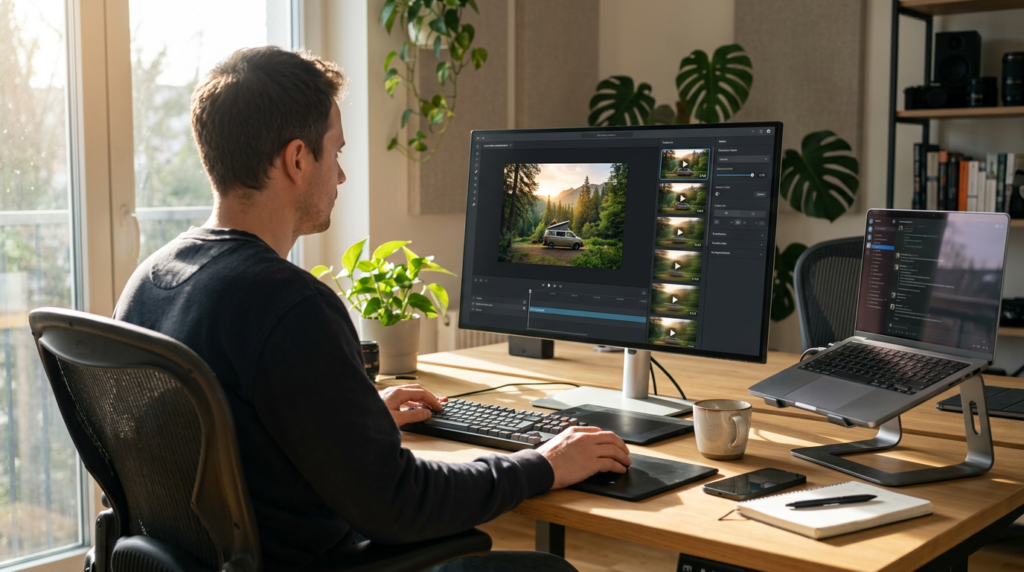
Mischief 1 brings together an unusual research approach and a price that makes short video experiments easier to contemplate.
The biological angle deserves thoughtful examination. TBC has described how neuronal research informs its software, and its earlier technical work provides material that researchers can question and investigate.
For creators, the immediate opportunity is simpler: explore whether inexpensive short clips help an idea take shape.
The launch does not settle every question about quality, speed, or the wider potential of biological computing. It does provide a public product that people can evaluate.
That is a useful step.
The most convincing evidence will emerge from ordinary projects: a concept that becomes clearer, a shot that works after a few deliberate attempts, or an application that delivers a worthwhile feature within its budget.
For now, Mischief offers an interesting invitation to experiment.
The next good idea may still require patience, judgment, and editing. At least the first few seconds come with a smaller price tag.
Sources
- TBC: Official Mischief 1 launch announcement — Primary source for the launch, Wan 2.2 foundation, and company-reported speed and quality claims.
- PR Newswire: TBC launches its neuron-derived AI video model — Distribution of TBC’s announcement, including its publication timestamp; this is company material rather than independent reporting.
- OpenRouter: Mischief 1 pricing and specifications — Marketplace information covering resolution-dependent prices, clip lengths, aspect ratio, and inputs.
- fal: Mischief 1 image-to-video model — Marketplace listing with a playground and API access.
- TBC: Technology and product overview — The company’s explanation of its discovery process and software deployment approach.
- TBC: Bridging Biology and Silicon—The Neural Dynamics Adapter — Primary technical background on the separate Oasis experiments, methods, and limitations.
- Unite.AI: TBC Launches Mischief, a Neuron-Derived AI Video Model Built on Wan 2.2 — Additional coverage discussing the product and evidence limitations; it does not supply an independent performance benchmark.
The Kingy Brief
Get The Kingy Brief.
AI changes, original tests and one practical thing to try. Fridays at 09:00 Vancouver time.
Free · Double opt-in · Unsubscribe anytime
Sign up for The Kingy Brief on Beehiiv.
Signup help and newsletter schedule
Signup form provided by Beehiiv. After submitting, check your inbox for "Confirm your subscription to The Kingy Brief" and open its confirmation link. Check Spam or Promotions if you cannot find it.
Fridays at 09:00 Vancouver time: source-checked AI changes, original tests and one practical thing to try. We skip a week when there is not enough verified material. Free. Unsubscribe anytime.