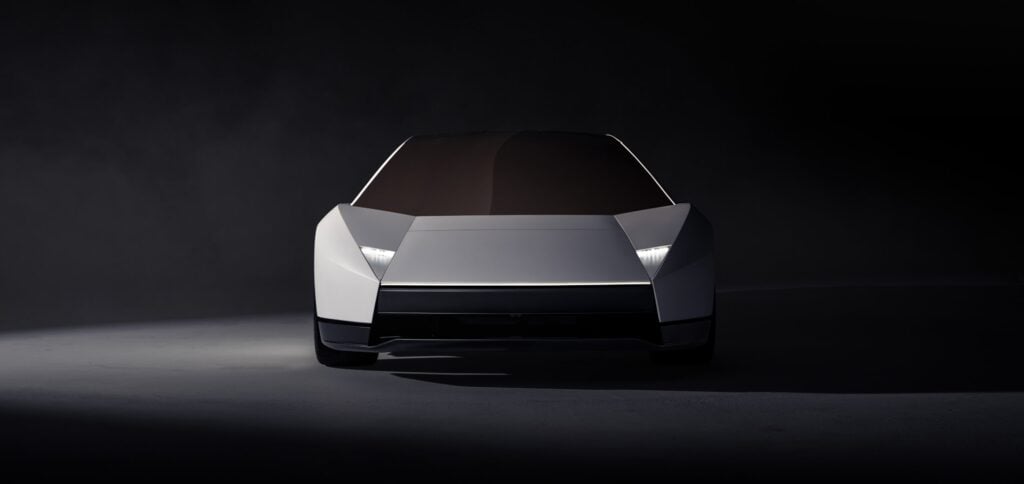
Tesla’s new Roadster has made the jump from a long-delayed sports-car promise to a demonstration of fan suction, rocket-style thrust and controlled aerial stunts. At its October 15, 2026 reveal, the company showed a 0–60 mph run displaying 0.81 seconds. Its published configuration claims go further: under 0.59 seconds for the single-seat Rocket version.
Those numbers describe different pieces of the launch. They also come with very different implications for a buyer. Tesla offers a two-seat Performance car, a two-seat Thrust augment and an invitation-only Rocket augment. The company explicitly marks Rocket as not approved for public road use. Final purchase prices remain unannounced; the amounts currently being collected are reservation payments.
Launch analysis checked October 15, 2026, Pacific time. Performance figures below are Tesla claims unless identified otherwise. Kingy has not driven the car, independently timed it or inspected its pressure system. Official Tesla imagery accompanies the article; it is promotional material, not Kingy photography. Sources: Tesla’s configuration announcement, current product page and official event.
Tesla Roadster specifications at the 2026 reveal
The useful starting point is the configuration split. Tesla calls Thrust and Rocket “augments.” Treating every feature as standard on every Roadster would produce a misleading spec sheet.
| Specification | Performance | Thrust augment | Rocket augment |
|---|---|---|---|
| Claimed 0–60 mph | Under 1.6 seconds | Under 0.9 seconds | Under 0.59 seconds |
| Top-speed claim | Not separately specified | Not separately specified | Above 230 mph / 370 km/h |
| Range announcement | Above 300 miles / 483 km; no separate certified figure by configuration verified | ||
| Seats | 2 | 2 | 1 |
| Positioning | Road ready | Race ready | Air ready |
| Fan suction | Included | Included | Included |
| Thruster arrangement | Not listed | Rear cold-gas thrusters | Perimeter cold-gas thrusters / flight system |
| Access | By reservation | Limited release | Invitation only |
| US reservation total | $50,000 | $250,000 | No public payment offer verified |
| Final vehicle price | Unannounced | Unannounced | Unannounced |
| Public-road status | Tesla’s “road ready” description; delivery approvals still matter | Check local approval and permitted thruster use | Tesla explicitly says not approved |
Tesla’s product page also carries restrictive footnotes: some capabilities are Rocket-only and region-dependent, while its general specification caveat refers to the optional Thrust augment. A shared feature name does not establish that every configuration supports the full demonstration envelope. The figures and labels above come from Tesla’s configuration post and US reservation page. Tesla’s main site uses the less specific phrase “under 1 second” for Thrust; its configuration announcement supplies the tighter sub-0.9-second claim.
Tesla also announced range above 300 miles, approximately 483 km. The same announcement attaches its above-230 mph top-speed figure, approximately 370 km/h, specifically to Rocket. It does not provide a complete range certification or a separate top-speed table for all three configurations. “More than 300 miles” therefore should not be rewritten as a certified EPA figure for every version.
This is already a striking specification set. It is also incomplete. The limits, test methods and repeatability behind those numbers will matter as much as the numbers themselves.
0.81 seconds or 0.59 seconds? Both appeared, with different meanings
The 0.81-second figure was the displayed result in Tesla’s launch demonstration. The under-0.59-second figure is Tesla’s published Rocket configuration claim. There is no basis for silently replacing the former with the latter and calling it an independently measured production-car record.
The official event broadcast is the primary record of the presentation. Contemporary Road & Track coverage also records the 0.81-second display and a 2028 production target. Neither our reporting nor a launch video supplies an independent timing certificate.
The unresolved measurement questions are substantial: Was timing started at actual movement or after rollout? Which tires and surface were used? What were the battery state, gas pressure and vehicle load? How many attempts were made? Was the instrumentation externally audited? Was the car in the exact configuration a customer will receive?
Rollout matters particularly at this scale. A timing convention that omits the first part of vehicle movement can remove a significant portion of a sub-second interval. A properly documented result can still be useful with rollout, but it must be compared with another result measured the same way. The video alone does not establish that equivalence.
What those times imply in physical terms
Sixty miles per hour equals 96.56 km/h, or 26.8224 metres per second. A 0–60 mph result is therefore not a 0–100 km/h result; the latter needs its own measurement. Dividing that velocity change by elapsed time gives average longitudinal acceleration. The following is Kingy’s calculation, using the published times as hypothetical true zero-start intervals and standard gravity of 9.80665 m/s².
| 0–60 interval | Average acceleration | Equivalent g | Idealized distance* |
|---|---|---|---|
| 1.60 s | 16.76 m/s² | 1.71g | 21.46 m / 70.4 ft |
| 0.90 s | 29.80 m/s² | 3.04g | 12.07 m / 39.6 ft |
| 0.81 s | 33.11 m/s² | 3.38g | 10.86 m / 35.6 ft |
| 0.59 s | 45.46 m/s² | 4.64g | 7.91 m / 26.0 ft |
*Distance assumes constant acceleration from rest, using distance = ½ × final velocity × time. Actual acceleration varies. These distances are illustrations, not measured Roadster launch distances. The less-than claims would imply greater average acceleration if achieved without rollout; the calculations use the stated thresholds exactly.
A 0.59-second interval is about 27 percent shorter than 0.81 seconds. At the same final speed, that requires about 37 percent more average acceleration. Calling the difference “only two-tenths” conceals how large an engineering step it represents.
Average acceleration also tells us nothing by itself about peak acceleration, how sharply the force arrives or how an occupant experiences it. Seats, restraints, head support and control logic become central engineering questions when a car aims for this kind of launch. We do not have enough data to describe the exact occupant loading.
The thrusters change how force reaches the car
An ordinary electric car accelerates by sending motor torque through its tires into the road. Add power indefinitely and eventually the tires cannot transmit it. A rear-facing thruster adds forward force directly to the vehicle, bypassing that particular tire-contact limit.
That is the strongest technical reason to take the Roadster seriously. More motor power alone does not solve every launch problem. Additional thrust changes the force balance.
In its official engineering post, Tesla claims its thruster system can generate four to five times the force the tires can. That is a manufacturer claim, not a measured multiplier for every driving condition. The tire force being used as the baseline, the system state and the duration of that output would all be needed to turn the claim into a reproducible specification.
Cold gas means stored pressure, rather than a combustion engine
NASA’s propulsion reference explains the principle: a cold-gas system produces thrust by expelling gaseous propellant through a nozzle without combustion. Its performance depends on how much gas is stored and how that gas can be discharged. NASA also identifies limited total impulse and the trade-off between storage volume and performance.
For a car, that creates a second performance reserve alongside the battery. A charged battery does not establish that the pressure vessels are ready for another maximum-thrust launch. Conversely, a full pressure system does not establish that the battery, motors and tires are at the right temperature. A meaningful test will have to record both.
“Rocket” should therefore not conjure a miniature fuel-burning launch vehicle hidden behind the bumper. The relevant technology is controlled release of stored pressurized gas. It still requires substantial hardware: pressure vessels, valves, actuators, pipework, sensors and software coordinating the resulting forces.
Why pressure-vessel packaging matters
Tesla’s pressure-vessel announcement says it has packed usable voids with composite overwrapped pressure vessels, or COPVs, and links more stored gas to more flight time. This makes packaging a performance variable. The tanks compete for the same finite space that could otherwise hold cabin room, luggage, structural members or battery hardware.
The detail a specification sheet needs next is usable impulse, which is force integrated over time. A very large force available for a fraction of a second and a smaller force sustained for several seconds are different capabilities. Peak thrust alone cannot tell us how many launches, how long a hover or what aerial manoeuvre is possible.
The same applies to replenishment. Even if an onboard system refills the vessels, compressing gas consumes energy and produces heat. Recharge time, cooling demand, noise and pressure limits determine whether the performance is available again in moments or after a lengthy wait. No credible per-launch running cost can be calculated without those inputs.
There is also no single horsepower conversion for the entire experience. Electric-motor power and gas thrust describe different quantities. Thrust becomes instantaneous mechanical power through force multiplied by velocity. Adding a thrust number directly to an electric horsepower rating would be dimensionally wrong.
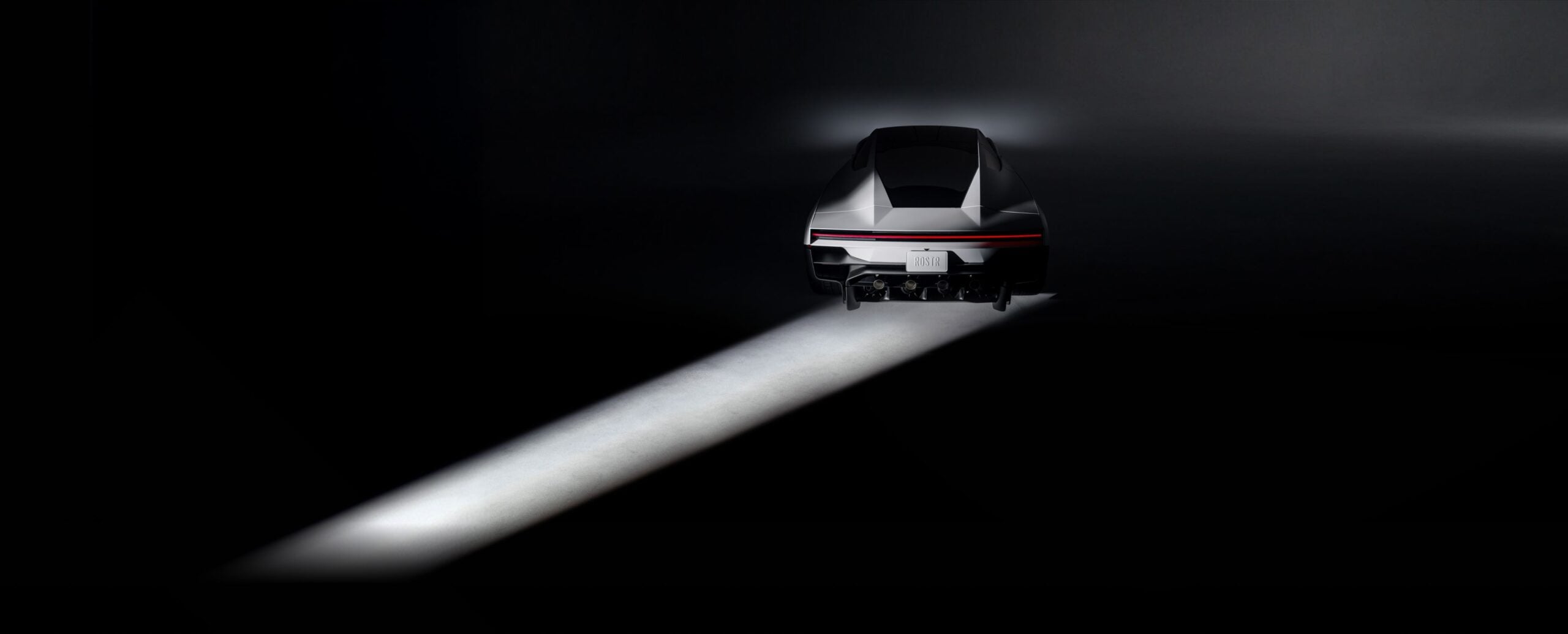
Fan suction could matter more often than the rockets
The aerial demonstrations will dominate short clips. For a driver circulating a circuit, the fan system may be the more consequential feature.
A conventional wing develops downforce from airflow as the car moves. At very low speed, there is much less aerodynamic force available. A powered extraction system can reduce pressure beneath the car even while it is stationary, provided the underbody and sealing arrangement maintain the necessary pressure difference.
That difference affects the normal load at the tires. More tire load can make more braking and cornering force available, although tire behaviour is nonlinear and the gain is not simply proportional without limit. It also means the car could have useful aerodynamic assistance before it has gathered the speed needed for a large passive wing to work effectively.
The engineering challenge is maintaining the effect on a real surface. A smooth demonstration ramp is a different environment from a rough circuit, kerbs, changing ride height, standing water and debris. Ground clearance, sealing, suspension movement and fan control must work as a system. The interesting test is sustained, predictable grip through an entire lap.
Tesla’s aerodynamics announcement also makes an ambitious passive-downforce claim approaching Formula 1 and identifies Optimus-related wing actuators. Neither establishes a verified lap-time advantage. Downforce requires a speed, configuration and measurement method to become a useful numerical comparison; drag and energy consumption belong beside it.
Three systems, three different jobs
| System | Primary role | Main question for testing |
|---|---|---|
| Active wings and aero surfaces | Manage airflow, drag and aerodynamic balance as speed changes | How much downforce and drag at each speed and setting? |
| Underbody fan suction | Generate tire-loading force without relying solely on forward speed | How consistently does it work over bumps and long sessions? |
| Cold-gas thrusters | Apply additional forces directly to the vehicle | How much usable thrust, for how long, and with what recovery time? |
These systems can complement one another, but they are not interchangeable. Suction presses the car toward a nearby surface. A free-flying vehicle has to support and control itself without that surface. Explaining the inverted-driving stunt does not, by itself, explain the flight stunt.
Tesla is not the first to demonstrate upside-down driving
McMurtry demonstrated its Spéirling PURE VP1 driving upside-down in April 2025, using a specially built rotating rig and fan-generated downforce. That precedent matters. Tesla’s significance lies in how it combines the technologies and what reaches customers, rather than an unsupported claim that nobody has ever held a car upside-down before.
McMurtry’s demonstration also supplies a useful lesson for interpreting extraordinary video: understand the surface, support arrangement and operating conditions. A convincing demonstration answers a specific engineering question. A full customer-car validation programme has to answer many more.
Can the new Tesla Roadster fly?
Tesla demonstrated aerial manoeuvres and markets Rocket as flight-capable. The important qualification is what kind of flight was shown and what a buyer is legally and practically able to do with it.
The presentation included an inverted ramp sequence, a gas-assisted departure and recovery, and an airborne manoeuvre over a line of Tesla vehicles. These were demonstrations at a controlled event. They do not establish a useful airborne commuting range, routine operation above traffic or permission to take off from a public street. The official replay is the place to inspect the sequences in their original context.
To hover, upward thrust must at least balance weight. To begin accelerating upward, upward thrust must exceed weight. To rotate, forces have to create a controlled moment about the vehicle’s centre of mass. To land, the controller must bring position, orientation and descent rate into a recoverable envelope while the gas supply is changing.
Those are different requirements from accelerating along a straight road. A rearward jet can provide a spectacular launch without supplying the vertical force needed to hover. Distributing thrusters around the car opens additional control possibilities, but also adds plumbing, mass, failure cases and software coordination.
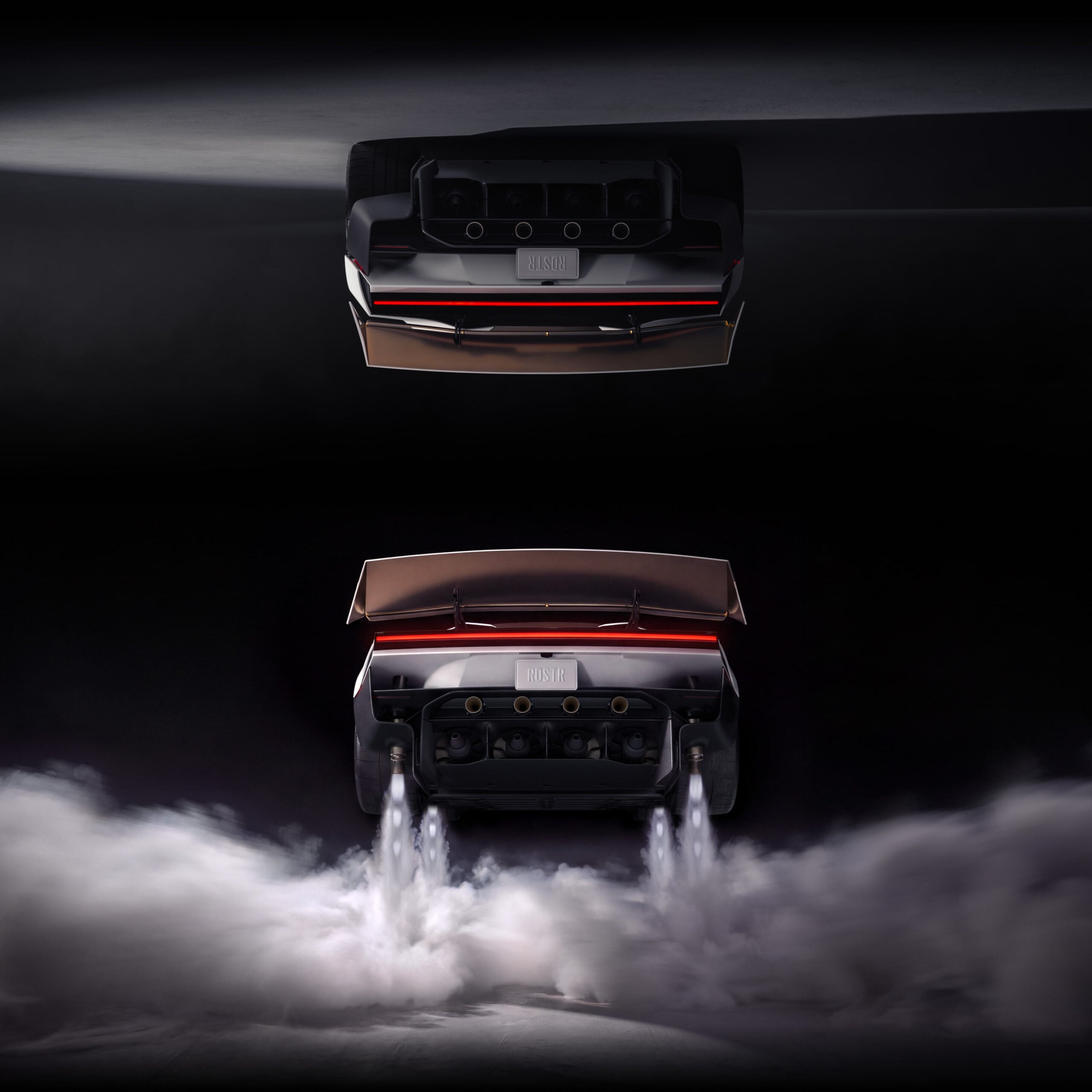
The flight specifications buyers still need
A useful flight data sheet would state maximum duration, altitude, horizontal distance, usable gas reserve, allowable wind, payload and landing requirements. It would explain what happens when a valve, sensor, actuator or gas circuit fails. It would also identify where the system is approved, what training is required and what facilities are permitted.
We have not verified that complete operating envelope in Tesla’s published launch materials. A dramatic flip cannot substitute for it. Neither can an invitation-only sales label.
The single seat is a significant clue about the intended experience. It changes the vehicle from a two-person sports car into a solo machine in its most extreme configuration. That difference should be treated as part of the specification, alongside acceleration and propulsion.
For practical buying purposes, the Rocket warning controls the discussion: Tesla currently says it is not approved for public road use. Its regional availability is also restricted. There is no sound basis for promising buyers a street-legal flying car today.
Top speed, range and the limits of the launch figures
The launch specification above 230 mph is already an extreme road-car figure. It is nevertheless a separate claim from the much more ambitious half-the-speed-of-sound aspiration voiced during the presentation. A development goal belongs in a different column from a tested maximum speed.
There is another trap in converting Mach numbers to a fixed road speed: the speed of sound changes with atmospheric conditions. A single mph conversion without a temperature assumption creates false precision. We are retaining the official above-230-mph Rocket claim in the specification table and treating the Mach discussion as an aspiration.
Higher speed also changes the engineering problem. For a given air density and aerodynamic configuration, drag force rises roughly with the square of speed. The power required to overcome that drag rises roughly with the cube. As an illustration, increasing speed by 20 percent would raise aerodynamic power demand by about 73 percent, assuming everything else remained unchanged. That is a calculation about drag, not a Roadster power forecast.
Range deserves equally careful treatment. Tesla’s above-300-mile announcement does not tell us highway speed, test cycle, ambient temperature, tire selection or the contribution of fan and pressure-system use. A headline range number cannot answer how far the car travels during repeated track sessions.
Nor does the change from the old 620-mile target permit an exact “range cut” percentage. One value was a historical programme target; the new one is a greater-than threshold without a complete published test basis. Comparing them explains a change in messaging, but does not establish a measured battery-capacity reduction.
Design, cabin and driver controls
The official imagery shows a much sharper, more angular car than the rounded red prototype associated with the earlier programme. The frontal shape, light treatment and rear hardware give it a distinct identity. Photographs of the 2017 car should not be used to imply that this is merely the same body with a faster launch mode.
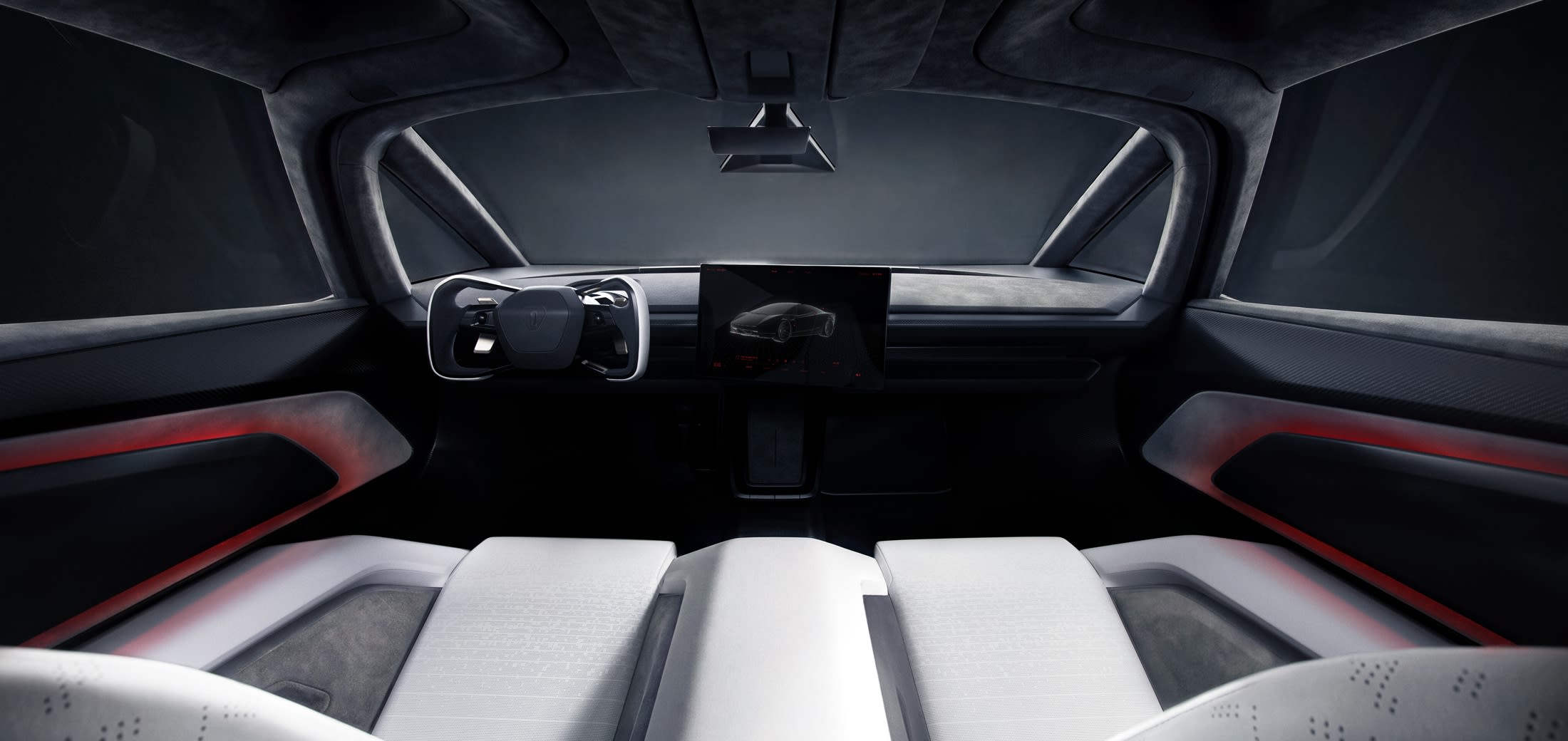
Tesla’s design description identifies hidden lighting, flush aero, Ano White paint, gold-tinted glass and titanium accents. Inside are an Ultrawhite finish, microsuede, a steer-by-wire yoke, a centre touchscreen and two smaller forward displays. Its mass-reduction approach includes a fixed seat position, manual controls and magnesium, titanium and carbon fibre.
Those choices have practical consequences. A fixed seat makes the adjustment range of the pedals and steering controls especially important. Buyers need to know which driver sizes fit, how easily they can enter and leave, and whether a helmet works with the roof and restraint arrangement. A beautiful cabin image cannot answer those ergonomic questions.
Steer-by-wire also makes control calibration part of the driving experience. How much steering movement corresponds to a given front-wheel angle? How does that relationship change with speed? What information reaches the driver through the yoke? Hardware descriptions alone do not establish steering feel, accuracy or redundancy.
The additional displays could be useful in a car with several performance reserves to monitor. In principle, battery state, temperature, tire condition and thruster readiness could all affect available performance. Which values Tesla ultimately exposes, and how clearly it distinguishes “ready” from “reduced capability,” will matter during fast driving.
Aerospace-inspired materials and finishes should also be read precisely. Styling inspiration from spacecraft does not establish that the entire car is certified for spacecraft environments. A material name does not tell us its quantity, the finished vehicle’s mass or the cost of repairing a damaged part.
Tesla Roadster price: What is known, and what you pay to reserve
Tesla has not confirmed the final purchase prices of the newly revealed configurations. The current US reservation flow displays these payments in US dollars:
| Configuration | Due today | Due within 10 days | Total reservation |
|---|---|---|---|
| Performance | $5,000 | $45,000 | $50,000 |
| Thrust | $5,000 | $245,000 | $250,000 |
| Rocket | Invitation only; no public payment schedule verified | ||
The US reservation page limits Thrust to one per customer and makes access subject to regional requirements. Its payment schedule should not be translated into a Canadian, European or UK price. Taxes, currency, import costs and regional terms need their own confirmation.
What the October 15 reservation agreement says
The US Roadster Reservation Agreement, version 20261015, provides a clearer commercial picture than the reveal’s spectacle. Full payment establishes approximate priority for configuration; it does not constitute an order. The final price depends on the eventual configuration. The payment is applied toward the purchase price if the buyer proceeds.
The agreement also says the car remains under development and Tesla cannot guarantee when, or whether, delivery will occur. Until the buyer completes configuration after an invitation, either party may cancel and the reservation payment is refundable. Tesla does not hold it in escrow or pay interest.
The reservation page separately contains wording about refunds for modifications. Buyers should read the complete current agreement and checkout wording together rather than assume every later change follows the initial cancellation rule. This article reports the published terms; it does not resolve every possible contract scenario.
The practical distinction is straightforward: a refundable payment still ties up money, and an approximate place in line still leaves vehicle specification, timing and final price open. The $250,000 Thrust payment is five times the Performance reservation total. It is not evidence that the finished Thrust car costs exactly five times as much.
Running costs will involve more than electricity
A detailed ownership budget cannot yet be made from the launch materials. Charging efficiency, insurance, tires, pressure-system servicing and track support remain relevant unknowns. Assigning a confident annual cost now would be an invention.
There are, however, useful ways to frame the eventual budget. Separate ordinary road energy from fan operation, pressure replenishment, consumables and specialist inspection. A car can be inexpensive to charge for a gentle road journey while being costly to operate at its most demanding settings.
A transparent charging-cost example
The formula is electricity used per 100 miles multiplied by price per kilowatt-hour. Because we do not have a verified Roadster efficiency rating, the examples below use hypothetical wall-energy consumption, including whatever charging losses the assumed figure contains. They are not Tesla estimates or local tariff quotes.
| Assumed wall energy | At $0.15/kWh | At $0.40/kWh |
|---|---|---|
| 25 kWh / 100 miles | $3.75 | $10.00 |
| 35 kWh / 100 miles | $5.25 | $14.00 |
| 50 kWh / 100 miles | $7.50 | $20.00 |
The table is deliberately a sensitivity calculation. It shows why a real efficiency measurement and an actual tariff are both necessary. It does not predict where Roadster will fall, especially during high-speed driving or repeated fan-assisted laps.
The costs that could dominate
Tires and brakes. Tire dimensions, compounds, approved alternatives and replacement intervals will influence operating costs. Maximum performance may require a very different consumable budget from ordinary road use. We have not verified final retail tire or brake-service prices.
Pressure-system maintenance. Inspection intervals, vessel service life, valve replacement and certified repair procedures are important for a high-pressure system. None should be priced by analogy with a normal Tesla service visit.
Insurance and permitted use. Road driving, closed-circuit driving and aerial operation are separate use cases for a buyer to confirm with an insurer and the relevant venue. A road policy cannot be assumed to cover every demonstrated capability.
Access and support. A vehicle that needs a controlled location, specialist staff or inspection after a demanding manoeuvre carries costs beyond a charging bill. The final operating manual and service arrangements will determine which of those costs apply.
For a potential customer, the most informative future quote will combine the final vehicle price with the cost of a repeatable day of the intended activity. A road trip, track day and flight demonstration are three very different budgets.
Availability and production: 2028 is the target
Elon Musk’s production target at the reveal was 2028. That is a stated plan. It is not evidence that customer production has begun, that every regional approval is complete or that a reservation holder has a guaranteed delivery date. The distinction is consistent with Tesla’s current reservation agreement.
Performance can be reserved, Thrust is a limited release and Rocket requires an invitation. Those are three access paths, rather than a conventional showroom range with a complete price list and delivery estimator.
A buyer should look for several concrete milestones next: a final order agreement, an identified production configuration, the applicable regional approvals, a delivery allocation and a service plan. A production-start announcement would still need to be distinguished from the first customer handover and from broad availability.
The history makes that discipline useful. Tesla’s Q4 2017 shareholder update described the previous Roadster prototype with a 1.9-second 0–60 target, speed above 250 mph and 620 miles of range. The original Tesla Semi and Roadster event belongs to that earlier programme. Those archival materials should not fill gaps in the new car’s specifications.
Kingy previously covered the Sam Altman–Elon Musk Roadster reservation dispute. That history is relevant to the experience of waiting for a promised vehicle; it is separate from this launch’s technical specification.
How to compare the Roadster with an existing electric hypercar
Rimac provides a useful reference because it publishes a wider set of performance measurements for the Nevera R. In its July 2025 validation release, Rimac lists 1.66 seconds to 60 mph, a 7.90-second quarter mile and a 268.2 mph maximum. It says Dewesoft independently verified the tests.
That gives context for how ambitious Tesla’s sub-second claims are. It does not give us permission to declare a like-for-like winner. Test conditions, timing conventions, vehicle legality and the use of stored gas have to be disclosed before a fair record comparison can be made.
| Item | New Tesla Roadster | Rimac Nevera R |
|---|---|---|
| 0–60 evidence | 0.81-second launch display; configuration targets as low as under 0.59 seconds | 1.66 seconds in published validation results |
| Quarter mile | No verified new-model result in our source set | 7.90 seconds in the same release |
| Top-speed evidence | Above 230 mph claim for Rocket | 268.2 mph in published validation results |
| Independent verification | No independent timing certificate verified for this article | Rimac identifies Dewesoft as verifier |
| Extreme configuration use | Rocket explicitly not approved for public roads | Check vehicle and test configuration when comparing |
A broader test would add braking, lap times, repeated-launch performance and recovery time. A car that records one extraordinary launch might have very different strengths from one that sustains performance through a long session. Customers need to know which capability they are buying.
Our view is that the Roadster’s best engineering argument will be sustained control of force: grip available at low speed, useful handling, repeatable acceleration and predictable transitions between modes. Those qualities could matter every lap. The launch’s most spectacular clip cannot establish them.
The specifications still needed for a complete buyer’s guide
The following items were not established as final production specifications in the official sources verified for this article. This is a source boundary, not a claim that nobody at the event mentioned any of them. A number heard on stage or reported from a display still needs its configuration, units and conditions before it belongs in a definitive retail specification.
| Area | Details still needed | Why they matter |
|---|---|---|
| Electric powertrain | Final motor layout, power curve, continuous and peak output, torque and rating conditions | A launch time cannot define the full acceleration envelope |
| Battery | Usable/gross kWh, voltage, final cell specification, cooling and warranty | Determines energy reserve, thermal limits and long-term ownership |
| Charging | Connector by region, AC/DC limits and a measured charge curve | Peak kW alone cannot establish trip charging time |
| Mass and dimensions | Curb mass by augment, gas-state convention, payload, wheelbase and exterior measurements | Needed for handling analysis, fit and fair comparisons |
| Thrusters | Rated force, usable impulse, final propellant specification, vessel pressure/volume, recharge time and cycle life | Determines repeatability and service requirements |
| Fan and aero | Downforce versus speed, fan demand, sealing limits and drag by mode | Connects spectacle to grip, range and track endurance |
| Flight | Duration, height, range, weather envelope, reserve and failure procedures | Defines what “can fly” means operationally |
| Chassis | Tires, brakes, suspension travel, ground clearance, braking distances and final restraint system | Shows how the speed can be controlled and repeated |
| Commercial | Final prices, options, warranty, service access, deliveries and regional approvals | Enables a concrete purchase decision |
In particular, the old 200 kWh battery, four-seat layout, historical price figures and earlier motor assumptions should not migrate into a new spec sheet merely because they remain in search results. Use the date and generation attached to each source.
What makes this Roadster special, and what would prove it
The combination is the attraction: electric drive, powered downforce and stored-gas thrust in one vehicle, with configurations that extend into controlled aerial operation. That creates engineering possibilities beyond another increase in motor output.
The strongest next evidence would be unusually ordinary: a defined production car, independently instrumented, completing repeated launches and a full circuit session with the same tires and hardware a customer receives. Publish the gas-state and battery-state traces. Show recovery time. Explain which mode is legal where. Then publish the complete price and delivery terms.
For Performance, the central buying question is how well the fan-assisted sports car works on roads and circuits. For Thrust, it is how frequently and where the extra acceleration can be used. For Rocket, it is the approved operating envelope and the support needed to use its flight system.
A prospective buyer can ask Tesla for six specific items now: the final price for the chosen augment, the exact regional approval, the final specification sheet, a repeatability test, the operating and service requirements, and a contractual delivery allocation. Those answers will determine what the Roadster offers beyond its reveal.
Sources and reporting method
This is a source-based analysis of the October 15 launch, with original calculations clearly labelled. Tesla product and configuration statements establish what the manufacturer claims. The reservation agreement establishes the published US terms. NASA supports the cold-gas explanation; McMurtry and Rimac provide primary-source context. Contemporary event reporting helps identify the displayed launch result, without turning it into an independent test. No Roadster hands-on testing was performed by Kingy.
- Tesla Roadster product page and US reservation flow, checked October 15, 2026.
- Tesla configuration/specification announcement, October 15, 2026.
- Tesla official event post and broadcast replay.
- Tesla pressure-vessel post, thruster-force post and aerodynamics post.
- Roadster Reservation Agreement, US v.20261015.
- NASA, State-of-the-Art of Small Spacecraft Technology: In-Space Propulsion, cold-gas section.
- McMurtry, Spéirling upside-down demonstration, April 11, 2025.
- Rimac, Nevera R performance validation, July 9, 2025.
- Tesla Q4 2017 shareholder update, historical Roadster claims.
- Road & Track, October 15 event report, secondary corroboration of the demonstration display and production target.
Trending on Kingy
Keep reading with the stories getting the most attention now.
The Kingy Brief
Get The Kingy Brief.
AI changes, original tests and one practical thing to try. Fridays at 09:00 Vancouver time.
Free · Double opt-in · Unsubscribe anytime
Sign up for The Kingy Brief on Beehiiv.
Signup help and newsletter schedule
Signup form provided by Beehiiv. After submitting, check your inbox for "Confirm your subscription to The Kingy Brief" and open its confirmation link. Check Spam or Promotions if you cannot find it.
Fridays at 09:00 Vancouver time: source-checked AI changes, original tests and one practical thing to try. We skip a week when there is not enough verified material. Free. Unsubscribe anytime.