
A Summit With Water Views and Digital Fireworks
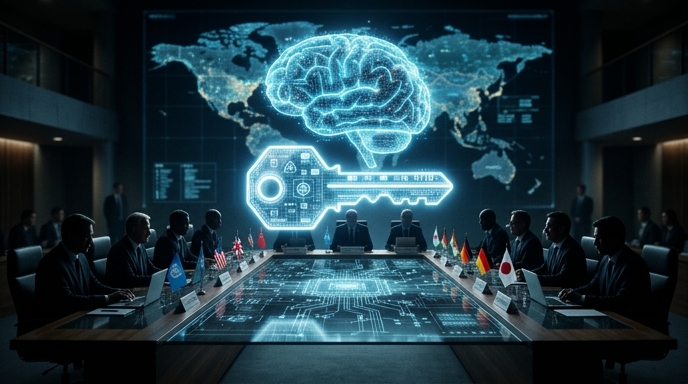
The G7 summit in Évian-les-Bains, France, already had plenty on its plate. War. Trade. China. Energy. Supply chains. The usual diplomatic buffet, only with sharper knives.
Then artificial intelligence barged into the room like a guest who did not RSVP but somehow brought the loudest speaker.
Leaders from the Group of Seven spent part of the June 15–17 summit wrestling with a deceptively simple question: who should get access to the most powerful American AI models?
That question sounds technical. It is not. It is political, economic, military, and deeply awkward.
The issue exploded after the Trump administration ordered Anthropic to block foreign nationals from accessing its most advanced models, including Fable 5 and Mythos 5. Anthropic then disabled access more broadly to comply. Suddenly, close U.S. allies were staring at a future where advanced American AI might come with a giant “U.S. only” sticker slapped on the front.
Nobody loves that sticker. Especially not allies.
So the G7 began talking about a possible workaround: a “trusted partners” scheme. In plain English, that means select countries or companies could gain access to powerful U.S. AI models, even as Washington keeps tighter controls in place.
It is a velvet rope for frontier AI. The fight now is over who gets on the list.
The Trusted Partners Idea
The “trusted partners” proposal sits at the center of the debate.
According to reporting from The Straits Times, citing diplomatic sources, several country representatives at the summit discussed widening access to advanced U.S. AI models with American officials. The discussions reportedly included U.S. Commerce Secretary Howard Lutnick on the sidelines of the opening G7 dinner.
The possible partners could be countries. They could also be companies. That detail matters.
If the scheme covers countries, it becomes a diplomatic club. If it covers companies, it becomes a trust-and-compliance machine. Governments would need to decide which firms can safely handle models that might help defend hospitals, banks, telecom networks, power grids, and water systems.
That is the sunny version.
The darker version is just as important. The same AI that finds software flaws for defenders may also help attackers find them faster. In cybersecurity, a lockpick can be a tool for a locksmith or a burglar. Mythos, Anthropic’s model designed to find coding flaws, sits right in that uncomfortable middle.
That is why the debate has teeth. The G7 is not arguing about chatbots writing limericks. It is arguing about access to systems that may reshape cyber defense, cyber offense, and national power.
Fun little summit, right?
Mythos: Defender, Attacker, or Both?
Anthropic’s Mythos model appears to be the star of this particular drama.
The model was built to identify weaknesses in computer code. That makes it valuable for defensive cybersecurity. Companies and governments could use it to scan systems before criminals or hostile states exploit them.
But the same capability creates anxiety. A model that quickly spots flaws may also help bad actors move faster. That is why cybersecurity experts have raised concerns that Mythos could turbocharge attacks on sensitive systems, including banking technology and critical infrastructure.
Before the U.S. restrictions, Anthropic had reportedly allowed select organizations in more than 15 countries to use Mythos to scan systems for vulnerabilities. Those organizations included entities in healthcare, communications, power, and water.
That is not a trivial user base. Those are the systems that make modern life feel boring when they work and terrifying when they fail.
This is the central contradiction. Allies want access because they fear hostile cyber actors. Washington restricts access because it fears advanced AI could empower hostile actors. Both sides can point to national security. Both sides can make a decent case.
That is why the “trusted partners” scheme has appeal. It tries to split the difference. Let the right people in. Keep the wrong people out.
Simple? Not remotely.
Once governments start drawing that line, every excluded nation and company will want to know why it landed outside the fence.
Macron’s Message: Trust Cuts Both Ways
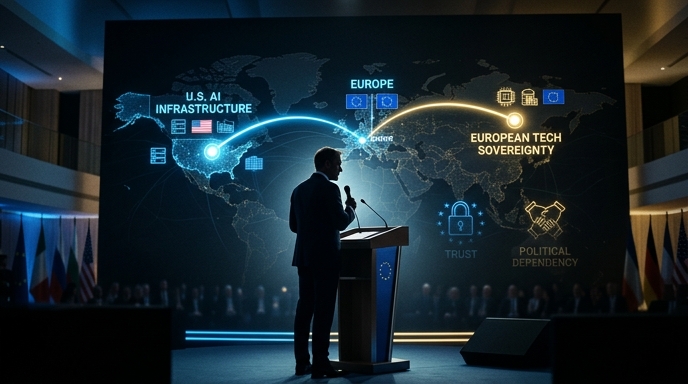
French President Emmanuel Macron pushed the argument in a practical direction.
According to Reuters, Macron said he believed progress would come in the weeks after the summit on broadening access to leading U.S. AI models. His argument was not just about Europe wanting shiny new tools. It was about trust in American technology itself.
If buyers fear that Washington can shut off access suddenly, they may hesitate to build their security systems, businesses, and public infrastructure around U.S. AI.
That is a big deal.
America currently leads much of the frontier AI race. U.S. firms dominate many layers of the stack: advanced models, cloud computing, semiconductor design, and AI research. But dominance brings a problem. The more others depend on you, the more nervous they become when you start flipping switches.
Europe knows this feeling well. It has spent years talking about “tech sovereignty,” which often means: “We need American tools, but we hate needing American tools.”
Macron’s point was blunt beneath the diplomatic polish. If U.S. AI becomes too politically conditional, allies will look for alternatives. They may not find better ones quickly. But they will look.
That alone should make Washington pay attention.
The CEOs Enter the Lunchroom
The G7 also brought in the people building the machines.
Executives from Anthropic, OpenAI, and Google attended a working lunch with leaders to discuss AI regulation and infrastructure. OpenAI CEO Sam Altman, Anthropic CEO Dario Amodei, and Google DeepMind CEO Demis Hassabis were among the major AI figures connected to the summit discussions.
This was not a casual tech demo. Nobody was there to ask a chatbot for lasagna recipes.
The discussion centered on governance, risk, access, and international coordination. Altman reportedly told G7 leaders that democratic governments should lead on AI governance rather than handing that responsibility to AI labs. His message was striking because it came from one of those very labs.
That line matters. AI companies want influence, but they also want governments to own the hardest legitimacy questions. Who gets access? Who sets standards? Who decides whether a model is safe enough? Who pays when things go sideways?
Those questions cannot be solved by a product team in San Francisco.
An accessible report from The Next Web, summarizing CNBC’s reporting, said Amodei and Hassabis called for a U.S.-led AI coalition to shape international rules and standards. It also reported that no binding commitments emerged.
So, yes, the lunch mattered. But it did not end with a grand treaty and a dessert spoon shaped like a neural network.
America Wants to Lead. Allies Want Guarantees.
A U.S.-led AI coalition sounds obvious at first. America has the frontier labs. America has the chip ecosystem. America has the cloud giants. America has the money cannon.
But leadership is not the same as control.
That is where the tension lives. Other G7 members may accept U.S. leadership if it comes with reliability, shared rules, and meaningful access. They will resist if it feels like dependency dressed up as partnership.
This is the real diplomatic bargain. Washington wants allies to line up behind its AI strategy, especially as competition with China intensifies. Allies want to know they will not be locked out whenever U.S. politics shifts.
The Anthropic restrictions made that fear concrete. They showed that even close partners could lose access to powerful models because of a U.S. national security decision.
That may be defensible. It may even be necessary in some cases. But it is not free. Every control creates doubt. Every doubt creates demand for alternatives.
Europe’s answer has been to push for more domestic computing capacity, cloud infrastructure, AI investment, and semiconductor strength. The European Commission has floated plans for large-scale AI infrastructure and “gigafactories.” Critics still argue Europe trails U.S. rivals by years.
In other words, Europe wants independence. It also wants access. That is not hypocrisy. It is survival math.
China Was Not in the Room, But It Was Everywhere
China did not attend the G7 summit. It still haunted the conversation.
According to Fortune, the summit reflected two linked anxieties: G7 reliance on U.S. AI and dependence on Chinese supply chains. That is the nasty geometry of the current tech race.
The West depends heavily on American AI. It also worries about Chinese control over critical minerals, manufacturing, and supply chains tied to energy and advanced technology.
That gives Europe a headache with no clean aspirin.
If Europe leans too hard on U.S. AI, Washington can control access. If it leans too hard on Chinese industrial supply chains, Beijing can apply pressure through materials, manufacturing, or trade.
The result is a strategic squeeze.
Fortune quoted experts who framed China as the “elephant in the room.” That phrase fits. The G7 leaders were not simply debating Anthropic access. They were debating whether democratic economies can build a technology system that does not leave them permanently dependent on one superpower for software and another for hardware.
That is a brutal puzzle.
And unlike most summit puzzles, this one does not wait politely for the next communiqué.
Cybersecurity Is the Sales Pitch—and the Scare Story
The strongest argument for trusted access is cybersecurity.
Banks need stronger defenses. Hospitals need stronger defenses. Energy systems need stronger defenses. Governments need stronger defenses. The modern economy is basically a giant spreadsheet wrapped in passwords and hope.
Advanced AI could help defenders find vulnerabilities faster, patch systems sooner, and respond to threats with more speed. If hostile states and criminal groups use AI, defenders will not want to show up with yesterday’s tools and a motivational poster.
But cybersecurity is also the strongest argument for restrictions.
A model that helps defenders find flaws could help attackers do the same. A tool that accelerates security research could also accelerate exploit discovery. That is why Washington sees national security risk. It is also why allies want access before adversaries gain an edge.
This is the strange loop at the heart of the debate. The more dangerous the model, the more governments want to restrict it. The more dangerous the world, the more allies want to use it.
The trusted partners scheme tries to answer that contradiction with vetting, rules, and controlled access.
Will that work? Maybe.
But the hard part is enforcement. Once access exists, governments need monitoring, auditing, technical safeguards, and consequences for misuse. Otherwise “trusted partner” becomes a fancy phrase for “we hope nothing weird happens.”
And hope is not a cybersecurity strategy. It is barely a password strategy.
The G7’s AI Governance Problem
The G7 has talked about AI governance before. The Hiroshima AI Process in 2023 produced principles and codes of conduct. Canada’s 2025 presidency also pushed AI commitments.
Those efforts mattered, but they were mostly soft law. Useful? Yes. Binding? Not really.
The 2026 summit felt sharper because the technology has become more powerful and the politics more tense. Leaders are no longer debating only abstract safety principles. They are debating access, export controls, infrastructure, and geopolitical leverage.
That changes the mood.
AI governance now resembles financial governance, arms control, cybersecurity policy, trade strategy, and industrial policy all mashed together. It is not one file folder. It is the whole cabinet.
The G7 leaders said they would ask finance officials, regulators, and cybersecurity experts to assess how frontier AI could affect financial stability, productivity, and labor markets. That is a sensible move. It also shows how broad the concern has become.
AI is not just a tech sector issue. It touches banks, jobs, markets, science, defense, and public administration.
The next phase will test whether the G7 can move beyond statements. Principles are nice. Shared access rules are harder. Enforcement is harder still. And agreeing on how much control Washington should hold over the world’s most powerful AI systems may be hardest of all.
The Real Story: Power Has a Login Screen
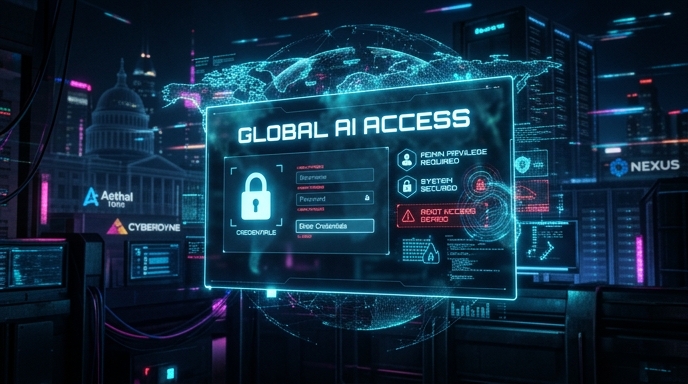
The fight over Anthropic, Mythos, and trusted partners reveals something larger.
AI power now has a login screen.
Who gets credentials? Who gets blocked? Who decides? Who appeals? Who audits? Who benefits? These are no longer product-management questions. They are questions of international order.
The U.S. wants to protect national security. Allies want access to tools that may protect their own national security. AI firms want markets, influence, and regulatory clarity. Europe wants sovereignty without falling behind. China remains the strategic rival shaping the background of almost every conversation.
That is why the G7’s AI debate matters.
It is not about whether artificial intelligence is useful. That argument is over. The fight now is about distribution, control, and trust.
The trusted partners scheme may become a practical bridge. It could let allies use frontier models for cyber defense while giving Washington confidence that access will not leak into dangerous hands. Or it could become another diplomatic patch on a much bigger rupture: the growing discomfort of countries that depend on technologies they do not control.
Either way, the summit made one thing clear.
The age of casual AI access is ending. The age of AI geopolitics has arrived. It wears a suit. It speaks in communiqués. And somewhere behind the curtain, it is asking for admin privileges.
Sources
- The Straits Times: G-7 leaders discuss “trusted partners” access to cutting-edge U.S. AI models
- The Straits Times: G7 leaders vow closer ties on AI as they hash out “trusted partners” scheme
- CNBC: Anthropic, Google DeepMind CEOs call for U.S.-led AI coalition at G7
- Fortune: The G7 confronts reliance on U.S. AI and Chinese energy supply chains
- BBC Bermuda: G7 leaders discuss “trusted partners” access to cutting-edge U.S. AI models
- Reuters: Macron expects progress on broadening access to Anthropic’s Mythos
The Kingy Brief
Get the next Kingy Brief.
Source-checked AI changes, original tests and one practical thing to try.
Free · Choose your subjects · Double opt-in · Unsubscribe anytime