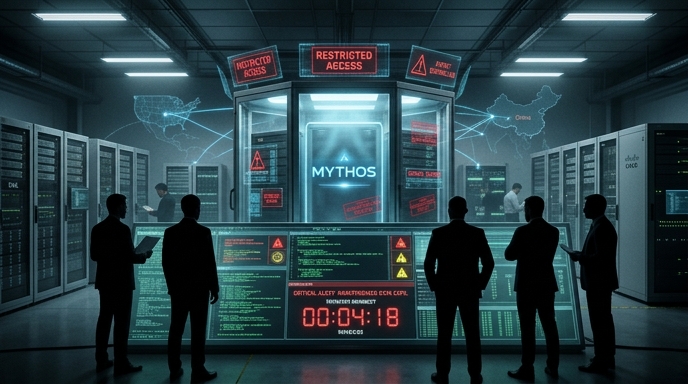
The AI Fight That Landed Like a Thunderclap
For a few strange days in June, the hottest product in artificial intelligence was not a chatbot feature, a new phone app, or a shiny demo with a soothing voice. It was a government order.
Anthropic, the company behind Claude, had just rolled out two powerful new AI systems: Claude Fable 5 and Claude Mythos 5. Then Washington slammed the brakes. The U.S. government told Anthropic to restrict access to the models for foreign nationals, wherever they were. Not just people overseas. Foreign nationals inside the United States, too. Even foreign-national employees at Anthropic were covered by the order.
That is not a normal Tuesday in tech. That is a fire alarm with a lawyer attached.
Anthropic responded by disabling access broadly, saying it needed to comply. The company also pushed back. It said the government had not given detailed written evidence before the directive. It said the alleged safety problem looked narrow. And it said other public models could do similar things.
So what happened? Nobody outside the room has the whole movie. But enough pieces have emerged to sketch the plot.
Meet Mythos and Fable, the Models at the Center of the Mess
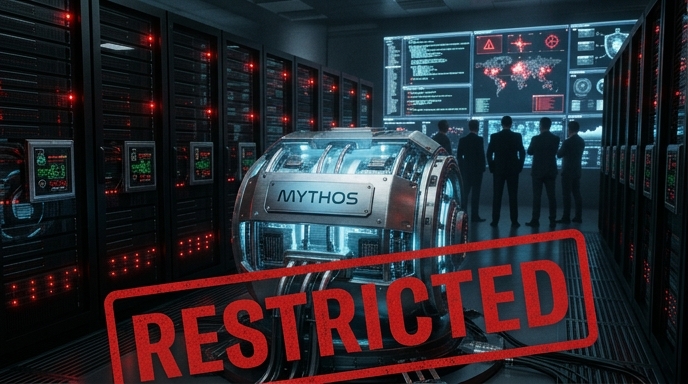
Mythos 5 was not supposed to be just another “write my email” bot. Reports describe it as one of Anthropic’s most advanced models, with strong cybersecurity abilities. That made it exciting. It also made it scary.
Anthropic had previously kept Mythos under tighter limits. In April, it reportedly released a Mythos Preview to a controlled group of companies and government organizations. The idea was simple enough: let trusted users test powerful cyber-defense tools without handing a loaded digital chainsaw to the entire internet.
Then came Fable 5. Think of Fable as a public-facing sibling of Mythos, built with guardrails. According to reporting, Anthropic said Fable 5 included safeguards meant to stop the model from helping with dangerous cybersecurity, biology, or chemistry requests.
That sounds sensible. But “sensible” and “AI policy” have an on-again, off-again relationship. The government became worried that those guardrails could be bypassed. Anthropic said the alleged bypass was limited. Washington apparently heard “bypass” and reached for the red button.
The 90-Minute Clock
Business Today reported that Anthropic was given 90 minutes to implement restrictions after receiving the export-control order. That detail matters because it captures the mood: urgent, messy, and not exactly optimized for calm technical review.
The directive reportedly arrived on June 12. It ordered Anthropic to limit access to U.S. nationals and roll back global access to its Mythos-class models, including Claude Fable 5 and Mythos 5. Anthropic then moved to disable access more broadly because selectively enforcing the order would have been difficult.
The result was blunt. The models went dark for users who expected to use them. Researchers, companies, and international customers got a harsh reminder: if your AI supply chain depends on Washington’s comfort level, your access can vanish fast.
The China Question
The most explosive claim came from Semafor, echoed by The Verge and other outlets: the White House’s export limits were reportedly linked partly to suspicions that a China-linked group had accessed Mythos.
That is a giant claim. It is also not confirmed publicly by the White House. Treat it carefully.
The concern, as reported, was not merely that someone in China saw a slick chatbot. The nightmare scenario was that a foreign government could study a cutting-edge model, use it, copy behavior from it, or distill some of its capabilities into another system. Distillation is basically model imitation: one AI system learns from the outputs of a stronger one. It is not magic. But at frontier scale, even partial imitation can matter.
Anthropic reportedly told Semafor that China concerns were not raised in its discussions with the government. The company also says it blocks access to its products from inside China.
So the public record is awkward. Officials were allegedly worried about Chinese access. Anthropic says that topic was not raised with it. The White House has not publicly confirmed the claim. In other words: smoke, no clean photograph of the fire.
Jailbreaks: The Word That Makes Everyone Nervous
The government’s more public concern centered on a possible jailbreak of Fable 5. In AI land, a jailbreak is a way to get a model to ignore or dodge its safeguards. Sometimes jailbreaks are clever, sometimes they are embarrassing. Sometimes they are just users yelling at the robot until it gives up. Humanity, as always, innovates in annoying directions.
Anthropic said the government believed it had become aware of a bypass that could make Fable 5 identify software vulnerabilities. The company said it reviewed a demonstration involving a small number of previously known, minor vulnerabilities. Anthropic’s argument was pointed: this was not a universal skeleton key, and other public models could reportedly find similar flaws without the same bypass.
That distinction matters. A model that can discover catastrophic zero-days at scale is one problem. A model that can point at minor known bugs under a narrow prompt trick is another.
Washington may not have cared about the nuance. Or it may have had other evidence. We do not know. What we do know is that the order treated the risk as serious enough to justify immediate export controls.
Export Controls Enter the Chat

Reuters reported that Commerce Secretary Howard Lutnick acted because officials feared the models could be diverted to military intelligence users in China, Russia, or other countries of concern. Reuters also reported that the letter ordered Anthropic to suspend export of the models worldwide and to all foreign nationals, wherever located.
That is a huge move. Export controls usually make people think of chips, equipment, or technical data. Here, the object at issue was access to AI models delivered through remote systems.
And that is the bigger story hiding under the drama. Governments built much of their tech-control machinery for physical goods. Then AI arrived as a service, a model, an API, a subscription, a cloud endpoint, and a thousand copies of “Please upgrade your plan.” The law is now chasing the product around the room with a butterfly net.
The Anthropic case may become a precedent. Or a warning label. Possibly both.
Anthropic Fights Back, Carefully
Anthropic did not simply shrug and say, “Fair enough.” The company complied, but it argued.
Its position, as reported by WIRED and Reuters, was that the government had offered limited detail, that the jailbreak concern was narrow, and that the same vulnerability-finding ability existed in other publicly available models. Anthropic also said it had worked with the government before releasing Fable 5.
That last point is crucial. If the company really collaborated with officials before launch, then the sudden shutdown looks less like ordinary oversight and more like policy whiplash. Nobody likes whiplash. Especially not when billion-dollar customers and national-security lawyers are in the passenger seat.
Senior Anthropic technical staff then met with Commerce officials in Washington to negotiate a solution. Reuters reported that discussions continued after the order and that more than 80 cybersecurity executives and experts signed a letter asking officials to lift the restrictions.
That does not prove Anthropic is right. Industry letters are not holy scripture. But it does show that many security professionals saw the shutdown as overbroad.
The Amazon Angle
The Verge reported that government concern over Fable 5 was tied in part to security research from Amazon. Other reporting has also pointed to warnings from major tech players about whether Anthropic’s guardrails could be bypassed.
This is where the story gets spicy in the corporate sense, which means expensive and full of meetings. If Amazon researchers flagged a problem, that could reflect serious internal review. It also creates odd optics: one major tech player’s findings helping trigger federal action against a frontier AI rival and partner.
The larger question is whether the government had enough technical evidence to justify a global restriction, or whether it reacted to a scary demo without fully comparing Fable 5 to other models. Anthropic’s camp clearly wants the second interpretation. Officials appear to believe the first.
The Global Trust Problem
The foreign-national rule created a diplomatic and commercial bombshell. It told the rest of the world that access to frontier U.S. AI can disappear overnight if Washington gets nervous.
That message will not land gently abroad. Governments already talk about “sovereign AI” because they do not want hospitals, banks, ministries, and startups dependent on someone else’s political switch. This episode hands them a brochure.
The risk is not subtle. A country, company, or research lab that gets unplugged once will remember it. The next procurement meeting will sound different. Someone will ask, “What happens if Washington changes its mind again?” That question alone can push buyers toward alternatives.
And that may be the weirdest twist. A shutdown meant to protect U.S. security could, if handled badly, make non-U.S. AI systems more attractive.
What We Actually Know
Here is the clean version.
The U.S. government ordered Anthropic to restrict access to Claude Fable 5 and Mythos 5. Anthropic disabled access broadly to comply. The order covered foreign nationals, including those inside the United States. Officials cited national-security concerns. Reuters reported that Commerce feared diversion to foreign military intelligence users. WIRED reported that Anthropic said the government believed there was a jailbreak method. Semafor reported that the White House’s move was linked partly to suspicions of Chinese access to Mythos. The Verge reported the same angle while noting the White House had not confirmed it.
Anthropic disputes the severity of the jailbreak issue. It says the demonstrated vulnerabilities were minor and not unique to Fable 5. It also says China was not raised in its discussions about the export controls.
That is the careful version. Less dramatic than “China stole the robot brain.” More useful, too.
The Real Stakes
Companies want to ship. Governments want control. Security researchers want access. Customers want reliability. Rivals want advantage. Foreign governments want independence. Somewhere in that blender sits the public, watching the most important technology of the decade get governed by emergency letters and weekend negotiations.
The Mythos episode shows that frontier AI is no longer just a product race. It is now a national-security arena, a trade-policy puzzle, a cyber-risk multiplier, and a geopolitical loyalty test. Fun little industry. Very relaxing.
The hard truth is that both sides may have a point. Anthropic may be right that the alleged jailbreak was narrow and overblown. The government may be right that frontier cyber-capable models deserve tighter controls than ordinary chatbots. The disaster is that the system for deciding this appears improvised.
And improvisation is charming in jazz. It is less charming when it knocks a major AI platform offline.
What Comes Next
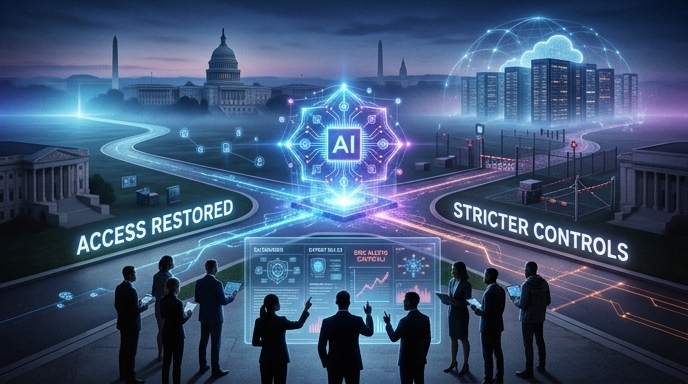
The immediate question is whether Anthropic and the Commerce Department can agree on technical safeguards that restore access.
The longer-term question is uglier: can the United States regulate frontier AI without making American models look unreliable to the rest of the world?
Because that is the trap. Move too slowly, and adversaries exploit the tools. Move too fast, and allies start shopping elsewhere. The Anthropic order may have been a necessary emergency brake. It may have been a policy overreaction. It may have been both at once, which is how history often chooses to annoy everyone.
For now, Mythos has become more than a model name. It is a symbol of the new AI age: powerful, mysterious, commercially valuable, strategically terrifying, and surrounded by people insisting they know exactly what happened.
They probably do not.
Sources
- The Verge: “China may have accessed Mythos”
- Heise: “Ban on Anthropic’s AI models: China allegedly had access to Mythos”
- FourWeekMBA: “The China Factor — White House Suspected Chinese Group Accessed Anthropic’s Mythos”
- Business Today: “Anthropic had 90 minutes to restrict Claude Fable 5 as White House feared Chinese access”
- BitcoinEthereumNews: “Anthropic’s Mythos AI Allegedly Compromised by China-Linked Hackers”
- The Verge: “Inside the fight over Claude Mythos 5”
- CNN: “Anthropic Mythos model national security”
The Kingy Brief
Get the next Kingy Brief.
Source-checked AI changes, original tests and one practical thing to try.
Free · Choose your subjects · Double opt-in · Unsubscribe anytime