Your Earbuds Are Taking Notes Now
Most wireless earbuds help you escape conversations. Plaud’s new earbuds want to remember them.
The company has unveiled the Plaud One Explorer Edition, a pair of AI-powered earbuds built to record, transcribe, summarize, and eventually act on everyday conversations. Think AirPods crossed with an AI notetaker—and then give the charging case its own cellular connection.
Plaud already makes dedicated recording devices, including the card-shaped Plaud Note and wearable NotePin. The Plaud One takes that familiar formula and puts it into a form people already wear for hours: wireless earbuds.
According to The Verge, users can capture in-person conversations, calls, and online meetings. Plaud’s software then turns that audio into searchable transcripts, summaries, and follow-up material.
However, Plaud does not want the One to stop at meeting notes. Its bigger ambition involves transforming conversations into actions. After a meeting, the system could draft an email, prepare a report, create a document, or help schedule the next appointment.
That is a much bigger promise than “Here’s what everyone said.” It is closer to “Here’s what everyone said—and I have already started the paperwork.”
Two Earbuds and a Very Busy Case
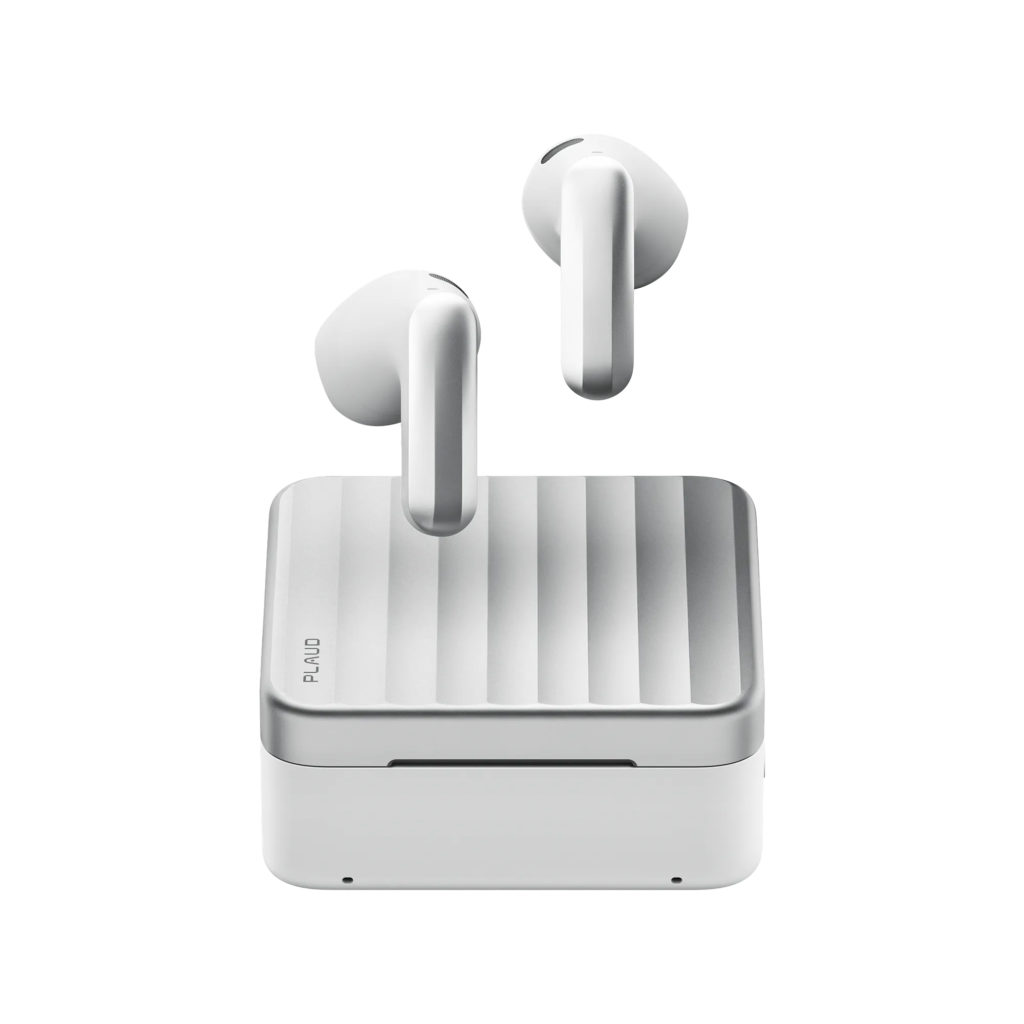
The Plaud One resembles a fairly conventional pair of white, half-in-ear wireless earbuds. Underneath that familiar appearance, however, Plaud has packed in an unusual collection of recording hardware.
Each earbud contains three microphones and 16MB of local storage, providing 32MB across the pair. The microphones can reportedly capture conversations from as far as two meters away, although real-world results will naturally depend on background noise, speaker volume, and where the wearer is standing.
The earbuds can record continuously for up to six hours. Plaud also equips them with force-sensitive controls on their stems, allowing users to start recording or interact with the system without digging through a phone app.
The charging case gets even more interesting.
It contains four microphones, 512MB of storage, a speaker, and a claimed recording range of up to five meters. Users can place it in the middle of a conference table, where it functions more like a standalone meeting recorder than a traditional earbud case.
PCMag describes the product as part wireless earbuds and part AI recorder. That combination neatly captures Plaud’s approach. The company is not simply adding transcription to headphones. It is redesigning the entire package around capturing conversations.
The Case Can Leave Your Phone Behind
The charging case’s standout feature is not its microphone array. It is the built-in eSIM and 4G LTE connection.
That cellular capability allows the case to upload recordings and communicate with Plaud’s services without depending on a nearby smartphone or Wi-Fi network. Leave your phone in another room, and the case can still capture and process a meeting—provided cellular coverage and regional support cooperate.
That independence could prove valuable for professionals who jump between offices, conference rooms, client locations, and airport lounges. It also removes some of the familiar friction involved with AI recorders: open an app, connect the device, find a network, wait for synchronization, and wonder why Bluetooth has chosen violence today.
The case supports up to 25 hours of continuous recording. When used to recharge the earbuds, it extends their total listening time to as much as 36 hours. It charges through USB-C and offers two hours of additional use after a ten-minute quick charge.
SiliconANGLE reports that either the earbuds or case can initiate recording. Users can therefore choose the format that fits the situation: earbuds for calls and mobile conversations, or the case for group meetings.
From Conversation to Structured Memory
Recording audio is the easy part. The interesting part begins after everyone stops talking.
Plaud One uses the company’s Plaud Intelligence platform to convert captured conversations into transcripts, summaries, notes, and searchable context. Plaud says its system supports transcription and summaries in more than 112 languages, though some early agent features may work best in English.
The Starter Plan bundled with the Explorer Edition includes 300 transcription minutes. People who record more frequently will need one of Plaud’s paid plans or additional usage allowances.
The system is designed to create an evolving memory of a user’s conversations. Instead of treating each recording as an isolated audio file, Plaud wants its software to connect discussions, decisions, people, and unfinished tasks.
Imagine asking, “What did the client say about the revised budget last Tuesday?” The useful answer is not a two-hour recording with a timestamp and a prayer. It is the relevant statement, the surrounding context, and the decision that followed.
That approach explains why Plaud describes conversation as an interface for AI. People rarely express their complete intentions in tidy prompts. Intent emerges through questions, corrections, jokes, disagreements, and the occasional meeting that should have been an email. Capturing that context could give an assistant much better material to work with.
Plaud Agent Wants the Next Job
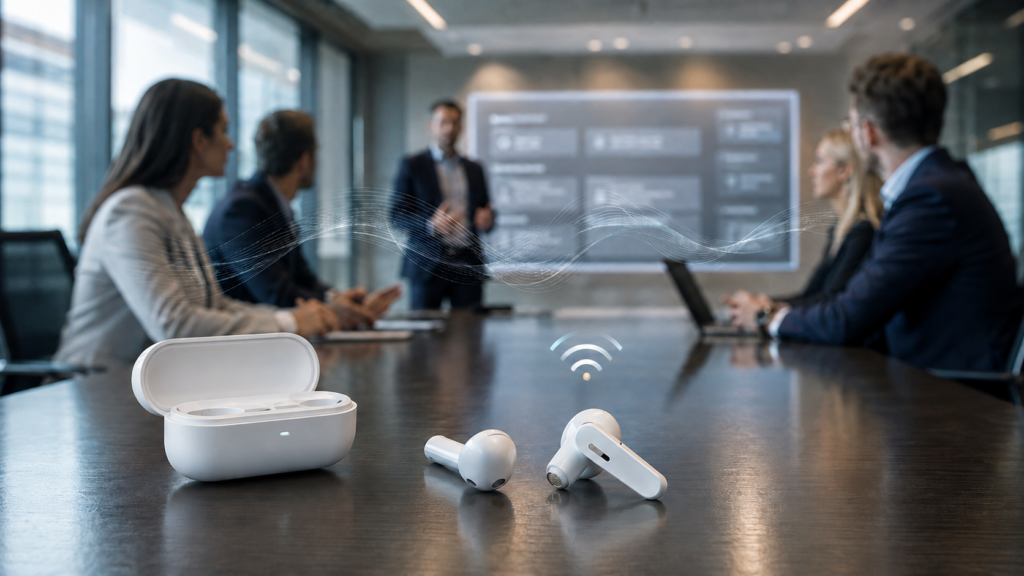
Once Plaud One understands a conversation, Plaud wants it to do something useful with that knowledge.
The company’s Plaud Agent is designed to connect with services such as Gmail, Google Calendar, Notion, Slack, and Google Drive. Plaud also plans support for Skills, plugins, connectors, and workflows compatible with the Model Context Protocol.
After a sales meeting, for example, a user could ask the agent to draft a follow-up email. A consultant might turn a workshop transcript into a findings report. An executive could request a briefing based on previous conversations before walking into another client meeting.
The system may also support routines. A chief of staff could theoretically create a Monday workflow that reviews the previous week’s conversations and prepares a structured briefing.
According to Digital Trends, the product’s appeal lies in what happens after the recording. Plaud is trying to bridge the annoying gap between hearing a decision and completing all the administrative work that decision creates.
That gap is where good intentions go to nap. Someone promises to send a proposal, update the calendar, notify the team, and revise the document. Then another meeting begins. Plaud Agent wants to catch those promises before they vanish into corporate mist.
The Agentic Future Comes With an Asterisk
Here comes the necessary reality check.
The Explorer Edition includes the complete Plaud One hardware, but some of its most ambitious agent capabilities will not necessarily be available on day one. Plaud says broader Plaud Intelligence functions will arrive through future software and firmware updates, including the Plaud App 4.0 rollout.
At launch, users should be able to press and hold the Agent Button and speak to Plaud Agent. Hands-free activation using “Hey Plaud” is expected through a later firmware update. Some integrations may also arrive after the initial release.
That distinction matters. Buyers are preordering a capable AI recording device with an expanding software platform—not a finished autonomous assistant that can immediately run every office workflow imaginable.
Plaud calls this limited release an Explorer Edition for a reason. The company is offering only 2,000 units worldwide and expects early users to test the system in real working environments. Their behavior and feedback will help shape the product.
In other words, early buyers are not merely customers. They are also explorers, testers, and unpaid members of the “What happens if I press this?” department.
The hardware may be ready, but Plaud’s grander vision will depend on future updates, dependable integrations, and agent outputs people can actually trust.
Yes, They Still Work as Earbuds
Despite all the AI fireworks, Plaud One can perform ordinary earbud duties.
The earbuds use 12mm dynamic drivers and support a frequency range of 20Hz to 20kHz. They offer balanced, bass-boost, and vocal equalizer presets, along with adaptive hybrid active noise cancellation rated at up to 40 decibels.
Plaud also includes a transparency mode, Bluetooth 5.4, two-device multipoint connectivity, and LDAC support for higher-resolution wireless audio on compatible devices. The earbuds carry an IP54 rating for resistance to dust and splashes, while the case is rated IP52.
Battery life reaches up to six hours with active noise cancellation turned off or approximately 4.5 hours with it enabled. Those figures can change depending on volume, recording activity, calls, connectivity, and other settings.
The earbuds also capture incoming and outgoing audio during phone calls and online meetings through dedicated voice-pickup microphones. That capability helps Plaud One cover conversations that happen both inside and outside physical meeting rooms.
Still, Plaud presents the One primarily as an AI notetaker. Buyers who care mainly about music may find more established audio-focused options elsewhere. The sound features are respectable, but the real sales pitch remains memory, transcription, and workflow automation—not making your favorite bass line rearrange the furniture.
Privacy Walks Into the Meeting
Earbuds that record conversations naturally raise a rather large privacy question: Does everyone else know they are being recorded?
Plaud says recording must be triggered manually. It also places responsibility on users to notify other participants and obtain any consent required by local law.
That responsibility should not become a footnote. Recording laws differ across countries and, in places such as the United States, between states. A conversation involving people in multiple jurisdictions can make the situation even more complicated.
Plaud’s own guidance tells users to inform participants clearly before recording and to obtain consent wherever necessary. The product page also reminds buyers to get approval from people before capturing a conversation.
The company says conversation data is encrypted during transmission and while stored. It also says recordings are not used to train models unless a user explicitly opts in. Users can reportedly access, export, correct, and delete their data through the Plaud app.
Plaud additionally cites compliance with frameworks and standards including GDPR, SOC 2, HIPAA, ISO 27001, ISO 27701, and EN 18031. Those credentials matter, especially for professional customers, but they do not replace responsible behavior.
A discreet recorder may be convenient. It can also feel unsettling to everyone sitting across the table. The safest social feature remains wonderfully low-tech: “Is everyone okay if I record this for notes?”
Price, Credits, and Availability
The Plaud One Explorer Edition costs $249.99 in the United States. Plaud is also listing regional prices, including £229 in the United Kingdom and €249.90 in participating European markets.
Preorders opened on August 27, 2026. Shipments are expected to begin in the fourth quarter of 2026. The limited edition is available in selected markets, including the United States, Canada, the United Kingdom, France, Germany, Italy, Spain, and the Netherlands.
Every Explorer Edition includes the Starter Plan with 300 transcription minutes and $200 in Plaud Credits, or the corresponding local value.
Those credits power eligible Plaud Intelligence features, including agent tasks, routines, Skills, plugins, and generated work products. Once users consume their included credits, they will need to purchase more if they want to continue using credit-based functions.
The long-term cost deserves attention. Plaud’s conventional transcription plans and its newer agent-credit system represent separate layers of spending. Heavy users could therefore pay for additional transcription capacity while also buying credits for agent actions.
Plaud has not fully established what typical agent usage will cost over time. That makes the bundled $200 valuable, but it also functions as a test drive for an ecosystem whose ongoing economics remain a little foggy.
A More Practical Kind of AI Wearable

The Plaud One arrives in a market filled with AI wearables searching for a reason to exist. Some promise to replace smartphones. Others introduce unfamiliar controls and then expect users to rebuild their daily habits around them.
Plaud is taking a more grounded route.
People already wear earbuds. They already carry charging cases. Professionals already record meetings, use transcription services, and ask chatbots to turn rough notes into polished emails. Plaud simply pulls those activities into one connected device.
That does not guarantee success. The product still needs accurate recording, reliable transcription, useful summaries, trustworthy agent behavior, and integrations that work when deadlines loom. Future features must also arrive close enough to schedule that early buyers do not spend months admiring a very ambitious roadmap.
Yet the underlying idea makes sense. Conversations contain decisions, obligations, context, and tiny details that human memory cheerfully throws overboard. Capturing that information and turning it into useful work could save meaningful time.
The Plaud One is therefore less about putting a chatbot in your ears and more about closing the distance between talking and doing.
If Plaud executes well, these earbuds could become a practical assistant for people whose work happens through conversations. If it falls short, they will still be an interesting pair of earbuds with an unusually hardworking case.
Either way, your next meeting may finally produce something more useful than another meeting.
Sources
- The Verge — Plaud Is Launching AI Earbuds
- Digital Trends — Plaud One AI Earbuds Can Remember Conversations
- PCMag — Plaud One Headphones Are Part Earbuds, Part AI Recorder
- The Daily Tech Feed — Plaud One Brings AI Recorder Technology Into Your Ears
- SiliconANGLE — Plaud Unveils Wearable Earbuds With Agentic AI
- Plaud — Official Plaud One Product Information
The Kingy Brief
Get The Kingy Brief.
AI changes, original tests and one practical thing to try. Fridays at 09:00 Vancouver time.
Free · Double opt-in · Unsubscribe anytime
Sign up for The Kingy Brief on Beehiiv.
Signup help and newsletter schedule
Signup form provided by Beehiiv. After submitting, check your inbox for "Confirm your subscription to The Kingy Brief" and open its confirmation link. Check Spam or Promotions if you cannot find it.
Fridays at 09:00 Vancouver time: source-checked AI changes, original tests and one practical thing to try. We skip a week when there is not enough verified material. Free. Unsubscribe anytime.