
Update, September 20, 2026: The app and website have closed; the API deadline is September 24. Read our Sora export checklist and workflow-based migration guide for what to save and where to move next.
The Rise and Fall of AI’s Most Hyped Video Tool

It started with a bang. OpenAI launched Sora in early 2024 to a limited audience, and the internet lost its mind. By September 2025, it had a standalone iOS and Android app. It hit number one in the US App Store. It reached one million downloads faster than ChatGPT. OpenAI even locked in a $1 billion investment commitment from Disney.
On March 24, 2026, OpenAI announced that Sora would be discontinued.
OpenAI’s official notice confirms that the Sora app and website closed on April 26, 2026, and the API closes on September 24, 2026. It does not specify a March 31 data-deletion deadline.
The Money Problem Was Massive
Let’s start with the obvious: Sora was bleeding cash. Supporting the tool cost OpenAI an estimated $15 million per day — roughly $5 billion annually. Video generation demands far more computing power than text-based tools like ChatGPT.
That’s not a small gap. That’s a chasm.
OpenAI is already projected to lose up to $14 billion in 2026 and spend $200 billion through 2030. Even with a fresh $110 billion raise from SoftBank, Nvidia, and Amazon, burning billions on a niche video tool doesn’t make sense. Killing Sora frees up precious compute in a race where infrastructure is everything.
Artists Rejected It From the Start
Before Sora even launched publicly, it was already in trouble with the creative community. Artists given beta access pushed back hard. They penned an open letter condemning Sora’s “art washing” — accusing OpenAI of exploiting unpaid creative labor from hundreds of artists for bug testing and feedback.
“Hundreds of artists provide unpaid labor through bug testing, feedback and experimental work for the program for a $150B valued company,” the letter read.
OpenAI tried to course-correct. In February 2025, it launched the Global Sora Artist Program, investing $3 million to enlist ten artists and creative teams to showcase the tool. It wasn’t enough to repair the relationship.
Legal and Safety Risks Piled Up

Sora didn’t just have a PR problem. It had a legal one too.
The tool allowed users to generate realistic videos of public figures. In October 2025, OpenAI had to block Sora from generating deepfake videos of Martin Luther King Jr. after the civil rights leader’s estate complained about “disrespectful depictions.” The Disney licensing deal itself highlighted the copyright minefield Sora was navigating.
ChatGPT, when asked about Sora’s shutdown, described these issues bluntly — calling copyright concerns, deepfake risks, and moderation challenges a “big problem” that made the tool “risky to keep open to everyone.”
The Product Simply Wasn’t Good Enough
Here’s the hard truth: Sora underperformed against its competitors.
Third-party estimates suggest the standalone app reached fewer than 500,000 downloads in its first month. Meanwhile, Runway ML crossed $100 million in annual recurring revenue by late 2025. Kling AI claimed 10 million users within months of its international launch.
Both rivals offered more granular camera controls, longer generation lengths, and less restrictive content policies. Sora’s 60-second cap and frequent physics failures — floating objects, merging limbs — made it unreliable for professional workflows.
As Justine Moore, partner at a16z, put it: “OpenAI treated video generation as a feature, not a product. Runway treated it as a craft. That difference in positioning matters enormously.”
OpenAI Is Betting on a “Super App”
Sora’s shutdown isn’t just about cutting losses. It’s about strategy.
OpenAI is consolidating everything into one unified platform. It already killed its ChatGPT plugins system and deprecated the standalone DALL-E interface. Now Sora joins that list. The core video technology survives inside ChatGPT — where it can reach 400 million weekly active users instead of a niche subscriber base.
Beyond that, OpenAI is building toward a “super app” that combines ChatGPT, its coding platform Codex, and browser capabilities (Atlas) into one desktop experience. The goal is to go deep on enterprise and coding — not wide with experimental consumer tools.
What This Means for the AI Video Market
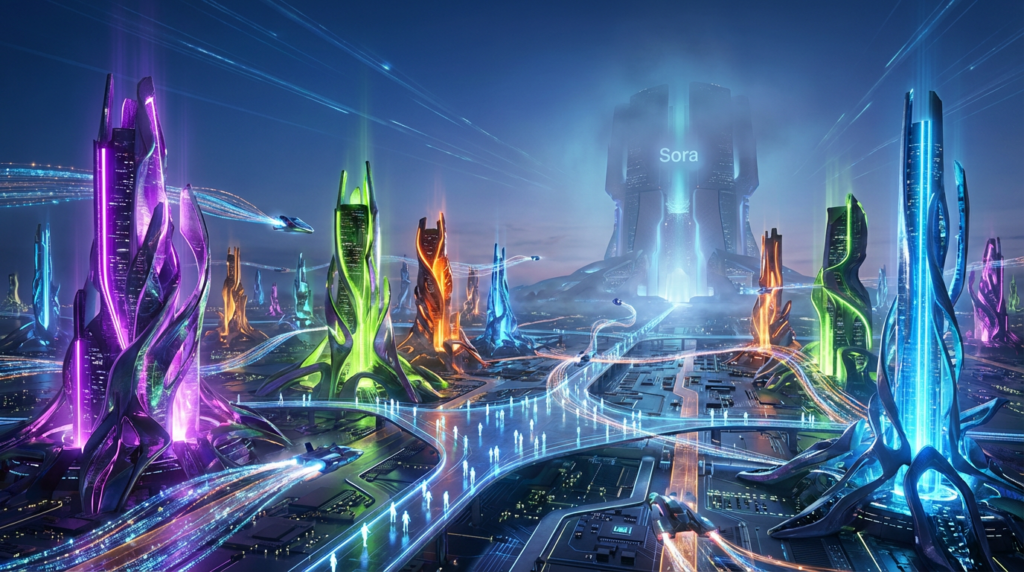
Sora’s retreat actually creates breathing room for its competitors. Runway, Kling, Pika Labs, and Luma Dream Machine now have time to solidify their positions before OpenAI potentially re-enters with a stronger integrated offering.
Existing users should export available content promptly and preserve their own project assets. Developers need to migrate integrations before the API closes. OpenAI says Sora data will eventually be permanently deleted after discontinuation and any final export window, if one is offered.
OpenAI hasn’t ruled out a future standalone video product. But for now, the company that wowed the world with Sora is admitting that video works better as a ChatGPT feature than as a standalone product.
Boom or bust? The AI industry will find out soon enough.
Sources
- iDrop News — Why OpenAI Discontinued Sora, Explained
- Artforum — OpenAI’s ‘Art Washing’ Sora App is Dead; Deal With Disney Scrapped
- The Pulse Gazette — OpenAI Shuts Down Sora Video Tool Months After Launch
- CNN — OpenAI Sora Video App Shutting Down
- Variety — OpenAI Shutting Down Sora Video, Disney Deal Off
The Kingy Brief
Get future Kingy Brief editions.
Source-checked AI changes, original tests and one practical thing to try.
Free · Choose your subjects · Double opt-in · Unsubscribe anytime
Regular sending is paused; no restart date is set.