Last updated: 2026-06-26
Last verified: 2026-06-26
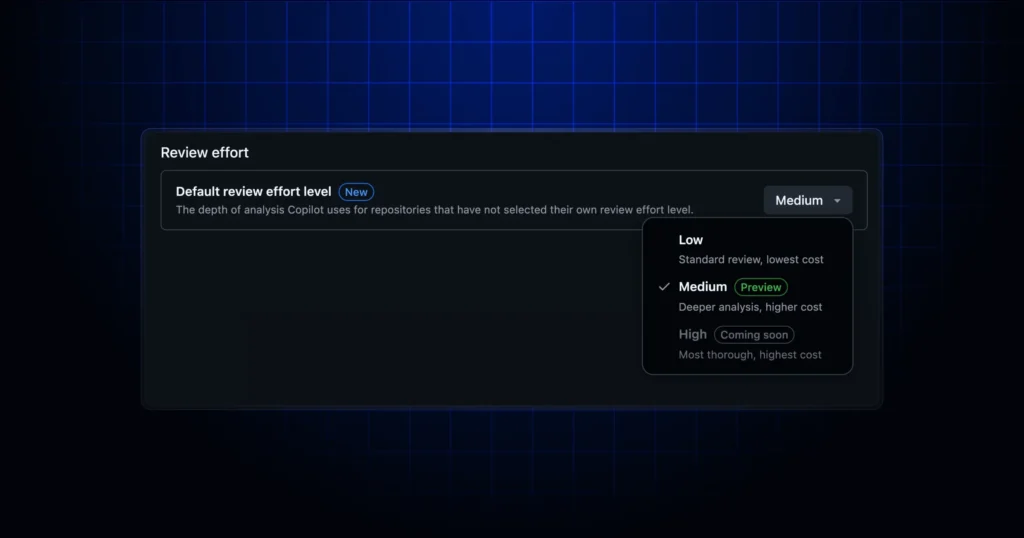
TL;DR: Copilot Code Review Analysis Depth is gitHub updated Copilot code review with analysis-depth and efficiency improvements. The key question is whether its source-backed details, pricing, and practical use cases make it worth testing for your workflow.
What launched?
On June 25, 2026, GitHub announced analysis-depth and efficiency updates for Copilot code review. The current draft is based on the official/source URLs checked for this run, with launch/update source treated as the primary launch evidence when available.
This matters because AI code review is useful only when teams can tune how much analysis they want and avoid turning every pull request into noisy automated feedback. The useful editorial angle is not hype; it is whether the product gives founders, marketers, builders, and AI buyers a clearer way to decide if it is worth testing.
What is Copilot Code Review Analysis Depth?
Copilot code review uses GitHub Copilot to review pull requests and surface code suggestions or risks inside developer review workflows. If that positioning holds up, Copilot Code Review Analysis Depth belongs in the AI coding tools category, with a more specific fit around AI code review.
For broader Kingy AI context, compare Copilot Code Review Analysis Depth with other AI launch radar coverage and recent AI News before treating this as a standalone buying decision.
The maker is listed as GitHub. Verified founder, funding, and customer claims should remain conservative unless they are backed by an official company page, reputable profile, or source checked during the run.
Key features to review
- Copilot code review uses GitHub Copilot to review pull requests and surface code suggestions or risks inside developer review workflows.
- Review GitHub’s Copilot code review documentation and enable the feature through eligible GitHub Copilot settings for repositories or organizations.
- https://docs.github.com/en/copilot/using-github-copilot/code-review
- Whether the product has enough official documentation to support production use.
- Whether the stated access path is clear enough for a reader to try it without guessing.
- Whether the launch details are materially new or only a minor feature update.

Real use cases
- Reviewing pull requests before human maintainer review
- Finding common code-quality and maintainability issues
- Creating a lighter review pass for busy engineering teams
- Testing AI review depth against repository-specific standards
- Founder research: compare the product against existing tools before committing budget or launch time.
- Marketing research: decide whether the product deserves a deeper review, tutorial, or sponsored content angle.
- Buyer research: identify pricing, access, and workflow risks before asking a team to test it.
Founder, marketer, builder, and buyer notes
For founders: Copilot Code Review Analysis Depth is worth reviewing if it solves a painful workflow that is already costing time, support capacity, engineering attention, or launch momentum. The useful question is not whether the launch sounds impressive; it is whether the product can replace a messy manual process with something easier to test, explain, and measure.
For marketers: the angle to watch is whether Copilot Code Review Analysis Depth creates a clear story for campaigns, demos, tutorials, or creator-led education. A good AI launch article should help marketers understand the audience, the buyer pain, the objection, and the before/after workflow without turning the page into vendor copy.
For builders: check whether the docs, API page, examples, changelog, and access model are detailed enough to support a real implementation. If the launch page is strong but the docs are thin, the product can still be interesting, but it should stay in review until the technical path is clearer.
For buyers: treat pricing, free-plan language, security posture, integration details, and support expectations as open questions until they are confirmed through an official source. If the product affects customer data, production workflows, or customer-facing output, run a small test before making it part of a core process.
Pricing and free plan
Pricing: Copilot code review is tied to GitHub Copilot availability; confirm current plan eligibility on GitHub’s official Copilot plans page. If pricing is unclear, readers should confirm it through the official pricing page, product dashboard, or sales process before making a buying decision.
Free plan: no. Do not treat this as final unless the free plan is visible on an official pricing, signup, docs, or product page.
How to try it
Review GitHub’s Copilot code review documentation and enable the feature through eligible GitHub Copilot settings for repositories or organizations. For technical products, check the docs and API page before assuming the product is ready for developer workflows.
Comparison snapshot
| Question | Current verified answer |
|---|---|
| Primary job | Copilot code review uses GitHub Copilot to review pull requests and surface code suggestions or risks inside developer review workflows. |
| Best fit | AI Platform Teams, AI Engineers, Developers, Enterprises |
| Pricing status | Copilot code review is tied to GitHub Copilot availability; confirm current plan eligibility on GitHub’s official Copilot plans page. |
| Free plan | no |
| Access | Review GitHub’s Copilot code review documentation and enable the feature through eligible GitHub Copilot settings for repositories or organizations. |
| Main alternatives | CodeRabbit, Sourcegraph Cody, Cursor Bugbot, Snyk Code, CodeQL |

Alternatives
Copilot Code Review Analysis Depth should be compared with alternatives on workflow fit, output quality, pricing clarity, documentation depth, data/security requirements, and whether the product solves a real daily problem rather than a demo-only use case.
- CodeRabbit
- Sourcegraph Cody
- Cursor Bugbot
- Snyk Code
- CodeQL
The strongest alternative is not always the closest feature match. Sometimes the better comparison is the current manual workflow, an internal script, a broader automation platform, or a more mature category leader. It is worth checking whether Copilot Code Review Analysis Depth is meaningfully different from those options or mainly a new wrapper around a familiar capability.
Risks and unknowns
AI review suggestions still need human validation; Overly broad automated review can create noise or false confidence; Security and compliance teams should not treat the feature as a replacement for formal testing.
Other risks to review include onboarding friction, unclear cancellation terms, weak documentation, limited export options, privacy obligations, and model-output reliability. If those details are missing, it is worth waiting for stronger official evidence before relying on the product.
Should you try it?
Try it if the official source, pricing, and workflow match your use case. Review the product directly before depending on it. If the product is important to your work, start with the official source, confirm pricing, and compare it with at least two alternatives before depending on it.
FAQ
What does Copilot Code Review Analysis Depth do?
Copilot code review uses GitHub Copilot to review pull requests and surface code suggestions or risks inside developer review workflows.
Is Copilot Code Review Analysis Depth free?
Copilot code review is tied to GitHub Copilot availability; confirm current plan eligibility on GitHub’s official Copilot plans page.
Who is Copilot Code Review Analysis Depth for?
AI Platform Teams, AI Engineers, Developers, Enterprises
What are alternatives to Copilot Code Review Analysis Depth?
CodeRabbit, Sourcegraph Cody, Cursor Bugbot, Snyk Code, CodeQL
Official links
Related Kingy AI links
The Kingy Brief
Get the next Kingy Brief.
Source-checked AI changes, original tests and one practical thing to try.
Free · Choose your subjects · Double opt-in · Unsubscribe anytime