
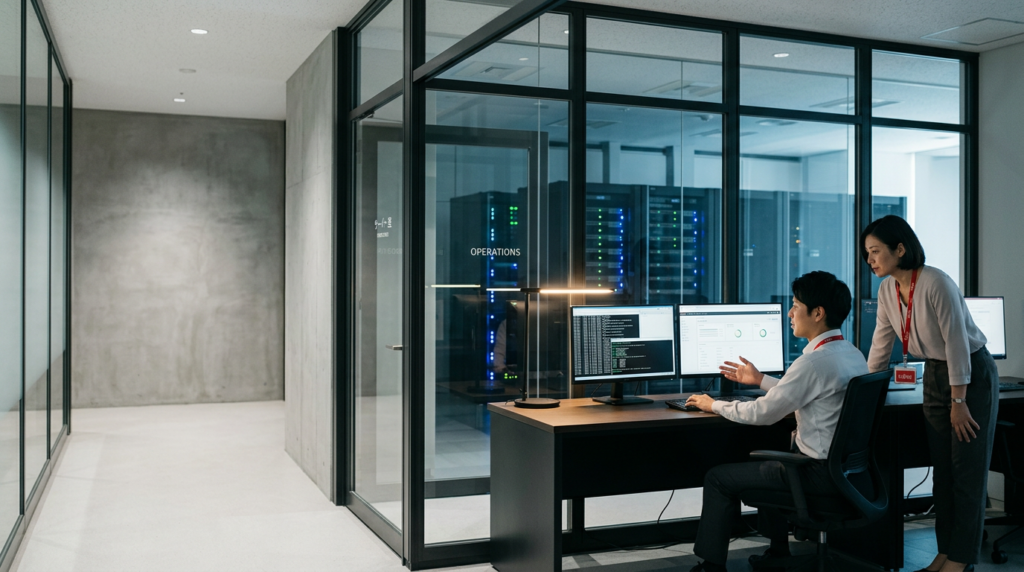
Fujitsu goes first
Fujitsu has expanded its partnership with Google Cloud, and the Japanese technology company plans to put its own operations on the front line. It will use more of Google Cloud’s AI and cloud technology internally, then bring what it learns to customers. The November 19 announcement covers cybersecurity, cloud systems for sensitive workloads, Gemini tools for engineers, and AI for retailers.
That’s quite a shopping list. The common thread is deployment. A retailer needs software that understands what’s actually on the shelf. A public agency needs to know who can access its records. Fujitsu plans to take on some of those practical questions inside its own business first, where its teams can see what the software asks of the people who’ll use it. That makes the internal rollout worth following in its own right, too.
What changed since July
The agreement started in July, when Fujitsu and Google Cloud Japan signed a memorandum of understanding to develop joint offerings and plan how to sell them. November’s expansion names four areas of work and adds a commitment from Fujitsu to increase its use of Google Cloud services.
Those workstreams are at different stages. Fujitsu is already a launch partner for Google AI Threat Defense in Japan. Its engineers are getting a Google Cloud platform for AI implementation. The companies describe the work on cloud systems for highly sensitive environments as exploratory, while retail is an area where they want to develop new capabilities. The announcement gives buyers a clearer picture of where the companies are working together. Availability will depend on the offering.
Inside the customer zero plan
Fujitsu calls its internal adoption plan “customer zero.” The idea is to experience the work of buying, integrating and running AI from the customer’s side, while also building the services it intends to offer. People inside Fujitsu will have to decide which teams use the tools, how they fit existing processes, and what happens when something breaks.
Imagine an AI assistant that answers questions about company procedures. It could give a convincing answer using a document that expired last month. Fixing that would mean working out who owns the source material and how updates reach the assistant. That’s an illustrative example. It shows how a lesson from an internal rollout might save a customer from rediscovering the same problem during its own deployment.
Cyber defense gets a bigger role
Google Cloud began offering Google AI Threat Defense in Japan in July. Fujitsu’s role as a launch partner gives the companies a starting point for this part of the expanded deal. The plan brings together Google Cloud technologies including Wiz, Mandiant, Google Security Operations and CodeMender, alongside Fujitsu’s knowledge of the systems its customers run.
The attraction for a security team is context. An alert about an unusual change can mean one thing during scheduled maintenance and something very different on a normal morning. Analysts need to connect the alert with what the business was doing at the time. A partnership that brings security tooling and knowledge of customer systems together could help teams make that judgment with fewer trips between screens.
What a security team would notice
Say an analyst starts the day with several alerts from one application. Some relate to the same event, and each uses a different name for the asset. A useful AI summary would group the relevant evidence, show where it came from, and give the analyst a place to start. The analyst would still decide whether the case warrants action.
That’s one way to picture the opportunity. Fujitsu’s announcement supplies no figures on alert quality or investigation time. A customer case study could show how much review work the tools save, how often analysts correct a summary, and whether the system keeps its value during a busy shift. The last measure matters when the queue fills faster than anyone can read it.
Cloud services for sensitive systems
Fujitsu and Google Cloud plan to explore how Google Distributed Cloud could serve organizations with stringent confidentiality and data sovereignty requirements. Fujitsu brings experience in public and social infrastructure. Google brings a cloud portfolio that customers can deploy on premises, including configurations designed to run in closed environments.
Google documents an air-gapped version of Distributed Cloud that can operate without a connection to the public internet or Google Cloud. Its portfolio also includes connected deployments. That distinction matters to an organization evaluating a specific workload. An agency that needs to keep records inside an isolated facility and a business that wants processing close to a busy site may both consider distributed cloud services. Their choices about connectivity and day-to-day operations could look very different.
Where the data lives is one question
Data residency concerns where data is stored or processed. Sovereignty also raises questions about which laws apply and who controls the systems that handle it. Even with the servers in an approved building, an organization may need to account for who holds the keys, who can administer the system, and how teams recover records after an outage.
Picture a public agency considering AI to search its internal manuals. The documents may contain information that only certain employees can see. The agency would want search results to respect those access rules, and its operations team would need to know how to restore the service if it failed. The deployment location helps answer part of that brief. The way the service is run answers much of the rest.
Gemini joins the engineering team

Fujitsu is providing a platform on Google Cloud to support its forward deployed engineers. These are engineers who work closely with customers and the teams that will use the technology. Fujitsu says Gemini and other Google Cloud AI tools will help streamline implementation, giving engineers more time to work through customer problems.
Take a team building an assistant for service technicians. An AI tool might help the engineers draft tests. The technicians can tell them which error codes get confused, which manuals are out of date, and when a job needs to go straight to a specialist. That could change what the team builds in its very first week. The engineers’ job is to turn that feedback into software the technicians can use and help maintain.
From a demo to a daily tool
A good demo usually has tidy files and a problem somebody picked in advance. A normal workday has duplicate records, vague requests, and a spreadsheet that someone moved without telling anyone. For the engineer deploying an AI system, figuring out how people handle those exceptions can take as much attention as building the feature.
Consider a tool that routes service requests. If employees have to copy every request into a new screen, the team has added work before it has saved any. An engineer working alongside the staff is in a position to spot the extra step. That’s also where the benefits of Fujitsu’s Gemini-supported platform would become visible. Faster setup helps most when it gives engineers time to fix the parts that cause daily friction.
Fujitsu brings its own AI
Gemini gets a named role in the engineering initiative, and Fujitsu has its own AI products in the wider partnership. The company says it intends to combine Google Cloud capabilities with Takane, its enterprise generative AI offering, and Fujitsu Kozuchi, its AI platform. Fujitsu will also bring the teams that help customers implement the technology.
For a buyer, the details will come down to how a particular offering is put together. One customer might want an AI system to work with an existing application, while another might start with a process it is already rebuilding. Both will need to know which components do the work and who supports them. Fujitsu’s announcement describes the product mix at the partnership level. Customer deployments would show how the pieces fit.
Retail AI has a job behind the counter
Fujitsu wants to use Uvance for Retail and Google’s AI technology to improve store operations and develop new ways for shoppers to find products and services. The store side of that brief is easy to picture. A helpful shopping assistant needs to see the same information staff rely on when they look up a product.
Imagine asking whether a pair of shoes in your size is available for pickup. The answer depends on which branch has the shoes, when its stock count last changed, and whether the store can hold them. A polished answer based on stale inventory sends everybody on an unnecessary field trip. It’s an example of how a shiny new shopping feature can depend on the quality of an ordinary inventory feed.
What shopping agents could do
Fujitsu uses the term agentic commerce for a future in which shopping assistants can work with agents that retailers, manufacturers, and logistics companies use. That could span finding a product, comparing options, buying it, and getting help after the sale. A shopper could, for instance, ask for an item that meets a budget and can arrive before a weekend trip.
An agent might turn those instructions into a short list and confirm which delivery options fit. How useful that feels will depend on the information it can retrieve and which decisions the shopper delegates. Choosing a size is different from authorizing payment. For retailers and customers, it will matter whether that handoff is clear, especially when an available product is close to the request and the deadline is tight.
Returns are part of the test
Anyone can make buying look easy while the product is still in the cart. Try exchanging it after delivery. Now the details matter. Is it still within the return period? Can it go to a local branch? Is a replacement in stock? A shopping assistant that can pull those answers together could earn repeat use even when the original order went sideways.
Fujitsu’s retail vision includes the period after checkout. A convincing demonstration would follow a single order through an exchange and show how it hands over to a store employee or service team when it hits an exception. That would tell retailers more about the quality of the connections between their ordering and support systems than a flawless product search ever could.
Public services run on ordinary work
Public infrastructure covers services people depend on, and some promising uses of AI in those settings are routine. A staff member might need to find a maintenance procedure quickly or summarize a backlog of internal service requests. Both examples give teams something measurable to start with, such as how long it takes to find the right document or whether a summary misses urgent work.
Fujitsu and Google Cloud are exploring where their technology can fit in high-security environments. Fujitsu’s announcement names public and social infrastructure as areas where it brings experience. If the companies publish a case study, it would be worth seeing how it accounts for shift changes, downtime, and staff who need a reliable answer while a service is already running.
What customers can verify next
A wider agreement gives Fujitsu and Google Cloud more things to build together. For customers, the next milestone is evidence from real deployments. A cybersecurity team might look for investigation time and alert quality. A retailer could measure stock accuracy in shopping responses and see how often an automated exchange reaches a person. A public agency could check that a service remains accessible during a recovery exercise.
Fujitsu’s release gives the direction of the partnership and names several technologies involved. A shared rollout timetable, pricing across the four initiatives, and customer performance figures remain undisclosed in the announcement. Case studies would help buyers understand which parts they could adopt first, and how much work they’d need to do with the systems they already own.
The most useful result may be a fix

The next update from this partnership could be more revealing if Fujitsu talks about a problem it encountered in its own operations. Which team tried the technology? What did the software get wrong? How did Fujitsu change it, and what happened after the change? That sequence would give customers a way to judge whether the same approach might work for them.
The November expansion puts Fujitsu in a position to answer those questions from experience. Its engineers can bring examples to a customer conversation, and its customers can ask how the lessons hold up in a different setting. If Fujitsu can show where a deployment got easier, where staff kept control, and what still required engineering work, buyers will have something concrete to evaluate.
Sources
- Fujitsu — Expanded Google Cloud partnership and customer zero initiative
- StreetInsider — Partnership expansion and its four workstreams
- Investing.com — Gemini engineering support and enterprise AI collaboration
- Google Cloud Documentation — Distributed Cloud deployment options
- Google Cloud Documentation — Air-gapped operations, residency, and recovery
- Google Cloud — Key control in a regulated cloud environment
The Kingy Brief
Get the free AI price sheet.
25 AI plans and models on one page, from official pricing pages, updated every month. Free when you join The Kingy Brief: AI changes, original tests and one practical thing to try, Fridays at 09:00 Vancouver time.
Free · Unsubscribe anytime
Signup help and newsletter schedule
After submitting, look out for the welcome email from The Kingy Brief. If the form asks you to confirm, open the confirmation email too. Check Spam or Promotions if you cannot find it.
Fridays at 09:00 Vancouver time: source-checked AI changes, original tests and one practical thing to try. We skip a week when there is not enough verified material. Free. Unsubscribe anytime.