
Microsoft puts the AI bill onstage
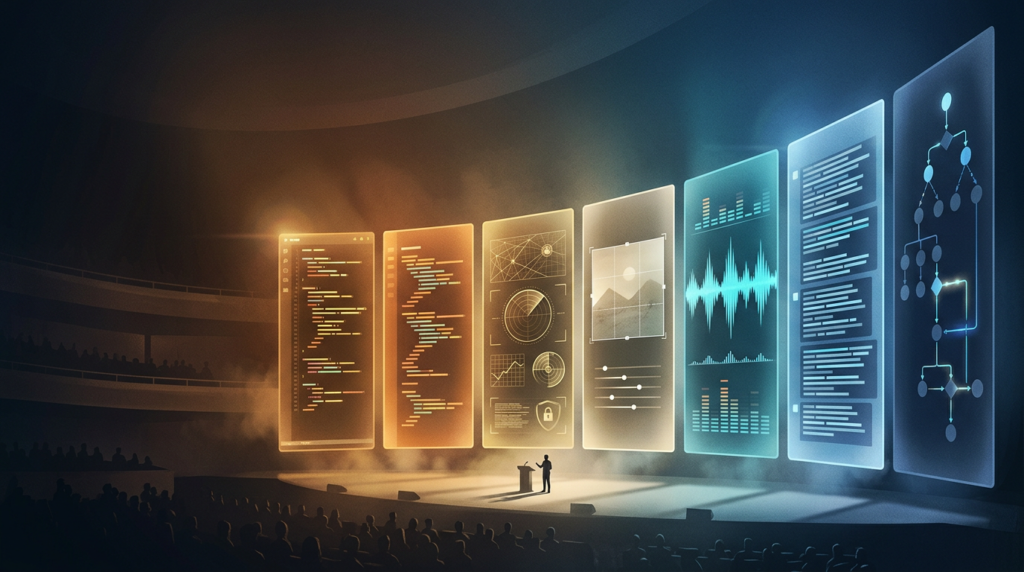
Microsoft unveiled seven specialized AI models at Ignite 2026 in San Francisco, and the most interesting number may be the one that shows up on a customer’s bill. The lineup covers software development, cyber defense, image generation and editing, live voice conversations, transcription, and model routing. Reuters confirmed the announcement at 2:16 a.m. Philippine time on November 18.
The Ignite announcement makes a case for paying less per job by giving different models different jobs. A software team working through a backlog has little in common with a support center answering calls. Both can benefit from more affordable AI, and both have their own ways of telling whether the technology has earned its place.
Seven models, six kinds of work
The seven Microsoft highlights are MAI Code 2, MAI Code 2 Flash, MAI Cyber 2 Flash, MAI Image 2.7, MAI Realtime 1, MAI Transcribe 2, and Decision 1.1. Coding accounts for two entries because Microsoft built a stronger workhorse and a lighter option for frequent, smaller tasks.
Microsoft also announced an Image 2.7 Flash variant alongside its main image model. That companion release makes the image family a little bigger than the seven names on the keynote list might suggest. There’s a similar wrinkle in the audio lineup. Realtime handles a conversation, while Transcribe turns speech into text. Decision 1.1, meanwhile, helps applications choose which model to call. Its work is mostly invisible to the person making the request.
MAI Code 2 takes on the daily backlog
MAI Code 2 is the model Microsoft wants developers to reach for when a request involves several files or a bug takes some digging. GitHub also points to refactoring and repository-wide work. Think of a developer updating a shared component and checking which parts of the application depend on it. The time goes into understanding what else the change touches.
Microsoft says Code 2 averaged 98% of GPT-6.1 Sol’s score at roughly 40% of its price across four coding benchmarks. That comparison gives software teams a concrete reason to look at the release. A team testing the model on its own backlog would have another useful number to track: how often the first proposed change actually passes review.
Code 2 Flash handles smaller jobs
MAI Code 2 Flash targets the stream of smaller requests that fills a developer’s day. Explain this unfamiliar function. Update a label. Adjust a test after the inputs change. A busy engineering organization can generate a surprising number of them before lunch.
That volume gives a lighter model room to matter. If the explanation is clear and the patch is easy to inspect, a team can get real value from a short interaction. GitHub says Flash is available to Copilot Free and Student users as well as paid customers. The GitHub changelog also lists Code 2 on eligible paid plans, giving teams with access to both a direct way to compare them during everyday work.
Cyber 2 Flash brings lower prices to defense
Microsoft positions MAI Cyber 2 Flash as a defensive model for security teams reviewing software and prioritizing fixes. The company says it costs less than 2% as much per task as GPT-6 Astra on one cybersecurity benchmark while delivering comparable or better results. Reuters reported that Microsoft planned to offer the model to a limited group of customers.
The practical attraction is coverage. A team responsible for many applications can spend substantial time sorting new findings and figuring out which problems deserve immediate attention. Lower processing costs could make routine review more affordable. Analysts would still have to verify the findings that reach them and decide which changes belong in production.
Image 2.7 makes revision part of the pitch
The first draft of an AI image can be fun. The second pass is where patience gets tested. Ask for a red jacket to turn navy and the tool might also change the stitching, the lighting, or the face of the person wearing it. MAI Image 2.7 is designed to make targeted changes while preserving the rest of the scene.
Microsoft cited a first-place finish on Artificial Analysis’s image editing leaderboard at launch. Its image model announcement put the lead over GPT Image 2.6 Sunburst (max) at four Elo points. For a design team, a bigger question is whether the model can keep a product recognizable across three successive rounds of feedback.
Image Flash is built for volume
Microsoft put both image variants in public preview on Foundry. Its published estimates work out to around $35 per thousand images for MAI Image 2.7 and $10 per thousand for Image 2.7 Flash. The latter could be attractive for a retailer preparing backgrounds for a catalog or an agency preparing several crops before a campaign review.
The per-image figure is only one line in the budget. Someone still needs to check whether the product looks right and whether the composition works in its intended placement. A batch of 100 cheap outputs starts looking expensive if someone spends an afternoon rescuing them. The promise of the Flash variant is straightforward. It gives creative teams more room to try variations and discard the ones they can’t use.
Realtime 1 gives voice AI a price per minute

MAI Realtime 1 is Microsoft’s first live speech-to-speech model. Its announced starting price is one cent per audio minute. The model is built for conversations where a person may pause, change direction, or jump in before the system finishes talking. Microsoft is offering a way to try it through MAI Labs and is collecting interest from prospective customers.
For a service team, the timing is as important as the wording. Even a well-phrased answer can feel awkward if it arrives after a long silence. Interruptions matter, too. If a caller corrects a date halfway through a sentence, the next reply should reflect the new date. Those small moments explain why a voice model deserves a category of its own.
Transcribe 2 does a different job with audio
MAI Transcribe 2 powers transcription in Dragon Copilot. Microsoft says the system handles 10 million patient encounters a month and that error rates in multilingual workflows fell by half. Those are figures from Microsoft about the product’s deployment and performance. They help explain why the company gave transcription its own spot in the announcement.
A conversation can contain names, numbers, and switches between languages, sometimes in the same breath. A transcription system needs to preserve what was said in a form someone can check afterward. In that setting, a small error can be easy to miss when the rest of the text reads smoothly. Transcription quality comes down to whether the details survive the trip from speech to text.
Decision 1.1 chooses where the request goes
Decision 1.1 is Microsoft’s model for routing requests. An application can use it to decide which requests can go to a less expensive model and which need more processing power. A straightforward question about an internal policy and a question that asks an assistant to reconcile several policies might arrive through the same chat window. They present very different jobs behind the scenes.
Microsoft made Decision 1.1 generally available at Ignite. TestingCatalog reported that it scored 68 on Artificial Analysis’s Decision Index, up from 62 for the prior version. An application owner has a complementary way to judge it. When a request goes to a cheaper model, does the person still get a useful answer on the first try?
How the benchmark numbers fit together
Microsoft’s coding comparison averages four evaluations. The cyber figure measures cost per task on one benchmark. Image editing uses a leaderboard score, and voice has a starting rate per audio minute. Each number answers a different question, which makes the announcement easier to read once you know what sits under the headline.
Consider two coding tools that score about the same overall. One might do better on unfamiliar code, while the other produces cleaner patches in projects that already have good tests. Either could be cheaper for a given team depending on the work. The headline percentages narrow the list of models worth trying. The actual workload gives those percentages a price tag that means something to the people paying it.
The price of a finished task
Cheap input can still produce an expensive result. Imagine a team using AI to draft updates for internal documentation. One model needs an extra prompt for every third update. Another finishes in one pass more often but charges a higher rate. The difference that matters to the team includes the cost of the extra prompts and the time someone spends checking the drafts.
The same idea applies to speed. A shorter wait can improve a live call, while a batch of pictures can run in the background as a designer does something else. Buyers will get more clarity from measuring the cost of a usable transcript, an approved patch, or a completed call. Those units already make sense to the people doing the work.
Availability varies by product
Microsoft gave users several different ways into the lineup. Both coding models are in GitHub Copilot, with Flash also in limited access preview in Foundry. The image models are in public preview through Foundry. Realtime has a demo and an interest form, Dragon Copilot already uses the transcription model, and Decision 1.1 is generally available. The cyber model has a more limited audience.
Those distinctions shape what teams can learn this week. Developers who already use Copilot can try work they do routinely. Designers with access to Foundry can run a small batch of edits. A support operation interested in Realtime can explore the demonstration while it checks what wider access would involve. Ignite gave each group a different starting point.
Microsoft builds models and sells access to rivals
Microsoft’s broader Ignite announcement also highlighted GPT‑6.2 coming to Foundry. That puts a rival model family alongside the company’s own push into coding, voice, images, and other specialized tasks. Foundry customers can have reasons to use both, especially when an application deals with several types of work.
There’s a commercial logic to the arrangement. Microsoft earns a chance to serve customers who want its own models and those who come looking for a specific outside model. It can also put its technology in tools developers already open every morning. For customers, the payoff could be a simpler comparison, with fewer meetings about how to fit a new service into the existing stack.
What a good pilot would reveal
The quickest answers will probably come from familiar work. A developer can hand Code 2 a task with a known outcome and see how much of the patch survives review. A creative team can ask both image models to make the same change across a batch. A support team testing Realtime can listen to how it handles the moment when a caller changes their mind.
A visually appealing image can still take too many tries. A fast reply can still miss the caller’s correction. A working patch can be harder to maintain than it first appears. Early evaluations that track staff time alongside model charges will tell buyers more about which savings they can keep.
The next milestone is repeatable savings

Microsoft has given customers something concrete to compare. The company named the jobs it wants to handle, published price figures and comparisons, and opened access to several of the tools across its enterprise products. That is encouraging for teams that have useful AI projects waiting on a budget large enough to run them regularly.
The follow-up belongs to the people using the models on their own work. How many edits make it into a campaign? How many proposed changes pass review? How often can the router choose a cheaper model and still leave users satisfied? If those answers hold up at volume, the effect of Ignite will show up in work that teams can finally afford to do every day.
Sources
- Microsoft AI — The seven-model Ignite announcement
- Reuters — Microsoft’s coding and cybersecurity model launches
- Axios — Microsoft’s specialized AI models and coding price comparisons
- GitHub Changelog — Code 2 and Code 2 Flash availability in GitHub Copilot
- Microsoft AI — Image 2.7 and Image 2.7 Flash pricing and editing performance
- Microsoft AI — Realtime 1 speech-to-speech capabilities and pricing
- TestingCatalog — The MAI lineup and Decision 1.1 benchmark results
- The Official Microsoft Blog — Foundry and the broader Ignite announcements