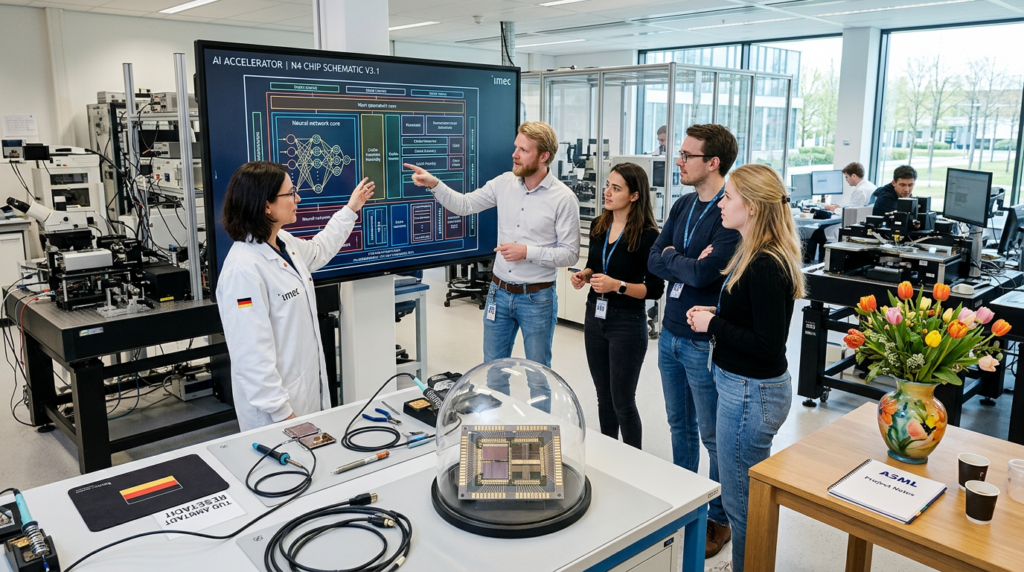
A new bet on Europe’s AI hardware
The Netherlands and Germany are joining forces to tackle a stubborn problem in artificial intelligence: designing the chips that make it run.
Their strategic innovation agencies, the Dutch National Agency for Disruptive Innovation (NADI) and Germany’s SPRIND, plan to commit €40 million over 20 months to small teams working on AI chip design. The teams will use AI to help develop processors for both training models and inference—running those models after training. Reuters reported the collaboration on 23 September.
It is an appealing idea. If AI can help engineers explore chip designs faster, Europe might find better ways to build the hardware behind the technology. But the announcement is a starting gun, not a victory lap. Neither agency has announced a finished chip, a performance result, or a production deal from this project.
That distinction matters because chip announcements can sound deceptively complete. A design that looks excellent in a simulation must still be tested, manufactured and made useful to customers. For now, the news is the collaboration—and the question of whether its approach can shorten a process that often takes years.
What the agencies have actually announced
According to Reuters, NADI and SPRIND will put €40 million toward the project over 20 months. Their plan centers on small teams using AI to accelerate the design of chips that train and run AI models. SPRIND’s head of challenges, Jano Costard, described an ambition to achieve dramatic acceleration in a design process that currently takes years.
That is the reported aim. It is not a measured result. The public reporting does not yet identify winning teams, lay out a chip specification or say when a prototype will appear.
The partnership also needs to be kept separate from the agencies’ other budgets. The Dutch government has set aside €500 million for NADI, according to the agency’s website. SPRIND separately runs a €125 million challenge intended to help create European frontier AI labs. Those figures describe wider initiatives; they are not extra money added to this €40 million chip project.
Even so, €40 million is a substantial commitment to finding out whether a different design process can work.
Meet NADI, the Dutch newcomer
NADI is still being established. On its website, the agency describes its purpose as backing potentially important innovations at a stage when their financial risk makes private investment difficult. It names security, energy, health and the economy among the areas where promising research can struggle to reach the market.
The agency says it will frame programmes around major strategic problems, then challenge researchers and companies to develop solutions. That gives the new chip collaboration a broader purpose than producing another processor diagram. NADI wants to help close the distance between a promising technical idea and something that can matter economically.
The Netherlands brings considerable semiconductor experience to that effort. Reuters points to the ecosystem around Dutch chip-equipment maker ASML as one reason the cross-border partnership makes sense. Yet expertise in equipment does not automatically mean that a country can design, manufacture and sell every part of an AI computing system itself.
For NADI, working with an established German counterpart offers a way to begin testing ambitious ideas while the Dutch agency continues building its own organisation.
SPRIND brings the challenge model
Germany’s SPRIND already has a method for funding risky technology ideas. Its challenges set a defined goal that teams can approach in different ways. Teams develop their ideas in stages; at each stage, promising projects can advance and receive further support.
This structure fits a problem like chip design. Engineers may disagree—productively—about which architecture, design tool or technical trade-off has the best chance of working. Funding several approaches lets them test those arguments against evidence instead of selecting one on paper and hoping it wins.
SPRIND says its challenges draw applicants from universities, research institutions, startups and established companies. It also offers support beyond money, including expert coaching and help connecting teams with potential partners. Its published partnership information lists support for establishing a Dutch counterpart.
The agencies have not yet published enough detail to say exactly how their new joint project will select or assess teams. SPRIND’s existing model explains the approach it brings to the table, but the chip project will need its own concrete milestones.
Why focus on chip design?
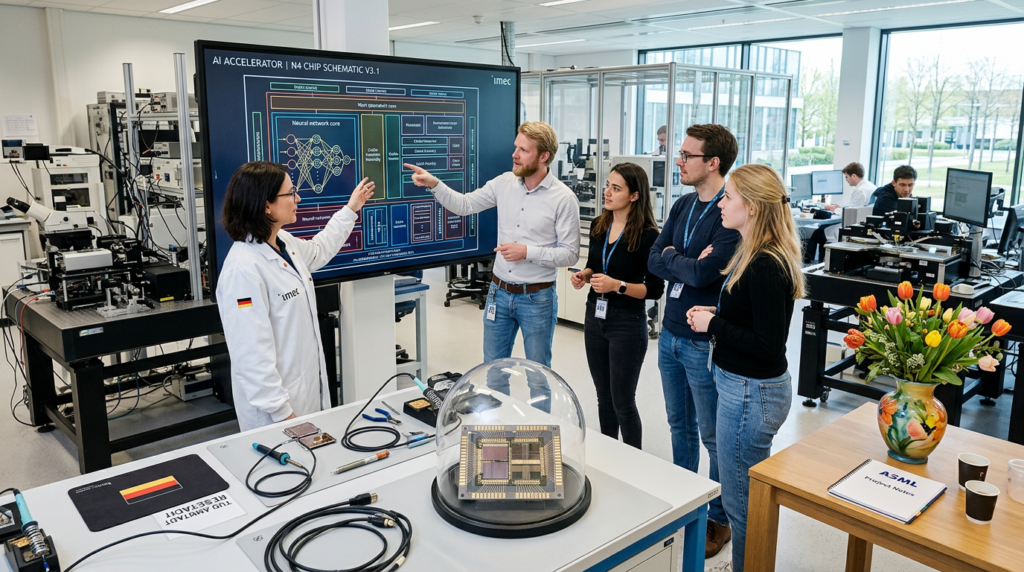
An AI chip is the result of many linked decisions. Engineers have to decide how it moves data, uses memory, performs calculations and communicates with other chips. They also have to consider power consumption, software support and what manufacturers can realistically produce.
A design that wins on one measure can lose badly on another. More computing capacity sounds attractive until it demands too much electricity, costs too much to manufacture or leaves software developers struggling to use it. That makes the design process itself a valuable place to experiment.
The European Commission says the EU remains dependent on countries outside the bloc in important parts of advanced chip manufacturing and semiconductor design. Its proposed Chips Act 2.0 includes support for the development of strategically important chips, including AI chips. The German–Dutch project fits that wider concern, though it should be judged on its own results.
The immediate goal is therefore more specific than “build Europe’s answer to Nvidia.” It is to explore whether small, well-supported teams can find and validate useful designs more quickly.
Using AI to help create AI hardware
There is a neat loop at the center of the project: AI systems may help engineers design the next chips on which AI systems run.
Reuters reports that the participating teams will use AI to speed up chip design. It has not reported the particular tools or methods they will use. That leaves room for several possibilities, from helping engineers compare design options to improving parts of the testing workflow—but those are examples of what AI-assisted design could involve, not confirmed features of this programme.
Whatever tools the teams choose, the challenge will be proving that speed produces a better outcome. Generating a large number of candidate designs is useful only if engineers can tell which ones satisfy real constraints. A design must survive careful verification before anyone can trust it in hardware.
That is why Costard’s ambition to accelerate work that takes years is interesting, but also a claim to watch closely. The meaningful result would be a repeatable process that reaches sound designs faster—not simply a faster way to generate suggestions.
Training and inference need different things
The project covers chips for training and inference, two related jobs with different demands.
Training is the costly process through which a model learns from data. Inference happens every time someone asks a trained model a question or gives it a task. Training can require enormous computing clusters. Inference happens repeatedly, which makes the cost and energy used per task particularly important.
Jelle Prins, a NADI co-founder, told Reuters that powerful Nvidia chips can be inefficient for some inference work. He compared using them for those tasks to taking a truck on a grocery-shopping trip. It is a vivid way of arguing that the most powerful general option is not always the best fit for a particular job. It does not establish that this new project already has a cheaper or more efficient replacement.
The distinction gives designers choices to investigate. Should a processor handle many different workloads reasonably well? Or should it excel at a narrower set of inference tasks? Those choices depend on the customers, software and economics a team eventually targets.
Why the Dutch–German pairing makes sense
The partnership joins different strengths. Reuters describes the Dutch semiconductor ecosystem around ASML and German strengths in research and manufacturing as the rationale cited by NADI’s Prins. SPRIND contributes experience organising high-risk technology challenges. NADI brings a newly funded Dutch route for turning ambitious research into development programmes.
Cross-border work also widens the pool of people who might tackle the problem. Designing a competitive chip calls for expertise across hardware, software, manufacturing and business. A promising architecture needs engineers who can make it usable and customers who have a reason to adopt it.
SPRIND’s own partnership page says it works with other European organisations on international challenges and new approaches to innovation funding. The Dutch collaboration is consistent with that strategy.
Still, putting two agencies together does not automatically put all the necessary expertise on one team. Their practical task will be connecting researchers, chip specialists and potential users early enough for those groups to shape the designs together.
The larger European picture
Europe has spent years asking how to strengthen its place in the semiconductor industry. The European Commission says its original Chips Act helped mobilise more than €52 billion in public and private investment, while dependence remains in areas including advanced manufacturing and design. Its Chips Act 2.0 proposal puts more attention on design, production and demand for important chips.
That context helps explain the attraction of a focused chip-design programme. Large manufacturing projects are expensive and slow. Design is another part of the value chain where European teams can try to create distinctive technology and companies.
The Dutch government’s plans point in a similar direction. NADI’s €500 million allocation is intended to support breakthroughs that otherwise struggle for funding. Holland High Tech describes a broader Dutch effort linking support for early breakthroughs, innovation ecosystems and the later growth of companies.
The new partnership is one piece of that picture. It cannot, by itself, resolve Europe’s wider chip dependencies. It can test whether Europe has a faster route from a strong design idea to a credible product.
What €40 million can—and cannot—buy
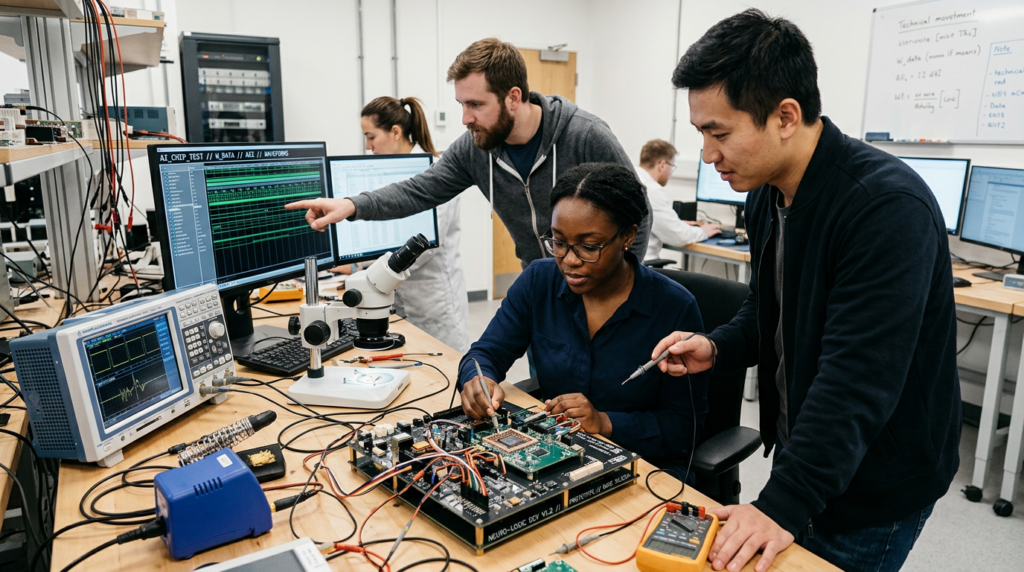
A €40 million, 20-month programme can support serious engineering work. It can give teams time to pursue alternatives, test assumptions and show whether an approach deserves a larger commitment.
It should not be mistaken for the budget required to build an entire advanced chip industry. Designs need tools, testing, software and access to manufacturing. Commercial products need buyers and a dependable way to supply them. Each step creates another decision about money and risk.
That makes the project’s scope important. If the agencies fund several teams, they may learn that one design approach is more promising than another. They may also discover that an idea works technically but faces a costly path to production. Finding that out early would still be useful.
SPRIND’s general challenge model explicitly allows teams to compete through stages, with continued support depending on progress. The agencies have not yet detailed how this particular €40 million will be divided or what will happen after the 20 months. Until they do, claims about an eventual factory, chip launch or market share would be guesswork.
The hard part comes after a clever design
The cheerful version of this story ends with a breakthrough chip. The realistic version has several more chapters.
A team must show that its design works under the workloads it hopes to serve. It must establish that the chip’s speed, energy use and cost are attractive together. Then it needs software that lets customers put those advantages to work. A powerful chip that requires extensive changes to existing systems may have a difficult sales pitch.
Manufacturing is another hurdle. A chip design and a manufactured chip are different achievements, and delays or costs in turning one into the other can change a project’s prospects. These are general challenges of chip development, rather than reported setbacks for the new partnership; the project has only just been announced.
The European Commission’s Chips Act 2.0 materials recognise the importance of linking new chips with industrial demand, including measures meant to help semiconductor products reach users. That connection will matter for any designs emerging from NADI and SPRIND’s work.
How to judge the project fairly
The first useful signs of progress will be more modest than a dramatic headline about replacing today’s market leaders.
Watch for the agencies to publish a clear challenge brief: which workloads matter, how teams will be selected and what they must demonstrate. Next, look for comparisons made under defined conditions. A claim that a design is “faster” means little without knowing the task, power consumption and cost involved.
Evidence of software support and manufacturing plans would strengthen the case further. So would interest from potential customers willing to test a prototype. These are suggested measures for assessing progress, not milestones the agencies have announced.
It will also be worth asking what AI contributes to the work. If the programme says AI speeds up design, can it show where time was saved and whether the resulting designs perform well? That would make its method valuable beyond any single chip.
For now, the verified measure is commitment: €40 million, 20 months and a joint effort to accelerate design. Outcomes remain to be demonstrated.
A small start with a big question
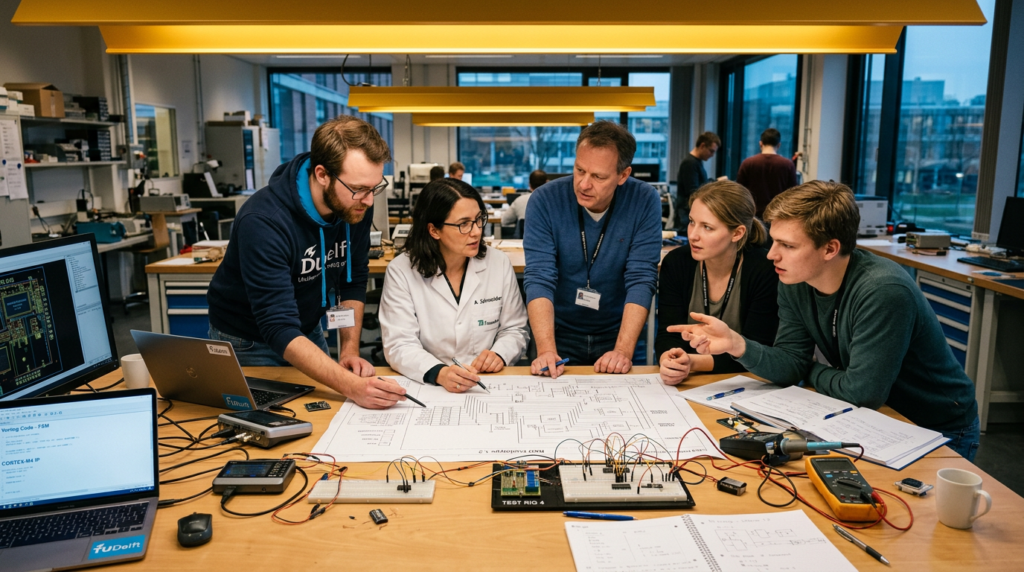
There is something refreshingly practical about the German–Dutch proposal. Rather than announcing that Europe has solved AI hardware, two agencies are funding teams to test whether the path to better chips can be improved.
The collaboration has credible ingredients: a defined investment, agencies built to support risky ideas, Dutch semiconductor expertise and German research and manufacturing strengths. It also faces the unforgiving realities of chip development. Clever designs must become verified hardware, usable software and products that someone wants to buy.
That is the story to follow over the next 20 months. If the teams can demonstrate a faster, reliable way to design chips for training or inference, the benefit could extend beyond one processor. If they cannot, the programme should still produce useful evidence about which approaches fell short and why.
Today’s news is a bet on the process. Whether that process yields a competitive chip is the part nobody can honestly announce yet.
Sources
- Reuters — “German and Dutch strategic innovation agencies to collaborate on AI chip design” — 23 September 2026.
- NADI — Agency overview and establishment updates — website includes an update dated 15 September 2026; the overview page has no single publication date.
- SPRIND — How its challenges work — publication date not stated.
- SPRIND — Partnerships in Germany and abroad — publication date not stated.
- European Commission — Chips Act 2.0 overview — last updated 3 June 2026.
- Holland High Tech — Dutch innovation funding plans — 17 September 2026.
The Kingy Brief
Get the next Kingy Brief.
Source-checked AI changes, original tests and one practical thing to try.
Free · Choose your subjects · Double opt-in · Unsubscribe anytime