ChatGPT May Be Getting a Body
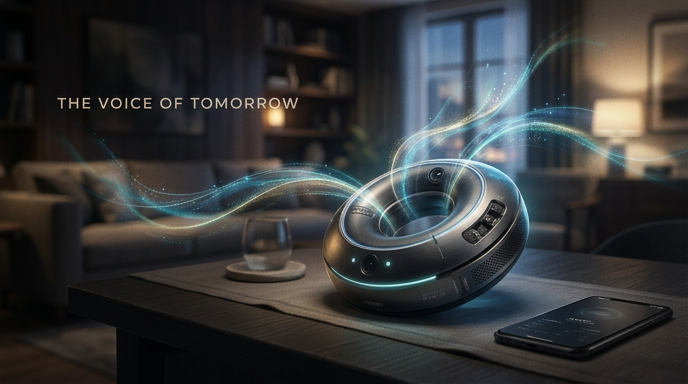
ChatGPT has lived inside browsers, phones, and desktop apps. Now OpenAI reportedly wants to give it a body and, in a delightful twist, that body may resemble a doughnut squashed to the size of a hockey puck.
According to The Verge, OpenAI and former Apple design chief Jony Ive are developing what sources describe as a screenless smart speaker. The battery-powered device could arrive in 2027 and cost more than $300. It may include microphones, speakers, lights, cameras, other sensors, and mechanical pieces that move when it responds.
That combination makes “smart speaker” sound almost too ordinary. The rumored product seems designed to notice its surroundings, travel around the home, and communicate through motion as well as voice.
Nothing here is final. OpenAI has not announced the product, revealed its design, or confirmed its price. The current picture comes from reporting about a device still under development. Even so, the rumors offer the clearest glimpse yet of how OpenAI may try to move ChatGPT beyond the screen.
A Doughnut With Cameras, Because 2026 Was Apparently Too Normal
The shape has grabbed the headlines, naturally. Gadgets usually arrive as rectangles, cylinders, or tiny slabs pretending not to be rectangles. A doughnut-shaped assistant feels different before anyone even knows what the hole is for.
The Verge’s report says the device may be roughly the size of a hockey puck and easy to carry around the house with one hand. Its rechargeable battery would free it from a permanent spot beside an outlet. You might move it from a desk to the kitchen, then take it to the bedroom without ending the conversation.
The reported moving parts are more intriguing. They could turn the device toward a speaker, signal that it is listening, or create small gestures while it talks. None of those functions has been confirmed. As Maya Bennett observes, movement could make the object feel attentive or simply turn it into a very expensive wiggling doughnut.
If OpenAI wants this device to feel more expressive than today’s speakers, every twitch will need a purpose. Otherwise, it risks performing interpretive dance while someone asks for a pasta timer.
The Screenless Bet Is the Real Story
The absence of a display may prove more important than the shape. Remove the screen, and the assistant must understand speech reliably enough that users stop reaching for a phone.
The Decoder says the device is expected to work like ChatGPT’s current voice mode, but with more advanced models aimed at natural, humanlike interaction. It may learn from conversations and adapt to individual users over time. That sounds ambitious. It also explains why OpenAI might want dedicated hardware.
A phone treats voice as one feature among hundreds. A purpose-built device could make conversation the entire interface. No app launcher. No keyboard. No notification carnival. You ask, clarify, interrupt, and continue. In theory, that flow could feel less like operating software and more like working through an idea with someone nearby.
Yet screenless design removes the escape hatch. When the assistant mishears a name, invents a detail, or chooses the wrong smart-home device, there is no obvious visual control panel waiting below. OpenAI would need excellent voice recognition, crisp feedback, and easy ways to correct mistakes. Conversation cannot be merely charming. It must be dependable.
Why Not Just Use the Phone Already in Your Hand?
This is the question hovering over the entire project like a particularly judgmental cloud. ChatGPT already has voice features on smartphones. Phones already include batteries, microphones, speakers, cameras, screens, and internet connections. Why buy another object that performs a task your current rectangle can handle?
The rumored speaker must remove friction that phones create. Perhaps it wakes instantly, follows a conversation across rooms, understands what the camera sees, or handles requests without opening an app.
Still, convenience has limits. Smart speakers became popular partly because they made timers, music, weather reports, and basic home controls effortless. Those uses remain useful, but they rarely justify a premium price. Bennett’s Medium analysis puts the challenge neatly: a costly home device must explain why the phone cannot remove the same friction.
OpenAI therefore needs a killer habit, not a longer feature list. Maybe the device becomes a roaming tutor, a hands-free creative partner, or a household organizer that remembers context. Whatever the answer, it must feel essential after the novelty fades. Nobody needs a $300-plus kitchen timer with excellent vocabulary.
The Price Is Reported Above $300, Not Confirmed at $400
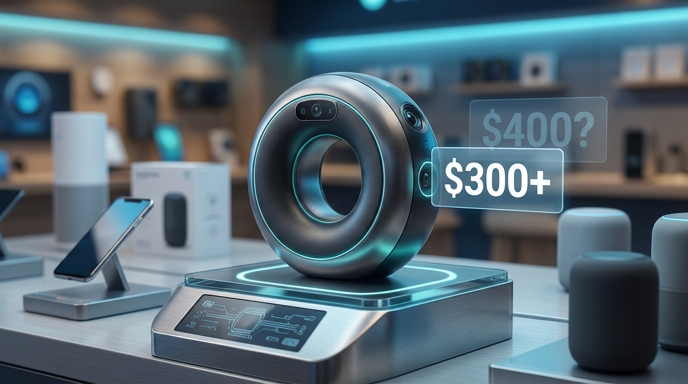
The price deserves careful handling because the headlines do not all say the same thing. The Verge and The Decoder report that the device is expected to cost more than $300. Bennett discusses a possible $300-to-$400 range and uses $400 in her headline. OpenAI, however, has not announced a retail price.
So, no, the world does not yet have an official $400 ChatGPT doughnut. What it has is a premium-price rumor.
Even the lower end would place the product far above many familiar smart speakers. That tells us OpenAI may not be chasing the mass-market bargain bin. A metal build, cameras, sensors, motors, battery, and advanced AI service could make the hardware expensive. The company may position it as a new computing category rather than another voice-controlled music box.
Premium pricing also raises expectations. Buyers will demand accuracy, useful memory, strong sound, good battery life, dependable privacy controls, and features that improve over time.
At $300 or more, “interesting” will not close the sale. The device must become something people miss when it is not in the room.
Moving Parts Could Make AI Feel Strangely Alive
Humans read meaning into motion with almost embarrassing enthusiasm. A tilt can look curious. A turn can signal attention. A pause followed by a tiny movement can feel thoughtful, even when a motor and software produced the whole performance.
That is why the rumored mechanical elements could become the product’s defining feature. The Verge reports that some pieces may move on their own while the device responds or interacts. Combined with lights and a voice, those motions could give users a quick sense of what the assistant is doing.
Done well, physical behavior could solve practical problems. The device might orient its microphones toward whoever is speaking, point a camera away when it is inactive, or use an unmistakable posture to show that recording has stopped. Motion could become a readable interface rather than decorative machinery.
Done poorly, it could feel gimmicky or manipulative. People already assign personality to text chatbots. Add a warm voice, memory, cameras, and gestures, and the effect becomes stronger. The Decoder connects the concept to Sam Altman’s interest in an assistant resembling the one in Her.
OpenAI will have to make the object engaging without pretending that software has feelings. That is a delicate design job. Cute can become creepy with one badly timed swivel.
A Companion Must Remember—But Not Too Much
The word “companion” sounds warm, helpful, and conveniently free of charging cables. It also opens a giant box labeled PRIVACY, probably in red letters.
A useful personal assistant needs context. It should remember preferences, ongoing projects, household routines, and the conversation that began five minutes ago in another room. Cameras and microphones could help it understand who is speaking and what is happening nearby. That context might let the device give genuinely useful answers instead of starting every exchange from zero.
But the same capabilities can feel invasive. As Bennett argues, users may want memory without making the room feel occupied by a silent employee who never leaves. That tension sits at the center of the product.
OpenAI would need clear indicators for listening and recording, simple camera controls, understandable memory settings, and convincing explanations of where data goes. Users should know what the device saw, what it stored, what it inferred, and how to delete it. A physical mute control would be reassuring, especially if its state is obvious from across the room.
Trust cannot arrive as a software update six months later. If the gadget wants a place beside the bed, privacy must become part of its physical design from day one.
Jony Ive’s Influence Raises the Stakes
Jony Ive helped shape some of Apple’s most recognizable products, so his involvement guarantees attention before the device even has a public name. It also invites a tidal wave of expectations. People will inspect the materials, weight, sounds, packaging, and probably the emotional significance of the charging cable.
The reported design deliberately avoids looking or feeling like an Apple product, according to The Verge. That makes sense. OpenAI does not need a tribute act. It needs an object with its own logic one built around conversation, awareness, and movement instead of a touchscreen.
The partnership also sits beside a legal fight. The Decoder reports that Apple has accused OpenAI of trade-secret theft and of poaching more than 400 employees. OpenAI denies wrongdoing. The dispute could delay the hardware effort.
The lawsuit does not reveal whether the speaker will work, sell, or ever ship in its rumored form. It does add uncertainty to an already fluid project. Hardware schedules slip for less dramatic reasons than courtroom warfare. A 2027 target is therefore a target, not a date to tattoo onto the calendar.
This May Be the First Member of a Larger Device Family
The rumored speaker may serve as an opening move rather than the whole hardware strategy. Both The Verge and The Decoder describe plans for more products to follow.
That ambition helps explain the pain of manufacturing. Software reaches existing devices owned by other platform companies. Dedicated hardware gives OpenAI control over microphones, sensors, interaction patterns, and the moment a user first says hello.
It also lets the company design around AI from the beginning. Smartphones grew from touchscreens, apps, and visual menus. An OpenAI device could reverse those priorities. Voice becomes primary. Memory connects sessions. Cameras provide situational context. Movement communicates status. The hardware fades into the background while the model takes center stage.
That is the optimistic version. The less glamorous version involves supply chains, repairs, returns, batteries, retail distribution, safety testing, and customer support. Hardware has a brutal talent for turning elegant concepts into spreadsheets full of screws.
If the first product succeeds, OpenAI could build an ecosystem around its assistant. If it fails, the doughnut may join the grand museum of AI gadgets that looked revolutionary right up until people had to live with them.
The Biggest Mystery Is the Habit
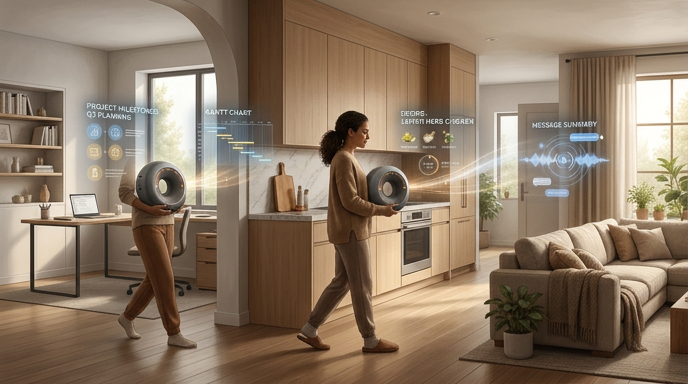
The rumored specifications create a vivid object: compact, portable, screenless, expressive, and packed with sensors. Yet they do not answer the most important question. What will people do with it every day?
The best consumer devices settle into routines. A phone goes everywhere. Headphones turn travel into private space. A smart speaker handles quick household requests while hands are busy. OpenAI’s gadget needs its own dependable rhythm.
Perhaps users will carry it through the house while planning a project. It could guide a repair, summarize messages, tutor a student, or continue a discussion without a screen. Those are possibilities, not reported promises.
The danger is that personality becomes a substitute for purpose. Humanlike conversation can make a demonstration sparkle, but daily value comes from saving time, reducing effort, and getting things right. A charming assistant that occasionally moves is still optional if the phone does the same work.
For now, the speaker remains an outline. The timing, price, shape, components, and features could all change before launch.
Still, the ambition is clear. OpenAI does not merely want ChatGPT in your pocket. It may want ChatGPT sitting in the room, looking around, remembering the conversation, and giving a tiny mechanical nod before it answers. Whether that feels magical or mildly haunted will depend on everything the rumors cannot yet tell us.
Sources
- The Verge — “Jony Ive’s first OpenAI gadget is reportedly a hockey puck-sized smart speaker”
- The Decoder — “OpenAI’s first smart speaker is expected in 2027 at over $300”
- Maya Bennett on Medium — “What Is OpenAI’s $400 AI Speaker For?”
The Kingy Brief
Get the next Kingy Brief.
Source-checked AI changes, original tests and one practical thing to try.
Free · Choose your subjects · Double opt-in · Unsubscribe anytime