
The AI Assistant Finally Gets a Job

For years, AI assistants have mostly been talented talkers. They could summarize, brainstorm, draft, explain, and occasionally hallucinate with Olympic confidence. Useful? Often. Transformative? Not quite.
Google now wants to change that with Gemini Spark, a new AI agent announced at Google I/O 2026. Unlike a chatbot that waits for prompts, Spark is designed to act. It can work across Gmail, Docs, Drive, Calendar, Slides, and outside services. It can monitor updates, organize tasks, draft messages, and keep going in the background even when your laptop is closed. That last part matters. Nobody wants an “autonomous assistant” that needs babysitting like a houseplant with Wi-Fi.
The pitch is simple: stop asking AI questions and start giving it jobs.
Google’s Big Advantage: It Already Knows Your Digital Life
Here is the blunt truth: Google has a better shot at consumer AI agents than almost anyone because it already sits inside people’s digital routines.
Gmail knows your inbox. Calendar knows your time. Drive knows your files. Docs knows your work. Maps knows your movements. Search knows your curiosity. That is either incredibly convenient or mildly terrifying, depending on your caffeine level.
CBS News quoted Cornell professor Karan Girotra arguing that a good agent needs intelligence, context, and relevant information. Google has plenty of context. Maybe too much context. That is exactly why Gemini Spark could feel more useful than a generic bot dropped into your browser with a clipboard and good intentions.
The Verge made the same point more sharply: if Google cannot make AI agents useful with this ecosystem, it has few excuses left.
OpenClaw Lit the Fire
Gemini Spark did not arrive in a vacuum. It looks like a direct response to OpenClaw, the viral open-source AI agent platform that pushed the industry from “agents someday” to “agents right now.”
OpenClaw gained attention because it worked across everyday tools and messaging apps. It could run continuously, handle basic chores, and behave less like a search box and more like a digital worker. The Verge reported that OpenClaw’s rise forced major AI labs to pay attention, and Google appears to be borrowing the parts that made it popular: always-on execution, messaging access, and deeper tool integration.
TechSpot framed Spark as Google’s answer to OpenClaw, noting that Spark can monitor email, organize files, schedule tasks, and continue working when devices are off.
What Spark Actually Does
Google says Gemini Spark can run 24/7 on dedicated virtual machines in Google Cloud. It is powered by Gemini 3.5 and uses Google’s Antigravity harness for long-running agentic tasks. That means it is not just a chatbot wearing a little productivity hat. It is supposed to execute multi-step work in the background.
Examples include watching your inbox, summarizing important updates, creating to-do lists, blocking time on your calendar, organizing Drive files, and pulling information from emails into Sheets. TechSpot also reported that Spark can learn “skills,” such as reviewing recent emails to create a personalized writing guide.
The Verge added a delightfully mundane example: Google’s Gemini app lead Josh Woodward used Spark to plan a neighborhood block party, track RSVPs, send reminders, and figure out HOA rules for a giant inflatable. That is not sci-fi. That is suburban warfare with APIs.
The Price of Convenience Is Permission
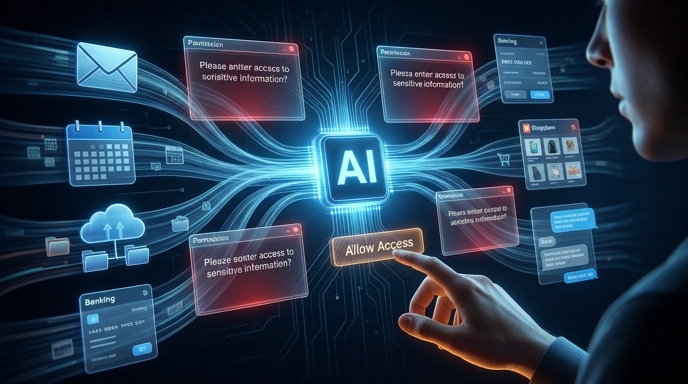
The excitement comes with a large flashing sign: access.
An AI agent that can help you also needs permission to see things. Emails. Files. Meetings. Purchases. Preferences. Deadlines. Maybe even your grocery habits if it connects to Instacart.
Google says Spark’s connections are off by default, users choose what it can access, and the agent will ask before high-stakes actions like spending money or sending emails. That is the right design direction. Still, it does not eliminate the core tension. The more useful the agent becomes, the more power it needs.
This is the central bargain of AI agents: “Help me run my life” quietly becomes “Please enter my life.”
Search Is Becoming Agentic Too
Spark is not the whole story. Google also wants agents inside Search.
According to Google, “information agents” in Search will work in the background to track topics, gather updates, and help users act at the right moment. These features are scheduled to begin rolling out this summer for Google AI Pro and Ultra subscribers.
The Verge described this as Google trying to make Search do more than generate bulky AI answers. Instead of answering a single question, the new system could keep monitoring things: stocks, weather, events, research, travel windows, whatever else people obsess over at 1:13 a.m.
That is a real shift. Search used to retrieve. Then it summarized. Now Google wants it to pursue.
Developers Get Their Own Agent Playground
Google also expanded Antigravity, its agentic development platform. The company says Antigravity 2.0 turns the product into a broader platform for building and managing autonomous AI agents, including a standalone desktop app for agent interaction.
That matters because agents are not only consumer assistants. They are becoming development infrastructure.
A DEV Community post about Google I/O 2026 argued that AI is moving beyond isolated chatbot experiences and into the tooling layer developers build on top of. The post emphasized APIs, integrations, orchestration, experimentation speed, and developer experience as the real battlefield.
That is probably right. Models get headlines. Infrastructure decides who actually ships useful products.
The Demo Problem
Google I/O 2026 was drenched in generative AI. The ZDNet-linked video headline asked the obvious question: who is all this for?
That question bites because tech demos often look magical under stage lights and messy on Tuesday morning. Agents sound great when they plan parties, summarize inboxes, and book dinner. But people will judge them by the boring stuff: Did it miss the deadline? Did it send the wrong email, did it buy cilantro instead of parsley? Did it invent a meeting that never happened?
The DEV Community post highlighted the same practical problem from a developer angle: hallucinations, reliability issues, debugging difficulty, orchestration complexity, and unpredictable behavior still make agentic systems hard to trust.
The future will not be won by the flashiest demo. It will be won by the assistant that quietly does the right thing.
Gemini Spark’s Real Test
Spark’s real test is not whether it can amaze early adopters. It is whether normal people trust it with boring, repeated, mildly annoying work.
Can it keep a small business from missing customer emails, can it turn meeting chaos into useful notes, can it block calendar time without creating scheduling crimes? Can it draft a message that sounds like you, not a corporate raccoon wearing your LinkedIn profile?
Google says Spark is rolling out first to trusted testers, with beta access for Google AI Ultra subscribers in the U.S.
That narrow rollout is smart. Agents need controlled exposure before mass adoption. A chatbot mistake is embarrassing. An agent mistake can become an action.
The Bottom Line
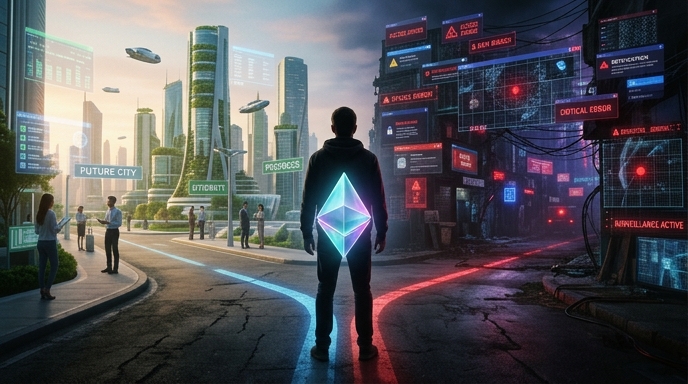
Gemini Spark represents a serious turn in consumer AI. Google is no longer merely selling a smarter answer engine. It is pitching an always-on digital worker.
That could be huge. It could also flop if users find the agent too expensive, too unreliable, too invasive, or too confusing. The technology sits at an awkward threshold: powerful enough to be exciting, not yet proven enough to be boring. And boring is the goal. The best assistant is not dramatic. It just gets things done.
Google has the models, the apps, the cloud infrastructure, the developer tools, and the user base. It has the home-field advantage. Now it has to prove that agentic AI is more than a Silicon Valley bedtime story with a subscription plan.
Confidence: high on sourced claims; moderate on synthesis; low on the inaccessible ZDNet source beyond its visible premise.
Sources
CBS News: Gemini Spark overview. (CBS News)
The Verge: Google agents and OpenClaw analysis. (The Verge)
TechSpot: Gemini Spark as a 24/7 AI agent. (TechSpot)
Google Blog: official I/O 2026 announcements. (blog.google)
DEV Community: AI agents as development infrastructure. (DEV Community)
Gemini Spark
Google AI Agents
Gemini Product Strategy
Google AI Search
The Kingy Brief
Get The Kingy Brief.
AI changes, original tests and one practical thing to try. Fridays at 09:00 Vancouver time.
Free · Double opt-in · Unsubscribe anytime
Signup help and newsletter schedule
Signup form provided by Beehiiv. After submitting, check your inbox for "Confirm your subscription to The Kingy Brief" and open its confirmation link. Check Spam or Promotions if you cannot find it.
Fridays at 09:00 Vancouver time: source-checked AI changes, original tests and one practical thing to try. The weekly restart begins October 9, 2026. We skip a week when there is not enough verified material. Free. Unsubscribe anytime.