The Chatbot Era Is Getting Restless

The AI chatbot is growing up. Or, at least, it is trying to move out of the basement.
For the past few years, most people have used AI as a clever text box. Ask a question. Get an answer. Ask for a summary. Get a neat little stack of paragraphs. Useful? Absolutely. Magical? Sometimes. But passive.
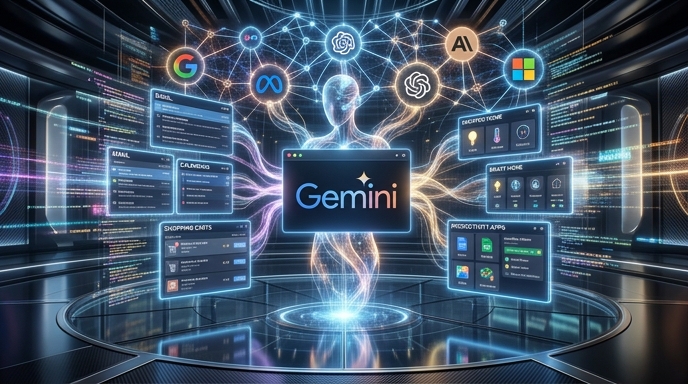
Google’s reported Remy project points to a different future: an AI that does not just answer, but acts. According to reports, Google is testing Remy inside a staff-only version of Gemini as a “24/7 personal agent” for work, school, and daily life. The idea is simple, enormous, and slightly chaotic: Gemini becomes less like a search bar with manners and more like a digital operator with a to-do list.
Meet Remy, Google’s Reported Always-On Agent
Remy is not officially launched. Google has not confirmed a public release date. In fact, Google declined to comment on the report, which is often corporate-speak for “please stop looking under that tarp.”
Still, the reported details are striking. Remy is being tested by Google employees and is described as an assistant that can take actions on a user’s behalf. It may monitor relevant activity, handle complex tasks, and learn preferences over time. That makes it different from the familiar chatbot rhythm of “you prompt, it responds.”
This is the big shift. An agent does not wait politely forever. It notices. It plans. It may chase down tasks across apps. That is the dream, anyway.
The nightmare is the same thing, but with bad judgment.
Why Google Cares So Much
Google has a structural advantage in personal agents. It owns Gmail, Calendar, Docs, Drive, Android, Search, YouTube, Photos, and a lot of the plumbing of modern digital life. If an AI agent needs context, Google has context stacked like warehouse pallets.
That is why Remy matters. A personal agent becomes far more powerful when it can reach your email, schedule, documents, reminders, files, location, and app ecosystem. Gemini already supports connected apps across Google Workspace and other services, including Gmail, Calendar, Docs, Drive, Keep, Tasks, YouTube Music, Google Photos, WhatsApp, Google Home, and Android utilities, according to Google’s support documentation as summarized by AI News.
That is not just convenience. That is distribution. In AI, distribution is gasoline.
Gemini Agent Gets a Bigger Mission
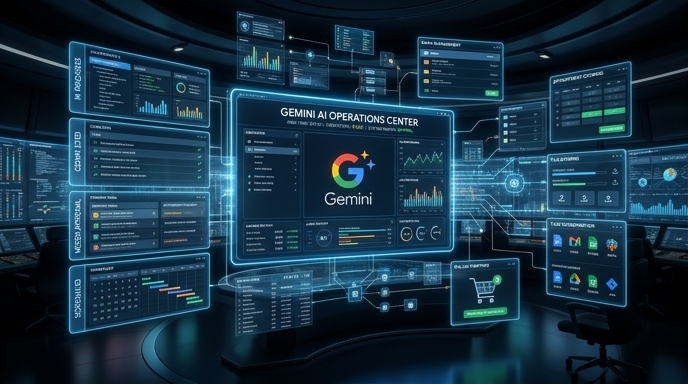
9to5Google reports that Google app strings point to a major upgrade for “Gemini Agent,” described as a “24/7 digital partner.” The reported text says it can take actions on the web and with connected apps and skills, including communicating with others, sharing documents, and making purchases.
That sounds less like a feature and more like a platform.
The interface also appears to organize tasks by status: completed tasks, in-progress tasks, tasks needing input, and scheduled tasks. That matters because agents need dashboards. Without a dashboard, an AI agent becomes a raccoon in the walls. You hear movement. You hope it is helping. You fear it has your credit card.
The Agent Race Is Now a Knife Fight
Google is not alone. The Decoder reports that Google and Meta are both testing personal AI agents while Anthropic, OpenAI, and Microsoft are perceived as being further ahead in some agent categories.
Meta is reportedly building an agent called Hatch, plus an Instagram shopping agent. Hatch is expected to be tested internally by the end of June, while the Instagram shopping tool is reportedly aimed at letting users discover and buy products without leaving the platform.
That is the commercial logic in one sentence: agents will not just help users. They will route money.
The personal assistant may book your dinner. The shopping agent may sell you the jacket. The coding agent may write your software. Same species. Different cages.
Project Mariner Gets Folded Away
Google has already experimented with agents. Project Mariner was an earlier Gemini-based browser agent that could navigate websites and complete web tasks. But The Decoder reports that Mariner was discontinued on May 4, 2026, with its technology folded into Gemini Agent.
That is not necessarily failure. It looks more like consolidation.
Browser agents are useful, but they are awkward. They click around websites like very fast interns with occasional amnesia. A deeply integrated agent inside Gmail, Calendar, Docs, Drive, Android, and the web could be more reliable. It does not need to pretend to be a human using software. It can connect directly to the machinery.
That is cleaner. Also scarier.
Why OpenClaw Lit the Fuse
A recurring name in these reports is OpenClaw, an open-source agent framework that attracted huge attention earlier this year. AI News says Remy’s concept has been compared with OpenClaw because OpenClaw drew attention for autonomously replying to messages, researching for users, and taking actions.
The Decoder reports that OpenAI hired OpenClaw creator Peter Steinberg in February.
This is the pattern: open-source project goes viral, users prove demand, big labs absorb the talent, incumbents scramble, executives discover urgency, roadmaps suddenly become “strategic.”
The lesson is blunt. People do not merely want AI that talks. They want AI that removes chores from their lives.
The Real Product Is Permission
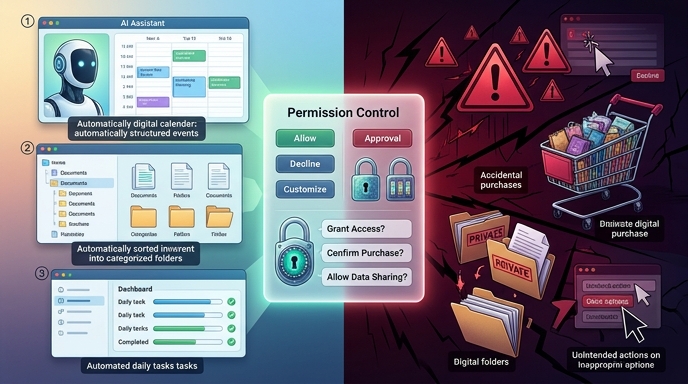
The hardest part of Remy is not the model. It is permission.
A chatbot can be wrong and annoying. An agent can be wrong and expensive. If Gemini drafts a bad paragraph, fine. If Gemini sends the wrong email, buys the wrong thing, shares the wrong document, or books the wrong appointment, the error leaves the chat window and enters reality.
That is why control matters. AI News notes that Google’s existing Gemini documentation covers actions with different levels of user impact, from retrieving Workspace information to creating calendar events, sending messages, opening apps, and controlling smart-home functions.
Each step up the ladder raises the stakes.
Reading your calendar is one thing. Rescheduling your doctor is another. Unlocking your smart door is a whole horror subplot.
The Privacy Problem Is Not Cosmetic
9to5Google’s APK findings include warnings that Gemini Agent can make mistakes and expose data unintentionally. The same reported strings say users can supervise tasks and actions in a dashboard, manage activity, clear browser and cookie data, turn off Personal Intelligence and Connected Apps, and manage personal context in settings.
That is not legal filler. It is the central bargain.
An always-on agent needs memory. It needs context. It needs access. But every extra permission increases risk. The agent becomes more useful as it knows more, and more dangerous for exactly the same reason.
The consumer pitch says: “It learns you.”
The security engineer hears: “It stores you.”
Both are correct.
Google’s Advantage Is Also Its Burden
Google may be better positioned than almost anyone to make personal agents mainstream. The company already sits across many user workflows. It can connect email, calendar, documents, maps, search, Android, and payments more naturally than a standalone startup.
But that advantage comes with baggage.
Users already worry about how much Google knows. An always-on agent asks them to go further: not just “let Google index my life,” but “let Google act inside my life.”
That is a much bigger psychological jump.
The product must feel boringly reliable. Not flashy. Not theatrical. Boring. The ideal agent should be less Iron Man’s JARVIS and more terrifyingly competent executive assistant who never sighs, never forgets, and never “circles back” unless circling back is genuinely useful.
Meta’s Angle: Agents That Sell
Meta’s reported plans show a different version of the same race. Hatch sounds like a general agent. The Instagram shopping agent sounds more directly commercial.
The Decoder reports that Meta’s shopping tool would let users tap a product in a Reel, learn more, and complete the purchase without leaving Instagram.
That is powerful because it compresses the funnel. Discovery, persuasion, and purchase happen in one environment.
In plain English: you see the thing, the agent explains the thing, you buy the thing. No browser tabs, No comparison shopping. No escape hatch unless Meta gives you one.
Useful? Yes.
A little predatory if designed badly? Also yes.
Anthropic and OpenAI Are Setting the Pace

The Decoder argues that Anthropic and OpenAI are further along while Google and Meta are still testing. Anthropic already has agent products such as Claude Code and Claude Cowork, while OpenAI is building on agent work alongside Codex and broader app ambitions. Microsoft has also tapped Anthropic technology for Copilot Cowork.
This is why Google cannot coast.
The old search era rewarded the company that organized information. The agent era may reward the company that completes tasks. Those are related skills, but not identical ones.
Search gives you options.
Agents choose and act.
That is a philosophical shift disguised as a product update.
The Browser Agent Wave Is Fading
The Decoder makes a useful observation: the market may be moving away from browser agents and toward integrated personal agents inside email, calendars, office tools, and shopping platforms.
That makes sense. Browser agents are impressive demos. Integrated agents are better businesses.
A browser agent must fight the messiness of the open web. Buttons move. Pages break. Captchas appear. Login flows get weird. Websites are hostile terrain.
An integrated agent works through APIs, permissions, and native app surfaces. It does not need to “look” at the interface as much. It can operate closer to the source.
Less magic. More plumbing. Better product.
What Remy Might Actually Do
Based on the reports, Remy could become a proactive layer inside Gemini. It might monitor your important information, help with work and school tasks, learn preferences, and coordinate actions across Google services. It could also use personal context, connected apps, uploaded files, location, chats, and other information to complete tasks.
Imagine asking:
“Plan my week around the product launch.”
A weak chatbot gives advice.
A real agent checks your calendar, scans relevant docs, drafts emails, creates tasks, schedules prep time, flags conflicts, and asks for approval before sending anything sensitive.
That is the product everyone wants.
The trick is making it work without turning your digital life into improv comedy.
The Approval Layer Will Make or Break It
A good agent needs judgment about when to ask.
Ask too often, and it becomes a nagging chatbot in a trench coat. Ask too rarely, and it becomes a liability cannon.
The obvious solution is tiered autonomy. Low-risk tasks can run automatically. Medium-risk tasks require review. High-risk tasks require explicit approval.
Summarize my unread newsletters? Go ahead.
Draft a reply to my boss? Show me first.
Send money, sign a contract, share private files, or purchase something expensive? Absolutely not without confirmation.
AI News notes that Google Research has argued agents should have defined human controllers, limited powers, observable actions, and planning abilities. Google Cloud guidance also emphasizes transparency, logging, action characterization, and least-privilege design.
That is the sober version of the future. Less “AI god assistant.” More “audited delegation system.”
The Word “Proactive” Is Doing Heavy Lifting
Every agent company loves the word “proactive.” It sounds delightful. It suggests an assistant who notices you forgot your passport before you leave for the airport.
But proactive can get annoying fast.
Nobody wants an AI popping up every six minutes with “I noticed you breathe oxygen. Would you like me to optimize that?”
The winning agent must know when not to act. Silence will become a feature.
A great personal agent should understand urgency, preference, risk, and context. It should interrupt only when the value is clear. Otherwise, it should quietly prepare options and wait.
That sounds easy. It is not. It requires memory, ranking, personalization, and restraint.
Restraint may be the rarest AI capability.
Why This Is Bigger Than Gemini
Remy is not just a Gemini story. It is a signal that the center of AI competition is moving.
The first phase was model quality. Who had the smartest model?
The second phase was interface. Who had the best chatbot?
The third phase is agency. Who can safely and reliably get things done?
That last word—safely—is where the bodies are buried.
Agents need tool use, authentication, user modeling, planning, rollback, monitoring, secure credentials, memory controls, and clear logs. They need product design, not just benchmark scores.
A model that wins a math test may still be useless if it accidentally sends your tax documents to your gym buddy.
The Business Model Is Obvious
Agents will likely become subscription products, enterprise tools, commerce engines, and platform lock-in machines.
For Google, Remy could make Gemini more valuable and make Workspace stickier. For Meta, agents could drive shopping and advertising. For OpenAI and Anthropic, agents could justify premium tiers and enterprise contracts. For Microsoft, agents fit naturally into productivity software.
That is the money map.
The company that owns the agent may influence where users shop, what tools they use, which documents they create, which meetings they attend, and which services they trust.
The assistant becomes the gatekeeper.
That is why everyone is sprinting.
The Consumer Version Needs Trust
Normal users will not care about “agentic workflows.” They will care whether the thing saves time without creating messes.
The first killer use cases will be boring:
Clean up my inbox.
Schedule this meeting.
Find the document.
Compare these options.
Prepare my trip.
Track this refund.
Summarize what changed.
Remind me before something breaks.
Boring wins because boring repeats. Repetition builds habit. Habit builds platform power.
The future of AI agents may not arrive with fireworks. It may arrive as a calendar invite correctly moved from Tuesday to Thursday.
The Big Risk: Confident Automation
The danger is not that agents become evil. The danger is that they become confidently mediocre.
A chatbot can bluff. An agent can operationalize the bluff.
That is a nastier failure mode.
If Remy launches widely, Google will need to prove that users can inspect what it did, stop what it is doing, reverse mistakes where possible, and limit what it can access. The reported dashboard for tasks is a good sign, but the details matter.
Logs matter.
Permissions matter.
Undo buttons matter.
So does humility. The agent should know when it is out of its depth. Especially around legal, medical, financial, and other high-stakes decisions.
What We Still Do Not Know
Several major facts remain unknown.
Google has not announced whether Remy will become a public Gemini feature. Reports do not establish which Google services are included in current employee tests. They also do not fully explain Remy’s architecture, autonomy level, approval flow, or release timeline.
That uncertainty matters.
A prototype can sound incredible in an internal document. A public product must survive messy users, weird edge cases, hostile prompts, broken websites, forgotten passwords, ambiguous instructions, and the eternal human talent for making everything complicated.
So yes, Remy sounds important.
No, it is not yet proven.
The Bottom Line

Google’s reported Remy project shows where AI is heading: away from chat as the final product and toward agents that work across apps, remember preferences, monitor context, and complete tasks.
That future is useful. It is also risky. The winning company will not simply build the most powerful agent. It will build the most controllable one.
Google has the ecosystem. Meta has the social and commerce funnel. OpenAI and Anthropic have momentum in agent products. Microsoft has the workplace beachhead.
The race is not about who makes the chattiest chatbot anymore.
It is about who gets trusted with the keys.
And that is the whole game.
Sources
- AI News: Google tests Remy AI agent for Gemini as focus turns to user control. (AI News)
- The Decoder: Google and Meta race to build personal AI agents as Anthropic and OpenAI pull further ahead. (The Decoder)
- 9to5Google: Google preps “Gemini Agent” as your “24/7 digital partner.” (9to5Google)
- WebProNews: Google’s Secret Remy Project Aims to Deliver Always-On Personal AI Agent. (webpronews.com)
The Kingy Brief
Get the next Kingy Brief.
Source-checked AI changes, original tests and one practical thing to try.
Free · Choose your subjects · Double opt-in · Unsubscribe anytime