ChatGPT research tool gets a major upgrade with full-screen document viewer, table of contents, and powerful new capabilities
OpenAI has rolled out a significant update to ChatGPT’s Deep Research tool, transforming how users interact with AI-generated reports. The enhancement introduces a full-screen document viewer, an interactive table of contents, and integration with the new GPT-5.2 model. For professionals who rely on AI for research, this update represents a shift from clunky copy-paste workflows to a more streamlined, integrated reading experience that could save valuable time and improve productivity.
A New Way to Navigate AI Research
Until now, users of ChatGPT’s Deep Research feature faced a frustrating limitation. After the AI compiled lengthy, in-depth reports, readers had to scroll through walls of text or copy-paste content into external applications just to navigate effectively. It was like reading a PDF in a browser without any navigation tools—functional, but far from ideal.
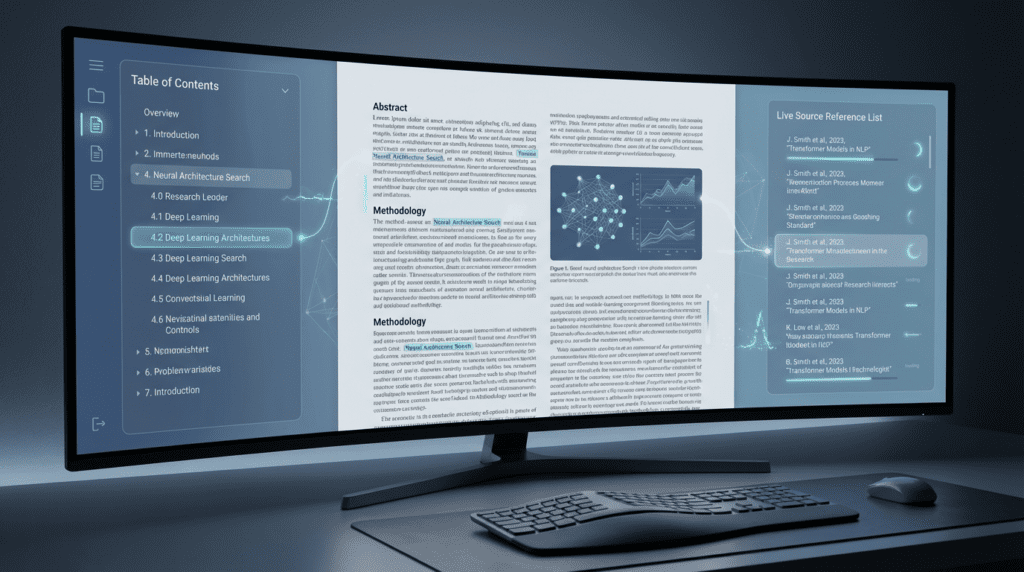
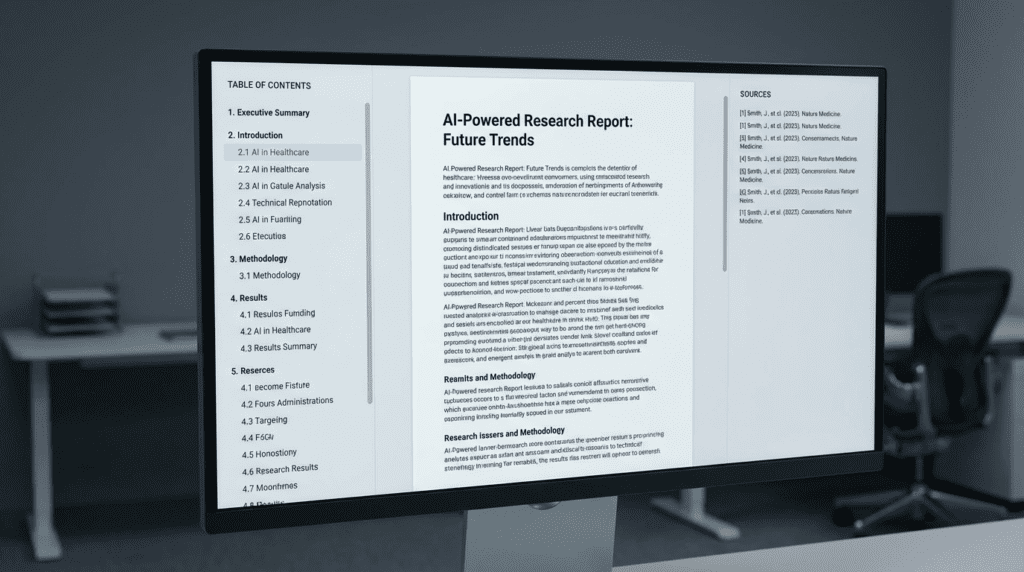
The latest update addresses this pain point head-on. OpenAI has introduced a built-in document viewer that renders full reports within the chat window, complete with a scrollable interface that feels more like a dedicated document reader than a chat interface. The viewer opens in a window separate from your chat, giving you a clean, distraction-free environment to digest complex research.
But the real game-changer is the table of contents. Positioned on the left side of the screen, this navigation panel lets you jump directly to specific sections like Methodology, Key Findings, or Conclusions without endless scrolling. On the right side, you’ll find a list of sources, making it easy to verify information and explore the research foundation. For anyone who’s ever lost their place in a 20-page AI-generated report, this feature alone is worth celebrating.
GPT-5.2 Powers Enhanced Research Capabilities
Beyond the interface improvements, OpenAI has upgraded the engine under the hood. Deep Research now runs on GPT-5.2, the company’s latest model, marking a significant departure from the o3 and o4 mini models that previously powered the feature. This upgrade promises more sophisticated analysis and better reasoning capabilities when conducting multi-stage web searches.
OpenAI considers Deep Research its first true AI agent within ChatGPT. Unlike standard queries that generate immediate responses, Deep Research independently initiates multiple web searches based on your question, synthesizes information from various sources, and compiles everything into a comprehensive report. It’s designed to compress hours of manual research into minutes of AI-powered analysis.
The GPT-5.2 integration brings another crucial feature: the ability to search specific websites and connected apps. This targeted approach means you can direct the AI to focus on particular domains or data sources, making the research more relevant and reducing the noise from irrelevant information. Whether you’re researching academic papers, industry reports, or company documentation, you can now point Deep Research exactly where to look.
Real-Time Tracking and Dynamic Research Control
One of the most practical additions is real-time progress tracking. As ChatGPT conducts its research, you can now watch the process unfold, seeing which sources it’s accessing and how the report is taking shape. This transparency helps build trust in the AI’s methodology and gives you insight into the research process.
Even better, you’re not locked into the initial research parameters. The update allows you to interrupt the research process, edit the scope, or add new sources while ChatGPT is still generating the report. Think of it as having a research assistant you can guide in real-time, redirecting their efforts as new questions emerge or priorities shift.
This dynamic control addresses a common frustration with AI research tools: the inability to course-correct once the process begins. Now, if you realize mid-research that you need to include additional sources or narrow the focus, you can make those adjustments on the fly rather than starting over from scratch.
Export Options for Seamless Workflow Integration
Once your research is complete, the new viewer makes it easy to export the report in multiple formats. You can download files in Markdown, Word, or PDF format, depending on your needs. This flexibility ensures that AI-generated research can flow seamlessly into your existing workflow, whether you’re preparing a presentation, writing a paper, or sharing findings with colleagues.
The export functionality recognizes that research rarely stays within the ChatGPT interface. By offering multiple format options, OpenAI acknowledges that users need to integrate AI-generated content into various tools and platforms. A researcher might prefer Markdown for version control, while a business analyst might need Word for collaborative editing, and a consultant might want PDF for client presentations.
Who Gets Access and When
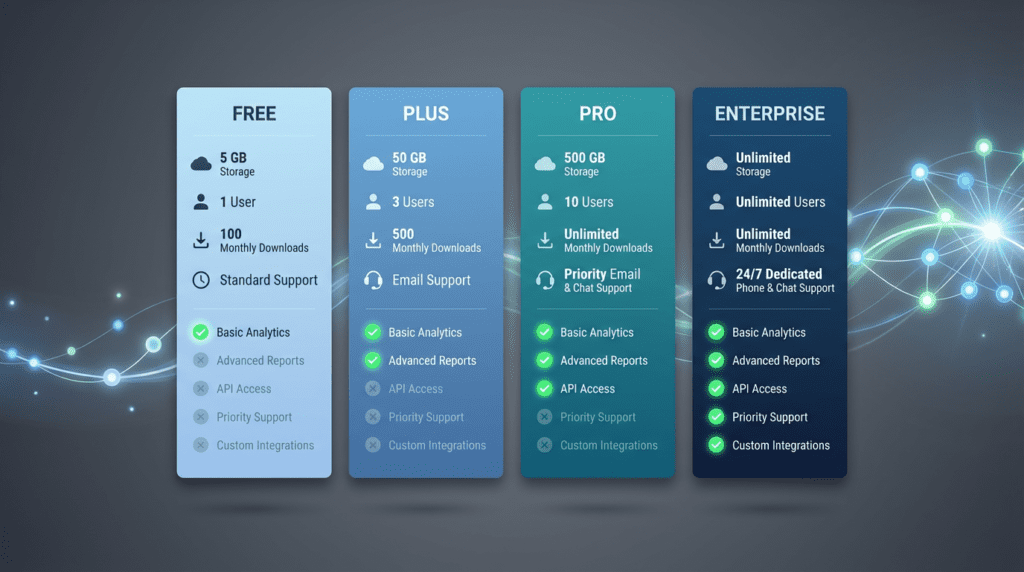
OpenAI is rolling out these features in phases. ChatGPT Plus and Pro subscribers started receiving access on February 10, 2026. Users on the new ChatGPT Go tier and those using the free version will see the Deep Research update in the coming days, according to OpenAI’s announcement.
This tiered rollout reflects OpenAI’s strategy of rewarding paying subscribers with early access to new features while still maintaining a path for free users to eventually benefit from improvements. For professionals who depend on ChatGPT for research, the Plus or Pro subscription increasingly looks like a worthwhile investment.
Different subscription tiers come with varying usage limits. ChatGPT Pro subscribers receive 250 queries per month, with half being lightweight queries. Plus, Team, and Enterprise users get 25 queries monthly, with 15 being lightweight. Free users are limited to just 5 lightweight queries per month. The lightweight version runs on the o4-mini model instead of the full o3 model, offering faster but potentially less comprehensive results.
The Promise and Limitations of AI Research
While Deep Research represents a significant advancement in AI-powered research tools, it’s important to understand both its capabilities and limitations. On benchmarks like Humanity’s Last Exam, Deep Research scored 26.6%, significantly outperforming competitors like DeepSeek’s R1 model at 9.4% and GPT-4o at 3.3%. These numbers suggest that the tool can handle complex research tasks better than many alternatives.
However, OpenAI acknowledges that the system isn’t perfect. Deep Research can occasionally make factual hallucinations or incorrect inferences. It may sometimes reference rumors without accurately conveying uncertainty. Web search capabilities significantly reduce hallucination rates compared to models without internet access, but they don’t eliminate the problem entirely.
This reality check is crucial for users. While Deep Research can compress hours of manual research into minutes, it shouldn’t be treated as infallible. The longer the generated text, the higher the risk of errors creeping in. For critical research, targeted search queries with capable reasoning models—combined with human verification—often prove more reliable than fully automated approaches.
What This Means for Research Workflows
The practical impact of these updates extends beyond convenience. For professionals who treat ChatGPT as a research assistant, the new viewer and navigation tools can genuinely save time. Instead of spending minutes scrolling through reports or copying sections into other apps, users can now navigate efficiently within a purpose-built interface.
The ability to specify websites and connected apps for research makes Deep Research more versatile. A market analyst could direct it to focus on financial news sites and company filings. An academic researcher could point it toward scholarly databases and peer-reviewed journals. A product manager could have it scan competitor websites and industry blogs. This targeted approach reduces irrelevant results and increases the signal-to-noise ratio.
Real-time tracking and dynamic control transform Deep Research from a black box into a collaborative tool. You’re no longer just submitting a query and hoping for the best—you’re actively participating in the research process, guiding the AI’s efforts and making adjustments as needed. This interactivity makes the tool feel less like automation and more like augmentation of human capabilities.
The Bigger Picture: AI Agents in Everyday Tools
Deep Research represents OpenAI’s vision for AI agents—systems that can independently complete multi-step tasks with minimal human intervention. While the term AI agent gets thrown around frequently in tech circles, Deep Research demonstrates what practical agent capabilities look like in a consumer product.
Rather than requiring users to manually search multiple websites, synthesize information, and compile reports, Deep Research handles these steps autonomously. The user provides the goal, and the AI figures out the steps needed to achieve it. This shift from tool to agent represents a fundamental change in how we interact with AI systems.
The new interface improvements make this agent behavior more transparent and controllable. You can see what the agent is doing, intervene when necessary, and guide its efforts toward better outcomes. This balance between autonomy and control may define the next generation of AI tools—systems that can work independently but remain responsive to human direction.
Challenges and Considerations
Despite the improvements, questions remain about how the new viewer performs in various scenarios. OpenAI’s announcement doesn’t provide data on how the feature handles extremely long documents or whether it integrates with existing citation management tools. For researchers who rely on reference managers like Zotero or Mendeley, the lack of direct integration could be a limitation.
There’s also the question of screen real estate. While the full-screen viewer offers a cleaner reading experience, some users might find it cluttered on smaller screens, particularly laptops or tablets. The three-panel layout with table of contents, main content, and sources requires significant horizontal space to work effectively.
The practical impact on research workflows will ultimately depend on user adoption and further refinement. OpenAI’s move reflects an effort to make AI-generated content more transparent and navigable, but the true test will come as researchers, analysts, and other professionals integrate these tools into their daily work.
Looking Ahead

The Deep Research update signals OpenAI’s commitment to refining the user experience around AI-generated content. By addressing practical pain points like navigation and export options, the company demonstrates an understanding that powerful AI capabilities mean little if the interface makes them difficult to use.
As AI research tools continue to evolve, we can expect further improvements in areas like citation management, collaborative features, and integration with other productivity tools. The addition of GPT-5.2 suggests that model improvements will continue to enhance research quality, while interface refinements will make those capabilities more accessible.
For now, the new Deep Research viewer represents a meaningful step forward. It won’t replace human researchers or eliminate the need for critical thinking and verification. But for professionals who need to quickly gather and synthesize information from multiple sources, it offers a more efficient and user-friendly approach than what came before.
The key is understanding what Deep Research does well and where human judgment remains essential. Use it to accelerate the initial research phase, identify relevant sources, and compile information efficiently. But always verify critical facts, check sources, and apply your own expertise to interpret the findings. In this balanced approach, AI research tools like Deep Research can truly enhance productivity without compromising quality.
Sources
- AI Daily Post. (2026, February 11). ChatGPT deep research tool adds built-in viewer and jump-to-section TOC
- Bastian, M. (2026, February 10). OpenAI’s Deep Research now runs on GPT-5.2 and lets users search specific websites. The Decoder.
- Roth, E. (2026, February 10). ChatGPT’s deep research tool adds a built-in document viewer so you can read its reports. The Verge.
The Kingy Brief
Get The Kingy Brief.
AI changes, original tests and one practical thing to try. Fridays at 09:00 Vancouver time.
Free · Double opt-in · Unsubscribe anytime
Signup help and newsletter schedule
Signup form provided by Beehiiv. After submitting, check your inbox for "Confirm your subscription to The Kingy Brief" and open its confirmation link. Check Spam or Promotions if you cannot find it.
Fridays at 09:00 Vancouver time: source-checked AI changes, original tests and one practical thing to try. The weekly restart begins October 9, 2026. We skip a week when there is not enough verified material. Free. Unsubscribe anytime.