Noam Shazeer Joins OpenAI: Why This Is One of the Biggest AI Talent Moves of 2026
Noam Shazeer joining OpenAI is not just another AI hiring headline. It is one of those moves that makes the entire frontier model race feel more personal, more strategic, and more serious.
Reuters reported that Shazeer, a Google vice president of engineering and co-lead of Google’s Gemini AI models, said he will leave Google to join OpenAI. That is the confirmed news peg. The exact OpenAI title, team, start date, mandate, compensation, and model assignment should not be treated as public facts unless OpenAI, Shazeer, or another reliable primary source confirms them.
Still, the move is a big deal. Shazeer sits at the intersection of three eras that define modern AI: the architecture era of Transformers, the scaling era of sparse Mixture-of-Experts systems, and the product era of consumer AI, Character.AI, Gemini, and now OpenAI. If models are the new operating systems, Shazeer is one of the people who helped invent the engine.
Image note: Original Kingy AI abstract editorial visual for Noam Shazeer joining OpenAI and the frontier AI talent war.
- Reuters reports that Noam Shazeer is leaving Google Gemini for OpenAI.
- He was a VP of engineering at Google and a co-lead of Gemini, Google’s flagship AI model family.
- He co-authored “Attention Is All You Need”, the Transformer paper behind the modern LLM era.
- He was also first author of the Sparsely-Gated Mixture-of-Experts paper, a key idea for increasing model capacity efficiently.
- He co-founded Character.AI after leaving Google, then returned to Google through the 2024 Character.AI licensing and talent deal.
- The move matters for OpenAI’s model strategy, consumer AI, agents, efficient scaling, and competition with Google DeepMind.
- The exact OpenAI role should not be overstated until it is confirmed by a reliable source.
What Happened?
The cleanest version is simple: Reuters reported in a June 18-dated story that Noam Shazeer said he would leave Google and join OpenAI. Reuters described him as a vice president of engineering at Google and a co-lead of Gemini, Google’s AI model line.
That is already enough to make the move newsworthy. Gemini is one of the few frontier model programs with the compute, research bench, product distribution, and platform reach to compete directly with OpenAI. Shazeer was not a random executive in that system. A 2024 Reuters report said Google had appointed him as a technical co-lead of Gemini alongside Jeff Dean and Oriol Vinyals after his return from Character.AI.
Kingy AI did not find an official OpenAI announcement of Shazeer’s exact role during source checking for this article. That matters. The safe wording is not “OpenAI hired Shazeer to run GPT-6,” or “Shazeer is taking over model architecture.” The safe wording is: Reuters reports he is leaving Google to join OpenAI, and the role details have not been publicly nailed down by OpenAI in the sources checked.
Who Is Noam Shazeer?
Noam Shazeer is one of the most consequential engineers in the large-language-model era. He is not famous in the same way Sam Altman, Sundar Pichai, Demis Hassabis, or Jensen Huang are famous, because his reputation comes less from stagecraft and more from model architecture, systems taste, and research output. But inside AI, his name carries unusual weight.
His public biography says he started at Google in 2000, worked on the company’s spelling corrector, later contributed to the PHIL algorithm behind AdSense, and then became associated with several major AI systems and papers. His personal site describes him as a co-lead of Google Gemini and a VP of engineering at Google, while listing Transformer, sparsely gated MoE, Mesh TensorFlow, T5, and LaMDA-related work among his inventions or major contributions.
The career arc matters because it is not one-dimensional. Shazeer is not only a paper author. He is not only a big-company infrastructure engineer. He is not only a startup founder. He has touched the research, scaling, and product layers of modern AI.
In 2017, Shazeer was one of the eight authors of “Attention Is All You Need”, the paper that introduced the Transformer architecture. Earlier that same year, arXiv posted “Outrageously Large Neural Networks: The Sparsely-Gated Mixture-of-Experts Layer”, with Shazeer as first author. Later, after leaving Google, he co-founded Character.AI with Daniel De Freitas, building one of the most culturally revealing consumer chatbot products before ChatGPT made AI chat mainstream for the general public.
Then came the boomerang. In August 2024, TechCrunch reported that Shazeer was returning to Google as part of a deal in which Google signed a non-exclusive agreement to use Character.AI technology and brought Shazeer, De Freitas, and other employees into Google DeepMind. A Reuters report on the Google/Character.AI arrangement also described Google hiring the cofounders and licensing Character.AI’s models.
Reuters then reported that Shazeer became a Gemini technical co-lead. In May 2026, Google’s Gemini 3.5 announcement listed Shazeer as a Vice President at Google DeepMind alongside other major Google AI leaders. That is why a move from Gemini to OpenAI lands with such force.
Why Noam Shazeer Joins OpenAI Matters
The short version: OpenAI is not just hiring a senior researcher. If the Reuters report is borne out by the actual role, OpenAI is adding someone who helped define the modern model stack from multiple angles.
There are many brilliant researchers in AI. Shazeer’s résumé is different because it joins three hard things: designing architectures that become industry standards, making giant models more computationally practical, and building consumer AI products that reveal how people actually use synthetic intelligence when nobody is forcing them to.
That combination is rare. Frontier labs do not only need more compute. They need people who can decide which architecture bets are worth billions of dollars of training, which efficiency tricks matter in production, which behaviors make a model feel alive or useful, and which product loops produce better data, better feedback, and better user trust.
That is why this move matters even before we know the exact title. The safest interpretation is that OpenAI has attracted one of the few people with credibility across model architecture, sparse scaling, dialogue systems, consumer AI, and Gemini-level frontier competition. That is a 10/10 news event in the AI talent war.
Why the Transformer Paper Matters
Before Transformers, many sequence models leaned heavily on recurrence, convolution, or combinations of both. Those approaches could work, but they were often hard to scale across long sequences and large training runs. The Transformer changed the center of gravity by making attention the core mechanism.
The Google Research page for “Attention Is All You Need” describes the Transformer as a simple architecture based on attention mechanisms, dispensing with recurrence and convolutions entirely. The NeurIPS proceedings page lists Shazeer among the paper’s authors and explains that the model was more parallelizable and required less training time on the reported translation tasks.
In plain English, attention lets the model decide which parts of the input matter for the next step. In language, that is powerful because a word can depend on another word many tokens away. In code, a line can depend on a function definition elsewhere. In multimodal systems, a generated answer can depend on a patch of an image, a piece of text, and a chain of reasoning that ties them together.
The Transformer was not “one more model.” It became the default grammar of the modern AI era. GPT-style models, Claude-style models, Gemini-style models, open-weight models, coding models, multimodal systems, and agentic systems all owe part of their shape to the Transformer breakthrough.
That does not mean Shazeer alone invented modern AI. The paper had eight authors, and the broader field had many predecessors and contributors. But being one of the authors of that paper places Shazeer inside the small group of people whose technical work became infrastructure for an entire industry.
Why Mixture-of-Experts Matters
Mixture-of-Experts sounds like a niche architecture phrase until you realize it touches one of the most expensive questions in frontier AI: how do you make models bigger, smarter, faster, and cheaper to serve?
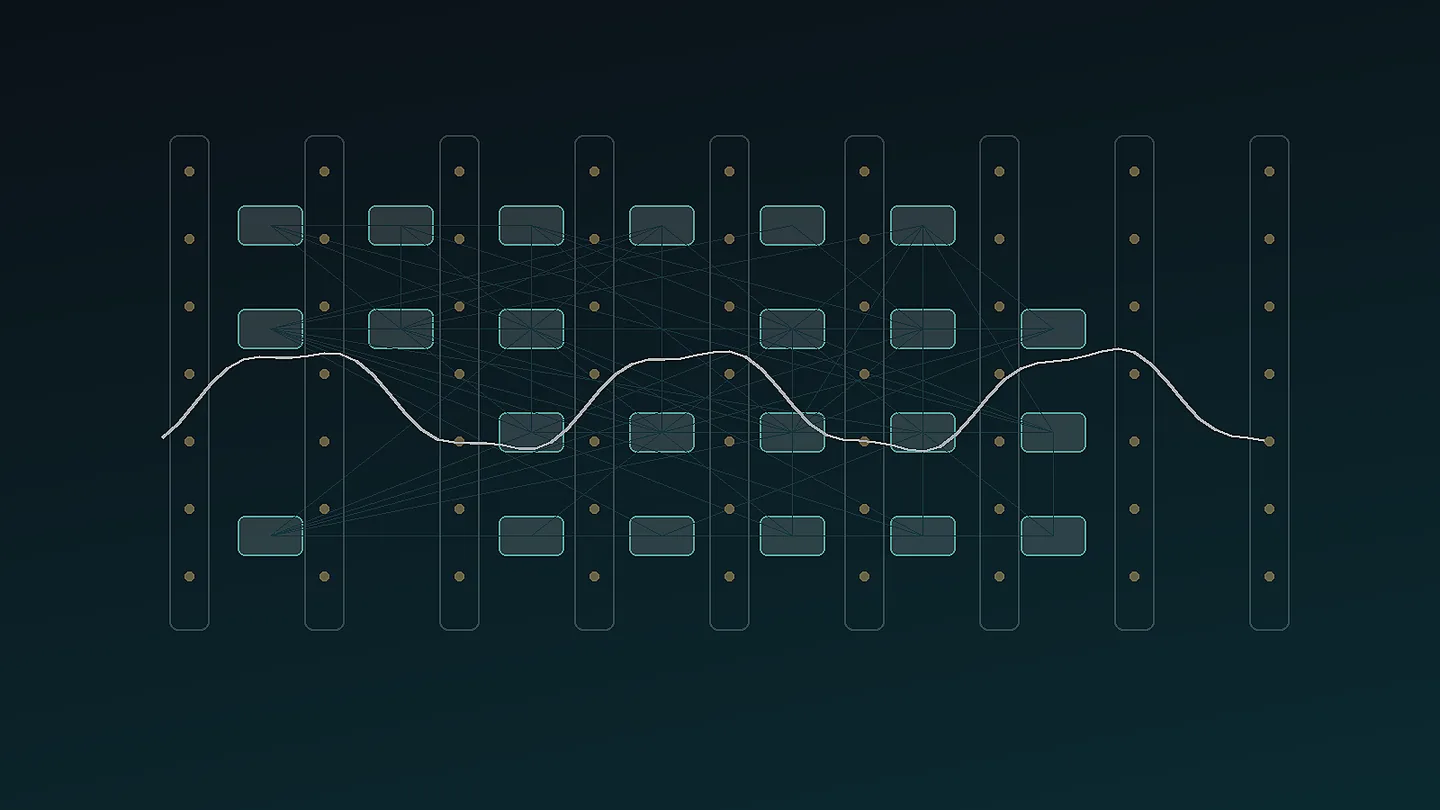
The 2017 sparsely gated MoE paper framed the core idea as conditional computation. Instead of activating every part of a huge neural network for every input, a gating or routing mechanism chooses a sparse subset of expert networks for each example. The paper described this as a way to dramatically increase model capacity without a proportional increase in computation.
A simple analogy: instead of waking up the entire company for every task, route the problem to the right expert team. A legal question goes to legal. A data problem goes to data. A design problem goes to design. The whole organization remains large and capable, but each request does not have to activate everyone.
For frontier labs, this matters because inference cost, latency, training efficiency, memory pressure, and serving architecture are now strategic weapons. The winner is not always the model with the most total parameters. The winner may be the system that can route work efficiently, keep quality high, and serve billions of requests without lighting money on fire.
That is why Shazeer’s MoE background is relevant to OpenAI. We should not claim he is joining to build a specific sparse model. We do not know that. But it is reasonable to watch for whether OpenAI keeps pushing harder on efficient architectures, routing systems, model specialization, long-context cost control, and agent-serving economics.
Character.AI and the Consumer AI Clue
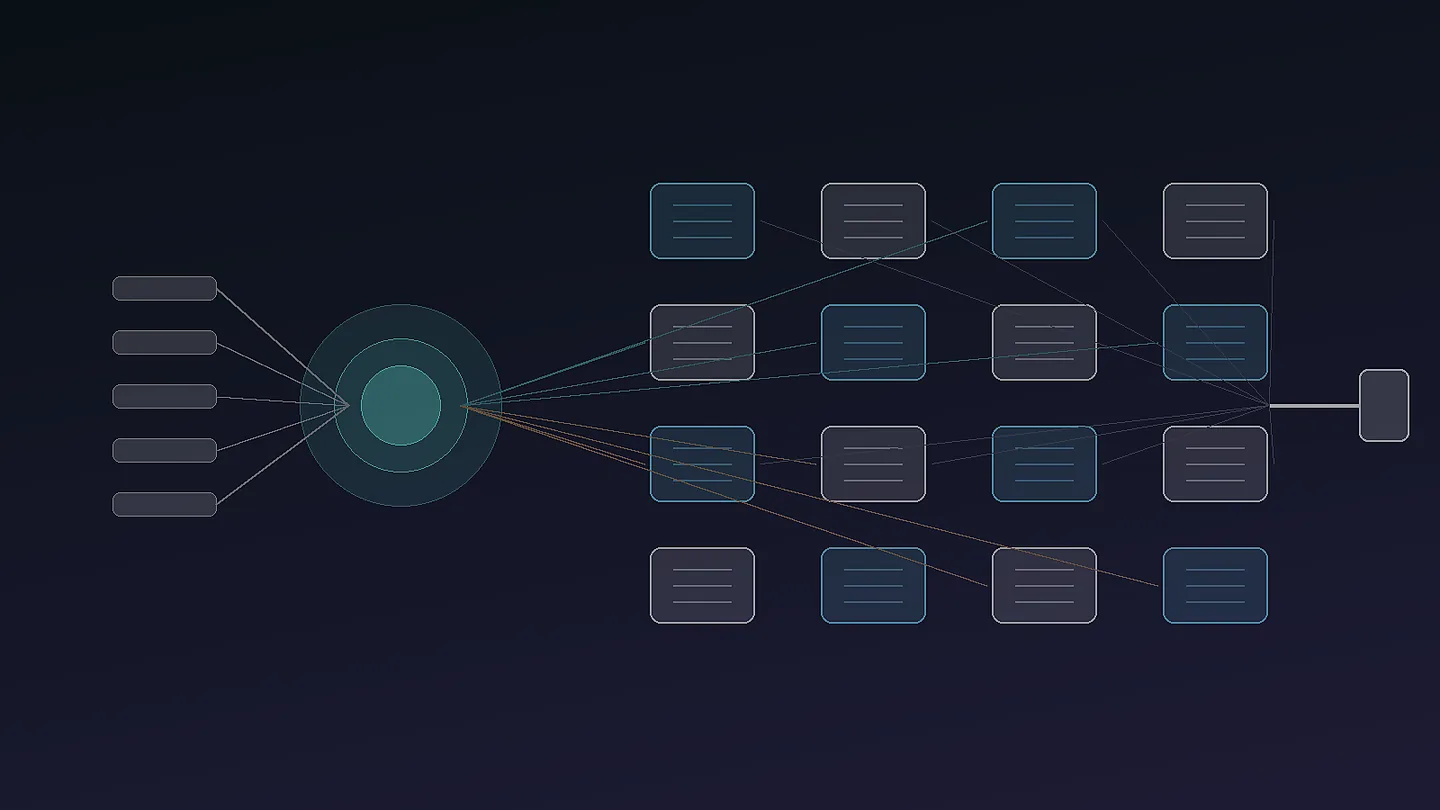
Character.AI was not only a chatbot app. It was a signal. Long before every software company had an AI assistant slide in its pitch deck, Character.AI showed that people wanted personalized, emotional, persistent, entertainment-oriented, roleplay-heavy AI interactions.
That product insight is easy to underestimate if you only look at benchmarks. Benchmarks tell you whether a model can solve a test. Consumer AI tells you whether people come back tomorrow. Those are related, but they are not the same thing.
TechCrunch’s report on Shazeer’s 2024 return to Google described Character.AI as shifting more resources toward post-training and new product experiences as more pretrained models became available. That is a useful clue: the frontier AI race is not only pretraining. It is behavior, personality, memory, moderation, engagement, user trust, and feedback loops.
This matters for OpenAI because ChatGPT is no longer just a box that answers prompts. OpenAI has been pushing toward agents, voice, memory, multimodal reasoning, coding, enterprise workflows, and more personal assistant behavior. Shazeer’s background is unusually aligned with that direction. He has seen both the model side and the “why do humans keep talking to this thing?” side.
There is also a caution. AI companion products have raised serious safety, moderation, and youth-use concerns. Character.AI itself maintains a Safety Center and has published teen-safety updates. That does not erase the product insight, but it does mean consumer AI experience has to be handled with discipline, not just growth hunger.
Why OpenAI Would Want Him
We do not know OpenAI’s internal reasoning. But from the outside, the fit is obvious enough to analyze carefully.
First, model architecture. Shazeer has unusually deep history with the architectural ideas that made modern LLMs possible. For a frontier lab deciding how to allocate enormous training budgets, that kind of taste matters. The wrong architecture bet can waste money and months. The right one can change the slope of the entire roadmap.
Second, scaling efficiency. MoE and routing are not academic trivia. They are directly connected to how labs manage cost, speed, capacity, and specialization. OpenAI has to serve consumer ChatGPT, enterprise ChatGPT, API models, coding agents, voice agents, multimodal systems, and internal research workloads. Efficient scaling is not optional.
Third, post-training and product behavior. The next AI cycle is increasingly about models that can act, remember, browse, code, speak, use tools, and stay useful over long sessions. Shazeer’s Character.AI experience gives him a product lens that many pure research leaders do not have. He has seen high-retention consumer AI up close.
Fourth, agents. OpenAI’s agent direction depends on models that can plan, recover, use tools, respect constraints, and avoid turning every task into a brittle demo. A researcher with experience in attention, sparse routing, dialogue, and consumer behavior could matter to how those systems are shaped.
Fifth, competition with Google. Shazeer has recent Gemini context. That does not mean he carries secret roadmaps across the street, and the article should not imply that. It does mean he has firsthand experience inside one of OpenAI’s most important rivals, at a moment when Gemini is competing across consumer products, developer APIs, search-like experiences, enterprise agents, coding, and multimodal AI.
Sixth, recruiting gravity. Talent moves signal to other talent. If a person associated with Transformers, MoE, Character.AI, and Gemini moves to OpenAI, it tells the market that OpenAI still has the pull to attract rare senior technical leaders even as every major lab throws money, compute, and prestige into the race.
Why Google Losing Him Matters
Google has one of the deepest AI benches in the world. Losing one person does not doom Gemini, Google DeepMind, Google Research, Search, Cloud, Android, Workspace, or the broader Google AI system. That needs to be said plainly.
But losing Shazeer is still a symbolic and practical hit. Google brought him back in 2024 through an aggressive Character.AI licensing and talent arrangement. Reuters-linked reporting described the move as involving billions to bring Shazeer and other employees into DeepMind and strike the Character.AI licensing agreement. Reuters later reported that he became a Gemini technical co-lead.
So this is not a normal departure. It is a move from the center of Google’s frontier model push to the company most closely identified with the current generative AI wave. That matters because Google and OpenAI are directly competing in models, assistants, developer platforms, enterprise AI, coding, multimodal systems, agents, and the future of search-like behavior.
The right phrasing is not “Gemini is in trouble.” Google has enormous talent, infrastructure, distribution, and research depth. The right phrasing is: Google is losing a high-signal technical leader it had very deliberately brought back into the Gemini effort. That is meaningful even for a company as deep as Google.
The AI Talent War Is Now as Important as the GPU War
The frontier AI race is often described as a GPU race. That is true, but incomplete. Compute matters. Data matters. Distribution matters. Product loops matter. Safety systems matter. Inference optimization matters. And talent matters in a way that is hard to spreadsheet.
A small number of people can shape architecture choices, training recipes, scaling bets, post-training systems, eval culture, product direction, and what a lab believes is technically possible. Those decisions can echo through multiple model generations.
That is why the best AI researchers are not interchangeable headcount. They are taste-makers inside technical systems. They influence what gets tried, what gets killed, what gets scaled, and what gets productized.
Shazeer is one of the rare researchers with credibility across research, architecture, scaling, and consumer product. That is why this move feels bigger than a job change. It is a transfer of judgment between two of the most important AI institutions on earth.
What This Could Mean for OpenAI
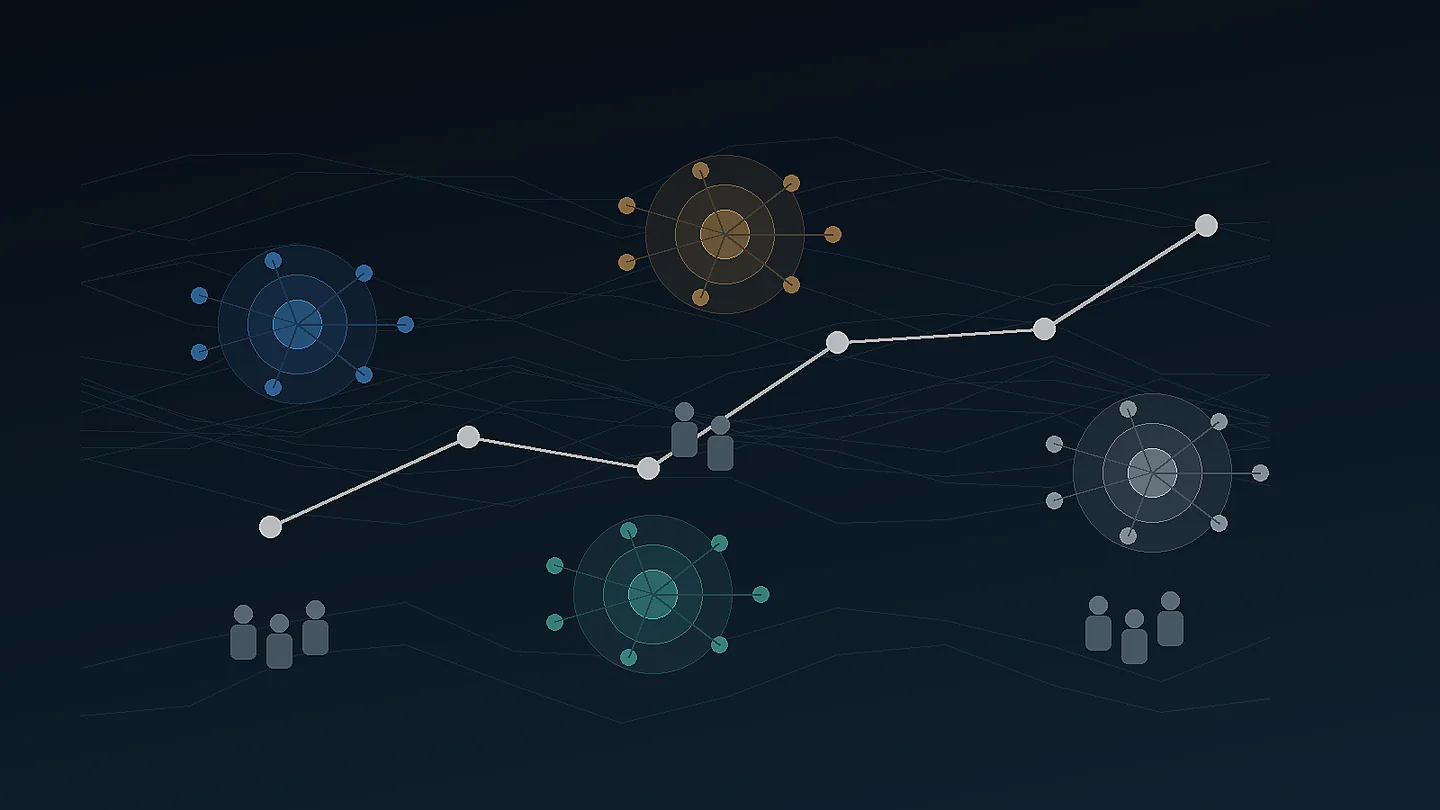
The careful answer is: we do not know yet. The useful answer is: there are several areas worth watching.
It is reasonable to watch for stronger sparse-model or routing strategy, especially if OpenAI keeps pushing toward models that need to serve many task types at different cost and latency levels. It is reasonable to watch for more efficient frontier model architectures, especially around long-context, agentic, and high-volume consumer workloads.
This could matter if OpenAI wants ChatGPT to feel more personal without becoming unsafe or sloppy. Character.AI showed how sticky conversational AI can become. OpenAI’s challenge is to make assistants useful, persistent, and emotionally natural while maintaining boundaries, factuality, and user control.
It could also matter for agents. The more ChatGPT and OpenAI’s developer stack move from answering to acting, the more model behavior becomes a systems problem. Routing, memory, tool use, verification, latency, and failure recovery all become part of the product.
The safest interpretation is not that Shazeer will personally define the next GPT-family model. We do not know his role. The safest interpretation is that OpenAI is adding a person whose background lines up with several of the hardest problems in the next phase of AI: efficient scaling, model architecture, assistant behavior, consumer engagement, and competition with Gemini.
What Not to Overstate Yet
Keep the hype on a leash. This is a major AI talent move, but the public facts still have limits.
- We do not yet know Shazeer’s exact OpenAI title.
- We do not yet know which OpenAI model family, product, or research group he will work on.
- One person does not determine the entire trajectory of OpenAI or Google.
- The effects of a senior hire may take months or years to show up in products.
- The move is important, but it is not proof of any specific unreleased model.
Timeline: Noam Shazeer, Character.AI, Gemini, and OpenAI
| Year | What Happened | Why It Matters |
|---|---|---|
| 2000 | Shazeer starts at Google, according to his public biography and Reuters-linked background reporting. | Places him inside Google during the company’s early engineering and machine learning buildout. |
| 2017 | “Attention Is All You Need” is published at NIPS/NeurIPS with Shazeer as a co-author. | The Transformer becomes the core architecture behind the modern LLM era. |
| 2017 | The sparsely gated Mixture-of-Experts paper appears on arXiv with Shazeer as first author. | MoE becomes a major line of thinking for increasing model capacity without proportionally increasing compute on every input. |
| 2021 | Shazeer leaves Google and goes on to co-found Character.AI with Daniel De Freitas, according to TechCrunch and Reuters-linked reporting. | Moves from foundational research and Google systems into consumer AI product building. |
| 2024 | Reuters and TechCrunch report the Google/Character.AI licensing and talent arrangement, including Shazeer and De Freitas joining Google. | Shows how valuable AI talent and model/product experience had become to frontier labs. |
| 2024 | Reuters reports that Shazeer becomes a technical co-lead of Gemini. | Places him near the center of Google’s flagship model strategy. |
| 2026 | Reuters reports that Shazeer said he will leave Google to join OpenAI. | Turns one of Google’s highest-signal Gemini leaders into one of OpenAI’s biggest talent wins of the year. |
Kingy AI Verdict
This is a 10/10 AI talent move for news importance. Not because one person magically changes everything overnight, but because Shazeer sits at the intersection of three things that define the next AI cycle: model architecture, efficient scaling, and consumer AI behavior.
For founders, developers, and AI product teams, the practical lesson is bigger than one résumé. The next phase of AI will be shaped by model quality, yes, but also by routing, cost, memory, agent reliability, user behavior, and distribution. That is why readers tracking the AI Model Intelligence Hub, the AI Launch Tracker, and guides on how to choose the right AI model should care about talent moves like this.
If OpenAI turns Shazeer’s background into better model routing, more efficient scaling, stronger agents, or more human-feeling ChatGPT behavior, the effects may show up quietly before they show up loudly. Better models often arrive as product smoothness before they arrive as slogans.
FAQ
Who is Noam Shazeer?
Noam Shazeer is an AI researcher, engineer, and entrepreneur known for co-authoring “Attention Is All You Need,” pioneering sparse Mixture-of-Experts work, co-founding Character.AI, returning to Google, and becoming a Gemini technical co-lead according to Reuters.
Why is Noam Shazeer joining OpenAI a big deal?
Because Shazeer combines rare credibility in model architecture, efficient scaling, conversational AI, consumer product behavior, and Gemini-level frontier model competition. That is exactly the territory where OpenAI is fighting hardest.
Did Noam Shazeer invent the Transformer?
No single person invented the Transformer. “Attention Is All You Need” had eight authors: Ashish Vaswani, Noam Shazeer, Niki Parmar, Jakob Uszkoreit, Llion Jones, Aidan Gomez, Lukasz Kaiser, and Illia Polosukhin. Shazeer was one of the co-authors of the paper that introduced the architecture.
What is Mixture-of-Experts?
Mixture-of-Experts is an approach where a routing or gating system activates selected expert subnetworks rather than using the whole model the same way for every input. The goal is to increase capacity while controlling compute cost.
Was Noam Shazeer working on Gemini?
Yes. Reuters reported in 2024 that Google appointed him as a Gemini technical co-lead. Google’s May 2026 Gemini 3.5 post also listed Shazeer as a Vice President at Google DeepMind.
Did OpenAI announce his exact role?
Kingy AI did not find an official OpenAI announcement of Shazeer’s exact role during source checks for this article. The accurate public claim is that Reuters reported he said he will leave Google to join OpenAI.
What did Noam Shazeer have to do with Character.AI?
Shazeer co-founded Character.AI with Daniel De Freitas after leaving Google. Character.AI became an important consumer AI company focused on personalized character-based chat experiences. In 2024, Character.AI announced a Google licensing agreement and said Shazeer, De Freitas, and certain research-team members would join Google.
What could this mean for future OpenAI models?
It could matter for efficient architectures, MoE or sparse routing strategy, long-context systems, agents, assistant behavior, and consumer personalization. But it should not be treated as proof that Shazeer is building any specific unreleased model.
Does this hurt Google Gemini?
It is a meaningful loss, but it does not mean Gemini is doomed. Google still has enormous AI talent, infrastructure, distribution, and research depth. The move matters because Shazeer was a high-signal technical leader in the Gemini effort.
Why does this matter for AI founders and developers?
Because talent moves help reveal where the next platform shifts may happen. Founders and developers should watch model efficiency, routing, agents, memory, voice, multimodal workflows, and platform distribution. Tools like the Gemini API, Gemini Deep Research, and OpenAI’s ecosystem will keep competing for real workflows, not just benchmark screenshots.
Sources
- Reuters: Google’s Gemini co-lead Noam Shazeer to join OpenAI
- Reuters: Google appoints former Character.AI founder as co-lead of its AI models
- NeurIPS: Attention Is All You Need
- Google Research: Attention Is All You Need
- arXiv: Outrageously Large Neural Networks: The Sparsely-Gated Mixture-of-Experts Layer
- TechCrunch: Character.AI CEO Noam Shazeer returns to Google
- Reuters: Google hires Character.AI cofounders, licenses its models
- Google: Gemini 3.5, frontier intelligence with action
- Noam Shazeer public biography
Track more frontier model moves, AI launches, and product shifts in the Kingy AI Launch Tracker. For AI companies that need help turning product news into attention, see AI product distribution with Kingy AI.
The Kingy Brief
Get the next Kingy Brief.
Source-checked AI changes, original tests and one practical thing to try.
Free · Choose your subjects · Double opt-in · Unsubscribe anytime