Last verified: July 24, 2026
Heidelberg AI startup kausable has raised a €12 million seed round to develop causal models that it says can adapt to unfamiliar conditions with little new data and without repeated retraining. UnternehmerTUM’s official announcement says UVC Partners and Entourage co-led the round, with HTGF and Mätch VC participating.
The financing is real. The larger technical promise still needs careful separation from the evidence available today. kausable has published a detailed preprint and named a concrete research system, TipPFN, but it has not announced a self-serve commercial product, public pricing, production customers, or independently verified deployment results. For now, this is a well-funded research bet rather than a finished platform buyers can evaluate through a standard trial.
The funding round
The seed round was announced on July 23, 2026. The HTGF portfolio record confirms the €12 million amount and the four institutional investors. UVC Partners’ company profile identifies the investment year as 2026 and describes kausable’s focus as reasoning-first causal AI.
kausable was founded in 2025 by Johannes Haux, Dr. Benjamin Herdeanu, and Gregor Ramien. The official funding announcement identifies Haux as CEO, Herdeanu as CTO, and Ramien as COO. It says the company will use the new capital to grow its nine-person team and continue developing its frontier model.
| Funding detail | Verified information |
|---|---|
| Amount | €12 million |
| Stage | Seed |
| Announcement date | July 23, 2026 |
| Lead investors | UVC Partners and Entourage |
| Other named investors | HTGF and Mätch VC |
| Planned use | Hiring and continued model development |
| Commercial pricing | Not publicly verified |
What kausable is building
kausable’s research focuses on critical transitions in dynamic systems: abrupt changes that may be difficult to predict from sparse, noisy observations. The company’s proposed approach trains a model on synthetic dynamical systems, then uses in-context learning to make predictions about systems it did not see during training.
That distinction matters. A model can be pretrained on broad synthetic tasks and then make an inference from new context without updating its weights for every new dataset. This is the basis for kausable’s “without retraining” language. It does not mean the model learns every new environment perfectly, eliminates model maintenance, or has already replaced domain-specific systems in production.
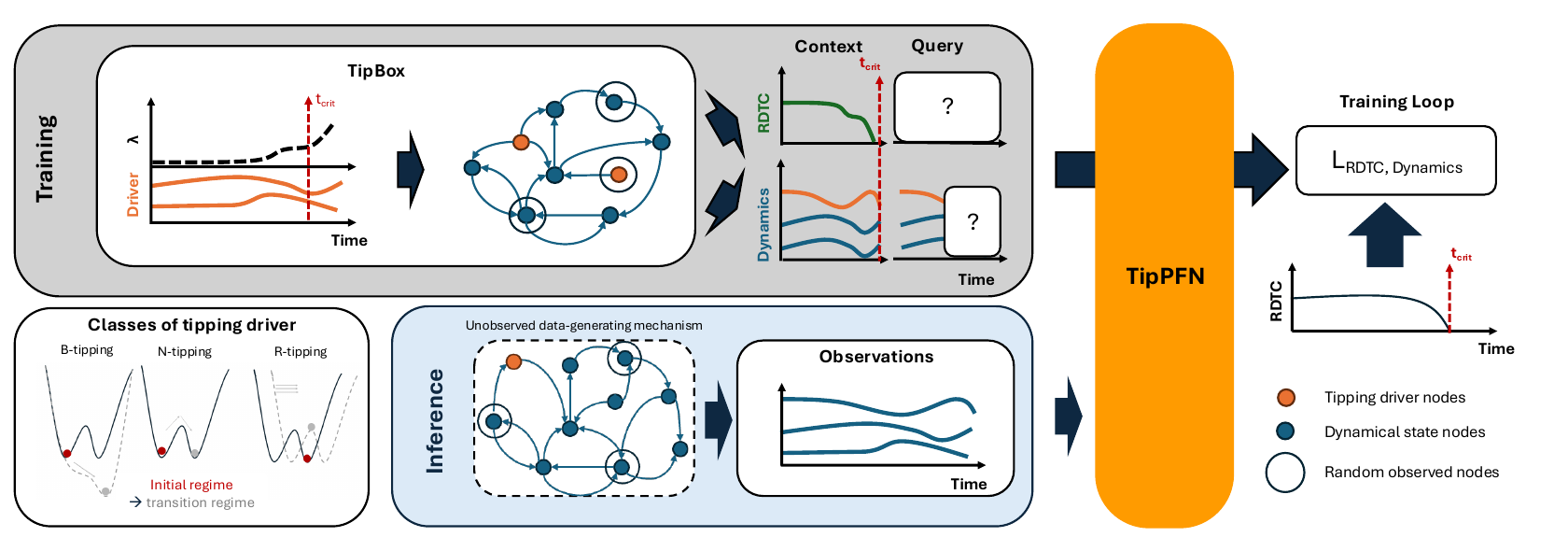
The company’s named research system is TipPFN. In the TipPFN preprint, kausable and university collaborators describe a transformer-based prior-data fitted network trained on randomized synthetic dynamics. The model takes observed trajectories and estimates how close a system may be to a critical transition.
The preprint reports evaluations across synthetic, simulation-to-real, and real-world datasets. Those results are useful research evidence, but they are author-reported findings in a preprint. They do not establish that the system will generalize to every industrial setting, remain reliable under operational drift, or deliver the same results after productization.
Why investors may care about causal adaptation
Many machine-learning projects become expensive after the first demo. Data changes, operating conditions shift, and teams must collect new examples, retrain models, validate them again, and monitor new failure modes. A system that can adapt from context with less task-specific retraining could reduce part of that burden.
The possible applications named by kausable and its investors include robotics, medicine, energy, finance, and other dynamic systems. These fields also set a high bar for validation. Predictions can affect safety, money, infrastructure, or clinical decisions, so strong research results are only the start. Buyers would need evidence for calibration, false alarms, failure detection, data requirements, auditability, and domain-specific oversight.
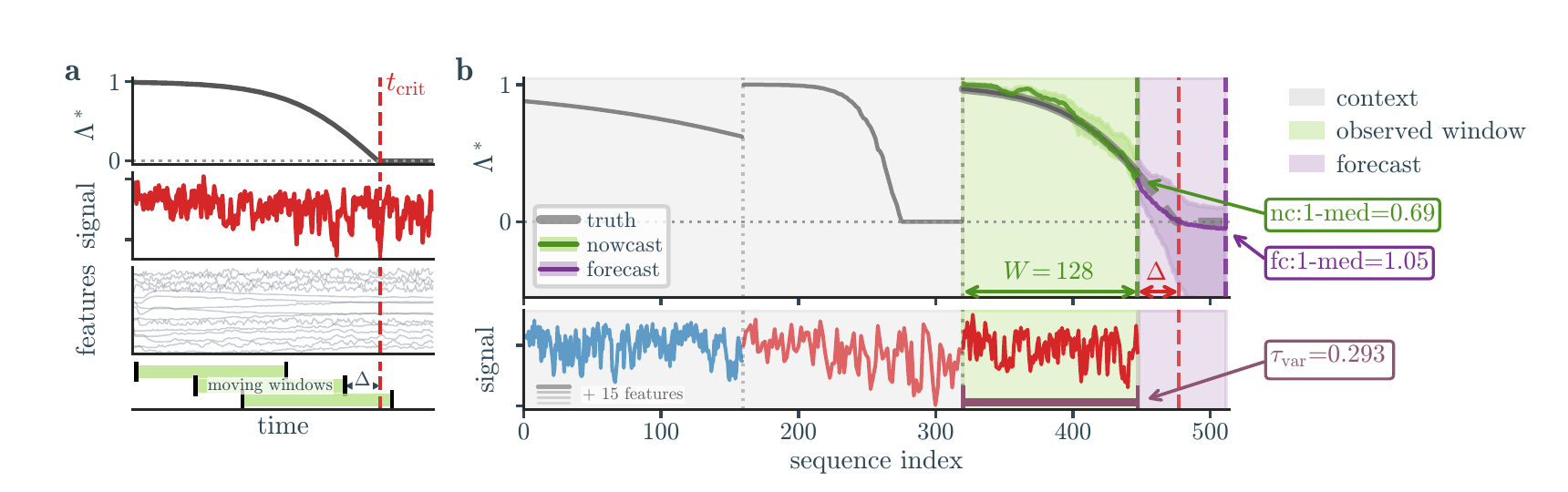
TipPFN’s published design illustrates the approach. It conditions on observed windows and context episodes, then estimates distance to a critical transition. The paper also compares the method with traditional early-warning signals and other machine-learning baselines. The useful question for future product evaluation is not whether a single chart looks strong. It is whether the system stays reliable on data from a buyer’s actual environment.
What the announcement does not verify
The funding materials do not provide a commercial launch date, self-serve access, API documentation, pricing, or a customer list. They also do not provide independent production benchmarks. Claims that the approach can adapt “without retraining” should therefore be read as the company’s technical direction, supported by its published research, rather than a general performance guarantee.
The round also should not be confused with revenue or product adoption. It gives kausable more time and resources to develop the research, hire specialists, and test whether its methods can become a repeatable product. The difficult work now is turning a research architecture into software that customers can deploy, monitor, govern, and trust.
What to watch next
- Product access: a documented API, evaluation environment, or limited commercial program would make the research easier to test.
- Independent replication: outside evaluations on unseen datasets would provide stronger evidence than company-selected results alone.
- Domain boundaries: kausable will need to state where TipPFN works, where it fails, and how much context each deployment requires.
- Operational evidence: real deployments should report calibration, false-positive rates, latency, monitoring, and the cost of maintaining the system.
- Commercial terms: pricing, data handling, support, and liability will matter in regulated or safety-sensitive industries.
Questions the announcement answers
Is the €12 million funding verified?
Yes. The amount, seed stage, announcement date, and four named institutional investors appear across official records from UnternehmerTUM, HTGF, and UVC Partners. UVC Partners and Entourage co-led the round; HTGF and Mätch VC also participated.
Can companies buy or test kausable’s model now?
No public self-serve route was verified. The company has a website and published research, but the checked sources do not list an API, trial, commercial launch date, or price. Interested organizations would need to contact kausable and clarify the evaluation terms directly.
Does the TipPFN paper prove that retraining is unnecessary?
No. The preprint supports a narrower claim: its authors report that TipPFN can make predictions on unseen systems through in-context learning without retraining the model for each evaluated dataset. That is meaningful research evidence, but it is not proof that every future deployment can avoid adaptation, recalibration, or domain-specific validation.
For daily context, the funding announcement also appears in Kingy AI’s July 24 AI Launch Radar. Readers tracking similar product and funding announcements can browse the AI Launches hub and the AI News archive.
Verified launch record: Open the verified kausable raises €12 million for adaptive causal AI record.
Funding verdict
kausable has secured a substantial European seed round around a specific technical thesis: use synthetic training and in-context inference to predict critical transitions in unfamiliar dynamic systems. The company has more evidence than a pitch deck, because its team has published the TipPFN architecture and evaluation results. It still has less evidence than a production AI vendor, because commercial access, independent validation, and customer outcomes remain unverified.
The next milestone is not another broad claim about adaptive AI. It is a product or evaluation program that lets outside teams test where the research works, what it costs, and how it fails.
The Kingy Brief
Get The Kingy Brief.
AI changes, original tests and one practical thing to try. Fridays at 09:00 Vancouver time.
Free · Double opt-in · Unsubscribe anytime
Sign up for The Kingy Brief on Beehiiv.
Signup help and newsletter schedule
Signup form provided by Beehiiv. After submitting, check your inbox for "Confirm your subscription to The Kingy Brief" and open its confirmation link. Check Spam or Promotions if you cannot find it.
Fridays at 09:00 Vancouver time: source-checked AI changes, original tests and one practical thing to try. We skip a week when there is not enough verified material. Free. Unsubscribe anytime.