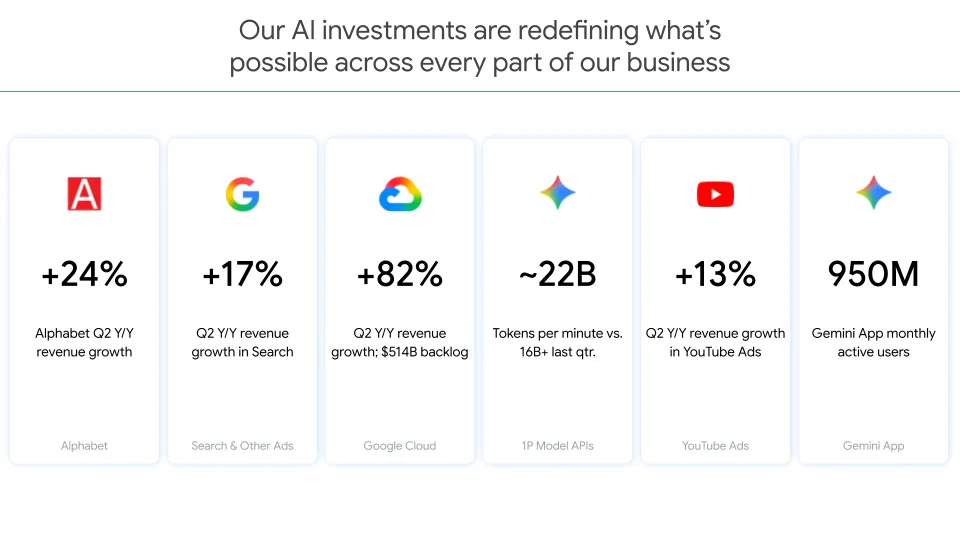
TL;DR: Google reported strong Search and YouTube advertising growth while publishers and infrastructure providers documented a harder referral environment. Those findings can coexist: Google measures activity and revenue across its products, while an individual publisher lives or dies by the clicks that reach its own pages.
What Google’s results establish
Alphabet’s second-quarter update gives a clear view of Google’s side of the market. In Sundar Pichai’s official Q2 remarks, Alphabet said revenue grew 24% year over year, Google Search and Other revenue grew 17%, and YouTube advertising revenue grew 13%. Pichai also said AI Overviews and AI Mode were contributing to query growth.
Those figures show that AI has not broken Google’s commercial engine. They do not, by themselves, describe how outbound traffic is distributed among news sites, reference publishers, retailers, forums, and other websites. Revenue growth at the platform level and referral pressure at the site level answer different questions.
Why advertisers see opportunity
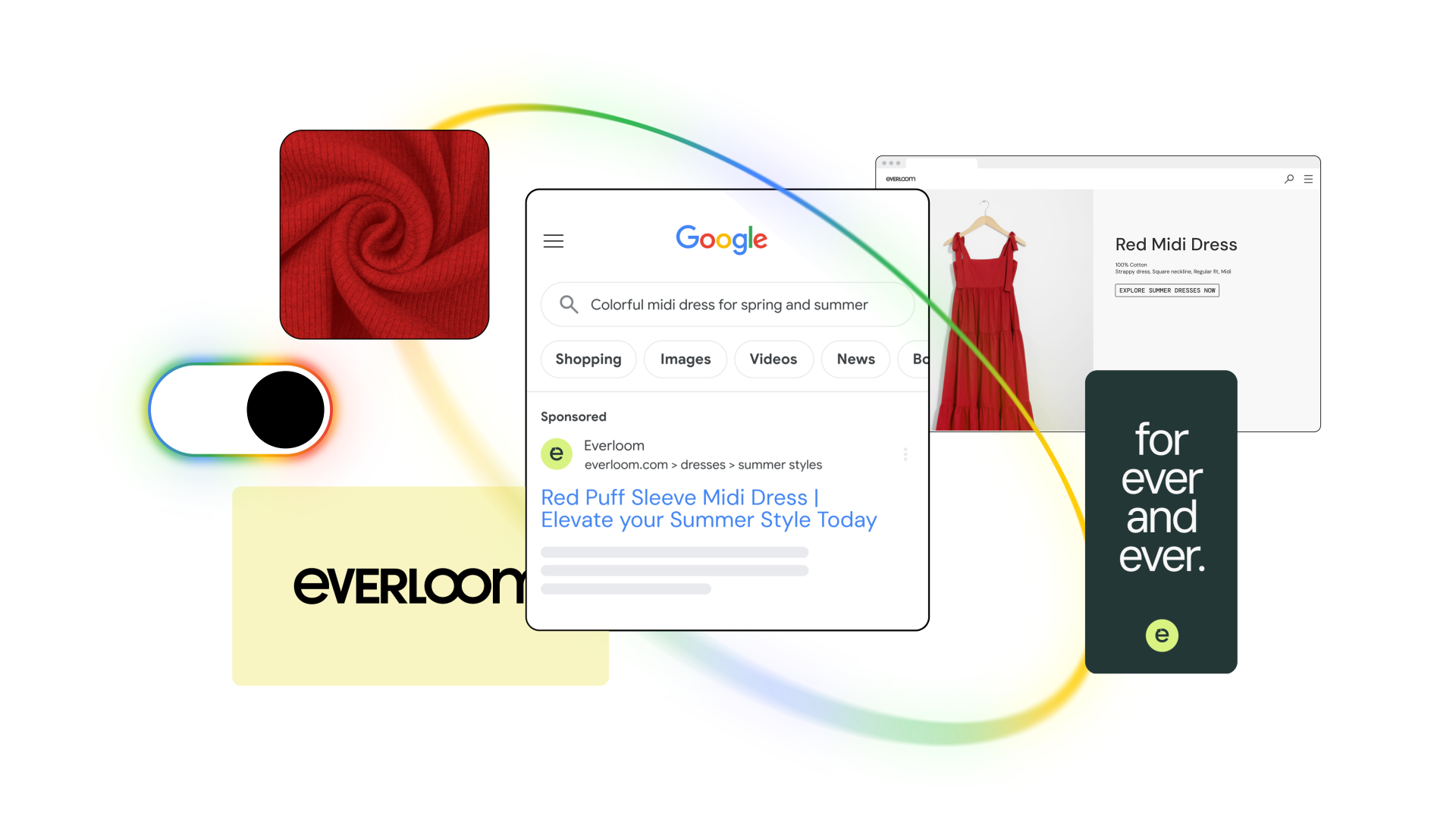
Google is building advertising tools for a search experience that relies less on exact keyword matching and more on inferred intent. Its AI Max announcement says advertisers that activated the suite typically saw 14% more conversions or conversion value at a similar cost per acquisition or return on ad spend. For campaigns that previously drew more than 70% of conversions from exact or phrase-match keywords, Google reported a typical 27% uplift.
Those are Google internal results, not independent guarantees. The footnote limits the 27% figure to a specific 2025 cohort of non-retail advertisers. Marketers should treat both percentages as vendor benchmarks and validate them against their own conversion definitions, incrementality, cost controls, and search-term reports.
Why publishers can still lose ground
Publishers measure sessions, subscriptions, advertising impressions, affiliate conversions, and repeat readership. An AI answer can encourage more searches while satisfying enough of a user’s intent that fewer visits reach a source site. One trend does not disprove the other.
Cloudflare’s July 2026 account of the agentic web says Google remains the dominant source of referral traffic across the sites it observes, while publishers increasingly worry that AI experiences consume content without returning comparable visits. Cloudflare also argues that Google’s combined search-and-AI crawler gives site owners less ability to separate discovery access from AI use. That is Cloudflare’s analysis of its network and product position; it should not be read as a universal traffic measurement or proof that every decline was caused by AI.
The defensible conclusion is narrower than the original article’s “Google Zero” framing: some publishers and infrastructure providers report a worsening referral bargain, while Google reports aggregate Search growth. The public evidence does not support assigning one causal percentage to all publishers.
Commerce is moving closer to the answer
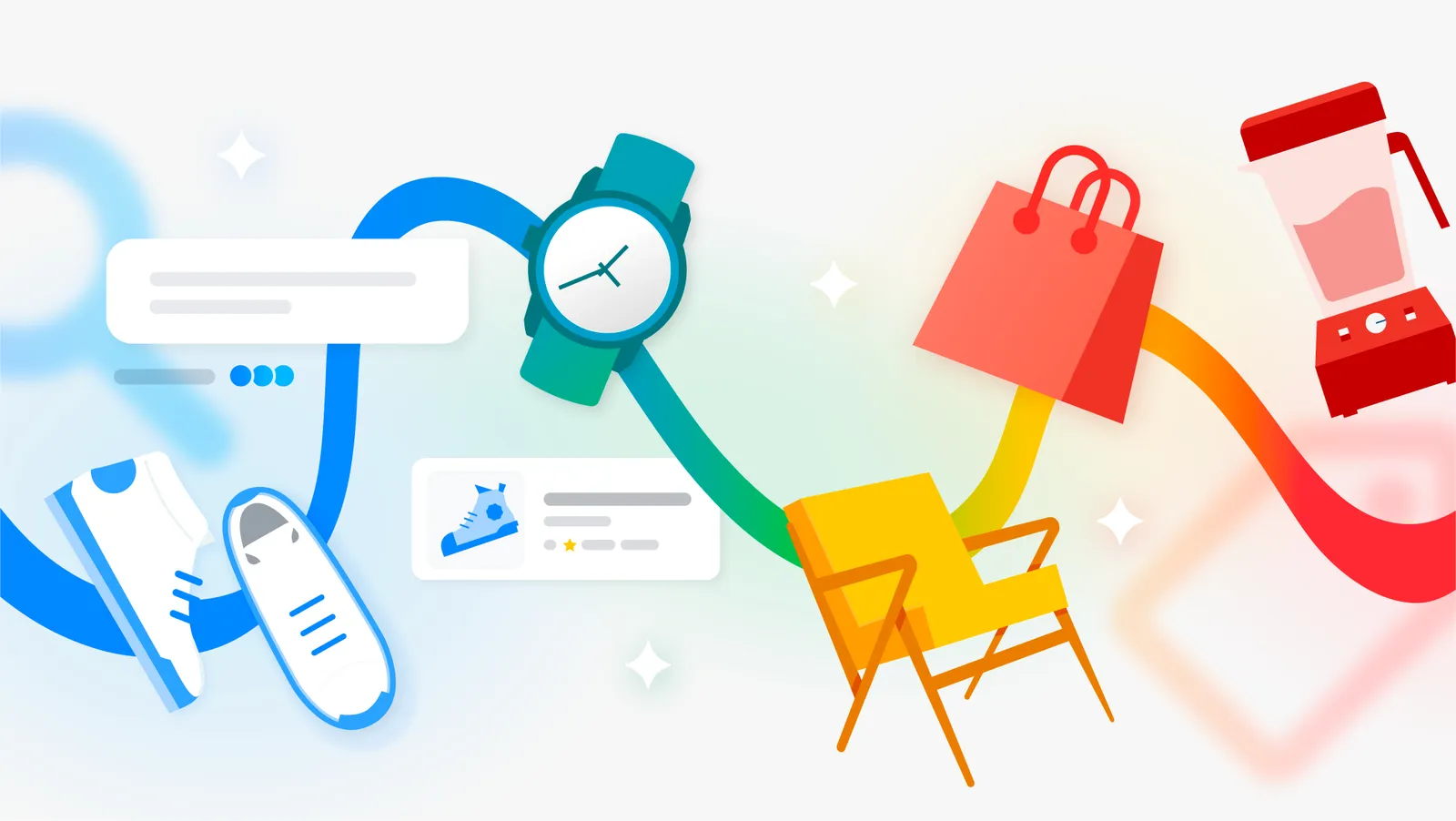
Google is also shortening the path between discovery and purchase. The company’s Universal Commerce Protocol launch describes an open standard for discovery, buying, and post-purchase support across agents, businesses, and payment providers. Google said eligible product listings in AI Mode and Gemini would support checkout while the retailer remained the seller of record.
This matters to publishers and merchants for the same reason: more of the user journey can happen inside a platform-controlled interface. A retailer may welcome a completed purchase even if the shopper never visits its site. A publisher usually has no equivalent conversion unless the interface produces a visit, subscription, licence payment, or another measurable return.
What website operators should do now
- Separate impressions from outcomes. Track Search Console visibility, actual referral sessions, subscriptions, qualified leads, and revenue as different measures.
- Audit AI-era attribution. Record where AI and Search surfaces send traffic, but do not infer causation from a single aggregate trend.
- Build direct distribution. Newsletters, video, community, and returning visitors reduce dependence on any one discovery platform.
- Test advertising claims locally. Google’s AI Max benchmarks are a starting hypothesis, not a forecast for a specific account.
- Protect source quality. First-party reporting, original data, tools, and expertise remain more defensible than interchangeable summary content.
The bottom line
Google’s AI search business is growing. Some publishers are simultaneously receiving less value from the old crawl-and-referral exchange. The useful story is not that one side must be lying; it is that platform-level growth can conceal sharply different outcomes for the websites supplying information.
Kingy readers can follow related product and protocol changes in the AI Launch Tracker and the latest source-checked coverage in AI News.
The Kingy Brief
Get The Kingy Brief.
AI changes, original tests and one practical thing to try. Fridays at 09:00 Vancouver time.
Free · Double opt-in · Unsubscribe anytime
Sign up for The Kingy Brief on Beehiiv.
Signup help and newsletter schedule
Signup form provided by Beehiiv. After submitting, check your inbox for "Confirm your subscription to The Kingy Brief" and open its confirmation link. Check Spam or Promotions if you cannot find it.
Fridays at 09:00 Vancouver time: source-checked AI changes, original tests and one practical thing to try. We skip a week when there is not enough verified material. Free. Unsubscribe anytime.