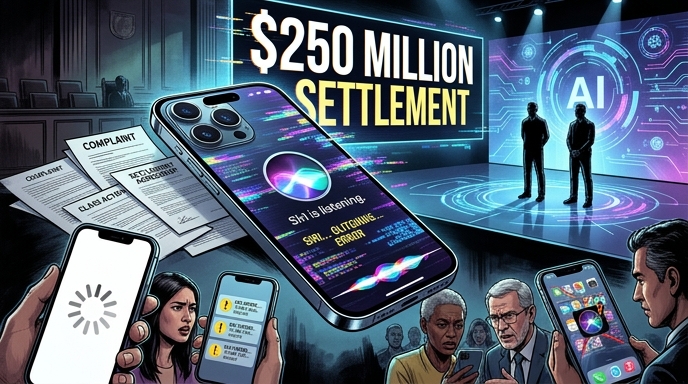
The Lawsuit That Finally Caught Up With Apple
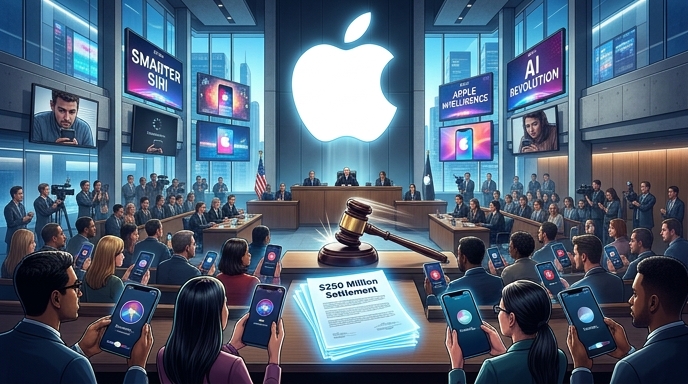
If you thought lawsuits against big tech were background noise, think again. This one landed with a thud—and a $250 million price tag.
Apple Inc. has agreed to settle a class action lawsuit accusing it of overselling the capabilities of Siri, particularly around its much-hyped “intelligence” upgrades. The core allegation is simple: Apple promised a smarter, more capable Siri—and then didn’t deliver on time.
That gap between promise and reality? It’s now worth a quarter of a billion dollars.
The lawsuit focused on marketing claims tied to Apple’s push into AI-enhanced features, often framed under branding like “Apple Intelligence.” Consumers argued that Apple painted a picture of a dramatically improved Siri—more conversational, more contextual, more useful—only for those features to arrive late, partially, or not at all.
Apple didn’t admit wrongdoing. That’s standard. But it also didn’t fight this to the bitter end. Instead, it cut a deal.
That tells you something.
Because companies don’t casually write checks with nine zeros unless there’s real legal risk—or reputational damage they’d rather contain.
What Apple Actually Promised (and Why It Matters)
Apple’s marketing machine is famously disciplined. It doesn’t usually make reckless claims. Which is exactly why this case stands out.
The lawsuit zeroed in on how Apple presented Siri’s future capabilities during product launches and promotional campaigns. The company showcased features like:
- More natural conversations
- Context-aware responses
- Smarter app integration
- Improved personalization
These weren’t vague aspirations. They were presented as near-term realities—features consumers could reasonably expect to use soon after purchasing devices.
That expectation is the legal fault line.
When a company markets a feature as imminent and it either arrives much later or in a diminished form, that’s where “false advertising” arguments gain traction. Not because the feature never existed—but because the timeline and readiness were misrepresented.
And Apple, despite its reputation for cautious messaging, pushed hard on AI narratives during a period when the entire industry was racing to catch up to generative AI breakthroughs.
In short: Apple wasn’t just selling a phone. It was selling a vision of what that phone would soon become.
The Timeline Problem Apple Couldn’t Escape
Here’s where things get uncomfortable for Apple.
The features at the center of the lawsuit weren’t completely fictional. Many did eventually materialize. But timing matters—legally and commercially.
Consumers who bought devices expecting immediate access to advanced Siri capabilities found themselves waiting. And waiting. And waiting.
Some updates rolled out incrementally. Others were delayed significantly. A few arrived in limited or scaled-back forms.
From Apple’s perspective, this is normal product development. Software evolves. AI features are complex. Delays happen.
From a legal standpoint, that argument doesn’t fully hold.
Because once you attach a feature to a purchasing decision—especially in marketing—you’re no longer just talking about future innovation. You’re making a claim tied to consumer value.
And if that value doesn’t show up when expected, you’ve got exposure.
That’s exactly what happened here.
Breaking Down the $250 Million Settlement
Let’s talk about the number: $250 million.
That’s not catastrophic for Apple. It’s not even a rounding error relative to its annual revenue. But it’s not trivial either.
The settlement is structured to compensate eligible consumers who purchased devices marketed with these Siri capabilities during the relevant period.
According to reports, payouts could reach up to around $95 per device, depending on how many claims are filed.
That’s the upper bound. Realistically, most users will receive less.
Still, multiply that across millions of devices, and the total adds up quickly.
What’s more interesting isn’t the payout—it’s the precedent.
This case signals that courts are increasingly willing to scrutinize AI-related marketing claims. Not just whether features exist, but whether they arrive when and how companies say they will.
And that’s a problem for an industry built on forward-looking promises.
Why Apple Settled Instead of Fighting
Apple had options. It could have dragged this out for years, It has the legal resources. It has the track record.
So why settle?
Because the downside risk was bigger than the $250 million.
A prolonged trial would have forced Apple to disclose internal timelines, development challenges, and decision-making around Siri’s rollout. That’s not information Apple likes to share.
It also risked a ruling that could set a stronger legal precedent—one that might open the door to more lawsuits, not fewer.
Settling keeps things contained. No admission of guilt, No detailed legal findings. No prolonged media circus.
It’s controlled damage.
And from Apple’s perspective, it’s probably the rational move.
The Real Story: Siri’s Struggles in the AI Era
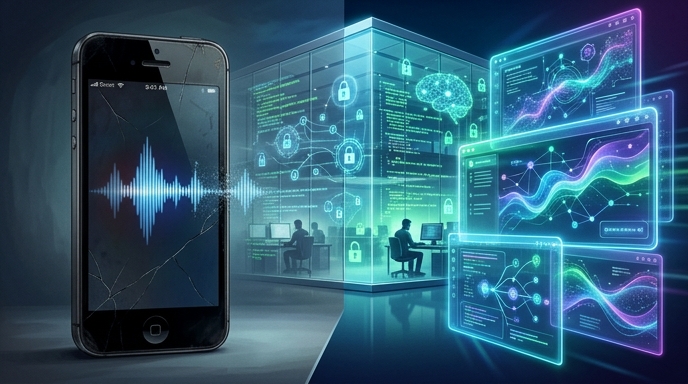
Strip away the legal drama, and this case is really about something deeper: Siri’s long-standing identity crisis.
Once a pioneer in voice assistants, Siri has spent years playing catch-up to competitors like Google Assistant and Amazon Alexa. More recently, the rise of generative AI has widened that gap.
Apple knows this. That’s why it leaned so heavily into “intelligence” messaging.
But ambition collided with reality.
Building a truly conversational, context-aware AI assistant is hard. It requires massive data, sophisticated models, and careful integration with user privacy—an area where Apple imposes stricter constraints than most.
Those constraints are a double-edged sword.
They protect users. But they also slow development.
And when marketing gets ahead of engineering, you get situations like this lawsuit.
Consumers Aren’t Just Buying Hardware Anymore
One of the most important shifts highlighted by this case is how people evaluate devices.
Consumers aren’t just buying hardware specs anymore. They’re buying software ecosystems—and increasingly, AI capabilities.
That means expectations are different.
When Apple promotes Siri as a smarter assistant, users don’t treat that as a bonus feature. They treat it as part of the core product experience.
So when it underdelivers, it doesn’t feel like a minor issue. It feels like the product itself fell short.
This is a fundamental shift in how value is perceived in consumer tech.
And companies that don’t adjust their messaging accordingly will keep running into trouble.
The Broader Industry Problem: AI Overpromising
Apple isn’t alone here. Not even close.
The entire tech industry is currently engaged in aggressive AI marketing. Every company is racing to position itself as an AI leader. That means big claims, bold demos, and forward-looking promises.
The problem? Many of those promises are premature.
AI development is messy. Features that look polished in demos often require months—or years—of refinement before they’re ready for real users.
But marketing timelines don’t wait.
So companies show what’s possible, not what’s ready.
That gap is where legal risk lives.
This lawsuit is a warning shot. Not just for Apple, but for everyone pushing AI narratives.
What Users Can Actually Expect From the Settlement
If you’re wondering whether you’ll get a check, the answer depends on eligibility.
Consumers who purchased certain Apple devices during the timeframe covered by the lawsuit may be able to file claims.
The process will likely involve:
- Verifying device ownership
- Submitting a claim form
- Waiting for distribution
The payout per device will vary based on participation rates.
Don’t expect a windfall. This isn’t life-changing money. It’s compensation—symbolic as much as financial.
But it does represent something important: accountability.
Apple’s Likely Response Moving Forward
Apple isn’t going to stop investing in Siri. If anything, this settlement increases the pressure to deliver.
Expect a few shifts:
- More cautious marketing language
Apple will likely dial back aggressive timelines for AI features. - More staged rollouts
Features may launch in clearer phases, reducing expectation gaps. - Heavier emphasis on reliability over novelty
Apple tends to prioritize polished experiences over bleeding-edge features. This case reinforces that instinct. - Deeper integration of AI across the ecosystem
Siri won’t just be a standalone assistant—it will become part of a broader AI strategy across devices.
Apple doesn’t lose long-term because of this. But it does adjust.
The Reputation Question: Does This Hurt Apple?
Not as much as you might think.
Apple’s brand is resilient. A $250 million settlement doesn’t fundamentally alter consumer perception. Most users won’t even follow the details closely.
But among more informed consumers—and regulators—this adds to a growing narrative:
Apple is no longer the company that always ships perfectly timed innovation.
It’s a company navigating the same messy AI transition as everyone else.
That doesn’t make it weak. It makes it…normal.
Which, for Apple, is a subtle but meaningful shift.
The Legal Precedent That Could Ripple Across Tech
The real impact of this case isn’t the payout. It’s what comes next.
If courts continue to take a harder line on AI-related claims, companies will need to rethink how they market unfinished features.
That could lead to:
- Fewer “coming soon” promises
- More conservative product announcements
- Greater transparency around timelines
Or, alternatively, more creative legal language designed to avoid liability while still generating hype.
Either way, the rules are changing.
And Apple just paid to find out where the boundaries are.
Final Analysis: A Predictable Outcome
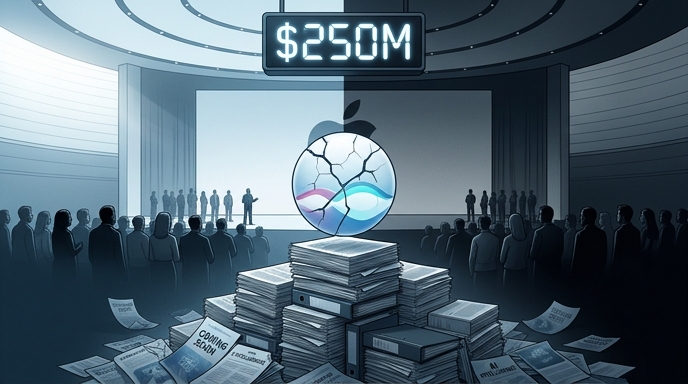
None of this is surprising.
Apple pushed hard on AI messaging at a time when its underlying technology wasn’t fully ready. Consumers noticed. Lawyers noticed. And eventually, the legal system responded.
The $250 million settlement is the cost of that mismatch.
It’s not catastrophic. It’s not even particularly damaging in isolation.
But it’s a clear signal: even Apple can’t market future capabilities as present realities without consequences.
That’s the takeaway.
Not the money. Not the headlines.
The shift in accountability.
And if you think this is the last lawsuit of its kind, you’re not paying attention.
Sources
The Kingy Brief
Get future Kingy Brief editions.
Source-checked AI changes, original tests and one practical thing to try.
Free · Choose your subjects · Double opt-in · Unsubscribe anytime
Regular sending is paused; no restart date is set.