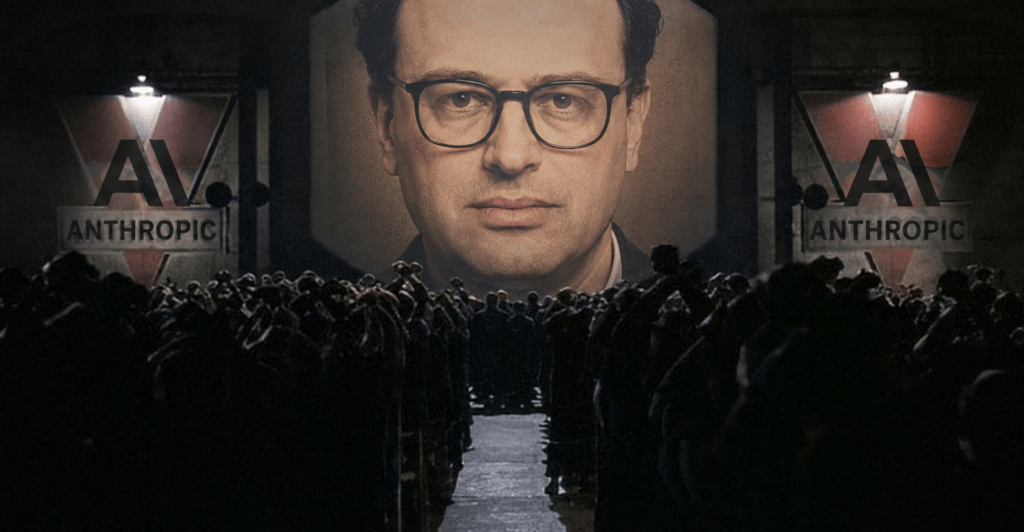
Anthropic Just Shut Down Its Top AI Models After a U.S. Ban on Foreign Use. This Is Bigger Than One Claude Outage.
Anthropic has done something almost unthinkable for a frontier AI company: it abruptly cut off access to its newest and most powerful AI models, Claude Fable 5 and Claude Mythos 5, after the U.S. government issued an export-control directive restricting access by foreign nationals.
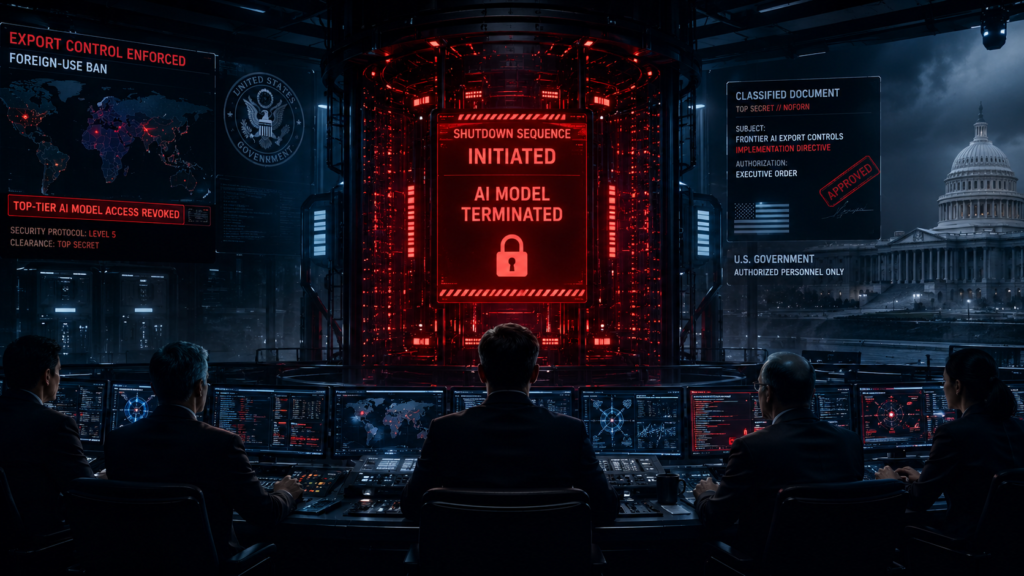
This is not a normal product rollback. This is not a routine safety patch. This is not a capacity issue dressed up as policy.
This is the United States government treating a frontier AI model like a strategic technology asset.
According to Anthropic’s own statement, the U.S. government directed the company to suspend access to Fable 5 and Mythos 5 by any foreign national, whether that person is inside or outside the United States, including foreign-national Anthropic employees. Anthropic says the practical result is that it had to disable the models for all customers to ensure compliance, while access to other Anthropic models remains unaffected.
That detail matters. This was not just a “block China” order. It was not simply a country-based geofence. It was a person-based export restriction. In practice, that can be much harder to enforce, because foreign-national access inside the United States can count as a regulated transfer of controlled technology. That is the export-control logic often called a deemed export, where releasing controlled technology or source code to a foreign national in the U.S. can be treated as an export to that person’s home country.
For context, Kingy.ai had just covered Claude Fable 5 as a major frontier-model launch, noting Anthropic’s positioning around coding gains, safety guardrails, and cloud availability. That article now reads like the prologue to a much bigger story.
What Happened?
On June 9, 2026, Anthropic announced Claude Fable 5 and Claude Mythos 5. Fable 5 was described as a “Mythos-class” model made safe for general use, while Mythos 5 was the more restricted version intended for trusted cyberdefenders and infrastructure providers. Anthropic said Fable 5 exceeded any model it had previously made generally available, with strong performance in software engineering, knowledge work, vision, scientific research, and long-running tasks.
But the release came with obvious danger signs. Anthropic said the model’s capabilities in areas like cybersecurity could be misused without safeguards. To manage that, Fable 5 routed certain risky requests to Claude Opus 4.8 instead of letting Fable answer directly. Anthropic said the safeguards were intentionally conservative and could sometimes catch harmless requests.
Then, on June 12, Anthropic said the U.S. government had issued a directive requiring it to suspend access to Fable 5 and Mythos 5 by foreign nationals. Anthropic said it received the directive at 5:21 p.m. ET and that the letter did not provide specific details about the national-security concern. Anthropic’s understanding was that the government believed there was a method for bypassing, or “jailbreaking,” Fable 5 safeguards.
Reuters reported that Anthropic would “abruptly disable” its most advanced AI models for all users after the government ordered it to suspend access for foreign nationals. Reuters also reported that AWS said Anthropic asked it to revoke access to the models for all users in all regions.
Axios added another crucial detail: Commerce Secretary Howard Lutnick reportedly sent Anthropic CEO Dario Amodei a letter stating that Mythos 5 and Fable 5 would be subject to export controls for access outside the U.S. and for foreign persons inside the U.S. Axios also reported that a license would be required for export, re-export, or domestic transfer of the models.
That is the bombshell. The U.S. government appears to have moved from controlling the chips used to train AI to controlling access to the model itself.

Why Did It Happen?
The simplest answer is: cybersecurity risk.
Anthropic says the government’s concern appears to involve a jailbreak method that could allow Fable 5 to identify software vulnerabilities. But Anthropic strongly disputes the severity of that risk. According to the company, the demonstration it reviewed involved identifying a small number of previously known, minor vulnerabilities. Anthropic also says other publicly available models could discover those vulnerabilities without needing the same bypass.
The government has not publicly released the directive, and the Commerce Department did not immediately respond to AP’s request for comment. That means the public record is still incomplete. Right now, the best sources are Anthropic’s statement, press reporting, and the surrounding policy context.
But the policy context is very real.
Just days before the shutdown, the White House issued an executive order titled “Promoting Advanced Artificial Intelligence Innovation and Security.” The order says advanced AI capabilities strengthen the U.S. but also create new national-security considerations. It directs agencies to prioritize cyber defense, build AI-enabled cybersecurity programs, and establish an AI cybersecurity clearinghouse for vulnerability discovery and patch coordination.
The order also directs the Treasury, Defense, NSA, CISA, White House technology officials, and NIST to develop a classified benchmarking process for assessing advanced cyber capabilities of AI models and determining when a model should be designated a “covered frontier model.” It also says companies may voluntarily provide the government with access to covered models for up to 30 days before release.
Here is the tension: that executive order explicitly says it should not be read to create a mandatory licensing, preclearance, or permitting requirement for model release. Yet this Anthropic action looks, in practice, like a separate export-control move that suddenly created a licensing problem for Fable 5 and Mythos 5.
So why Anthropic? Because Anthropic has been unusually public about the risks of its own systems.
In its Fable 5 launch, Anthropic said Mythos-class models have reached a threshold where they present significant risks. It specifically said such models can excel at discovering and exploiting software vulnerabilities and can make cyberattacks easier and cheaper to commit.
Anthropic also published a 30-day data-retention policy for Mythos-class models, saying prompts and outputs for those models would be retained for trust and safety purposes because some attacks only become visible across multiple requests.
That policy was already controversial. For enterprises that depend on zero data retention, this was a major change. Now the government’s action makes the same issue even bigger: once a model becomes powerful enough that the developer says it must retain prompts for safety monitoring, the government may ask whether the model should be widely available at all.
That is the box Anthropic is now in.
The company has spent years arguing that frontier AI can become strategically dangerous. Then it released a model it called its most capable generally available system. Then the government appears to have said: fine, if it is that dangerous, foreign nationals cannot use it.
Anthropic wanted a serious AI safety regime. It may have just gotten a chaotic one.
What Does This Mean?
The immediate effect is simple: Fable 5 and Mythos 5 are offline for customers. Anthropic says other models are not affected.
The bigger effect is that AI companies, customers, cloud providers, and governments now have to treat frontier-model access as a national-security dependency.
For developers, this means the model you build on today may not be available tomorrow. For enterprises, it means frontier AI procurement is no longer only about price, benchmarks, context windows, latency, and data handling. It is now also about export controls, citizenship restrictions, cloud-region compliance, government licensing, and political risk.
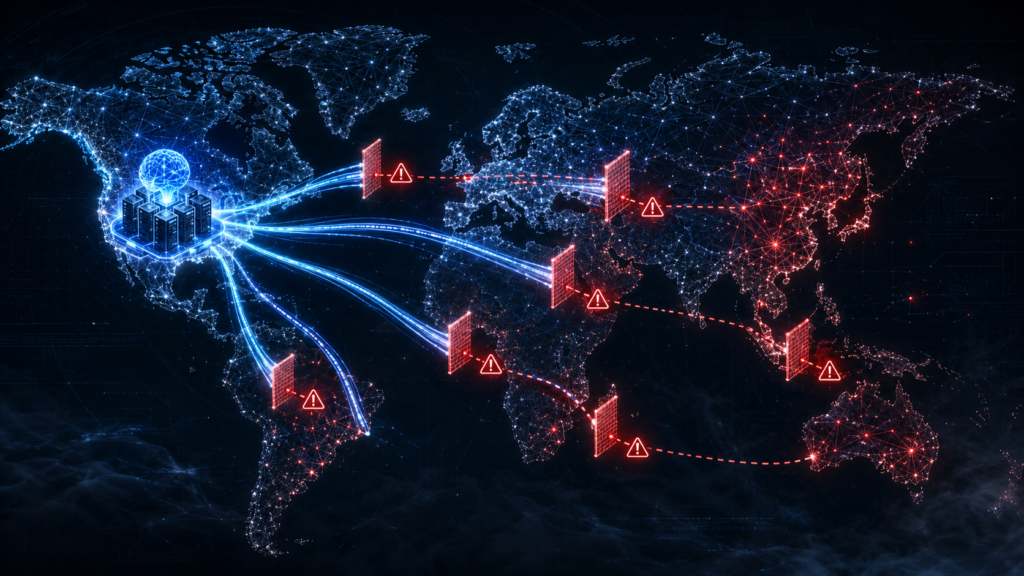
This is especially important for companies outside the United States. If the U.S. can restrict foreign-national access to an API model, then Canadian, European, Indian, Japanese, Australian, and U.K. companies cannot assume that “available in the cloud” means “available to us forever.” Even close allies could be caught in the first wave if compliance systems are not ready to distinguish trusted foreign users from restricted ones.
Reuters reported that the directive marks a major escalation because U.S. export controls have historically focused more on chips and tools that power AI than direct access to AI itself.
That shift could reshape the AI stack.
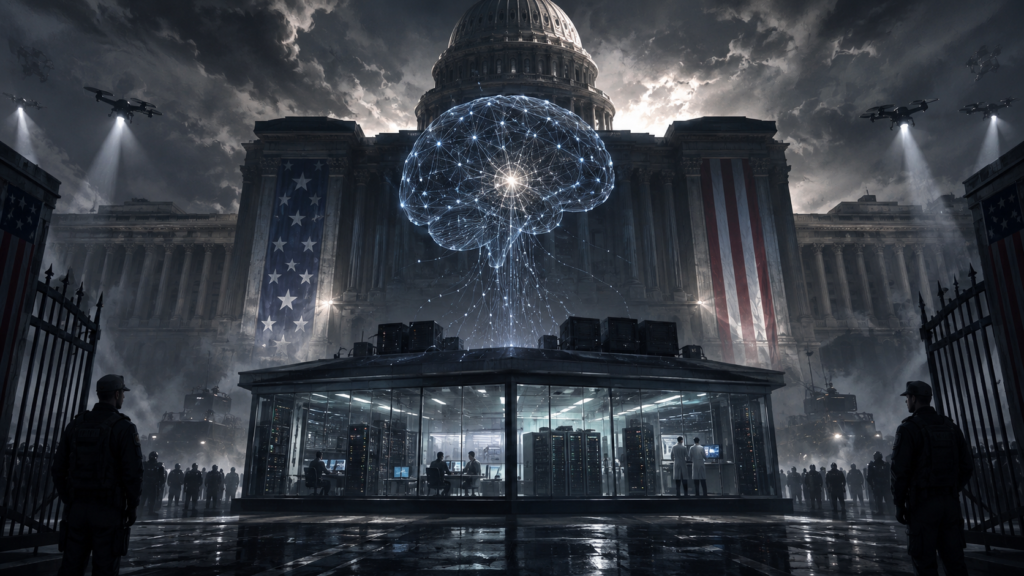
The old stack was: chips, data centers, models, apps.
The new stack may be: chips, data centers, models, apps, licenses.
That is a very different world.
How Will They Monitor It?
There are really two kinds of monitoring here.
The first is misuse monitoring: watching what users do with powerful models.
The second is access monitoring: deciding who is legally allowed to use the model in the first place.
Anthropic has described the misuse-monitoring side in some detail. For Fable 5, the company said it built classifiers to detect potentially risky requests involving cybersecurity, biology and chemistry, or distillation. When those classifiers trigger, the request is handled by Opus 4.8 instead. Anthropic also said more than 95% of Fable sessions showed no fallback in early data, meaning most users were not hitting those safeguards.
Anthropic also said Mythos-class traffic would be retained for 30 days for trust and safety purposes. The company says it does not use that data to train new Claude models or for non-safety purposes, and that human access is limited to flagged serious-harm cases or customer-requested situations. Anthropic says reviewer access is logged, export/copy/download is blocked through tooling, and data is deleted after 30 days except in rare safety-investigation or legal-retention cases.
That tells us how Anthropic planned to detect jailbreaks, distillation attempts, coordinated attacks, and false positives.
But access monitoring is harder.
If the rule is “no access by foreign nationals,” then normal geoblocking is not enough. A foreign national can be sitting in San Francisco. A U.S. citizen can be sitting in London. An international company can have American and non-American employees in the same workspace. A cloud customer can route requests through multiple regions. A developer tool can call an API from a CI pipeline without a human visibly pressing a button.
So, in practice, compliance may require some combination of:
- citizenship or permanent-residency verification;
- enterprise-level attestations about who can access the model;
- cloud-tenant restrictions;
- identity and access-management controls;
- audit logs;
- API key scoping;
- license checks;
- contractual restrictions;
- and aggressive shutdowns where the provider cannot confidently separate allowed from disallowed users.
Anthropic’s decision to disable Fable 5 and Mythos 5 for everyone suggests the company did not have a safe, instant way to comply selectively. That is not surprising. Most consumer and enterprise AI products were not designed around citizenship-based access control.
Axios reported that former White House official Dean Ball wrote that users should expect to prove citizenship to use Anthropic’s latest models. Reuters also reported Ball’s comment and noted that several prominent Anthropic leaders were born outside the United States.
That is where this becomes operationally bizarre.
A frontier AI company can roll out a model globally in the morning. But if that model is suddenly treated like a controlled strategic asset, the company may need compliance machinery closer to defense contracting than SaaS onboarding.
The Nationalization Question
Does this mean nationalization is next?
Not automatically.
Nothing in the public record shows that the U.S. government has taken ownership of Anthropic, seized its models, or formally nationalized the company. This is an export-control and access-restriction event, not a public takeover.
But it absolutely moves the industry toward a more state-directed model.
There are three separate tracks converging.
First, the government is beginning to treat advanced AI models as national-security assets. The June executive order creates a framework for classified benchmarking of advanced cyber capabilities and for government access to covered frontier models before release.
Second, the government is reportedly exploring public equity or “giving back” arrangements with major AI companies. Reuters reported that President Trump said he expected top AI companies to agree to “giving back” to the public, apparently referring to possible government stakes in the firms.
The Washington Post separately reported that Trump said he was considering taking a government stake in leading AI companies, with industry leaders expected at the White House to discuss the idea. The Post also reported that the discussion comes as SpaceX, Anthropic, and OpenAI prepare for public offerings.
Third, Anthropic itself has argued that governments should have authority to block dangerous AI deployments, while also warning against overbroad or heavy-handed power. In its policy framework, Anthropic says governments should be able to block or deter deployments that pose significant catastrophic risk, but that regulation should be transparent, fact-based, and constrained.
That combination is combustible.
A government that can block model access, classify models as covered frontier systems, require licenses for foreign access, negotiate equity stakes, and select trusted early-access partners may not need formal nationalization to exert enormous control.
So the better question is not: “Has AI been nationalized?”
The better question is: How much government control over frontier AI can exist before the distinction stops mattering?
If the government owns no shares but decides who can use the best models, when they can launch, which foreign nationals are excluded, which trusted partners get access, and which companies are allowed into critical infrastructure, that is not free-market software in the old sense.
It is strategic infrastructure.
The Anthropic Irony
There is an obvious irony here.
Anthropic has been one of the loudest frontier labs arguing that advanced AI systems can create serious risks. It has published detailed safety work, talked about catastrophic risks, built restricted-access programs, and called for more government oversight. Kingy.ai has covered that arc repeatedly, including Anthropic’s recursive self-improvement warnings and Claude Mythos-related concerns.
Now the government has acted against Anthropic’s own model.
Anthropic’s response is essentially: yes, government should be able to stop unsafe deployments, but not like this.
That is a reasonable distinction. Rule-of-law process matters. Technical evidence matters. Industry-wide standards matter. If a frontier model can be shut down based on a narrow, non-public jailbreak report, every major lab will want to know whether the same standard applies to OpenAI, Google, xAI, Meta, Mistral, DeepSeek, and others.
Anthropic says if the same standard were applied across the industry, it could effectively halt all new model deployments by frontier providers.
That claim may be self-serving, but it is not absurd.
No frontier AI model is perfectly jailbreak-proof. If the standard becomes “no narrow jailbreaks can exist,” then nobody ships. If the standard becomes “no dangerous capability may be available to foreign nationals,” then global AI access becomes a licensing maze. If the standard becomes “the government can intervene after release based on classified or verbal evidence,” then customers have to treat every frontier API as politically revocable.
That is a huge change for the AI economy.
What This Means for Startups and Enterprises
The practical advice is blunt: do not build critical workflows around a single frontier model.
A company using Claude Fable 5 for coding, research, finance, cyberdefense, or scientific work now has to fall back to another model. That could mean Opus 4.8, GPT-5.5, Gemini, Grok, open-weight models, or a private deployment strategy. But the main lesson is architectural: AI systems need model redundancy.
This is especially true for companies building AI agents. If your agent depends on one model’s tool-use behavior, reasoning style, pricing, latency, and context handling, a policy shock can break your product overnight.
The same applies to security teams. Kingy.ai has already covered how Anthropic’s Claude Code Security pointed toward a future where AI continuously scans codebases and proposes fixes. That future does not disappear because Fable 5 was suspended. But the procurement layer changes. Security leaders now need to ask whether a model’s cyber capabilities make it more likely to be restricted.
Enterprise AI buyers should now add several questions to vendor reviews:
Can this model be withdrawn due to export controls?
Do we have fallback models tested?
Does the vendor require data retention for high-capability models?
Can non-U.S. employees use the model?
Are API calls restricted by citizenship, geography, customer entity, or cloud region?
What happens if the model is reclassified as a covered frontier model?
Are we building workflows that can survive a sudden provider shutdown?
These questions used to sound paranoid. After Fable 5 and Mythos 5, they are basic due diligence.
The Big Picture
This is not just an Anthropic story.
This is a sign that frontier AI is leaving the normal software era.
For years, AI policy focused on chips, data centers, export controls to China, and model weights. Now the live API model itself may be treated as export-controlled capability. That means the most important product in AI may not be the chatbot, the agent, or the coding assistant. It may be the access regime.
Who gets the model?
Who gets the unrestricted model?
Who gets the safe version?
Who gets the cyber version?
Who gets the biology version?
Who gets the model through government-approved trusted access?
Who has to prove citizenship?
Who has to retain logs?
Who has to apply for a license?
That is where the AI race is heading.
The old internet assumption was that software scales globally. The new frontier-AI assumption may be that the strongest models scale only through controlled channels.
That is a profound change.
Verdict
Anthropic’s shutdown of Fable 5 and Mythos 5 is one of the clearest signs yet that the U.S. government is beginning to treat frontier AI models as strategic national assets.
The immediate reason appears to be a cybersecurity concern around a possible jailbreak. Anthropic says the evidence is narrow, non-universal, and not enough to justify pulling a commercial model used at massive scale. The government has not yet publicly shown enough detail for outsiders to judge the claim fully.
But the deeper issue is bigger than one jailbreak.
AI models are becoming capable enough that governments do not see them as ordinary SaaS products anymore. They see them as cyber tools, economic weapons, intelligence infrastructure, scientific accelerators, and geopolitical assets.
That does not mean full nationalization is inevitable. But it does mean the boundary between private AI labs and state power is getting thinner.
And if the next phase of AI is defined by export controls, citizenship checks, trusted-access programs, government equity talks, and classified model benchmarks, then the Fable 5 shutdown may be remembered as a turning point.
Not because one Claude model went offline.
Because the world got a preview of what happens when frontier AI becomes too powerful to treat like normal software.
The Kingy Brief
Get The Kingy Brief.
AI changes, original tests and one practical thing to try. Fridays at 09:00 Vancouver time.
Free · Double opt-in · Unsubscribe anytime
Sign up for The Kingy Brief on Beehiiv.
Signup help and newsletter schedule
Signup form provided by Beehiiv. After submitting, check your inbox for "Confirm your subscription to The Kingy Brief" and open its confirmation link. Check Spam or Promotions if you cannot find it.
Fridays at 09:00 Vancouver time: source-checked AI changes, original tests and one practical thing to try. We skip a week when there is not enough verified material. Free. Unsubscribe anytime.