Claude’s Next Challenge Has a Power Cable
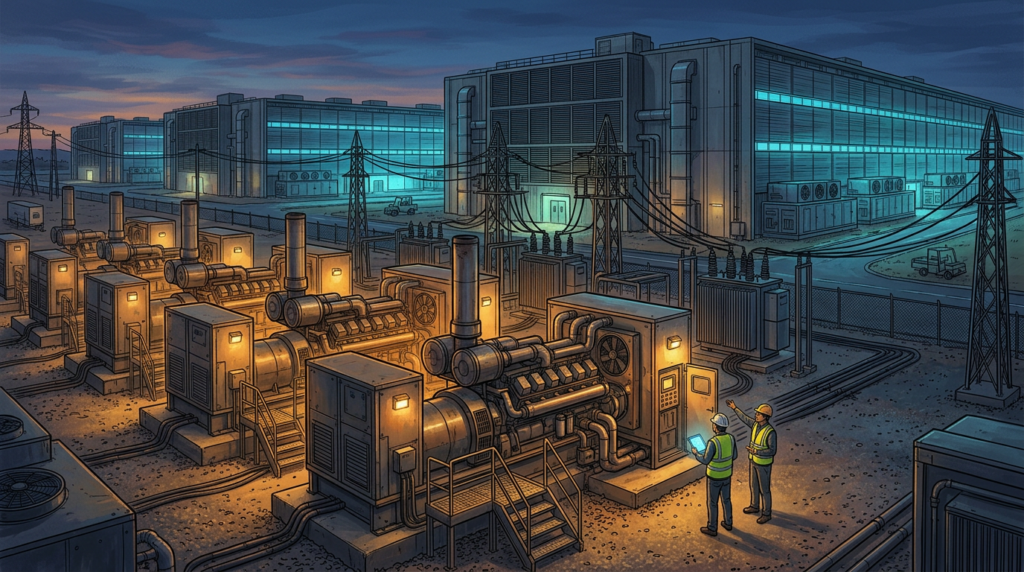
Anthropic’s latest reported infrastructure move comes with a distinctly industrial shopping list: heavy-duty generators, engineering capabilities, and billions of dollars.
According to Financial Times reporting carried by Reuters, the company agreed to spend approximately $3.4 billion on commitments covering 1.7 gigawatts of gas-fired generation equipment.
That is a substantial investment in the physical machinery behind AI.
The potential benefit is straightforward. More dependable electricity could help support the computing infrastructure needed for research and services such as Claude.
However, the story also brings environmental costs, construction challenges, and unanswered questions about delivery.
AI may appear on a laptop as a tidy conversation box. Behind that box sits an increasingly complicated relationship between software ambitions and the equipment required to keep servers running.
The Agreement Predates the Headlines
The reported agreement dates to late September 2026. The Financial Times story appeared on November 8, followed by Reuters coverage.
Search metadata places those publications at approximately 7:00 p.m. and 8:54 p.m. Philippine time, respectively.
Both therefore predate the November 9 morning-to-afternoon search window.
This is fresh reporting about an earlier transaction. It should not be presented as a deal signed today.
That distinction does not reduce its significance. Infrastructure arrangements can remain commercially important long after signing.
It does change the framing.
Readers should understand that the news concerns newly reported details, while the purchasing decision reportedly occurred weeks earlier. There is also no basis here to say the equipment has already been delivered or that the full capacity is operating.
What the Reporting Actually Establishes
Reuters identifies the supplier as OnePWR Solutions, based in San Antonio, Texas, and attributes the transaction details to the Financial Times.
The report says Anthropic did not buy OnePWR itself. It describes an arrangement that included capabilities needed to engineer and construct the generator installations.
Reuters also states that it could not immediately verify the report. Anthropic and OnePWR did not respond to its requests for comment.
That leaves an important boundary around the story.
The reported purchase should remain attributed. A widely repeated account does not become independently confirmed simply because several websites publish the same wire story.
For readers, the useful question is where each claim originated. Here, much of the coverage traces back to one original reporting effort.
A Primary Source Adds Supporting Evidence
Piper Sandler provides a separate piece of public evidence.
Its transaction page lists a September 2026 sale involving OnePWR’s power-generation platform, valued at $3.4 billion. The investment bank says it served as exclusive financial adviser to the seller.
However, the page identifies the buyer only as a frontier AI lab.
That supports the existence, broad timing, and value of a relevant transaction. It does not independently establish the buyer’s identity.
Taken together, the sources provide a clearer picture than either would alone, while leaving a meaningful verification limit.
The bank’s disclosure corroborates part of the reported structure. The Anthropic identification still comes from the news reporting.
That is a useful distinction when a headline moves faster than the underlying documentation.
Understanding the Gigawatt Figure
A gigawatt measures power: the rate at which energy is generated or used. The reported equipment commitments total 1,700 megawatts.
Energy generated over time requires another measurement.
For illustration, equipment delivering 1.7 gigawatts continuously for a year would produce about 14.9 terawatt-hours. That calculation assumes uninterrupted operation at the stated output.
It is not a forecast for this agreement.
Actual production would depend on installation schedules, operating hours, maintenance, fuel availability, and equipment performance.
The capacity figure also cannot tell us how many Claude requests the infrastructure could support. That would require information about computing hardware, workloads, and facility operations.
Large numbers deserve context. Otherwise, a useful engineering measurement becomes a headline decoration wearing a hard hat.
Buying Equipment Can Secure a Place in Line
The Financial Times describes AI developers taking more direct control of power equipment as demand rises and manufacturing lead times stretch.
The strategic logic is understandable.
A developer might secure land and computing hardware, then discover that electricity infrastructure will arrive much later. Every completed component waits for the missing one.
Reserving scarce equipment earlier could reduce that particular scheduling risk.
It cannot eliminate all project risks.
A generator still needs a suitable location, fuel arrangements, installation, and permission to operate. Other electrical components must also be ready.
Think of the reported purchase as potentially securing an important part of the construction schedule.
It does not establish that every remaining task has been completed, or that a finished facility is waiting for someone to press start.
Electricity Is Becoming a Competitive Constraint
The International Energy Agency’s 2025 Energy and AI report projected global data-centre electricity consumption reaching roughly 945 terawatt-hours by 2030 in its base case.
That projection covers data centres broadly, including services beyond AI. It is also a scenario, rather than a guaranteed outcome.
The agency identifies grid connections and equipment supply as important obstacles to expansion.
These findings help explain why an AI developer might spend considerable attention on electricity procurement.
A more capable model needs somewhere to run. Customers need those systems available when they use them.
In that setting, infrastructure planning becomes part of product planning.
The competition involves software quality, but it also depends on whether an organisation can assemble the physical resources required to deliver that software reliably.
Generators Are One Part of a Larger System
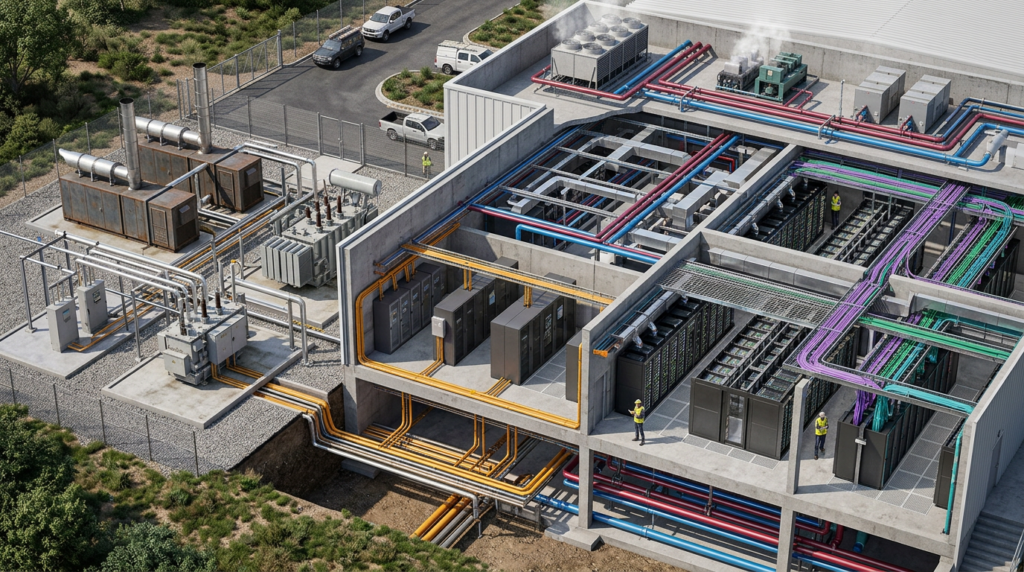
Power generation does not equal usable computing capacity.
Data centres also require electrical distribution, cooling, networking, and computing equipment. Each component must work with the others.
The US Department of Energy uses power usage effectiveness, or PUE, to compare a facility’s total energy consumption with the energy consumed by its IT equipment.
That distinction matters because some electricity supports the building and its supporting systems.
For example, a hypothetical facility operating at a PUE of 1.2 would consume 1.2 units of total energy for each unit used by IT equipment.
That is an illustration, not a specification for Anthropic’s projects.
The broader point is simple: generation capacity cannot be translated directly into chip capacity without additional details about the facilities it serves.
What More Capacity Could Mean for Claude
The practical opportunity involves supporting more useful work.
Additional infrastructure could, if successfully deployed, help an AI provider accommodate customer demand and research workloads.
A business using Claude for document analysis might value consistent access. A developer integrating an API might care about predictable service during busy periods.
However, the reported generator arrangement contains no verified promise of cheaper subscriptions, faster responses, or higher usage limits.
Those outcomes depend on many decisions beyond electricity supply.
The strongest positive interpretation is therefore about enabling capacity, rather than guaranteeing a particular product improvement.
Users will ultimately judge the results through service quality.
A large infrastructure purchase becomes valuable to them when the provider turns it into dependable tools that fit their budgets and solve their problems.
This Fits a Longer Infrastructure Effort
Anthropic’s earlier announcements show that computing infrastructure was already a major priority.
In November 2025, the company announced a $50 billion American infrastructure investment with Fluidstack, including planned data centres in Texas and New York.
It described facilities designed around its workloads and linked the investment to continued research and growing customer demand.
Those announcements provide background. They do not establish exactly where the newly reported generators will operate.
It would also be misleading to add every infrastructure figure together without checking whether the commitments overlap.
A generator purchase might relate to an existing programme, a separate project, or a broader arrangement.
Until documentation resolves that relationship, treating each headline number as an entirely separate spending commitment risks counting the same activity more than once.
The Fuel Choice Carries Environmental Costs
Gas-fired electricity comes with consequences.
The US Energy Information Administration explains that natural gas combustion produces carbon dioxide. Methane emissions associated with production and delivery also contribute to its climate impact.
The environmental performance of a particular project would depend on factors including equipment efficiency, operating patterns, and upstream leakage.
Without those details, this reported agreement cannot support a credible estimate of total emissions.
Nor should gas generation be described as carbon-free.
The benefit of additional AI capacity and the impact of producing its electricity belong in the same assessment.
That does not require assuming the worst possible outcome. It requires measuring the actual one.
Useful disclosure would connect operating hours, fuel use, and emissions with the services the infrastructure supports.
Who Pays for the Expansion?
Anthropic has publicly committed to addressing electricity-price increases associated with its data centres.
In a February 2026 announcement, it said it would cover required grid-interconnection upgrades and work to bring new generation online.
The company also described efforts to estimate and cover demand-driven price effects where new supply was unavailable, alongside investments in reducing demand during peak periods.
Its statement distinguishes projects developed for its workloads from capacity leased in existing facilities.
These are company commitments, rather than proof that every project has achieved the intended result.
The reported generator transaction does not establish how those promises will apply at specific locations.
For nearby consumers, the important evidence will be project-level arrangements and measured outcomes: who funds upgrades, how costs are allocated, and whether bills change.
Local Communities Need Concrete Answers
A large energy installation affects people who may never open an AI application.
Residents and local authorities may want information about noise, air quality, construction traffic, water requirements, and emergency planning.
The reported purchase does not provide enough detail to determine those impacts.
That makes local documentation important.
A hypothetical installation operating occasionally as backup would raise different questions from one generating electricity throughout the year. Different cooling systems could also create different resource demands.
These distinctions should emerge from engineering plans and permit applications, rather than assumptions based on the transaction value.
Community benefits deserve the same specificity.
Employment projections, training opportunities, and public-infrastructure contributions become meaningful when tied to named projects, clear responsibilities, and evidence that the promised work actually happens.
Efficiency Still Belongs in the Plan
Building more supply is only one way to support growing computing needs.
Better software, efficient hardware, and improved facility design can also change how much work a given electricity supply enables.
The Department of Energy’s data-centre design guidance addresses IT systems, cooling, air management, electrical systems, and heat recovery.
That broad approach matters.
A more efficient building can reduce supporting energy needs. Better workload management may improve utilisation. Appropriate model selection can avoid using an unnecessarily demanding system for a simple task.
These possibilities do not establish what Anthropic will achieve.
They identify useful questions for assessing any expansion: how efficiently does the infrastructure operate, and what useful output does it produce?
Capacity attracts headlines. Efficiency helps determine the lasting value of that capacity.
The most useful reporting will examine both sides of that equation. How much additional electricity becomes available, and how much productive work follows? Answering those questions would tell customers far more than another announcement celebrating the size of the investment.
The Next Evidence to Watch
The strongest follow-up reporting would identify deployment sites, delivery milestones, equipment specifications, and expected operating dates.
Company confirmation would also help resolve the remaining attribution questions.
Beyond that, project records could explain how the generation connects to computing facilities and whether the equipment serves regular operations, backup duties, or a combination.
Those details would turn a large procurement story into a more measurable infrastructure story.
For users, practical evidence might eventually include changes in availability or published service capacity. For communities, it would include operating data and compliance with local requirements.
The evaluation should follow completed milestones.
A signed commitment, delivered equipment, commissioned generation, and useful computing output represent different stages. Each provides stronger evidence of operational progress than the stage before it.
AI’s Ambitions Meet Industrial Reality
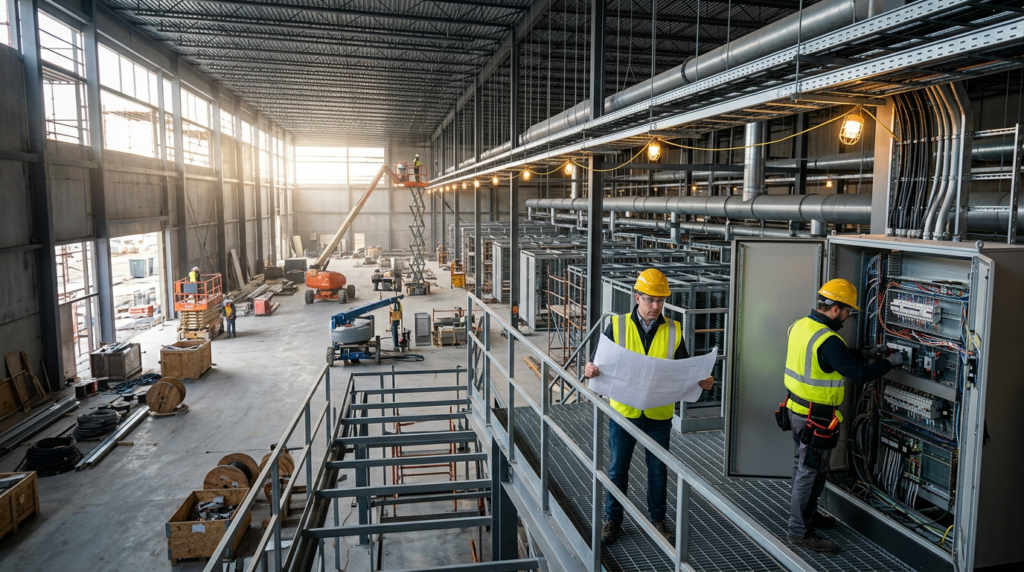
The reported agreement illustrates how closely AI development now intersects with industrial planning.
A model provider must think about computing hardware, electricity, engineering schedules, and the people living near its infrastructure.
The encouraging possibility is that better planning could help deliver dependable capacity for research and useful services.
The conditions matter: successful construction, responsible operation, efficient computing, and transparent treatment of environmental and community costs.
This story therefore offers more than a large spending figure.
It provides a practical way to judge AI expansion: follow the journey from procurement to operation, then examine what the infrastructure delivers.
Claude may answer in seconds. Building the systems behind those answers requires years of decisions, substantial physical work, and results that deserve careful measurement.
Sources
- Financial Times — Anthropic’s reported gas-fired generator agreement. ft.com
- Reuters via CNA — Generator commitments, transaction structure, and verification limits. CNA
- Piper Sandler — OnePWR’s power-generation platform transaction. Piper Sandler
- International Energy Agency — Data-centre electricity demand and infrastructure constraints. IEA
- US Department of Energy — Data-centre energy use and power usage effectiveness. energy.gov
- Anthropic — American computing infrastructure investment with Fluidstack. anthropic.com
- US Energy Information Administration — Natural gas and environmental impacts. U.S. Energy Information Administration (EIA)
- Anthropic — Electricity costs, grid upgrades, and consumer-protection commitments. anthropic.com
- US Department of Energy — Energy-efficient data-centre design. Department of Energy
The Kingy Brief
Get the free AI price sheet.
25 AI plans and models on one page, from official pricing pages, updated every month. Free when you join The Kingy Brief: AI changes, original tests and one practical thing to try, Fridays at 09:00 Vancouver time.
Free · Double opt-in · Unsubscribe anytime
Signup help and newsletter schedule
After submitting, check your inbox for "Confirm your subscription to The Kingy Brief" and open its confirmation link. Your price sheet download is on the page that opens. Check Spam or Promotions if you cannot find it.
Fridays at 09:00 Vancouver time: source-checked AI changes, original tests and one practical thing to try. We skip a week when there is not enough verified material. Free. Unsubscribe anytime.