
As of June 5, 2026, the strongest fresh AI launch in this cycle is NVIDIA Nemotron 3 Ultra, published on June 4, 2026. It leads because NVIDIA is not just shipping another large model. It is shipping an open release explicitly tuned for long-running agents, with a 1 million token context window, open checkpoints, reasoning-budget controls, and efficiency claims aimed at the exact bottlenecks developers and enterprises are now hitting in production.
The rest of the launch set reinforces the same direction. Ideogram 4.0 turns open-weight image generation into a more serious design workflow product. Anthropic’s new Services Track and Claude Partner Hub formalizes the services layer that actually gets agentic AI into production. Asana’s operating system for human-agent teams pushes the same trend into work management, while the GitHub Copilot app gives developers a desktop control center for parallel agent work. That broader shift also fits the local-control and deployability theme we recently covered in Google AI Edge Gallery for Mac.
TL;DR
- NVIDIA Nemotron 3 Ultra is the lead story because it is a fresh open model release built specifically for long-running agents, not just general chat.
- Ideogram 4.0 matters because open-weight creative AI is getting much closer to production design needs such as layout control and high-fidelity text rendering.
- Anthropic’s Services Track and Partner Hub matter because enterprise AI adoption now depends as much on integration capacity as on raw model quality.
- Asana’s latest launch and the GitHub Copilot app show agent management becoming a first-class product surface.
- The broader pattern is that the market is moving from single assistants toward durable systems for supervising, routing, and governing many agents at once.
Who This Matters To
This roundup matters most to AI product teams, developer-platform leaders, engineering managers, design-tool builders, automation consultants, and operators deciding whether the next wave of AI value will come from better models or better systems around those models. If your team cares about long-running workflows, parallel agent management, brand-safe creative generation, or enterprise rollout mechanics, this launch set is directly relevant.
Why This Matters Now
The June 5, 2026 cycle matters because the conversation has moved past whether agents are possible. The harder problem is making them reliable, controllable, efficient, and usable inside existing organizations. That is why the standout launches this week are not all frontier-model moonshots. They are infrastructure, work surfaces, and open releases that make agentic AI easier to deploy or supervise.
Quick Facts
| Launch | Date | What shipped | Why it matters |
|---|---|---|---|
| Nemotron 3 Ultra | June 4, 2026 | Open 550B total parameter reasoning model with 55B active parameters for long-running agents | Targets throughput, long context, and lower-cost multi-step agent execution |
| Ideogram 4.0 | June 3, 2026 | Open-weight image model with commercial license, layout control, and 2K output | Makes open creative AI more useful for real design work |
| Claude Partner Hub and Services Track | June 3, 2026 | Tiered partner program plus public-facing partner hub and MCP connector | Shows enterprise rollout capacity is becoming part of the AI product stack |
| Asana operating system for human-agent teams | June 4, 2026 | Agentic Work Management, AI Teammates, and Asana Dash positioning | Moves human-agent coordination into a mainstream work platform |
| GitHub Copilot app expansion | June 2, 2026 | Broader technical preview for a desktop control center for agent-native development | Gives developers a practical surface for parallel agent sessions and background automations |
Pricing and Availability
NVIDIA is releasing Nemotron 3 Ultra checkpoints and training datasets openly, but it does not publish simple end-user pricing because this is a model release rather than a hosted SaaS product. Ideogram 4.0 is available for download and through the Ideogram API under a commercial license. Anthropic says getting started in the partner program is free, though new applicants begin at the Registered level with a minimum commitment to 10 certified practitioners. Asana says Agentic Work Management is available now, while Asana Dash and new apps will roll out in phases over the coming months. GitHub says the Copilot app technical preview is available to existing Copilot Pro, Pro+, Business, and Enterprise customers.
What Changed Since the Last Cycle
The June 4 cycle was led by laptop-ready multimodal AI and hosted agent runtimes. The June 5 cycle shifts the focus up one layer. Now the standout launches are about managing long-running agents, operationalizing human-agent collaboration, formalizing partner ecosystems, and making open creative tooling viable for production teams instead of hobby experimentation.
Why Nemotron 3 Ultra Leads
NVIDIA says Nemotron 3 Ultra is its most capable model yet, with 550 billion total parameters, 55 billion active parameters, up to 1 million tokens of context, and open checkpoints for pre-trained, post-trained, and quantized variants. That would already be enough to make it notable, but the real reason it leads is how tightly the product framing matches a real market need.
The official NVIDIA technical blog says the model is optimized for orchestrating complex, long-running workflows and can cut cost for agentic tasks by up to 30 percent while NVFP4 can deliver up to 5 times higher throughput per GPU versus BF16 on Blackwell. That framing matters because the market is no longer short on general-purpose reasoning claims. It is short on systems that can keep multi-step agent work fast, cheap, and stable at production scale. For a broader Kingy context on why lower-friction deployment keeps winning, see Google AI Edge Gallery for Mac.
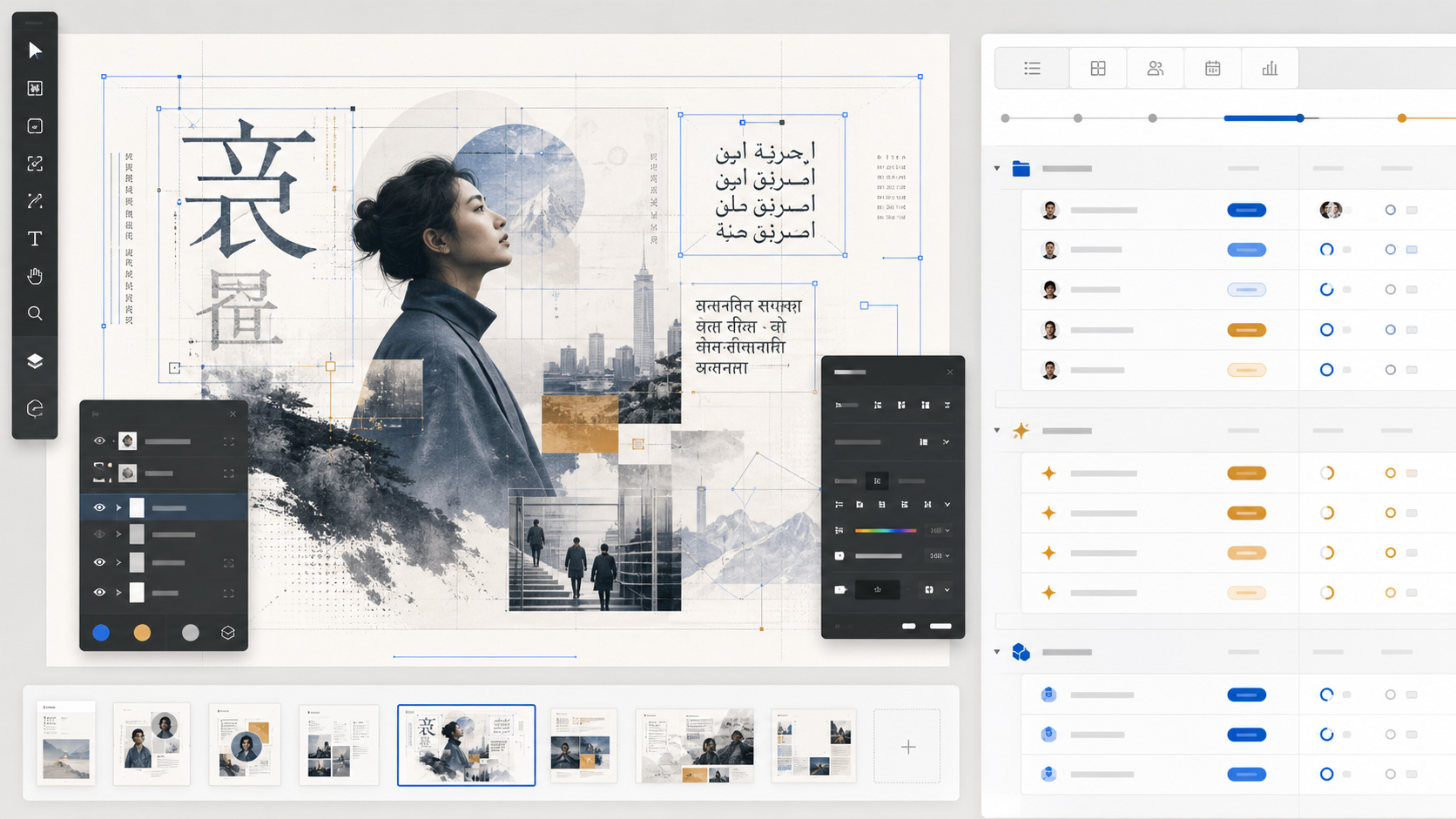
Image note: Nemotron 3 Ultra leads because the market now cares less about one-shot demos and more about durable agent systems that can run for longer, cheaper, and with tighter control.
Standout Launches
Nemotron 3 Ultra makes the long-running agent race more concrete
According to NVIDIA’s June 4 release page, Nemotron 3 Ultra uses a hybrid Mixture-of-Experts Mamba-Attention architecture, supports inference-time reasoning budget control, and ships with open checkpoints plus training data artifacts. NVIDIA also says it outperforms state-of-the-art open models on long-context RULER evaluation at 1 million tokens.
The bigger editorial point is that NVIDIA is positioning this release around operational agent performance, not just benchmark spectacle. That is a stronger lead than a narrower workflow launch because it could affect the base economics of how agentic products are built.
Best fit: teams building coding agents, research agents, security copilots, and enterprise automations that need long context, high throughput, and open deployment flexibility.
Ideogram 4.0 gives open creative AI a much stronger production story
Ideogram says version 4.0 ships as an open-weight release under a commercial license, available through download and API. The company says the model adds multilingual text rendering, bounding-box layout control, and 2K photoreal output while laying the groundwork for a layer-based design stack.
That matters because open image generation has often lagged closed systems in the exact details designers care about most: typography, composition control, and brand alignment. Ideogram is trying to close that gap directly instead of selling generic image quality alone.
Best fit: design teams, creative-tool builders, and enterprises that want controllable image generation they can fine-tune or keep inside their own environment.
Anthropic is productizing the services layer around Claude deployment
Anthropic says more than 40,000 firms have applied to join the Claude Partner Network and more than 10,000 consultants have already earned Claude certifications. The new Services Track introduces formal tiers, while the Claude Partner Hub gives partners and customers visibility into certifications, deployments, and references.
This is important because it treats implementation capacity as part of the product. Anthropic is effectively saying that enterprise adoption depends on who can install, govern, and adapt these systems, not only on who has the strongest model. That also sits neatly beside Kingy’s earlier framing in Anthropic Says AI Is Now Building AI: the frontier keeps moving, but real advantage still comes from how capability gets operationalized.
Best fit: consultancies, systems integrators, and enterprise buyers trying to assess who can actually get Claude-based workflows into production.
Asana wants to be the operating system for human-agent teams
Asana says its new product suite lets organizations run work with humans and agents on the same plan, with the same context, and under the same governance. The company is positioning Agentic Work Management, next-generation AI Teammates, and Asana Dash as a coordinated operating model rather than isolated features.
The launch matters because it shows work-management platforms do not want to be passive systems of record anymore. They want to become the place where human goals, AI execution, and governance meet. Whether the execution matches the ambition is still an open question, but the framing is strategically important.
Best fit: enterprises already standardizing on structured work systems and looking for a governed way to insert AI teammates into recurring workflows.
GitHub Copilot app turns agent supervision into a desktop workflow
GitHub says the Copilot app gives developers a single My Work view for active sessions, issues, pull requests, and background automations, with each session running inside its own git worktree. In the related June 2 changelog, GitHub says the technical preview expanded to existing paid Copilot customers.
This is one of the more practically useful launches in the cycle because it shifts the job from chatting with one assistant to managing multiple pieces of delegated work. That is much closer to how real agentic development is likely to work inside teams.
Best fit: engineering teams already leaning into coding agents and needing a cleaner control layer for concurrent sessions and review-heavy workflows.
Launch Table
| Launch | Category | Signal strength | Practical impact | Current takeaway |
|---|---|---|---|---|
| Nemotron 3 Ultra | Open model release | Very high | High | Open models are being tuned for long-running agent economics, not only general reasoning |
| Ideogram 4.0 | Creative model release | High | High | Open creative AI is moving closer to brand-safe production workflows |
| Claude Partner Hub and Services Track | Enterprise platform ecosystem | High | Medium to high | Implementation capacity is becoming part of the AI product itself |
| Asana human-agent operating system | Work management platform | High | Medium to high | Mainstream SaaS vendors want to orchestrate humans and agents in one governed layer |
| GitHub Copilot app | Developer tooling | High | High | Agent supervision is becoming a normal desktop development workflow |
Confirmed Facts
- NVIDIA said on June 4, 2026 that Nemotron 3 Ultra has 550 billion total parameters, 55 billion active parameters, and supports context lengths up to 1 million tokens.
- NVIDIA said it is releasing pre-trained, post-trained, and quantized Nemotron 3 Ultra checkpoints along with training datasets.
- NVIDIA’s technical blog said Nemotron 3 Ultra is optimized for long-running agent workflows and can lower agentic task cost by up to 30 percent in NVIDIA’s experiments.
- Ideogram said on June 3, 2026 that Ideogram 4.0 is released with open weights under a commercial license and offers bounding-box layout control plus 2K photoreal output.
- Anthropic said on June 3, 2026 that more than 40,000 firms have applied to the Claude Partner Network and more than 10,000 consultants have earned Claude certification.
- Asana said on June 4, 2026 that Agentic Work Management is available now, while Asana Dash and several new apps will roll out in phases over the coming months.
- GitHub said on June 2, 2026 that the Copilot app technical preview expanded to existing Copilot Pro, Pro+, Business, and Enterprise customers.
- Product Hunt’s June 5, 2026 leaderboard ranked Ideogram 4.0 at number 5 and Nemotron 3 Ultra at number 6, confirming both launches are already resonating with early adopters.
Analysis
The clearest pattern across this launch set is that agentic AI is maturing into an operating problem. Nemotron 3 Ultra addresses the model economics and context side. GitHub Copilot app addresses delegated development control. Anthropic addresses rollout capacity through partners. Asana addresses governed collaboration between people and agents. Ideogram addresses a parallel need on the creative side: open models that are controllable enough for real production work.
That is why Nemotron 3 Ultra leads. It is the most direct infrastructure release in the set, and the one with the broadest downstream effect if NVIDIA’s efficiency claims hold up outside its own evaluations. The others matter, but they mostly point to the same story: winning AI products in mid-2026 are becoming systems for sustained execution, not just interfaces for one-shot answers.
Practical Use Cases
- Platform teams can evaluate Nemotron 3 Ultra for coding, research, and security agents that need very long context windows and cost-aware execution.
- Creative teams can test Ideogram 4.0 for brand-guided visual generation, multilingual campaign assets, and layout-sensitive marketing work.
- Consultancies and enterprise transformation teams can use Anthropic’s partner update to benchmark implementation maturity and certification depth.
- Operations and PMO leaders can study Asana’s human-agent framing as a model for governed rollout inside structured work systems.
- Engineering teams can pilot the GitHub Copilot app when one-agent-at-a-time chat stops matching how work actually moves.
Risks or Claims Needing Review
- Nemotron 3 Ultra’s throughput and cost claims come from NVIDIA’s own evaluations, so independent testing is still needed before treating them as settled.
- Ideogram 4.0’s production-readiness case is strong on paper, but design teams will still need to test brand consistency, editability, and workflow friction in real environments.
- Anthropic’s partner metrics show momentum, but they do not automatically prove delivery quality across all listed firms.
- Asana’s operating-system framing is ambitious and strategically smart, but enterprise adoption will depend on how well the human-agent governance model works outside launch messaging.
- GitHub Copilot app access is still in technical preview, so broader usage patterns and workflow stability are not fully proven yet.
Alternatives and Related Tools
- Nemotron 3 Ultra will be compared with other open or semi-open reasoning families aimed at long-context, long-running agent work.
- Ideogram 4.0 enters the same competitive lane as closed creative models and other open image stacks that want stronger typography and layout control.
- Anthropic, Asana, and GitHub all point to the same larger market battle: who owns the orchestration layer where human goals, agent execution, and governance come together.
Kingy AI Verdict
NVIDIA Nemotron 3 Ultra is the cleanest lead story in the June 5, 2026 launch cycle because it speaks directly to the practical bottlenecks slowing agentic AI adoption: context limits, runtime cost, and execution durability. If the release performs close to NVIDIA’s own framing, it could matter far beyond NVIDIA’s ecosystem.
Ideogram 4.0 is the most interesting open creative release, Anthropic’s partner expansion is one of the sharper enterprise signals of the week, and Asana plus GitHub show that supervising multiple agents is becoming a product category in its own right. The throughline is simple: the best AI launches right now are not only adding intelligence. They are adding operating structure.
What to Watch Next
- Independent benchmarks on Nemotron 3 Ultra, especially for coding, tool use, and total-cost-of-run on real agent workloads.
- Whether Ideogram can turn open-weight momentum into a broader enterprise design workflow around layers, branding, and editable assets.
- How quickly enterprise platforms such as Asana, Anthropic, and GitHub can turn agent-management concepts into sticky day-to-day operating habits.
FAQ
What is the biggest AI launch in this roundup?
Nemotron 3 Ultra is the biggest launch in this set because it is a fresh open model release targeted at long-running agent workflows with clear implications for cost, throughput, and deployment flexibility.
Why does Nemotron 3 Ultra matter more than a normal model update?
Because it is framed around the economics and control problems of agentic AI in production, not only around general benchmark improvement.
What is the most notable non-model launch in this cycle?
There are two strong answers: Anthropic’s Services Track and Partner Hub for enterprise rollout mechanics, and GitHub’s Copilot app for practical day-to-day agent supervision in software teams.
Sources and Further Reading
- NVIDIA: Nemotron 3 Ultra
- NVIDIA Technical Blog: Nemotron 3 Ultra for long-running agents
- Ideogram: Ideogram 4.0 press release
- Anthropic: Services Track and Partner Hub
- Asana: Operating system for human-agent teams
- GitHub: Copilot app desktop experience
- GitHub Changelog: Copilot app preview expansion
- Product Hunt: June 5, 2026 daily leaderboard
Related Guides
Related Companies
Related Models
Recent Launches
Continue Reading
The Kingy Brief
Get The Kingy Brief.
AI changes, original tests and one practical thing to try. Fridays at 09:00 Vancouver time.
Free · Double opt-in · Unsubscribe anytime
Sign up for The Kingy Brief on Beehiiv.
Signup help and newsletter schedule
Signup form provided by Beehiiv. After submitting, check your inbox for "Confirm your subscription to The Kingy Brief" and open its confirmation link. Check Spam or Promotions if you cannot find it.
Fridays at 09:00 Vancouver time: source-checked AI changes, original tests and one practical thing to try. We skip a week when there is not enough verified material. Free. Unsubscribe anytime.