A $100 Million Bet on Robots That Do Things
Simplexity Robotics raised $100 million in a pre-Series A round led by Ant Group, valuing the Chinese physical AI startup at $1.6 billion, chairman and co-founder Wang Kai told Bloomberg News.
Existing backers Tencent, HongShan and Lanchi Ventures joined the round, and Chinese financial outlet Zhitong Finance also reported Alibaba’s participation.
Simplexity paired the financing news with a product debut on November 23, unveiling iX, a wheeled humanoid designed for public-facing service work.
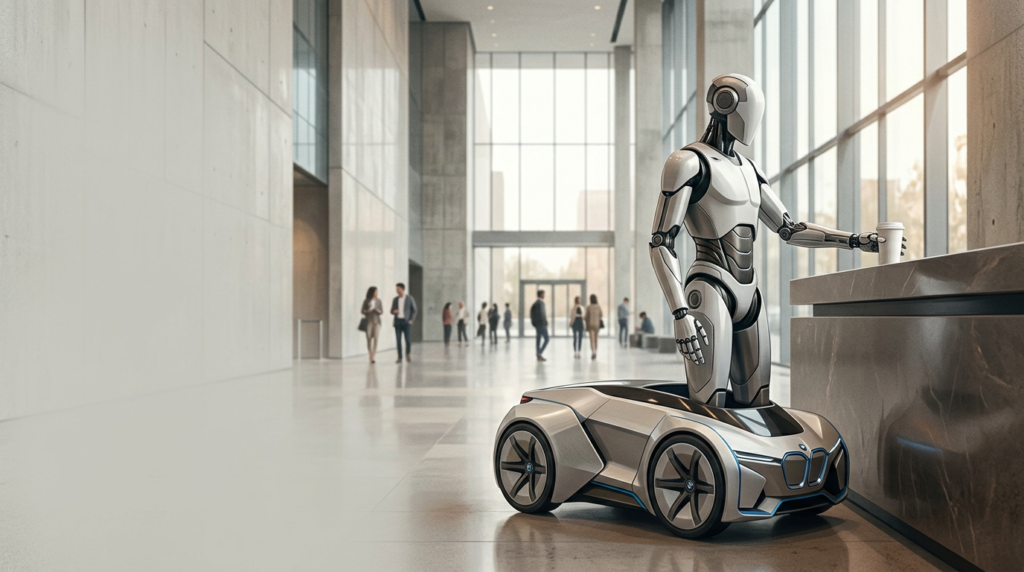
Imagine asking for a drink and watching the bartender roll over on a powered base, then point you toward the exhibition hall once it hands you the cup.
That combination of movement, object handling and human interaction explains why a robot launch belongs alongside the funding news.
What Ant Group Is Backing
Ant already has investments in robotics companies Unitree, Astribot and Zeroth, Bloomberg reported, so Simplexity adds another approach to a portfolio that spans several developers.
The $1.6 billion figure reflects the valuation assigned in the financing, while the $100 million is the amount the startup raised in the round.
For a young hardware company, capital can buy time for the expensive work that comes after a prototype runs successfully, from refining components to testing fleets and supporting customers.
Simplexity’s sales and delivery figures would give a clearer picture of its commercial progress, but the two headline numbers already show how much value investors are assigning to its approach this early.
Meet the iX
The iX is Simplexity’s second humanoid, and its launch showcased tasks such as preparing and serving drinks, retrieving and delivering items, and guiding visitors.
Each asks the machine to do something different with the same body.
A tour requires it to move through a space shared with people, while beverage service asks its arms to handle objects and carry out a sequence of steps.
Simplexity’s own product materials position the iX for venues such as exhibitions and corporate receptions, where a robot might greet someone, answer a question and lead them to the right place.
The company also describes a software platform for combining conversation, navigation and physical actions, which gives a venue some scope to choose what its robot does.
A lobby with a clear floor plan gives many of those skills an immediate assignment.
Why the Humanoid Has Wheels
You can recognize a humanoid shape in the iX’s upper body, but the bottom tells you where Simplexity expects the first jobs to be.
A wheeled base makes sense on floors that people already keep clear for trolleys and carts, and a torso with arms can reach toward counters and other surfaces designed for human use.
For those jobs, the platform leaves engineers free to focus more of their attention on steering through shared spaces and getting the grip right.
A staircase presents a different problem, as does a raised threshold between rooms.
The places where the machine can move easily will do a lot to determine where the first customers can put it to work.
What Physical AI Looks Like at a Counter
Picture a robot asked to bring over a cup.
It has to locate the cup, work out how to reach it, grip it with enough force to hold it, and keep it steady while the base moves.
A person walking between the robot and its destination can change the next move halfway through that simple request.
That loop between seeing, deciding and acting is the point of physical AI, also called embodied AI in robotics.
The machine’s body has to carry out each decision in the same space as the objects and people it is responding to, and every movement changes what the system sees next.
For anyone who has spilled coffee while walking, the difficulty needs little translation.
Early Customers Give the Story Some Weight
Simplexity named Tsinghua University, South Korean robotics startup RLWRLD and Chinese forklift maker Hangcha Group among its early customers, according to Bloomberg.
The company says it and Hangcha have already put a warehouse sorting line into operation.
Those organizations give Simplexity several different environments in which to learn what buyers need from its hardware.
A university can use a robot as a research platform, while a logistics operation will care about how it fits the workflow when a stream of packages shows up.
The campus, the startup and the forklift maker also highlight how broadly the company is looking for early users while its machines are still taking shape.
The list describes Simplexity’s early customer base across its business, so the Hangcha example is best understood as evidence of industrial work already under way when the new iX appeared.
The i7 Pro Shows Where Simplexity Started
Simplexity’s first wheeled humanoid had a more industrial job description.
Bloomberg reported deployments in manufacturing, logistics, retail and pharmaceutical packaging, and the startup’s product materials identify the i7 Pro as a platform for jobs such as warehouse sorting and machine tending.
Machine tending can be as straightforward to describe as putting a part into position and removing it after processing, but the details matter when a robot repeats the job throughout a shift.
Small differences in how a part sits can affect the next movement.
These installations give Simplexity a way to learn what repeated work demands of its machines, from dependable positioning to the practicalities of maintenance and support.
A Warehouse Is a Good Place to Learn
Sorting sounds simple until the packages arrive.
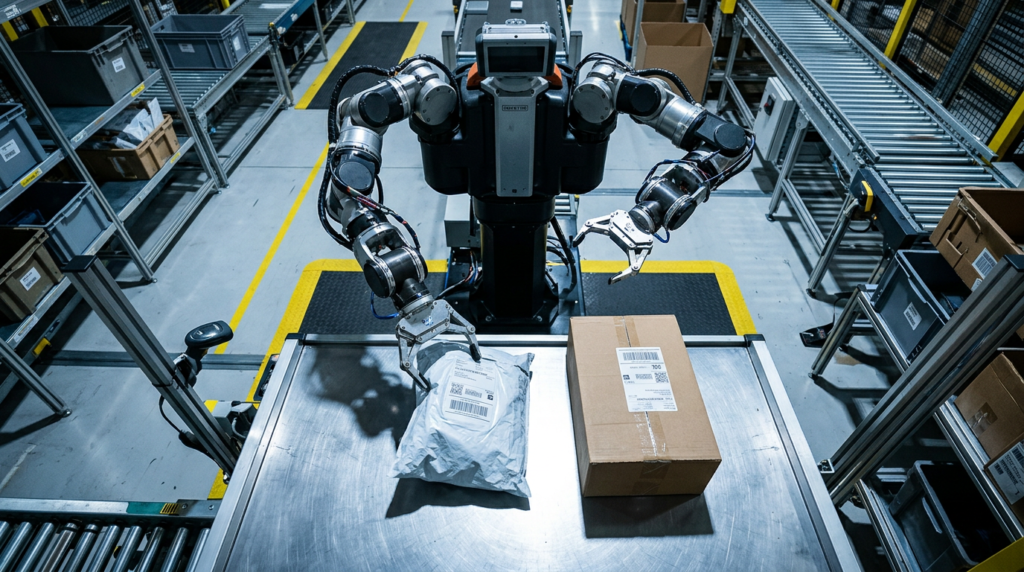
A cardboard box holds its shape, a soft parcel changes shape as the robot lifts it, and a label may face away from the camera.
The machines can encounter variation over and over as they identify each item, pick it up and send it to the right place.
Simplexity describes its sorting system as combining package recognition, coordination between two arms and grasping, capabilities that also matter in jobs far removed from the warehouse.
A parcel offers only a partial lesson for an unfamiliar coffee mug, but every successful pickup starts with a decision about where and how to hold the thing.
Three Founders From Li Auto
Wang Kai started Simplexity in July 2025 with Jia Peng and Wang Jiajia, two fellow former executives from Chinese electric vehicle maker Li Auto.
Zhitong Finance identifies Wang Kai as chairman, Jia as chief executive and Wang Jiajia as chief operating officer.
Their automotive background helps explain the company’s emphasis on designing hardware and software together, an approach Bloomberg described after interviewing Wang at the startup’s Suzhou campus.
A car and a service robot both need teams to integrate sensors, computing and physical components into a working machine.
The founders’ past work is relevant here because a customer will experience the hardware and the software as one product, especially when something needs fixing.
The robot adds a different set of demands once it has to reach out and move the objects around it, then do so again when the scene changes.
What the Robot Learns From the Real World
Simplexity says it combines world models with vision, language and action capabilities, and uses data from deployments to improve its machines.
In plain terms, a robot needs to connect the instruction it receives with what its sensors detect and the movement it can actually make.
That connection gets tested when an object turns up at a new angle or lands somewhere inconvenient.
Google DeepMind’s Open X-Embodiment project offers some context because researchers assembled demonstrations from many different robots to study how learning might transfer across machines and tasks.
Even a failed attempt can be informative if the team can tell whether the robot saw the wrong object, misjudged its position or moved too early.
Simplexity’s opportunity is to collect useful examples from the jobs its hardware already does, including the awkward cases a polished demonstration can easily leave out.
What One Good Demo Can Tell You
A robot delivering a drink can show that the navigation, arms and software worked together for the sequence on display.
A customer running a venue has a wider set of questions.
How long does the job take when visitors are milling around, and what happens when someone moves the cup before the robot gets to it?
A machine that handles a routine well but regularly calls a staff member over could still be useful in the right venue, depending on how much time it saves overall.
A venue might also want to know how the robot recovers after an interruption, since a successful handoff means more when the space is crowded.
That is where figures such as completed jobs per shift, human interventions and time spent out of service would put the launch footage into perspective.
The Economics of Hiring a Robot
A warehouse manager considering a robot has to work out how it will fit a shift, from the first charging break to the last pile of orders.
A reception manager faces a different calculation, because demand may come in bursts when a conference lets out or a large tour group walks in.
Cost depends on more than the machine itself, with installation, software, support and staff time all shaping the bill.
A robot can make sense in one venue while sitting idle for much of the day in another.
For Simplexity, the commercial question is where the new machine can stay busy doing a handful of useful jobs with a workload that justifies its upkeep.
The Long Road From Lobby to Living Room
A venue can choose a service route and keep its counters and displays in assigned places.
A home may have a chair pulled into the hallway, a rug folded at one corner and a toy exactly where the robot wants to turn.
Researchers at the robotics company Physical Intelligence tested their own model in homes outside its training data, an example of the kind of work involved in carrying a skill into unfamiliar rooms.
Simplexity’s November launch focused on commercial service, even if the idea of a general-purpose machine naturally invites people to imagine one at home.
Even the request to put something away can require a judgment about where it belongs, a choice one household may make differently from the next.
Serving coffee in a lobby is a concrete milestone, while doing chores across many homes would call for evidence from those homes.
What the Funding Can Help Build
A larger budget gives a robotics company room to run more trials and refine the parts that take wear, such as grippers and the mechanisms that move the arms.
It can also help a startup build the less visible side of a hardware business, including installation, repairs and customer training.
Think of a buyer who wants to put a second robot into service at another location without needing the engineering team on site for weeks.
Making that repeatable is part of the challenge facing any startup that wants to sell physical AI at scale.
Simplexity’s financing gives it more capacity to tackle that work while its product line expands from industrial jobs into public venues.
The Next Milestones to Watch
The clearest sign of progress would be a named iX customer describing what the robot does on an ordinary day and how often a person has to step in on site.
A second location with the same deployment would show whether the setup travels well, and a customer placing another order would suggest it sees enough value to keep going.
It would also help to know which jobs the iX handles on its own and which still depend on a person setting up the next step.
A published account of what staff had to change on site would also help other buyers estimate how much setup their own facilities might require.
That detail matters for a bartender as much as for a warehouse manager, because both need to plan around what the machine will do when the room gets busy.
From a Funding Round to a Full Shift
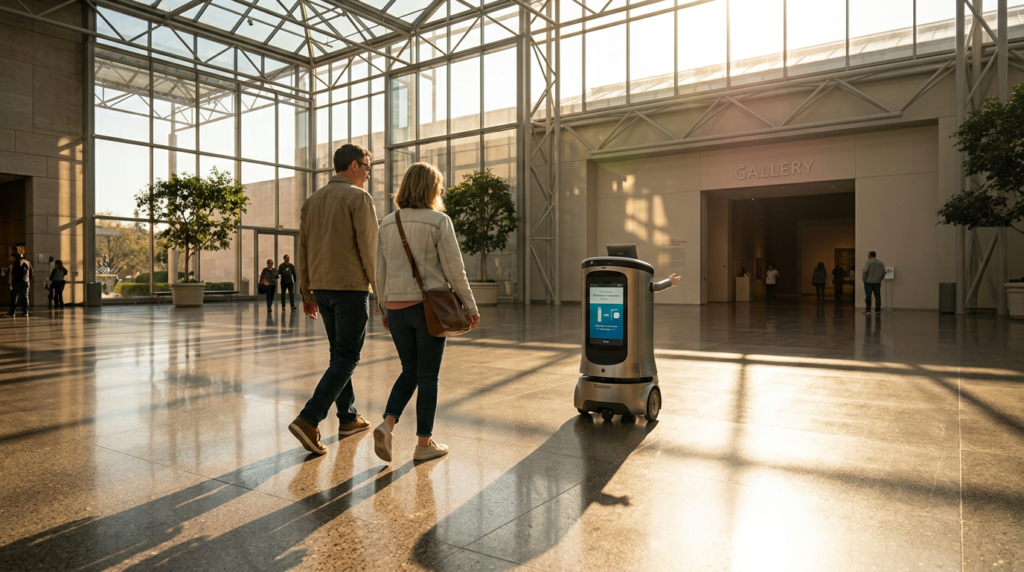
The round gives Simplexity more room to test a straightforward idea: a robot can earn its place by moving through ordinary spaces and doing several jobs that people recognize.
The i7 Pro already gives the company an industrial platform, and the iX takes that approach into spaces where customers and visitors can see the work up close.
Simplexity now has the backing to find out how far that model can travel, from one counter or sorting line to the next.
The most telling scene may be an uneventful afternoon in a busy lobby, when the robot hands over a drink, clears the counter and heads off to help the next person.
Sources
- Bloomberg News — Funding round, valuation and interview with Wang Kai.
- Bloomberg News via Business Standard — Ant Group’s robotics investments, early customers and industrial deployments.
- Zhitong Finance via Investing.com — Participating investors, founding date and executive roles.
- TechNode — iX debut and service demonstrations.
- Simplexity Robotics — iX, i7 Pro and robotics software.
- Simplexity Robotics — Warehouse sorting and commercial service applications.
- Google DeepMind — Open X-Embodiment and learning across robot types.
- Physical Intelligence — Robot learning in unfamiliar homes.