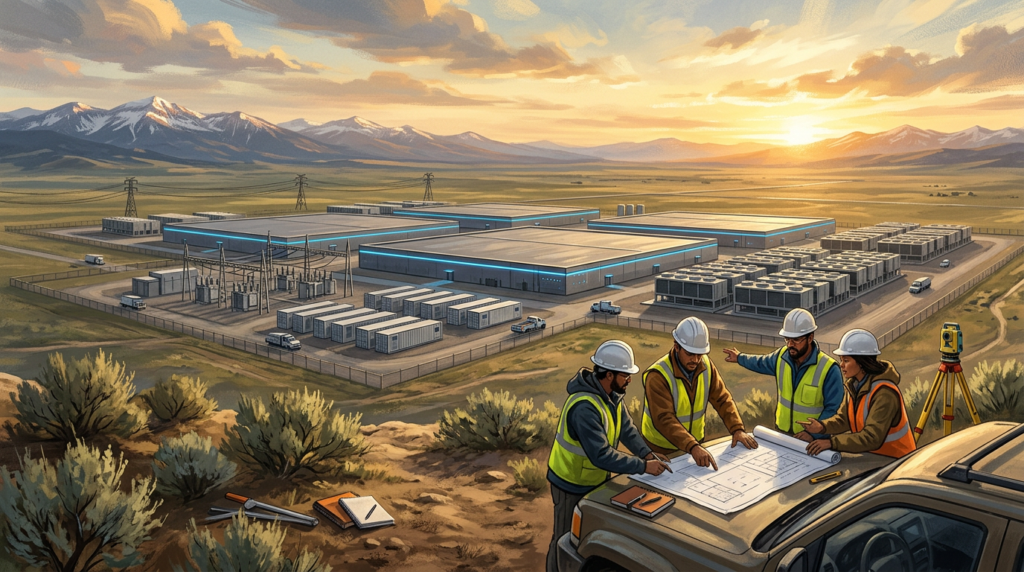
The Cloud Gets a Wyoming Address
Artificial intelligence may live on your screen, but its foundations look considerably less magical: land, buildings, electrical equipment, and people wearing hard hats. Google’s latest infrastructure move brings that physical reality into sharp focus.
The company has acquired Crusoe’s data center site in southeast Wyoming. Crusoe announced the transaction on November 6, following Google’s announcement of a planned $17 billion investment in its first data center in the state.
The acquisition gives an enormous technology project another concrete piece of its foundation. It also puts the spotlight on something that rarely appears in an AI demonstration: the work required before a server can switch on.
Even the cleverest chatbot cannot sweet talk a power cable into existence. Someone still has to build the infrastructure.
What Changed Hands
Crusoe says the transaction concludes its involvement in the project’s predevelopment phase. That work covered site selection, governmental approvals, and power strategy.
Reuters independently reported the acquisition and said the financial terms were not disclosed. The $17 billion investment figure therefore describes Google’s broader Wyoming project, rather than an announced purchase price for Crusoe’s site.
That distinction keeps two different milestones clear. One concerns ownership of a development site. The other concerns the much larger investment needed to turn a planned campus into functioning infrastructure.
For readers following the AI buildout, the immediate news is a handoff at an already developed planning stage. The announcement does not mean the entire campus is complete or that all its eventual computing capacity is operating today.
Why the Preparatory Work Matters
A suitable location needs more than open space. Developers must work out how buildings, energy supplies, access, and approvals fit together before construction can proceed confidently.
Crusoe’s statement describes its early work as preparing the Wyoming project for construction and eventual operation. The company and Tallgrass Energy initially developed the campus’s power and data center infrastructure together.
The practical advantage of that approach is coordination. Designing a facility without understanding its power requirements would invite expensive surprises later.
Think of the early stage as assembling the conditions that make construction possible. It produces fewer spectacular photographs than a finished server hall, but it can determine whether that hall gets built at all.
In infrastructure, boring paperwork can carry surprisingly exciting consequences.
Seventeen Billion Dollars Needs Context
Google describes its commitment as a long term investment in Wyoming. That language matters because a headline investment figure should not be mistaken for money already spent or benefits already delivered.
A major project unfolds through planning, procurement, construction, equipment installation, and operation. Each stage brings different decisions and different demands on the surrounding community.
The useful question therefore extends beyond the size of the announcement. What will the spending produce, when will it happen, and how will the results be measured?
For Wyoming, the opportunity lies in turning a substantial corporate commitment into useful infrastructure and durable local value. For Google, the challenge lies in coordinating many moving parts over time. Large numbers attract attention. Execution decides what those numbers ultimately mean.
The Energy Plan Has Several Pieces
Crusoe describes a hybrid power strategy combining fuel cells, grid electricity, and natural gas turbines, with a longer term carbon capture roadmap involving Tallgrass.
That mix reveals the project’s central engineering challenge. Computing equipment needs dependable electricity, and supplying it involves more than choosing a single technology from a catalog.
Different resources must work together through construction, startup, and changing demand. Their schedules matter as much as their advertised capabilities.
The encouraging element is that energy planning formed part of the project’s early development. Electricity is being treated as a fundamental requirement of the campus.
Still, a coordinated strategy needs coordinated delivery. Equipment, connections, generation, and operating arrangements must line up. An ambitious diagram becomes useful only when its individual components can actually work together.
A Major Role for Fuel Cells
American Electric Power announced in October that it plans to invest approximately $4 billion in a 702 megawatt fuel cell project near Cheyenne under a 20 year power purchase agreement with Google.
The planned installation will use Bloom Energy technology. AEP says construction is expected to start in 2026, with full operation targeted for the end of 2028.
Fuel cells generate electricity through an electrochemical process. In this project, the fuel is natural gas. AEP says the technology produces electricity without combusting that gas and includes plans to integrate carbon capture.
Those details make the energy project substantial in its own right. They also show why the Wyoming story stretches beyond a property transaction: Google’s computing plans depend on a parallel industrial buildout.
Reading the Power Numbers Carefully
Black Hills has outlined another major part of the arrangement. Its October announcement describes up to 590 megawatts of grid connected service and management of approximately 2.1 gigawatts of third party resources through a private microgrid.
The company says the total resource mix includes reserve margins. Readers therefore should not treat that figure as an exact statement of the data center’s computing load.
Capacity figures describe different things depending on their context. Generation resources, backup requirements, and actual consumption are related, but they are not interchangeable.
The broader lesson is simple: bigger numbers do not automatically provide a clearer picture. Understanding what a figure measures gives readers more useful information than stacking every announced megawatt into one enormous, potentially misleading total.
Carbon Capture Is an Important Test
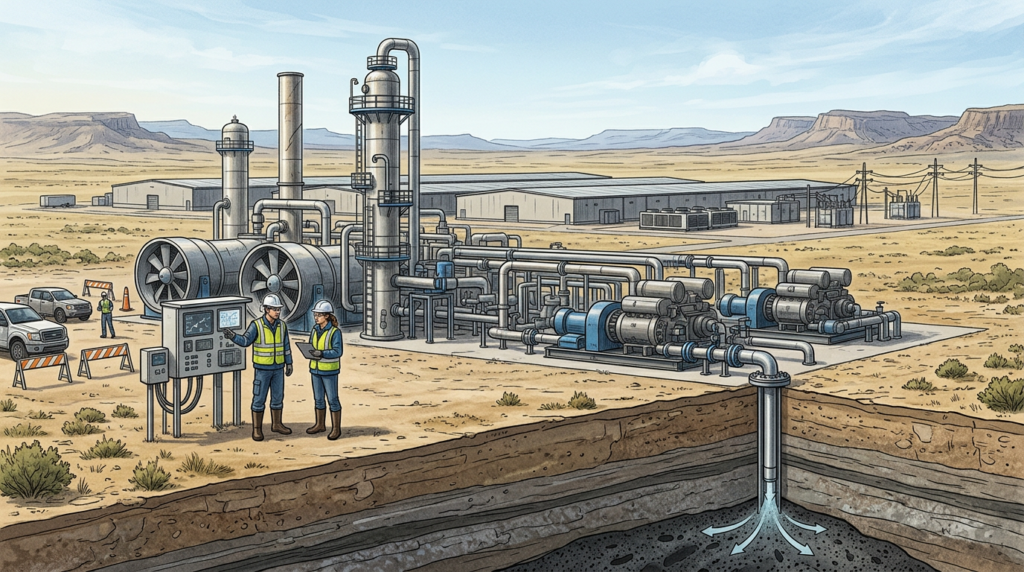
Google says the fuel cell development is planned with carbon capture and storage, using Tallgrass’s nearby Eastern Wyoming Sequestration Hub. It also describes engineering work to evaluate carbon capture for combined cycle turbines.
The distinction between those arrangements deserves attention. A planned capture system and a study assessing another installation represent different stages of development.
The environmental promise will ultimately depend on equipment performance and verified operating results. A future roadmap cannot establish emissions reductions that have already occurred.
That leaves a constructive standard for judging progress: compare the eventual facility with the commitments made today. Clear reporting on capture performance would make the project easier to assess. Ambition creates a direction; measured results show whether the project is following it.
Cooling Brings Water Into the Story
Google says its Wyoming data center will use air cooling to reduce pressure on local water resources.
That choice addresses a resource question communities can understand immediately. Technology infrastructure shares its surroundings with households, businesses, and other local users.
However, an air cooled design should not be interpreted as a promise that the entire project has no water footprint. The announcement describes a cooling approach, rather than a comprehensive accounting of every associated activity.
The useful followup will be actual water reporting once the facility operates. Design decisions establish expectations; operating data reveals the outcome.
For residents, that information should be understandable without an engineering degree. A community should be able to see how a major new neighbor uses shared resources and whether its performance matches its promises.
Who Pays for the Expansion?
Google says it will pay for all the power it uses and cover infrastructure needs directly driven by its growth. Black Hills likewise describes protections intended to prevent costs shifting to other customers.
Those commitments address an obvious concern: people want to know how a large industrial electricity customer will affect the systems they already depend on.
The details of implementation matter. Contracts, infrastructure responsibilities, and public oversight will determine how those principles work in practice.
There is a useful distinction between announcing customer protections and demonstrating their performance over time. Both deserve attention.
A successful project would make its own expansion economically workable while honoring its obligations to the surrounding system. That is a more meaningful measure than simply celebrating another large electricity demand.
Local Benefits Need Local Evidence
Google expects the project to generate substantial property tax revenue and says its community plans include education and workforce development.
Those are potentially valuable outcomes for Laramie County. The strongest way to evaluate them will be through specific commitments and subsequent results.
Construction opportunities, permanent operating roles, training programs, and tax receipts should each be described clearly. They represent different kinds of economic activity, with different timelines and beneficiaries.
A big investment announcement can create excitement without answering every household’s practical question. Can local people qualify for the work? Which skills will employers need? How will public institutions benefit?
The opportunity becomes more persuasive when residents can connect the project to understandable changes in their own community. Specific answers will carry more weight than promotional enthusiasm.
The Construction Clock Will Matter
The acquisition announcement is one milestone within a much longer sequence. Energy partners have already described different schedules for their contributions.
Black Hills says service is planned to begin in late 2027, with the project reaching peak load in 2030. AEP targets full operation of its fuel cell facility by the end of 2028.
These are published plans, rather than proof that the entire data center will open at one particular moment. Different pieces of a campus can develop on different schedules.
Those dates describe the current development schedule and may change as construction and technical work move forward.
That makes coordination essential. A delayed supporting system can affect what the rest of the development can do.
Readers tracking progress should watch commissioning announcements and actual service milestones. Those updates will reveal more about usable infrastructure than another repetition of the headline investment figure.
The Relationship Extends Beyond Wyoming
Crusoe’s release also points to its role developing another Google campus in Armstrong County, outside Amarillo, Texas. The Wyoming transaction therefore sits within a broader business relationship.
That context discourages an overly simple interpretation of the handoff. Infrastructure companies can contribute at different stages and take different roles across separate developments.
For this Wyoming announcement, the confirmed point is straightforward: Crusoe’s predevelopment engagement has concluded, and Google has acquired the site.
Any wider claim about strategic success or failure would require additional evidence. The release itself does not settle every question about the project’s earlier commercial history.
What it does show is the importance of specialized development work. Preparing land, approvals, and energy arrangements can create value before a completed building ever houses computing equipment.
What This Means for AI Users
An infrastructure acquisition does not immediately deliver a new button in an app. Users should not expect this announcement alone to produce cheaper subscriptions, faster responses, or a particular new model.
Its significance is more fundamental. Digital services need physical capacity, and increasing that capacity requires investments that extend far beyond software development.
A useful way to understand the Wyoming project is as an attempt to prepare the foundations for future demand. The eventual benefits will depend on what gets built and how effectively it operates.
That may sound less exciting than a dazzling product demonstration. Yet dependable infrastructure makes repeated, everyday use possible. The experience feels effortless at the screen precisely because enormous effort happens elsewhere, well outside the user’s view.
The Next Updates Worth Watching
The most revealing future announcements will concern delivery. Construction progress, energy availability, commissioning, and operating performance can show whether the project is moving from commitments into useful service.
Environmental reporting will matter alongside those milestones. So will evidence about water use, customer protections, and local economic contributions.
These subjects belong together because a data center operates within a community and an energy system. Success involves making that relationship work over time.
Google’s acquisition advances the ownership and development story. It does not close the book on execution.
The encouraging possibility is a campus whose computing ambitions arrive alongside credible resource planning and tangible local benefits. The next chapter will be written through engineering, construction, and public accountability. Hard hats will do more of the talking than chatbots.
Big AI Ambitions Meet Physical Reality

Google’s purchase of Crusoe’s Wyoming site makes an expansive infrastructure plan more concrete. It brings together prepared development work, a major investment commitment, and power arrangements that will take years to deliver fully.
The positive story lies in that movement toward implementation. The project connects the demand for digital capacity with the industrial work required to supply it.
Its credibility will grow through visible progress and measurable results. Those standards give both supporters and skeptical residents a practical way to assess what happens next.
For now, Wyoming offers a vivid reminder that the future of AI depends on real places. Behind every smooth digital interaction sits equipment, energy, engineering, and human effort. The cloud may sound weightless. Building it is anything but.
Sources
- Crusoe — Google’s acquisition of the Wyoming site and completed predevelopment work. crusoe.ai
- Reuters via Investing.com — Independent acquisition reporting and undisclosed transaction terms. investing.com
- Google — Wyoming investment, cooling strategy, carbon capture plans, and community commitments. blog.google
- American Electric Power via PR Newswire — Fuel cell investment, Google power agreement, and planned operating timeline. prnewswire.com
- Black Hills — Google energy agreements, resource capacity, customer protections, and service schedule. Black Hills Service Company, LLC