
AI adoption is no longer blocked by awareness.
Most people have heard of ChatGPT. Most executives know AI is important. Most marketing teams have tested image generators, writing tools, meeting assistants, coding copilots, research assistants, or some flavor of an “AI agent.” The technology has already crossed the threshold from obscure technical category to boardroom priority.
The numbers support that shift. In McKinsey’s 2025 global AI survey, 88% of respondents said their organizations were using AI in at least one business function, up from 78% the year before. McKinsey also reported high curiosity around agents: 62% of respondents said their organizations were at least experimenting with AI agents, while 23% said they were scaling an agentic AI system somewhere in the enterprise.
That sounds like a market that has already arrived.
But the more important story is not just adoption. It is uneven adoption.
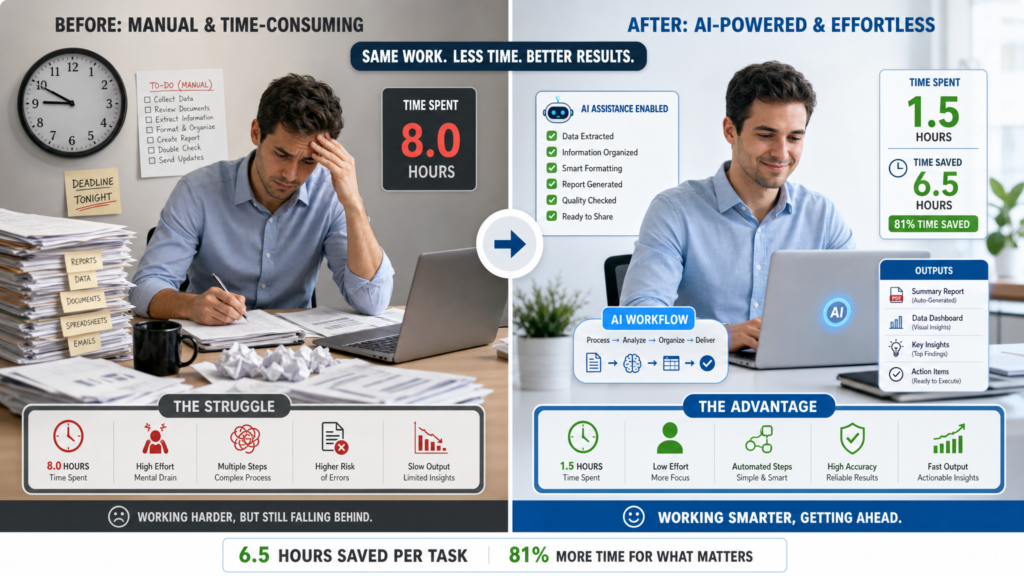
The same McKinsey research found that most organizations are still early in scaling AI. Nearly two-thirds of respondents said their organizations had not yet begun scaling AI across the enterprise. Only about one-third said their companies had begun to scale their AI programs.
That gap matters.
The problem for AI companies is no longer simply: “How do we get people to know we exist?”
The harder problem is: “How do we get people to believe this product is worth trying, trusting, adopting, and bringing into their workflow?”
That is where the creator economy is becoming one of the most important distribution layers in AI.
Not because creators are magically replacing sales teams. Not because influencer marketing is new. And not because a YouTube video alone can close a seven-figure enterprise deal.
The creator economy is becoming the front door for AI adoption because AI is confusing, fast-moving, demo-driven, and trust-constrained. People do not just want claims. They want to see the tool used by someone credible, in a real workflow, with visible tradeoffs, mistakes, outcomes, and context.
For AI companies, that makes creators much more than an awareness channel.
Creators are becoming educators, translators, validators, product testers, community builders, and early demand creators.
And for companies building in generative AI, that may be one of the biggest go-to-market shifts of the decade.
AI adoption is broad, but confidence is still uneven
The AI market has a strange contradiction at its center.
On one hand, adoption numbers look enormous. McKinsey’s 2025 survey says 88% of organizations are using AI in at least one business function. The same research shows that AI use is broadening across functions and that interest in agents is already high.
On the other hand, McKinsey also found that most organizations remain in experimentation or pilot mode. That is the practical reality beneath the headline numbers. AI has become familiar enough to test, but not always trusted enough to standardize.
It is easy to open an account and run a few prompts.
It is much harder to redesign a workflow, approve a vendor, train a team, manage data risk, and change how work actually gets done.
So the question is no longer whether people are interested in AI.
They are.
The question is whether they know what to do next.
That is a very different marketing problem.
When a market is unaware, companies need education. When a market is aware but uncertain, companies need trust. When a market is crowded, companies need proof. When buyers are skeptical, companies need credible third parties who can show the product in context.
AI has all four problems at once.
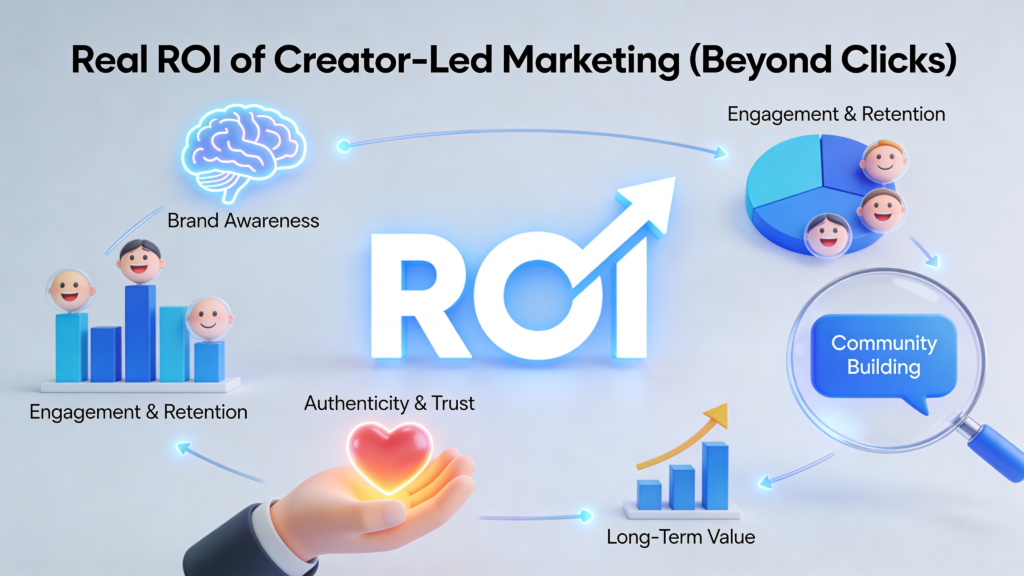
A CEO might know AI matters but not know which platform is real. A marketer might want automation but fear brand-damaging output. A developer might test five coding tools but hesitate to standardize on one. A procurement team might like the demo but worry about data security. A product leader might believe in agents but not know which workflows are safe enough to automate.
This is why creators have become so influential in AI adoption. They sit in the messy middle between product announcement and practical use.
They do not just say, “Here is a new tool.”
They say, “Here is what happened when I used it.”
That is the moment where adoption often begins.
The creator economy is no longer a side channel
For years, many B2B companies treated creators as an optional layer on top of “real” marketing.
The real marketing was paid search, events, analyst relations, email, webinars, sales enablement, customer case studies, and maybe LinkedIn. Creator partnerships were often seen as a consumer tactic, useful for beauty brands, gaming products, meal kits, mobile apps, fashion drops, or lifestyle products.
That view is becoming outdated.
The creator economy is now too large, too structured, and too influential to be dismissed as a side channel. Goldman Sachs Research estimated that the creator economy could grow from roughly $250 billion to $480 billion by 2027. The same Goldman Sachs article noted that brand deals are the main source of creator revenue, accounting for about 70% of income in its survey data.

That matters because brand spending follows attention, trust, and measurable influence. And creator-led influence is no longer confined to consumer impulse purchases. It increasingly shapes how people discover tools, compare products, learn workflows, evaluate vendors, and explain new categories to colleagues.
IAB’s 2025 Creator Economy Ad Spend & Strategy Report shows how quickly this has moved from fringe to core media planning. IAB projected U.S. creator ad spend would reach $37 billion in 2025, up 26% year over year and nearly four times faster than the media industry’s overall growth. IAB also reported that nearly half, 48%, of creator ad buyers now consider creators a “must buy.”
That is not just “influencers are popular.”
That is a budget shift.
Brands are realizing that creators combine three things traditional ad units struggle to deliver at the same time: distribution, trust, and explanation.
Distribution gets attention.
Trust lowers resistance.
Explanation turns attention into intent.
AI companies need all three.
Especially on video platforms.
YouTube is particularly important because AI products often need to be seen in motion. YouTube’s press page says more than 20 million videos are uploaded to the platform daily, that YouTube has localized versions in more than 100 countries across 80 languages, and that YouTube Shorts averages more than 200 billion daily views.
This is not a small creator hobby layer anymore.
It is a global media, education, entertainment, commerce, and software discovery layer.
For AI companies, ignoring it is increasingly like ignoring search in the 2000s or ignoring mobile in the 2010s.
Why AI is uniquely suited to creator-led adoption
Some products can be explained with a landing page.
AI usually cannot.
A project management app can show boards, tasks, due dates, and integrations. A payments tool can explain fees, settlement speed, and compliance. A CRM can show contacts, pipelines, and dashboards. A cloud storage product can explain storage limits, sharing permissions, and security features.
But a generative AI product often depends on behavior.
How good is the output?
How much prompting is required?
Does it fail gracefully?
Can it handle real files?
Does it work with messy inputs?
Can it save time for someone who already knows what they are doing?
Does it make beginners look better, or does it help experts move faster?
Does the product actually understand context, or does it just sound polished?
Can the user control the result?
Can a team trust it?
These questions are difficult to answer with static marketing copy. They are much easier to answer through a demo, teardown, tutorial, comparison, or workflow video.
This is why AI adoption often begins with watching.
People want to see the thing happen.
That does not mean every viewer immediately becomes a customer. But it does mean creators shape the mental shortlist long before a formal buying process starts.
A buyer might not be ready to fill out a demo form. But they might watch a 17-minute workflow breakdown. A developer might not trust a launch post. But they might trust a technical creator who tests the product against a messy repo. A CMO might not believe a generic productivity claim. But they might pay attention when a creator shows how one campaign brief becomes ten ad variants, with the rejected outputs included.
AI is not just a category of tools. It is a category of behaviors.
The value is often invisible until someone shows the sequence: the prompt, the input, the model response, the edit, the second attempt, the integration, the final output, and the time saved.
That is creator-native.
Creators translate technical capability into buyer meaning
AI companies often talk in capability language.
“We support multimodal reasoning.”
“We have a long-context architecture.”
“Our agents can orchestrate multi-step workflows.”
“We use retrieval-augmented generation.”
“We provide model-agnostic deployment.”
“We support enterprise-grade governance.”
Technical readers may understand those phrases. But understanding a feature is not the same as understanding its value.
A creator can translate.
Multimodal reasoning becomes: “I gave it a screenshot, a spreadsheet, and a rough instruction, and it built a usable first draft.”
Long context becomes: “I uploaded a full project folder and asked it to find the bug.”
Agentic workflow becomes: “It planned the campaign, drafted the assets, checked the data, and asked for approval before publishing.”
Governance becomes: “Here is what happens when a user tries to paste confidential customer data.”
Retrieval-augmented generation becomes: “Instead of guessing, the assistant answers from our approved documentation and links back to the source.”
Latency becomes: “It is fast enough to use while I am coding, not just when I am waiting for a batch job.”
That translation is not a small thing. It is often the difference between curiosity and adoption.
The best AI creators are not just entertainers. They are interpreters. They understand the product well enough to test it, but they understand the audience well enough to make the test meaningful.
This is especially important because AI buyers are fragmented.
A technical founder wants to know about model quality, latency, API design, evals, reliability, pricing, and extensibility. A CMO wants to know whether the tool can improve creative output, reduce production bottlenecks, or accelerate campaign testing. A CFO wants to know whether the spend maps to measurable productivity or revenue. A security team wants to know about data handling, permissions, audit logs, and risk. A customer support leader wants to know what happens when the system is wrong. A legal team wants to know how outputs are generated and what data is retained.
A single corporate announcement rarely satisfies all of these audiences.
A creator ecosystem can.
One creator might do the technical teardown. Another might do the practical workflow. Another might compare alternatives. Another might interview the founder. Another might test the tool in a live build. Another might explain the use case for nontechnical operators.
Together, they build the adoption surface around the product.
That surface matters because most AI products are not adopted through one moment of persuasion. They are adopted through repeated exposure, repeated proof, and repeated reduction of uncertainty.
The front door is not always the buyer
One of the biggest mistakes AI companies make is assuming the first user and the economic buyer are the same person.
Often, they are not.
A junior marketer finds an AI video editor on YouTube and starts using it for internal drafts. A developer sees a coding assistant demo and tests it on a side project. A sales rep tries an AI note-taker after watching a comparison video. A founder discovers an AI prototyping tool through a creator build video. A designer tests a new image model because a creator showed a specific style workflow. A customer support manager watches a tutorial about AI ticket triage and shares it with the operations team.
Months later, the company standardizes, upgrades, expands seats, or brings the tool into a formal buying process.
The creator did not necessarily close the deal.
But the creator opened the door.
This matters because AI frequently enters companies from the edge. It starts as individual experimentation before it becomes organizational procurement.
That has risks. Shadow AI is a real concern. Companies need policies, governance, security reviews, approved-tool paths, and clear guidance on what employees can and cannot put into AI systems. But from a go-to-market perspective, bottom-up discovery is powerful.
The person who first tries the tool may become the internal champion.
And internal champions need language. They need examples. They need proof. They need a way to explain why this tool is different from the ten other tools someone saw last week.
Creator content gives them that.
A good tutorial becomes an internal Slack share.
A strong comparison video becomes a shortlist argument.
A credible teardown becomes a way to reassure a skeptical technical lead.
A founder interview becomes a trust signal.
A workflow video becomes a training asset.
For AI companies, the creator economy is not merely “top of funnel.” It can support the entire adoption path: discovery, evaluation, onboarding, expansion, and retention.
That is a very different way to think about creator marketing.
It is not just buying attention.
It is building usable public proof.
AI adoption is a trust problem disguised as a tooling problem
A lot of AI marketing assumes the buyer’s main question is: “What can the tool do?”
That is only one question.
The deeper questions are usually:
“Can I trust it?”
“Will it embarrass me?”
“Will it leak data?”
“Will the output be good enough?”
“Will my team actually use it?”
“Will it still be around in a year?”
“Is this meaningfully different from ChatGPT, Claude, Gemini, Copilot, or the tool we already pay for?”
“Is this a product or just a wrapper?”
That last question has become especially common in generative AI. The market has seen enough thin products, overpromised agents, and flashy demos that buyers are more careful now. They have learned that a polished demo does not always equal a durable product. They have learned that “AI-powered” can mean anything from a deep workflow transformation to a lightly modified prompt template.
This is where creators can help, but only if the partnership is credible.
A lazy sponsorship says: “This tool is amazing. Click the link.”
A useful creator integration says: “Here is the tool in a real workflow. Here is where it worked. Here is where it struggled. Here is who it is for. Here is who should skip it. Here is how I would use it if I were running a team.”
The second version creates trust because it respects the viewer.
AI companies should understand this deeply. The creator’s credibility is the asset. If a sponsorship damages that credibility, it performs worse over time. If a sponsorship strengthens that credibility by being honest, specific, and useful, everyone wins.
This also fits where creator advertising is heading more broadly. IAB’s 2025 report says brands cite identifying the right creators as their top challenge and that measurement, standards, and operational tools are key opportunity areas for improvement.
In other words, the market is not only buying reach. It is buying fit, trust, relevance, and proof.
The best AI sponsorships do not feel like interruptions.
They feel like product education.
They show real use cases.
They avoid exaggerated claims.
They disclose limitations.
They explain setup.
They compare alternatives fairly.
They give the viewer enough information to decide.
That kind of content is not just more ethical. It is more effective.
Technical audiences can smell vague hype from miles away. CEOs and marketers may be more open to the promise, but they still need confidence. The creator’s job is not to act as a megaphone for a product claim. The creator’s job is to make the product legible.
That is the work that drives adoption.
The creator economy is becoming a product education layer
Every AI company eventually runs into the same problem: users do not understand the product deeply enough.
They sign up and try one prompt.
They use the product like a search box.
They miss the advanced features.
They fail to connect their data.
They do not invite the team.
They churn before reaching the “aha” moment.
This is not always a product problem. Sometimes it is an education problem.
Creators can help close that gap.
A company can publish documentation, but most people do not want to begin with docs. A company can host webinars, but webinars often attract people already in the funnel. A company can write blog posts, but AI products are often easier to understand visually.
Video is different.
Video shows sequence, speed, interface, decision-making, and result.
For AI tools, sequence matters. The user needs to see how the workflow begins, how the creator prompts, what settings they change, what outputs they reject, what they keep, and how they refine the result.
That is where the real learning happens.
YouTube’s about page says its mission is to “give everyone a voice and show them the world.” That mission statement may be broad, but in practical terms, YouTube has become one of the world’s largest informal education systems. People go there not only to be entertained, but to learn how to do things: fix a sink, edit a video, build a PC, understand a market, compare cameras, learn a programming language, and increasingly, use AI tools.
AI companies should think of creator partnerships as part of product education, not just paid media.
That means sponsoring product walkthroughs. Use-case tutorials. Workflow rebuilds. Before-and-after tests. Comparison videos. Founder interviews. Live build sessions. Integration guides. Prompting sessions. Security and governance explainers. Customer story breakdowns.
This content can live far beyond the campaign window.
A strong creator tutorial can keep sending qualified users for months. A comparison video can keep appearing in search. A technical teardown can support sales conversations. A workflow video can reduce onboarding friction.
That is very different from buying impressions.
It is building market infrastructure.
Creators are also becoming AI power users
The relationship between AI and creators cuts both ways.
Creators help audiences adopt AI, but creators are also among the earliest and most aggressive AI adopters themselves.
That makes them useful test users.
Creators use AI to ideate, script, edit, animate, design thumbnails, summarize research, generate voiceovers, translate content, create shorts, build prototypes, analyze performance, and speed up production. Even when creators are skeptical of AI, many are still testing it because their work depends on speed, differentiation, and output quality.
For AI companies, this is important.
A creator is not only a media channel. A creator can be an expert user who understands what breaks in real workflows.
They can tell you where onboarding is confusing.
They can tell you which features are demo-friendly but not useful.
They can tell you which outputs look impressive but fail in production.
They can tell you which messages land with beginners versus experts.
They can tell you which use cases deserve their own landing pages.
They can tell you which objections show up repeatedly in comments.
They can tell you which competitor comparisons the market actually cares about.
This feedback loop can be incredibly valuable.
The comments section alone can be a live research panel. People ask whether the tool supports their industry. They ask about pricing. They ask about privacy. They compare it to alternatives. They complain about missing features. They share unexpected use cases. They reveal confusion that would never appear in a structured survey.
For a smart AI company, a creator campaign is not just a campaign.
It is market research, positioning research, product education, objection discovery, and demand generation in one motion.
But only if the company is listening.
Why technical audiences trust creator demos
Technical readers are often skeptical of marketing. That is healthy.
They know benchmarks can be cherry-picked. They know demos can be staged. They know “agent” can mean anything from a simple workflow script to a complex autonomous system. They know a polished launch video does not guarantee reliability. They know model behavior can vary across inputs, datasets, contexts, and production environments.
This is why technical audiences often value independent demonstrations.
They want to see the product used outside the company’s perfect demo environment.
A good technical creator can do something a brand usually cannot: test the claim in public.
Can the coding assistant handle a messy repo?
Can the AI database tool explain a real schema?
Can the voice model preserve emotion?
Can the image model maintain character consistency?
Can the agent recover when a tool call fails?
Can the API documentation get a developer to success in 15 minutes?
Can the model follow instructions when the prompt is imperfect?
Can the product handle edge cases?
Can the workflow survive something other than a handpicked demo file?
This type of content creates a different level of trust because it is closer to reality.
Not perfectly objective. Sponsored content still needs disclosure and healthy skepticism. But a creator with a strong reputation has an incentive to protect their audience. If they consistently overhype bad products, the audience leaves.
That reputational pressure is what makes good creator partnerships work.
It also means AI companies should not be afraid of technical depth.
Some marketers worry that deep demos will reduce the audience. Sometimes they will. But the people who remain are often far more qualified.
For enterprise AI companies, the goal is not always maximum reach. It is reaching the right buyers, influencers, developers, and operators with enough depth to create belief.
A shallow video can generate clicks.
A deep video can generate conviction.
Conviction is what AI companies need.
The AI company website is no longer the first impression
For a long time, companies treated the website as the center of the buyer journey.
That is still partly true. The website matters. Pricing pages matter. Docs matter. Security pages matter. Case studies matter. Clear positioning matters. If a buyer arrives and the site is vague, slow, confusing, or unsupported by proof, the company has a problem.
But the first impression increasingly happens somewhere else.
A buyer sees a creator demo.
A founder sees a teardown on YouTube.
A developer sees a short clip on X or LinkedIn.
A marketer sees a workflow breakdown in a newsletter.
An employee asks an AI search tool for the best tools in a category and gets a summary influenced by public content.
Then they visit the website.
By that point, they may already have a frame.
They may think, “This is the AI video tool creators use for fast ads.”
Or, “This is the coding assistant that handles large codebases.”
Or, “This is the AI meeting tool with strong enterprise controls.”
Or, “This is another generic agent platform.”
That frame is hard to change later.
This is why creator-led perception matters. It often forms before the company gets the visitor.
For AI companies, the front door may be a creator’s video.
That means the creator experience needs to be treated strategically.
Do creators understand the product?
Do they have access to the right version?
Can they test real use cases?
Can they speak with product experts?
Do they know what claims are approved and what claims are not?
Do they have enough time to produce something useful?
Is there a landing page aligned to the specific video?
Is the product ready for the traffic and support questions?
Are sales and customer success aware of the campaign?
Are comments being monitored for objections and bugs?
A creator campaign should not be a random media buy. It should be an integrated launch path.
The best creator partnerships are built around use cases, not slogans
AI companies often want to sponsor creators with broad messages:
“Save time with AI.”
“Create better content.”
“Automate your workflow.”
“Build agents faster.”
“Unlock productivity.”
These messages are not wrong. They are just too generic.
The AI market is crowded with tools promising speed, creativity, automation, and productivity. The creator’s job is to make the value concrete.
That starts with use cases.
Not “this is an AI video platform,” but “here is how to create ten product ad variations from one script.”
Not “this is an AI coding assistant,” but “here is how I used it to refactor a legacy authentication flow.”
Not “this is an AI research tool,” but “here is how I used it to analyze market reports and build a founder briefing.”
Not “this is an AI agent builder,” but “here is how I built an agent that checks support tickets, drafts replies, and escalates uncertain cases.”
Specificity beats hype.
A specific use case gives the audience a mental handle. It helps them imagine the product inside their own life or company. It also helps the AI company attract better leads because the viewer knows what problem the product solves.
The best creator partnerships usually have a simple structure:
Here is the problem.
Here is the workflow before the tool.
Here is the workflow with the tool.
Here is the result.
Here is where it works well.
Here is where it has limits.
Here is who should try it.
That format respects the audience and gives the sponsor a better chance of attracting serious users.
It is also aligned with how AI value is actually captured. McKinsey’s 2025 survey emphasizes that workflow redesign is a key success factor for organizations seeing more impact from AI. The companies getting more value are not simply dropping AI into old processes. They are redesigning workflows around AI capabilities.
Creator content can show what that redesign looks like in practice.
AI companies need creators across the full funnel
The phrase “creator marketing” can be misleading because it sounds like a single tactic.
In reality, creators can support different parts of the funnel.
At the top, they create category awareness. A viewer learns that AI sales agents, AI design tools, AI coding assistants, AI video generators, AI research platforms, or AI governance systems exist.
In the middle, they create product understanding. A viewer learns how one tool compares to another, what use cases it is best for, and what tradeoffs matter.
Near conversion, they reduce risk. A viewer sees setup, pricing, limitations, integrations, and real workflows.
After purchase, they support onboarding. A user learns how to get more value from the product.
After adoption, they support expansion. A team shares tutorials internally, discovers advanced use cases, and builds confidence to roll out more broadly.
IAB’s 2025 report supports this broader view of creators across the funnel. The report says creator campaigns most often seek awareness and reach, but that sales is also among the top goals, showing that brands use creators across the purchase journey.
That mix matters for AI companies.
It means creator partnerships should not be treated only as awareness plays.
A mature AI creator strategy might include a launch video that explains the product vision. A technical walkthrough for advanced users. A use-case tutorial for the core audience. A comparison video against alternatives. A founder interview to build trust. Short-form clips for repeated exposure. A live Q&A for objections. A customer workflow breakdown. A follow-up video after major product updates.
That is a creator-led content system.
It can sit alongside paid search, SEO, events, outbound, partnerships, analyst relations, and product-led growth. It does not replace those channels. It makes them stronger because the market arrives warmer and better educated.
Measurement has to evolve beyond last-click attribution
One reason B2B companies underinvest in creators is measurement.
A search ad is easy to attribute. A creator video is messier. Someone might watch a video, search the brand later, read a Reddit thread, ask an AI tool for comparisons, visit the site from a colleague’s Slack link, and book a demo two weeks later.
Last-click attribution will often miss the creator’s influence.
That does not mean creator marketing cannot be measured. It means companies need a broader measurement model.
Track direct conversions with links and codes, yes. But also track branded search lift. Track direct traffic around launch windows. Track demo form “How did you hear about us?” responses. Track sales call mentions. Track comment sentiment. Track trial quality. Track activation rates from creator landing pages. Track pipeline influenced by campaign cohorts. Track retargeting audience growth. Track content reuse by sales. Track support questions generated by the campaign. Track paid social performance using creator clips.
A creator campaign can fail as a direct-response ad but succeed as a trust-building asset. It can also generate fewer leads but higher-quality leads. For AI companies, that distinction matters.
If a video brings in 500 curious hobbyists, that may be less valuable than 30 serious technical evaluators from the right segment.
The measurement question should not only be, “How many clicks did we get?”
It should be, “Did this partnership create qualified belief in the market we care about?”
That is harder to measure, but closer to the truth.
IAB’s report also points to measurement, standards, and operational tools as major opportunity areas as creator advertising becomes a core part of media strategy. That is especially relevant for AI companies, where buying cycles can be longer, stakeholders can be technical, and influence can happen before formal demand capture.
The risks: hype, AI slop, and credibility collapse
There is a darker side to all of this.
AI has made content creation easier, but it has also made low-quality content cheaper. The internet is filling with generic AI-written articles, synthetic videos, fake experts, thin affiliate sites, and low-effort “AI tool” roundups.
That creates a problem for serious AI companies.
If everything looks sponsored, nothing feels trusted.
If every tool is called revolutionary, no tool seems special.
If every creator reads the same script, the audience tunes out.
If AI-generated channels flood feeds with low-quality content, real expertise becomes harder to find but more valuable when found.
This is why AI brands should be careful about the creators they choose.
The cheapest reach is often not the best reach. The biggest channel is not always the best fit. The most enthusiastic creator is not always the most credible. The most polished demo is not always the most persuasive.
AI companies should ask:
Does this creator have real trust with the audience?
Do they understand the category?
Can they explain technical tradeoffs?
Do their comments show buyer-quality discussion?
Have they promoted too many weak tools?
Are they willing to test the product honestly?
Can they produce content that stays useful after the first week?
Will their audience actually care about this use case?
The future of creator-led AI adoption will not be won by spammy sponsorships. It will be won by credible education.
That is good news for serious AI companies.
It means the bar is higher, but the moat is stronger.
What AI CEOs should take seriously
For CEOs, the creator economy should not be delegated entirely as a “brand awareness experiment.”
It touches positioning, product, community, trust, and distribution.
A creator can reveal whether the market understands your product. If a smart creator struggles to explain what you do, your positioning may be too vague. If viewers keep asking the same questions, your website may be missing key information. If creators gravitate toward a use case you did not expect, your market may be telling you something.
Founders should also understand that creators can humanize an AI company.
That matters because AI can feel abstract and faceless. Models, agents, infrastructure, APIs, and automation can be difficult to emotionally connect with. A founder interview, product build session, or deep technical conversation gives the company a face and a philosophy.
Why did you build this?
What do you believe about the category?
What tradeoffs did you make?
Where is the product going?
What should users not expect?
What is your view on safety, privacy, reliability, and creative ownership?
These questions matter, especially in AI.
The companies that win trust will not only have better models or better interfaces. They will communicate better judgment.
Creators can help expose that judgment to the market.
What AI marketers should do differently
For marketers, the big shift is to stop treating creator partnerships like ad placements and start treating them like market education.
That changes the workflow.
Instead of beginning with, “Which creator has the biggest audience?” begin with, “Which audience do we need to educate, and what do they need to believe before they try us?”
Instead of giving the creator a list of slogans, give them a real product environment and a clear use case.
Instead of demanding only positive coverage, design a partnership that can handle nuance.
Instead of sending traffic to the homepage, build a landing page that matches the video.
Instead of measuring only signups, measure comments, sales mentions, branded search, demo quality, and content reuse.
Instead of one-off campaigns, build relationships with creators who can grow with the product.
The best creator partners become part of the company’s external education layer. They understand the roadmap. They know the audience. They see the market’s objections. They can help turn product complexity into buyer clarity.
That is far more valuable than a scripted ad read.
What technical teams should understand
Technical teams sometimes view creator marketing with suspicion. That is understandable. Bad creator marketing can flatten real technology into hype.
But good creator content can be a technical asset.
A strong API walkthrough can reduce developer friction. A coding demo can show real implementation patterns. A model comparison can clarify strengths and weaknesses. A workflow build can reveal bugs before enterprise customers hit them. A technical Q&A can surface documentation gaps.
Developers trust other builders who show their work.
If your product is technical, do not hide that complexity. Package it well.
Give creators access to sandbox environments, sample data, docs, engineers, and realistic constraints. Help them avoid inaccurate claims. Let them test enough to be credible. Encourage them to show actual setup, not just outputs.
Technical audiences do not need everything to be perfect.
They need it to be real.
That is a very different standard.
The front door is shifting
The front door to AI adoption used to look like this:
A company announces a product.
The press covers it.
Buyers visit the website.
Sales books demos.
Users test the product.
Adoption begins.
Now it often looks more like this:
A creator tests a product.
A user sees the workflow.
The user shares it with a team.
Someone searches for alternatives.
A technical evaluator watches a deeper demo.
A buyer visits the website already informed.
Sales enters a conversation shaped by content the company did not fully control.
Adoption begins before the formal funnel sees it.
That is the new reality.
AI companies can resist it, or they can build for it.
The winners will not simply buy creator mentions. They will build creator-ready products, creator-ready stories, creator-ready demos, and creator-ready proof.
They will understand that in a market full of noise, trust is distribution.
They will understand that education is acquisition.
They will understand that adoption starts when someone sees a tool solve a problem they recognize.
The creator economy is becoming the front door for AI adoption because creators are where curiosity turns into comprehension.
For AI companies, that is the opening.
Not just to get views.
To earn belief.
The Kingy Brief
Get The Kingy Brief.
AI changes, original tests and one practical thing to try. Fridays at 09:00 Vancouver time.
Free · Double opt-in · Unsubscribe anytime
Signup help and newsletter schedule
Signup form provided by Beehiiv. After submitting, check your inbox for "Confirm your subscription to The Kingy Brief" and open its confirmation link. Check Spam or Promotions if you cannot find it.
Fridays at 09:00 Vancouver time: source-checked AI changes, original tests and one practical thing to try. The weekly restart begins October 9, 2026. We skip a week when there is not enough verified material. Free. Unsubscribe anytime.