
TL;DR: New AI tools are easy to find and hard to judge. This guide gives you a repeatable way to evaluate AI apps, agents, coding tools, video tools, image tools, search products, open-weight models, and startup launches before you spend time, budget, or reputation on them. Start with sources. Demand a demo. Score the launch. Run a small test. Then decide whether to use it, watch it, cover it, or skip it.
Image note: The best AI launch evaluation starts with evidence: official sources, real demos, pricing clarity, use cases, and limitations.
If you track the AI Launch Tracker, read the AI Launch Radar, or browse the AI Tools directory, you already know the problem. A launch can look important for twelve hours and become irrelevant by the weekend. Another launch can look boring in a feed but quietly become the tool your team should test first.
The difference is not taste. It is evaluation discipline. A practical evaluator does not ask, Is this trending? A practical evaluator asks: What changed, who is it for, what proof exists, what is missing, what can I test today, and what would make this product worth adopting?
Quick Verdict
| Question | Practical answer |
|---|---|
| Should you try every new AI tool? | No. Score the launch first, then test only the tools with clear use cases, credible sources, and a believable path into your workflow. |
| What matters most? | Product clarity, a real demo, pricing clarity, official source quality, practical use case, current limitations, and whether the tool can produce business value now. |
| What is a bad sign? | No demo, no docs, unclear pricing, vague benchmark claims, waitlist-only access, anonymous makers, recycled wrapper positioning, and no example of the tool doing real work. |
| What is a strong sign? | Clear product page, official docs, changelog or launch post, pricing page, demo video or live sandbox, API docs if relevant, visible limitations, and a way to try it. |
| Who should use this guide? | AI buyers, founders, marketers, creators, product managers, consultants, startup employees, and non-technical operators who need a repeatable evaluation method. |
The best new AI apps do not force you to decode the launch. They make the product, use case, access path, and limits obvious. They show enough evidence for a skeptical buyer to run a test. They do not hide behind mystery, waitlists, benchmark screenshots, or vague claims about replacing entire teams.
This does not mean every strong launch needs to be mature. Early products can still score well when they are honest. A small open-source repo with clear docs, a limited but working demo, and precise caveats can be more useful than a polished landing page with no access, no pricing, and no real proof.
What Counts As An AI Launch?
An AI launch is any meaningful public release that gives users, buyers, developers, creators, or investors something new to evaluate. That can be a new AI app, a model release, an agent platform, a coding assistant, a video or image tool, an API, a major product feature, a GitHub repo, a research preview, a pricing change, a marketplace listing, or a startup launch.
Not every announcement deserves the same attention. A model with downloadable weights needs a different review than a browser agent. A video generator needs different tests than an AI search tool. A coding agent needs a real repo and a reviewable diff. An enterprise tool needs privacy, admin, and procurement clarity.
Kingy AI separates broad discovery from practical evaluation. The AI Agent Launches, AI Coding Tool Launches, AI Video Tool Launches, AI Image Tool Launches, AI Search and Research Tool Launches, and AI Open-Weight Model Launches pages help sort the category. This guide helps decide what deserves your time.
Core rule: evaluate the launch artifact before you evaluate the company narrative. A good launch gives you enough official evidence to understand, test, and compare the product. A weak launch asks you to fill in the gaps yourself.
The AI Launch Evaluation Workflow
Use this workflow before you add a tool to your stack, recommend it to a client, cover it in content, send it to your team, or put it into a buyer shortlist. It is intentionally simple. The point is not to build a procurement department around every AI app. The point is to stop confusing novelty with usefulness.
- Capture the launch. Save the product URL, official launch post, docs, pricing page, repo, model card, demo, and source date. If the only evidence is a social post, mark the launch as weak until stronger sources exist.
- Classify the product. Is it an AI agent, coding tool, video tool, image tool, search tool, model launch, enterprise workflow product, API, consumer app, or wrapper? Wrong category leads to wrong expectations.
- Write the one-sentence job. Use this format: It helps [user] do [workflow] by [mechanism] so they can [outcome]. If you cannot complete the sentence, the product clarity score is low.
- Check official sources. Prioritize official product pages, documentation, launch posts, pricing pages, GitHub repositories and releases, model cards, API references, and research papers. Treat reposts and summaries as leads, not proof.
- Inspect the demo. Look for a real input, a real action, a real output, and a visible limitation. A montage is not a demo. A screenshot is not a workflow.
- Check pricing and access. Can you try it? Is there a free plan? Are credits, seats, usage units, render minutes, API calls, storage, and export limits clear?
- Run three tests. Do one tiny test, one realistic test, and one edge-case test. Record failure modes instead of only celebrating the best output.
- Compare alternatives. Compare against the current manual workflow, a mature incumbent, and one direct AI competitor. A product can be good and still not worth switching to.
- Score it. Use the Kingy AI Launch Scorecard below. Do not let one exciting feature erase weak pricing, no demo, or missing limitations.
- Decide the action. Use now, pilot, watch, cover, submit for deeper review, or skip.
For ongoing discovery, use the AI Launch Radar to spot candidates. For decision-making, use this guide and the AI Launch Scorecard to slow the evaluation down enough to be useful.
The Kingy AI Launch Scorecard
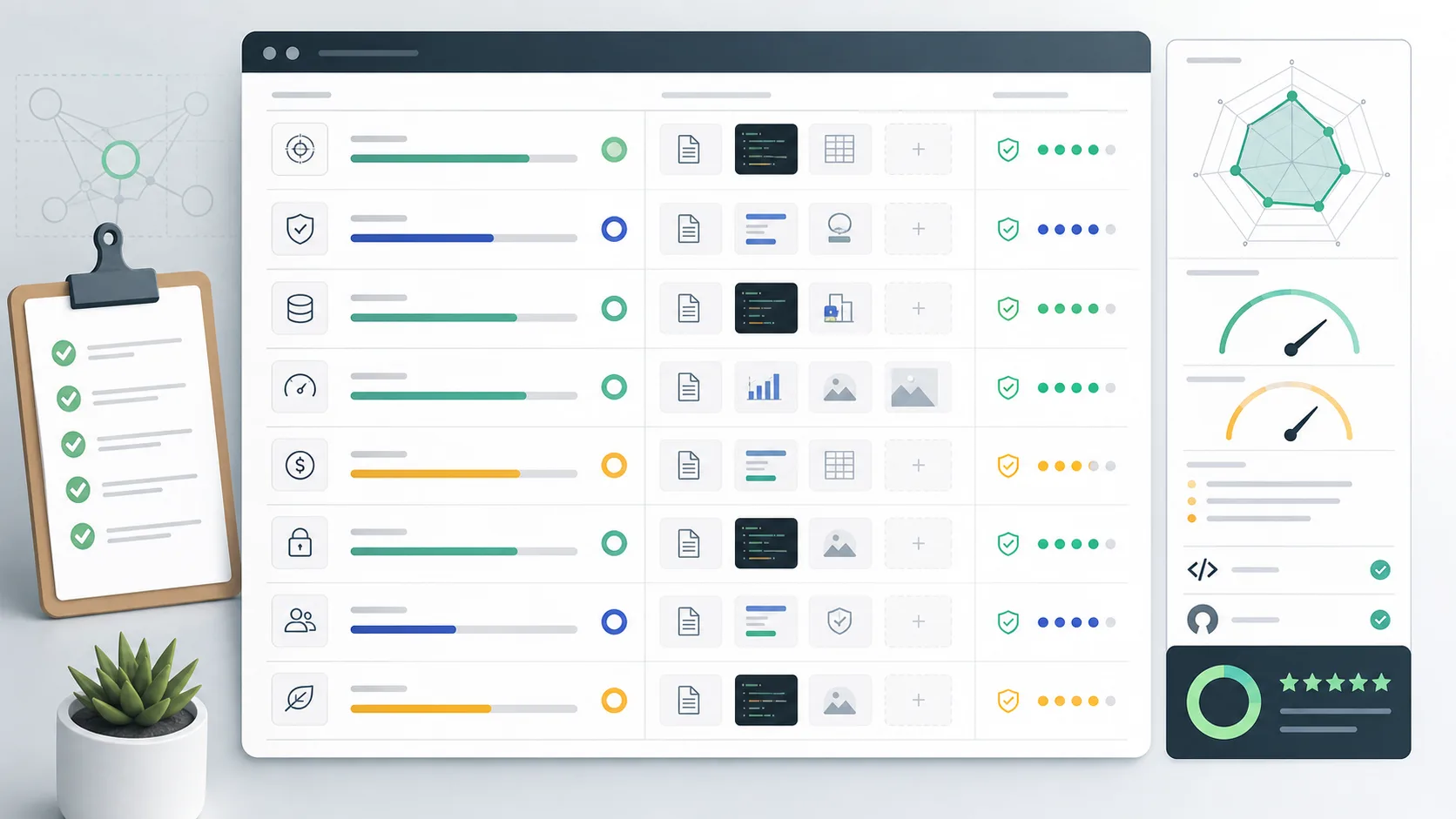
The Kingy AI Launch Scorecard is a 100-point rubric for turning launch evidence into a practical decision. It is not a benchmark. It is not a popularity score. It is a structured way to ask whether the product is clear, testable, credible, useful, and honest about its limits.
| Category | Points | Question | Strong evidence | Weak evidence |
|---|---|---|---|---|
| Product clarity | 10 | Can a smart buyer explain what the product does in one sentence? | Clear category, audience, job to be done, before/after workflow. | Vague AI-native language with no concrete user or workflow. |
| Demo quality | 10 | Can you see the product working? | Live demo, screen recording, sandbox, examples with inputs and outputs. | Only screenshots, teaser video, or cinematic product montage. |
| Real use case | 10 | Does the product solve a real workflow problem? | Specific user, pain, trigger, output, and decision helped. | Generic productivity promise with no daily workflow. |
| Pricing clarity | 8 | Can a buyer estimate cost before a sales call? | Pricing page, free plan limits, usage units, seat costs, enterprise notes. | No pricing, no trial limits, surprise credits, or vague contact-sales only. |
| Official source quality | 8 | Are claims backed by official pages? | Docs, launch post, model card, GitHub repo, changelog, pricing page. | Only social posts, Product Hunt blurbs, or unsourced blog copies. |
| Founder/company credibility | 7 | Can you identify who is accountable? | Company page, founder profiles, funding/customer claims with sources. | Anonymous team, unsupported logos, no support or legal contact. |
| API availability | 6 | Can teams integrate it? | API docs, SDKs, webhooks, examples, auth model, limits. | No integration path for a product that claims to fit teams. |
| Open-source/open-weight status | 6 | Is openness described precisely? | License, repo, model card, weights, inference path, restrictions. | Calls itself open without license, weights, source, or usage terms. |
| Free plan or trial | 5 | Can a user test without procurement? | Free tier, trial, credits, public demo, student/creator access. | No test path, waitlist only, or demo gated behind sales. |
| YouTube/demo potential | 6 | Can a creator show value in a real workflow? | Visible output, dramatic before/after, clear audience, repeatable test. | Back-office claim that cannot be demonstrated or explained quickly. |
| Business value | 14 | Could it save time, make money, reduce risk, or improve output? | Measurable workflow impact, buyer pain, implementation path. | Nice demo with no budget owner or operational reason to adopt. |
| Current limitations | 10 | Does the launch tell you what is not ready yet? | Known gaps, supported regions, model limits, privacy notes, roadmap caveats. | Perfect-sounding claims, no caveats, no failure modes. |
How to interpret the score
- 85-100: strong launch. Test quickly if the use case fits your team or audience.
- 70-84: promising launch. Run a small pilot or watch for missing pricing, docs, demo, or limitation details.
- 55-69: interesting but incomplete. Save it, but do not recommend adoption yet.
- Below 55: weak launch. Skip unless you have a specific reason to investigate.
A high score does not mean the product is best in category. It means the launch gives you enough clarity and evidence to evaluate it seriously. A low score does not mean the team is bad. It means the launch is not yet useful enough for buyers, creators, or operators to make a confident decision.
Examples: How To Evaluate Different AI Launch Types
The scorecard stays the same, but the hands-on test changes by category. A serious AI launch evaluation guide must respect the workflow. You do not test an AI model the same way you test an image tool. You do not test an agent the same way you test an AI search product.
| Launch type | First tests | Evidence to demand | Common trap | Kingy verdict pattern |
|---|---|---|---|---|
| AI agents | Give it a small multi-step task with tools, deadlines, and failure recovery. | Tool permissions, memory behavior, action logs, human approval controls, task examples. | Calling a chatbot an agent because it can plan. | Useful only when it completes actions reliably and exposes its reasoning trail. |
| AI coding tools | Run it on a real repo issue, inspect the diff, run tests, and review security-sensitive changes. | Docs, IDE/CLI support, GitHub integration, pricing, privacy, evals, changelog. | Mistaking a clean demo repo for production readiness. | Strong if it reduces reviewable engineering work, not just generates code. |
| AI video tools | Create a short product demo, tutorial, or ad from real source material. | Input formats, output rights, watermark rules, render limits, editing controls, examples. | Cinematic samples with no workflow detail. | Strong if the output is usable, editable, and legally clear. |
| AI image tools | Generate a product visual, ad concept, UI asset, and variant set from the same brief. | Commercial rights, brand controls, editing/inpainting, consistency tools, pricing. | Beautiful one-off images that cannot be controlled. | Strong if it supports repeatable production, not just novelty. |
| AI search tools | Ask five research questions with known answers and five open-ended research tasks. | Source citations, freshness, source ranking, export, browser extension, privacy policy. | Confident summaries from weak sources. | Strong if it helps you find and verify sources faster. |
| AI model launches | Run your own prompts, compare latency/cost, inspect license, and test failure modes. | Model cards, eval details, API docs, license, weights, limitations, safety notes. | Leaderboard worship with no workload fit. | Strong if it is useful for your tasks at an acceptable cost and risk. |
Example: evaluating an AI agent launch
Do not ask whether the agent sounds autonomous. Ask what actions it can safely complete. Give it a task with a clear objective, a tool boundary, a permission decision, and an expected deliverable. For example: research three vendors, produce a comparison table, cite sources, draft a short recommendation, and stop before sending any email. A real agent launch should show action logs, approval controls, error handling, and a way to recover when a tool call fails.
Example: evaluating an AI coding tool launch
Do not test only the tutorial. Put the coding tool inside a small real repo with a low-risk issue. Ask it to explain the code path, propose a patch, update tests, and summarize risk. Then review the diff like a normal pull request. The product gets credit only for changes that compile, pass tests, preserve security, and reduce human workload. It loses credit for confident but wrong explanations, broad unreviewed edits, and hidden data retention terms.
Example: evaluating an AI video or image tool launch
Creative AI launches need output quality, editability, rights clarity, and repeatability. A video demo that looks amazing once may still fail if you cannot control characters, captions, product shots, aspect ratios, brand style, render time, or commercial use. Ask for the same brief three times. If the tool cannot produce usable variants, it may be a novelty rather than a production workflow.
Example: evaluating an AI model launch
Model launches require extra caution because benchmarks can mislead. Read the model card when one exists, check license terms, inspect supported context length, modalities, pricing, latency, regions, safety notes, and tool-use behavior. For open claims, distinguish true open-source from open-weight and source-available releases. The Open Source AI Definition is useful context, and model cards are a practical place to look for release details.
How To Avoid Hype, Fake Benchmarks, Vaporware, And Wrappers
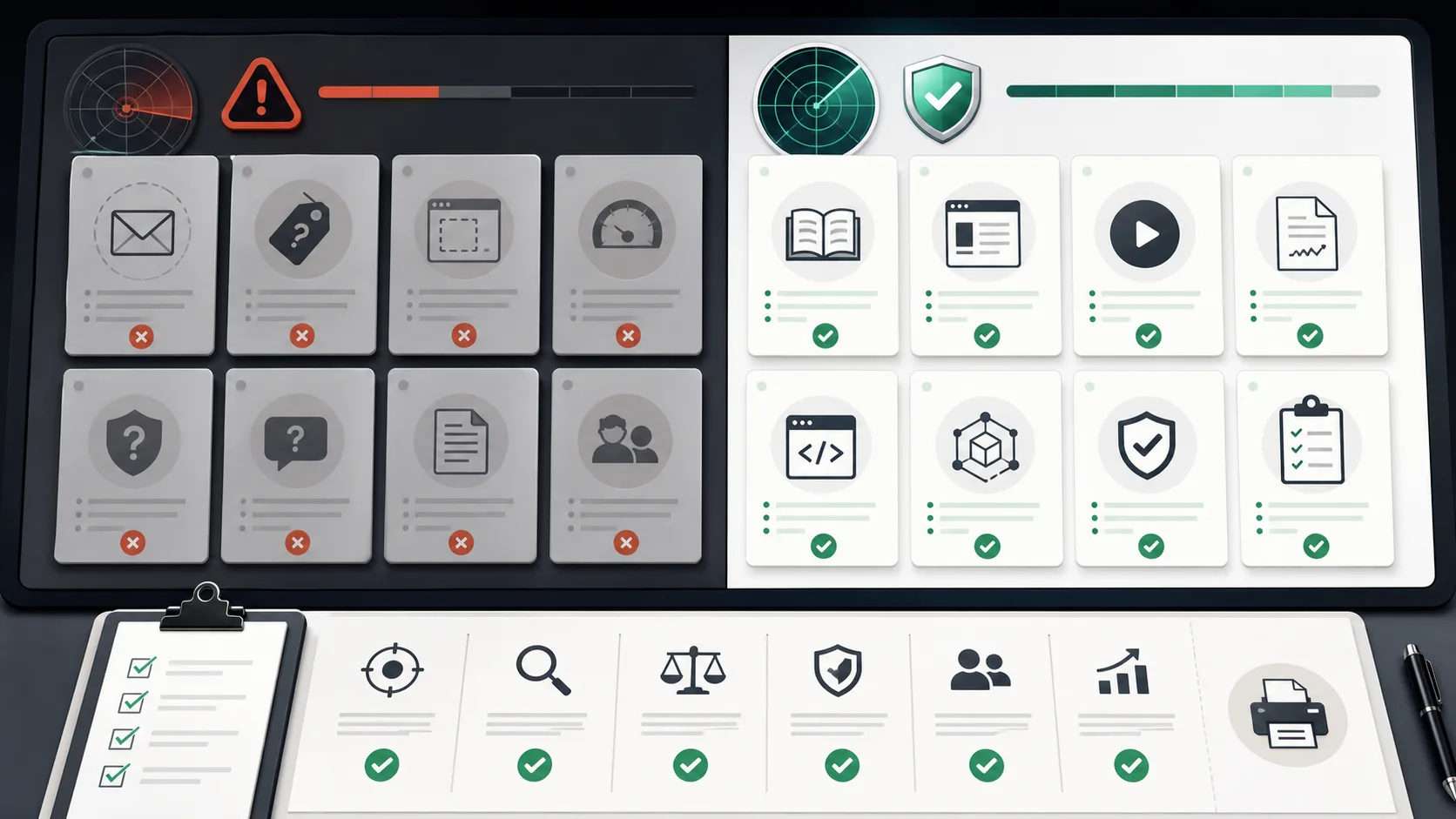
AI launches often fail in predictable ways. The product may be real but badly explained. The demo may be real but cherry-picked. The benchmark may be true but irrelevant. The launch may be a thin wrapper around another model. The pricing may be hidden because the economics are not stable. The waitlist may exist because there is no product yet. Your job is not to be cynical. Your job is to separate evidence from excitement.
| Launch signal | Weak version | Strong version | What to do |
|---|---|---|---|
| Product page | A slogan and a signup button. | Clear audience, workflow, screenshots, docs, pricing, and limitations. | Score clarity before you test. |
| Demo | A teaser video with no real workflow. | A real input, real action, real output, and visible constraints. | Recreate the demo with your own data. |
| Benchmark | One big number with no setup. | Methodology, dataset, baseline, code or report, and caveats. | Treat unsupported benchmarks as marketing. |
| Pricing | Contact sales for everything. | Free plan, paid tiers, usage units, limits, overage rules. | Estimate monthly cost before team rollout. |
| Open-source claim | Open AI in headline only. | Repo, license, model card, weights, data notes, restrictions. | Use precise terms: open-source, open-weight, source-available. |
| Founder credibility | No team, no company details. | Named operators, support path, legal entity, previous work, source-backed claims. | Do not trust unsupported logos or vanity claims. |
| Access | Waitlist only. | Try now, public demo, API key, downloadable model, or clear rollout notes. | Mark waitlist-only products as watch, not adopt. |
| Docs | No docs or outdated docs. | Getting-started guide, API reference, examples, changelog, limits. | Read docs before believing the positioning. |
| Use cases | Everyone can use it. | Three or more specific workflows with examples. | Map each use case to a real job and user. |
| Limitations | No caveats. | Known gaps, supported inputs, privacy, data retention, model limits. | Reward honest limitation disclosure. |
Fake or weak benchmarks
A benchmark is useful only when you understand the task, dataset, baseline, settings, measurement method, and relevance to your workflow. A single bar chart with a big number is not enough. Ask whether the benchmark was run by the company, a third party, a research group, or the community. Ask whether it measures reasoning, coding, video quality, search accuracy, latency, price-performance, or a narrow academic task. The original model-card literature, such as the Google Model Cards paper, exists because model claims need context.
For higher-risk AI decisions, use broader risk-management context such as the NIST AI Risk Management Framework. You do not need a full enterprise risk program for every app, but you should know when a tool touches customer data, regulated output, hiring, finance, legal, medical, security, or production systems.
Waitlist-only products
A waitlist is not automatically bad. Some teams stage access responsibly. But a waitlist-only launch should usually be classified as watch, not use. Do not give a high adoption score until there is a demo, docs, pricing direction, target user, and a realistic path to try the product. If a founder wants coverage before access exists, they should provide a working demo, test account, or recorded workflow with enough detail to evaluate.
Recycled wrappers
A wrapper is not automatically bad either. Many valuable products wrap models with workflow, memory, integrations, permissions, interface, data, or distribution. The weak wrapper is different: it adds a thin prompt box, hides the underlying dependency, charges unclear pricing, and has no workflow advantage. Score the product on the value it adds beyond the base model. If the product disappears when the model provider adds one feature, the score should drop.
For Founders: How To Submit A Better AI Launch
If you want Kingy AI or any serious editor, creator, buyer, or analyst to understand the launch, make the evidence easy to inspect. The Submit an AI Launch path should not receive a mystery box. It should receive a clean launch packet.
- One-sentence description: who it helps, what it does, and what outcome it improves.
- Launch summary: what is new now, not just what the product eventually wants to become.
- Demo: a real workflow with input, action, output, time, and limitations.
- Official links: product page, docs, pricing, changelog, repo, model card, API docs, and support page where relevant.
- Pricing: free plan, trial, paid tiers, usage units, credits, render limits, seats, and enterprise notes.
- Target audience: name the first users. Do not say everyone.
- Best use cases: three workflows where the product is already strong.
- Limitations: what is beta, unsupported, slow, expensive, region-limited, or not yet reliable.
- Company details: founders, company site, funding only if source-backed, support contact, security/privacy notes.
- Creator angle: the best demo story if someone had ten minutes to explain it on YouTube.
The fastest way to look credible is to be specific. The second fastest way is to admit limits. Buyers do not expect early AI products to be perfect. They expect the team to understand what is ready, what is not, and what problem the product solves today.
For Marketers: How To Know If An AI Launch Has Creator Coverage Potential
Creator coverage is not the same as publicity. A product can be newsworthy and still difficult to demonstrate. Another product can be small but ideal for a practical YouTube walkthrough. If you are deciding whether to pursue creator-led education, sponsorship, or demo-led demand, start with the coverage signals below and compare them with the Sponsor Kingy AI fit criteria.
| Creator coverage signal | Strong | Weak |
|---|---|---|
| Visible before/after | A viewer can see the old workflow and the new result in minutes. | The value is buried in back-end claims. |
| Demo rhythm | The product has a repeatable 5-10 minute walkthrough. | The only demo is a founder talking over slides. |
| Audience fit | There is a clear creator audience: founders, coders, marketers, designers, or operators. | The launch says it is for everyone. |
| Shareable artifact | The tool produces a video, image, app, report, workflow, dashboard, or measurable output. | The output is invisible or hard to explain. |
| Trust angle | The demo can include sources, docs, pricing, or limitations. | The pitch depends on unverified benchmark claims. |
| Offer clarity | Viewers know what they can try, buy, download, or submit next. | Waitlist-only with no public details. |
A launch has strong creator coverage potential when a viewer can understand the problem, watch the tool do something concrete, see the output, and decide whether to try it. AI coding tools, video tools, image tools, search tools, agents, and open-weight models can all work for creator coverage, but the best format changes. A coding tool needs a repo task. A video tool needs a before/after clip. A search tool needs a research race. A model launch needs practical workload comparisons, not only benchmark charts.
Weak creator campaigns usually fail before filming begins. The product is too vague, access is unavailable, pricing is hidden, the output is not visual, the demo takes too long, or the audience is unclear. Fix the launch before you buy attention.
For Buyers: Should You Actually Use This Tool?
Buyers need a different question from founders and marketers. The buyer question is not, Is this impressive? It is: Should we put this into a real workflow with real people, real data, real budget, and real risk? The answer is often no, even when the product is interesting.
| Buyer question | Use it now | Test first | Skip for now |
|---|---|---|---|
| Does it solve a real problem? | The workflow is painful, frequent, and owned by a budget holder. | The pain is real but the workflow owner is unclear. | It is interesting but not tied to a recurring job. |
| Can your team adopt it? | It fits current tools, permissions, data, and review habits. | It needs setup, training, or policy review. | It requires changing too much behavior before value is proven. |
| Is pricing workable? | The cost model is clear and within expected value. | Usage costs are uncertain but bounded enough for a pilot. | Pricing is opaque, unlimited claims are vague, or overage risk is high. |
| Is the risk acceptable? | Security, privacy, rights, and data handling are clear enough. | Legal, security, or procurement needs a narrow review. | The product touches sensitive data with weak documentation. |
| Is there a better alternative? | It beats your current workflow and a known mature competitor. | It may be better, but needs a side-by-side test. | The current workflow or incumbent tool is still stronger. |
The four buyer actions
- Use now: the tool scores high, solves a real workflow, has clear pricing, and passes a small hands-on test.
- Pilot: the tool is promising but needs a bounded test with one team, one workflow, and clear success criteria.
- Watch: the launch is interesting but missing pricing, docs, access, security details, or product maturity.
- Skip: the tool is unclear, duplicative, risky, too expensive, waitlist-only, or weaker than your current workflow.
For non-technical teams, the safest adoption pattern is small and evidence-based. Pick one workflow. Pick one owner. Define what good output means. Record time saved, quality gained, risk introduced, and support burden. If the product cannot win a narrow test, it does not deserve a broad rollout.
Final Printable AI Product Launch Checklist
- Write the product in one sentence without using the words revolutionary, autonomous, next-gen, or AI-native.
- Identify the target user, painful workflow, output, and decision the product improves.
- Open the official product page, docs, pricing page, launch post, changelog, repo, model card, and demo if available.
- Record what is verified, what is implied, and what is unknown.
- Check whether pricing, trial limits, credit usage, seat costs, and cancellation terms are visible.
- Run one tiny test, one realistic test, and one stress test.
- Compare the product with your current workflow and at least two alternatives.
- Look for current limitations, privacy terms, data retention, export options, and support path.
- Score the launch using the Kingy AI Launch Scorecard.
- Classify it as use now, pilot, watch, or skip.
- Save the evidence links so your future self knows why you made the decision.
- Re-check the tool after major model, pricing, or product updates.
Print this checklist or paste it into a notes template. The habit matters more than the format. Every AI launch should leave behind a short evidence trail: what you checked, what you tested, what scored well, what remained unknown, and what decision you made.
FAQ
What is an AI launch evaluation guide?
An AI launch evaluation guide is a practical process for deciding whether a new AI tool, app, agent, model, or startup launch is worth testing, buying, covering, or ignoring.
How do you evaluate new AI tools?
Start with official sources, check the demo, pricing, docs, use case, limitations, and credibility, then run small hands-on tests before giving the product a high score.
What is an AI tool scorecard?
An AI tool scorecard is a rubric that turns launch evidence into a structured score across categories such as product clarity, demo quality, pricing clarity, source quality, API availability, business value, and limitations.
What are the strongest signs of a good AI launch?
Strong launches have clear positioning, real demos, official documentation, transparent pricing, credible makers, visible limitations, and a practical path for the target user to try the product.
What are weak AI launch signals?
Weak signals include waitlist-only access, vague demos, fake or unclear benchmarks, unsupported customer logos, unclear pricing, anonymous teams, recycled wrappers, and no real example of the product doing work.
Should buyers use every promising AI tool?
No. Buyers should use a tool only when it solves a real workflow problem, fits security and budget constraints, and performs well in a small test against alternatives.
How should founders submit a better AI launch?
Founders should submit a clear product page, launch summary, demo, pricing, docs, screenshots, target audience, limitations, founder/company details, and the best real workflow to test.
How do marketers know if an AI launch has creator coverage potential?
Creator coverage potential is strongest when the product has a visible before/after, a demo-friendly workflow, a clear audience, a shareable output, and an offer viewers can act on.
Related Kingy AI Reading
The Kingy Brief
Get the next Kingy Brief.
Source-checked AI changes, original tests and one practical thing to try.
Free · Choose your subjects · Double opt-in · Unsubscribe anytime