
Last updated: June 19, 2026
AI search visibility is the work of making your company, product, content, and proof easy for search engines, AI answer engines, AI chatbots, product directories, and video platforms to understand, retrieve, cite, and recommend.
That sounds like SEO, but it is not only SEO. Traditional search still matters. Google still matters. Technical crawlability still matters. But the visibility surface has expanded. A founder now has to think about Google Search, Google AI Overviews, AI Mode, ChatGPT search, Perplexity answers, Gemini-assisted discovery, Bing, YouTube, product pages, launch trackers, comparison pages, creator coverage, documentation, and third-party mentions. People are no longer only typing short keywords into a search box. They are asking conversational questions, comparing tools, asking for alternatives, watching demos, and expecting AI systems to summarize the answer.
The practical takeaway is simple: if your product is hard for a human to describe, it will usually be hard for an AI system to describe. If your website does not clearly state what your product is, who it is for, how pricing works, where the docs live, what changed, what integrations are supported, and what limitations exist, you are making every discovery system work harder. That is not a clever growth strategy. It is a visibility tax.
This guide is written for founders, SaaS teams, marketers, creators, publishers, consultants, and non-technical business owners who want a durable system for AI search optimization. If you want a beginner path, start with the AI Search Visibility Course for Beginners. If you want to see the ecosystem Kingy AI tracks, explore AI Tools, AI Companies, the AI Launch Tracker, and AI Launch Radar.
The Short Version
- AI search visibility is not a trick. It is the result of clear entity information, crawlable source pages, useful content, third-party proof, and clean product facts.
- Traditional SEO still matters. Google says its generative AI search features are rooted in core Search ranking and quality systems, so the basics still carry weight.
- AI systems need sourceable pages. A chatbot or answer engine cannot reliably cite a claim if the claim only exists in a sales call, a social post, or a buried PDF.
- Entity clarity matters more now. Your company name, product name, category, target user, pricing, docs, demos, integrations, alternatives, and limitations should be explicit.
- Third-party mentions help when they add context. Creator videos, reviews, launch pages, interviews, comparisons, and credible directory pages can help systems triangulate what you are.
- YouTube is part of AI discovery. Demo videos can rank in YouTube, appear in Google, support brand trust, and help creators explain your product better.
- Do not fake it. Keyword stuffing, fake reviews, thin directory pages, hallucinated benchmarks, vague pricing, and AI spam are visibility debt.
What AI Search Visibility Means
AI search visibility is the probability that your brand, product, or content appears accurately in the places where people now ask for recommendations, comparisons, summaries, and answers. It includes classic organic rankings, but it also includes being named in an AI answer, cited as a source, summarized correctly by a chatbot, included in a product shortlist, found in a category page, discovered through a YouTube demo, or recommended by a creator whose content later becomes part of the search ecosystem.
The phrase gets messy because people use many overlapping terms. You will see AI SEO, answer engine optimization, generative engine optimization, LLM visibility, ChatGPT SEO, Perplexity SEO, entity SEO, and AI search optimization. The labels are useful if they help you see the surface area. They become dangerous if they make you think there is a secret tag or prompt that forces AI systems to recommend you.
There is no single “AI answer engine switch.” Google’s guide to optimizing for generative AI features on Google Search says the same foundational SEO practices remain relevant because generative Search features draw from Google’s Search index and quality systems. OpenAI’s crawler documentation separates search appearance signals from training-related crawling through different user agents. Perplexity publishes crawler documentation for PerplexityBot and Perplexity-User. Schema.org gives shared vocabulary for structured facts. YouTube explains that search results are influenced by relevance, engagement, and quality.
The pattern across all of those sources is consistent. Systems need accessible content, clear facts, useful media, reliable references, and permission to fetch the pages they need. The better your public source material is, the easier it becomes for retrieval systems, ranking systems, and answer systems to use it correctly.
Traditional SEO vs AI Search vs AEO vs GEO vs LLM Visibility
Here is the practical difference between the main terms.
| Term | Plain-English meaning | What you optimize |
|---|---|---|
| Traditional SEO | Improving visibility in search engines such as Google and Bing. | Crawlability, indexability, information architecture, helpful content, page quality, links, structured data, speed, and search intent. |
| AI search | Discovery through AI-assisted search products such as Google AI Overviews, AI Mode, Perplexity, ChatGPT search, Bing Copilot surfaces, and Gemini-assisted search experiences. | Clear source pages, current facts, answerable sections, citations, entity relationships, and pages that can be retrieved for conversational questions. |
| Answer engine optimization | Making content easy for answer systems to use when they produce direct responses. | Concise answers, definitions, comparisons, factual tables, FAQs, step-by-step explanations, and source-backed claims. |
| Generative engine optimization | A research and industry term for improving visibility in generated answers. | How your content is cited, summarized, attributed, and selected when a generative engine synthesizes multiple sources. |
| LLM visibility | The chance that large language models can recognize, retrieve, summarize, or recommend your brand or product accurately. | Entity clarity, crawlable official sources, third-party references, docs, demos, and consistency across the open web. |
| Entity SEO | Helping search and AI systems understand who or what an entity is and how it relates to other entities. | Company pages, product pages, founder pages, official profiles, structured data, same-as links, category language, and consistent naming. |
| YouTube search visibility | Making videos easier to discover in YouTube and Google surfaces. | Video title, description, chapters, transcript, thumbnail, topic focus, engagement, watch time, and a page that embeds or references the demo. |
| Product discovery visibility | Showing up when people look for tools, alternatives, launches, categories, use cases, or vendor shortlists. | AI tool profiles, launch pages, comparison pages, category hubs, pricing pages, integrations, reviews, and creator coverage. |
These categories overlap. A strong AI tool profile can support traditional SEO, entity SEO, LLM visibility, product discovery, and answer engine optimization at the same time. A clear YouTube demo can support YouTube search, Google video results, creator education, and AI-generated summaries. A good launch page can become a source for journalists, creators, directories, and AI answer engines.
The mistake is treating each term as a separate tactic. The better approach is to build a visibility system. That system starts with one question: what would an AI system need to know in order to recommend you honestly?
The AI Search Visibility Stack

The AI Search Visibility Stack has six layers. You do not need to perfect all six in one week, but you do need to understand how they reinforce each other.
1. Technical Access
Search engines and answer engines cannot use what they cannot fetch, render, or index. Make your important pages public, fast enough to load, and internally linked. Avoid hiding the only useful explanation of your product behind JavaScript that search crawlers cannot render reliably. Keep your robots.txt, noindex rules, canonical tags, and sitemaps clean. If you use a web application firewall, make sure legitimate bots are not blocked accidentally.
This layer now includes AI-specific crawler decisions. OpenAI’s crawler documentation explains separate roles for OAI-SearchBot, GPTBot, and ChatGPT-User. Perplexity’s crawler documentation explains PerplexityBot and Perplexity-User. You do not have to allow every bot for every purpose, but you should make those decisions intentionally. Blocking everything and then wondering why answer engines cannot reference your site is not a strategy.
2. Entity Clarity
AI systems need to know the difference between your company, your product, your founder, your category, your features, your competitors, your docs, and your launch. If your product name is also a common word, if your company has rebranded, or if your tool sits in a crowded category, entity clarity becomes even more important.
Entity clarity is not just structured data. It is also plain language. Say what the product is in one sentence. Name the company behind it. Link to official profiles. Mention who it is for and who it is not for. Use consistent names across your website, docs, YouTube channel, Product Hunt, LinkedIn, GitHub, app store pages, and directory profiles.
3. Sourceable Content
AI systems need reliable source pages. A sourceable page is not a thin landing page with one headline and a form. It is a page that answers specific questions: what does this do, how does it work, who uses it, what does it cost, how do you try it, what integrations does it support, what changed, and what are the limitations?
Google’s structured data documentation explains that structured data helps systems understand page content, but markup should support real visible content. In practice, your best source pages are useful even if the schema never runs. The schema clarifies; the page earns trust.
4. Third-Party Proof
Official pages are necessary, but they are not enough. Third-party proof helps AI systems and humans cross-check your claims. Useful proof includes credible reviews, creator demos, independent comparisons, launch coverage, podcast interviews, documentation mentions, GitHub repositories, customer stories, analyst pages, community discussions, and category pages.
The quality bar matters. A thoughtful creator video that shows the product working is better than twenty scraped directory pages. A comparison page that explains tradeoffs is better than a fake “best tools” list. A launch page with screenshots, pricing, limitations, and official links is better than a press release that says “revolutionary” six times and proves nothing.
5. Demo and Media Visibility
Text is not enough for many AI products. People want to see the tool. Google’s generative AI search guidance explicitly points out that useful images and videos can create additional opportunities for visibility. YouTube search also uses signals such as title, description, video content, engagement, and quality to understand relevance. A demo video can therefore support search visibility, sales clarity, creator coverage, and product understanding at the same time.
6. Measurement and Maintenance
AI search visibility changes as products, indexes, models, and answer experiences change. Track branded and category queries in Google Search Console, Bing Webmaster Tools, YouTube Analytics, referral logs, AI answer appearances, direct traffic to source pages, and mentions in credible third-party pages. Keep a changelog of important updates. Refresh old product pages when pricing, integrations, screenshots, or positioning changes.
What AI Systems Need to Understand About Your Product
If you want to be summarized and recommended correctly, your public footprint should answer these questions clearly.
- What is the official company name? Use the legal or operating company name consistently.
- What is the product name? If the product name differs from the company name, explain the relationship.
- What category is it in? Be specific. “AI tool” is too broad. “AI meeting notes for sales teams” is clearer.
- Who is the target user? Name the audience: founders, marketers, developers, teachers, designers, support teams, enterprises, or creators.
- What use case does it solve? Say the job it helps with, not only the technology it uses.
- What does pricing look like? Include free plan status, paid plan starting point, usage limits, trial details, and enterprise contact language when public.
- Where are the official links? Link to the homepage, pricing, docs, changelog, API docs, support, status page, and contact page.
- Where are the docs? Docs are excellent source material because they contain concrete instructions and feature details.
- Where are the demos? Include product videos, screenshots, walkthroughs, sample outputs, and live examples.
- When did it launch? A launch date helps answer systems separate new releases from older coverage.
- Who is behind it? Founder and team information can help entity disambiguation and trust, especially for early-stage startups.
- Is funding public? Only include funding if it is publicly sourceable. Do not imply backing you cannot prove.
- What integrations are supported? Name real integrations, supported platforms, APIs, model providers, and export formats.
- What are the alternatives? Alternatives help systems place you in a category. Be honest and precise.
- What are the limitations? Limitations reduce hallucinated claims and make recommendations more trustworthy.
That list might feel basic. That is the point. Many AI companies still hide half of this information across a pricing modal, a Discord announcement, a tweet, a founder interview, and an outdated landing page. A human can piece that together. A retrieval system may not.
Entity Clarity: The Foundation of AI Search Visibility
Entity clarity is the practice of making your product and company legible as distinct things. Search engines have long built knowledge graphs around entities. AI answer systems increase the value of that clarity because they often need to compress many facts into a short answer. If the facts are inconsistent, the answer can become vague, wrong, or absent.
Start with your official website. Create a clear company page and product page. If you have multiple products, do not make one generic page carry everything. Each important product should have its own source page with a stable URL, visible description, pricing or pricing status, supported platforms, docs, demos, screenshots, and links to relevant official profiles.
Use structured data where it fits. For software, review SoftwareApplication. For the company, review Organization. For videos, review VideoObject. For FAQs, review FAQPage and Google’s own structured data guidelines before adding markup. Structured data is not a substitute for the page, but it can help systems parse the page more confidently.
Then make the same facts consistent across the web. The product name on your site should match your YouTube channel description, launch page, creator brief, GitHub README, API docs, LinkedIn page, and directory profiles. If you have changed names, state the old and new names on a source page. If your company and product names are similar, state the relationship clearly: “Acme Labs builds Acme Agent, an AI support automation platform for B2B SaaS teams.”
Entity clarity also includes boundaries. If your product is not an agent platform, do not call it one because the category is trendy. If you use a third-party model provider, say so when it matters. If your tool is best for small teams and not enterprise governance, say that. The best visibility strategy is not to appear in every answer. It is to appear in the right answer with accurate context.
AI Company Profile Pages
An AI company profile page should answer the questions a journalist, creator, customer, investor, search engine, and answer engine would all ask before mentioning the company. It should be clear enough that a third party can summarize the company in one paragraph without inventing anything.
A strong company profile page includes:
- Official company name and short description.
- Website, docs, support, careers, LinkedIn, X, GitHub, YouTube, Discord, or community links where relevant.
- Headquarters or operating location if public.
- Founders and leadership if public.
- Public funding information only when sourceable.
- Main products and their categories.
- Target customers and use cases.
- Notable launches, milestones, and changelog links.
- Official media kit, logo usage, screenshots, and product images.
- Limitations, compliance notes, or security documentation where relevant.
On Kingy AI, the AI Companies hub exists for this kind of entity clarity. For startups, a profile page can function as a durable source of truth that supports future launch coverage, tool profiles, category pages, and comparison articles.
AI Tool Profile Pages
An AI tool profile page is more specific than a company page. It should help someone understand whether the tool fits their job. For AI search visibility, the tool profile should be explicit about the product’s category, user, use case, pricing, setup, outputs, integrations, and alternatives.
A useful AI tool profile usually includes:
- One-sentence description.
- Primary category and secondary category.
- Target users and best-fit teams.
- Core features written in plain language.
- Pricing summary and official pricing link.
- Free plan, trial, open-source status, or enterprise-only status.
- How to try it.
- Docs, API, GitHub, demo, and changelog links.
- Supported integrations and model providers.
- Use cases and example workflows.
- Strengths, limitations, and known tradeoffs.
- Alternatives and adjacent tools.
The page should not read like a brochure. It should read like a good analyst note: clear, specific, and useful. Kingy AI’s AI Tools section is built around that pattern. The more complete the tool profile, the easier it is for search systems and AI answer engines to place the product in the right category.
Launch Pages
Launch pages are a missed opportunity for many AI companies. A launch is often the moment when search interest, creator interest, social attention, and AI answer interest spike at the same time. If the launch page is vague, every downstream mention becomes weaker.
A good launch page should include the launch date, what changed, who it is for, screenshots or demos, pricing impact, availability, official links, docs, limitations, and a short FAQ. It should also link to the evergreen product page so that future readers do not get trapped in old launch context.
For AI startups, launch pages should be source-contained. Do not make the reader leave the page to understand the announcement. If the product is available only to waitlist users, say that. If the feature works only in a certain plan, say that. If the benchmark is internal, label it as internal. If you cite a public benchmark, link to the source. The goal is not to make the launch look bigger than it is. The goal is to make it understandable.
If you want Kingy AI to track a launch, use Submit an AI Launch. Relevant launch hubs include AI Agent Launches, AI Coding Tool Launches, and AI Video Tool Launches.
YouTube Demo Visibility
YouTube is not a side channel. For many AI products, it is the place where people decide whether the product is real. AI writing tools, coding agents, video generators, workflow automations, voice tools, and design products all benefit from visible demos because the output matters more than the pitch.
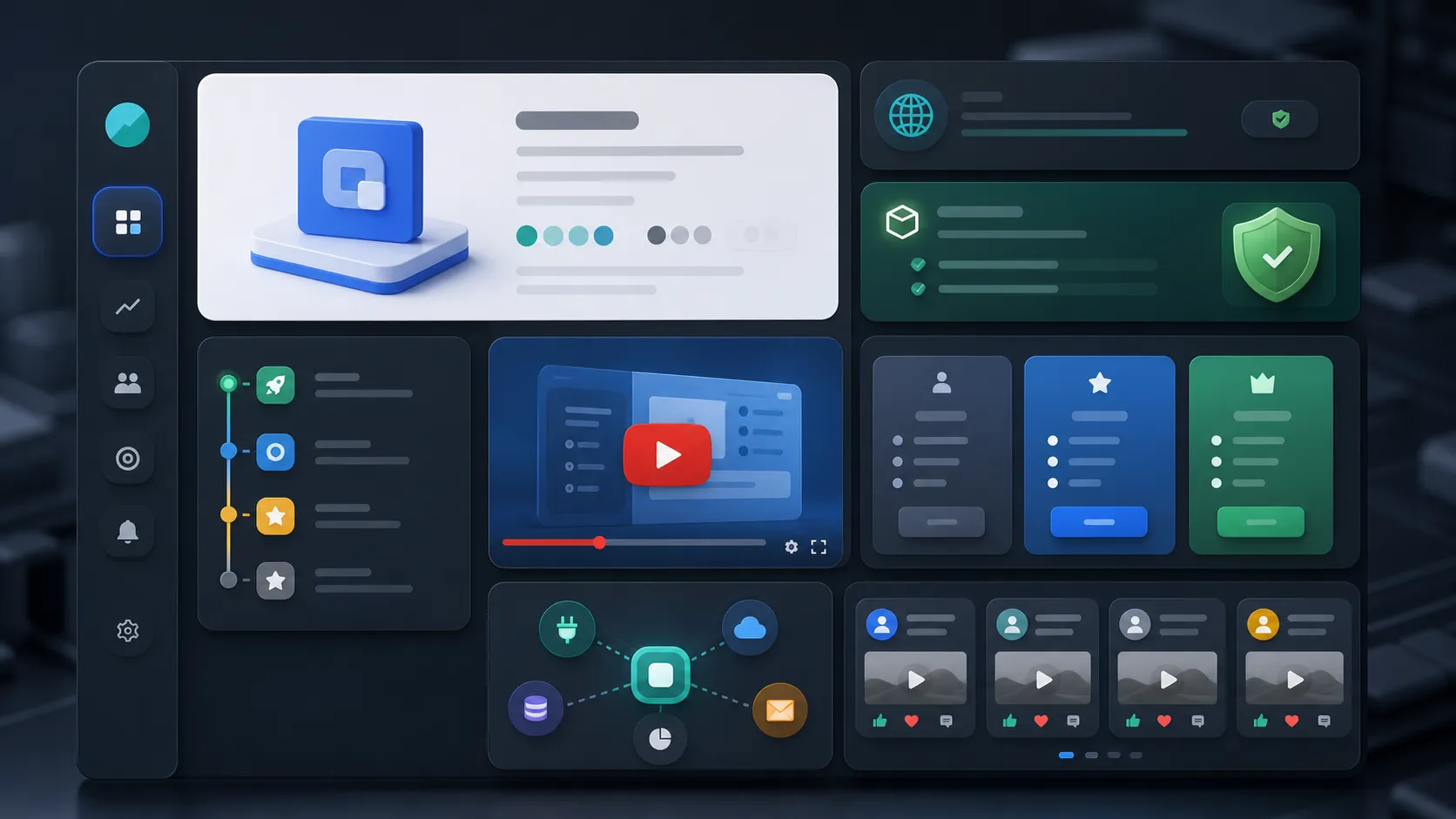
YouTube search visibility starts with the obvious pieces: title, thumbnail, description, chapters, transcript, and retention. YouTube’s search documentation says relevance can include how well the title, tags, description, and video content match the query, with engagement and quality also playing a role. YouTube’s creator resources also recommend using analytics to understand what audiences search for and how thumbnails and titles perform.
For AI companies, the best demo videos usually have a very clear promise. “We built a customer support agent” is vague. “How to turn 200 Zendesk tickets into a support QA report with Acme Agent” is more useful. The second title describes the workflow, the input, the output, and the user. It gives YouTube, Google, creators, and AI systems more concrete material to work with.
Use a matching source page for every important demo. Embed the video on a product or use-case page. Add a short summary, transcript, steps, screenshots, and links to docs. If the video shows a temporary beta workflow, label it. If the feature changed, update the page. The page and video should reinforce each other rather than living as disconnected assets.
How Creator Coverage Supports AI Search Visibility
Creator coverage can support AI search visibility when it adds useful, sourceable context. This does not mean paying for vague hype. It means helping trusted creators produce specific coverage that answers real questions: what the product does, who it is for, how setup works, what the output looks like, what the pricing constraints are, and where it sits against alternatives.
A strong creator brief should include official product facts, screenshots, a demo workflow, limitations, comparison context, docs, pricing, and claims that can be sourced. Do not ask creators to repeat unsupported benchmark claims or pretend to be independent users if the video is sponsored. That creates trust risk and source quality risk.
Creator coverage helps in several ways. Humans search YouTube directly. Google can surface videos. AI answer engines may use web pages that summarize or embed videos. Journalists and newsletter writers often use creator demos to understand the product. Product pages can link to credible demos as external proof. The best creator coverage becomes part of the public explanation layer around your product.
Kingy AI works directly with AI companies that want distribution, creator coverage, and launch visibility. If you are planning a campaign, see Sponsor Kingy AI.
Internal Linking for AI Search Visibility
Internal linking is how you tell your own site what matters. It helps crawlers discover pages, distributes context across related topics, and gives AI systems a cleaner path from a broad concept to a specific product, company, launch, or tutorial.
For an AI company, a healthy internal-link structure usually looks like this:
- The homepage links to the main product pages, pricing, docs, demo, and company page.
- Product pages link to use-case pages, docs, pricing, demo videos, changelog, and comparisons.
- Use-case pages link back to the relevant product page and forward to tutorials or demos.
- Launch pages link to the evergreen product page, docs, and changelog.
- Blog posts link to product pages only when relevant, not in every paragraph.
- Comparison pages link to official sources, alternatives, and category hubs.
- Video pages link to the product source page and transcript.
Internal links should use natural anchor text. “AI coding tools for product teams” is better than “click here.” “Acme pricing” is better than “learn more.” Do not overload every page with exact-match anchors. Use the language a human would use when connecting related ideas.
Kingy AI’s own ecosystem uses this kind of structure: category hubs like AI Tools, entity hubs like AI Companies, launch surfaces like AI Launch Tracker, and educational hubs like Build With AI Academy.
External Citations and Source Quality
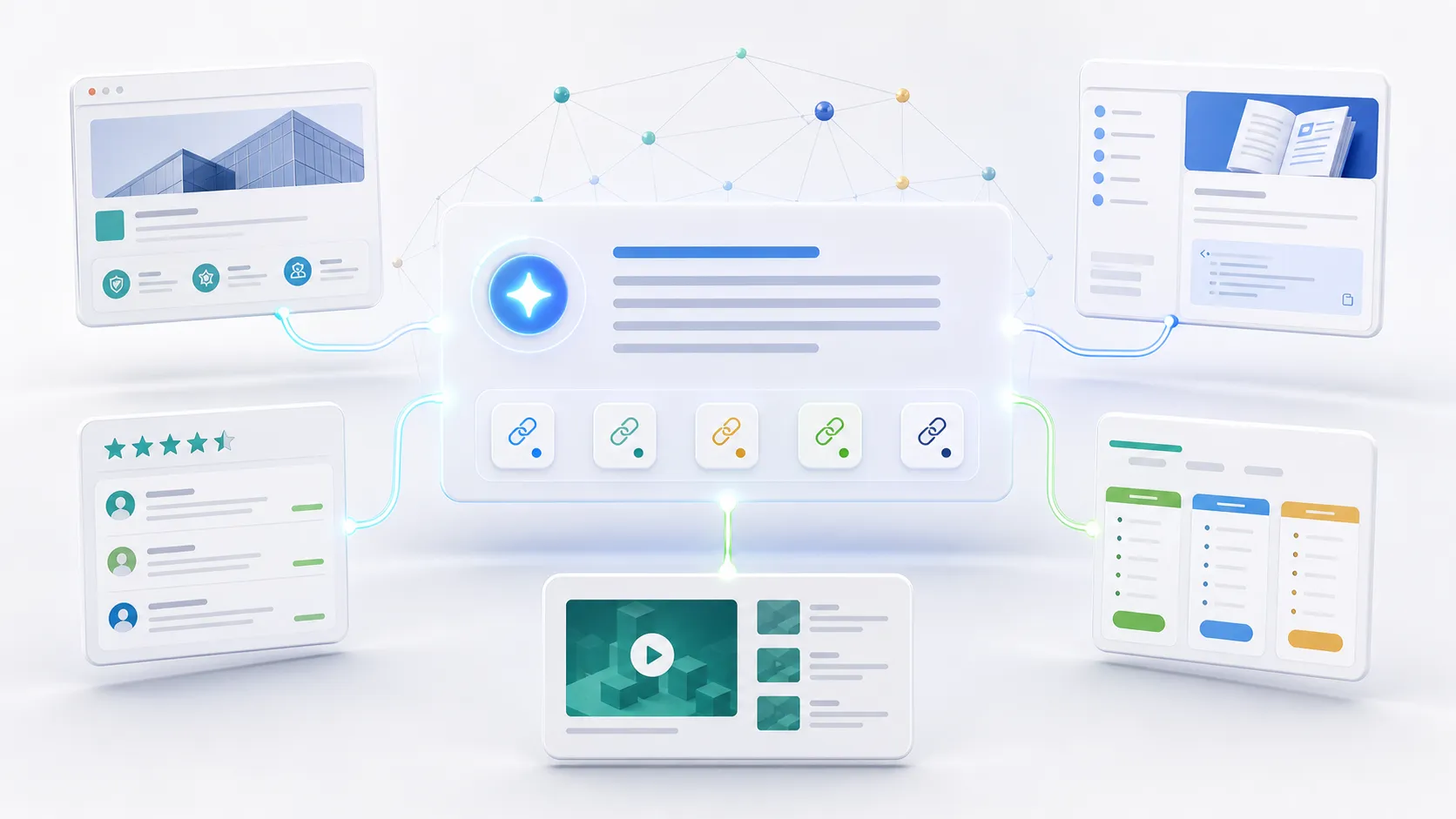
External citations are not all equal. A mention on a credible publication, a detailed creator demo, a useful GitHub README, or an official integration partner page is different from a spun-up directory page with copied copy and no editorial judgment.
Good external citations tend to have four qualities. First, they are findable: public, indexable, and linked from somewhere meaningful. Second, they are specific: they describe the product, use case, pricing, category, or limitation clearly. Third, they are independent enough to be useful: they are not just your own copy pasted elsewhere. Fourth, they are current: they do not describe a 2024 beta as if it were the current product.
When you evaluate citation opportunities, ask:
- Will this page help a human understand the product?
- Does it link to official sources?
- Does it add original context, testing, screenshots, video, or analysis?
- Is the publisher credible in the category?
- Will the page stay online and be maintained?
- Are claims labeled and supported?
AI search visibility is less about getting the most mentions and more about building a reliable evidence graph. Official pages provide the base facts. Third-party pages validate, compare, and explain. Videos show the product in use. Docs prove depth. Pricing pages reduce ambiguity. Together, they give answer systems something better than marketing fog.
What Not to Do
AI search has attracted the usual shortcuts. Most of them age badly.
Do Not Keyword-Stuff AI Pages
Repeating “AI search visibility, ChatGPT SEO, Perplexity SEO, Gemini SEO” fifty times does not make a page more useful. It makes it less trustworthy. Use the terms naturally when they help readers understand the landscape.
Do Not Buy or Invent Fake Reviews
Fake reviews are a trust problem, a legal risk, and a source quality problem. If an answer engine or human reviewer sees inconsistent claims, your visibility can become negative visibility.
Do Not Build Thin Directory Pages
A directory page that lists 500 tools with copied descriptions, no testing, no pricing checks, and no editorial value is not a visibility asset. It is noise. If you publish a tool page, make it useful.
Do Not Publish AI Spam
Google’s generative AI search guidance warns against creating many pages mainly to manipulate rankings or generative AI responses. AI-assisted content can be useful, but scaled low-value pages are still low-value pages.
Do Not Hallucinate Claims
If you are “the first,” “the best,” “the fastest,” or “the most accurate,” prove it. If you cannot prove it, use more precise language. Unsupported superlatives are hard for AI systems to verify and easy for humans to distrust.
Do Not Make Unsupported Benchmark Claims
Benchmarks need sources, methodology, date, model versions, evaluation details, and limitations. If the benchmark is internal, say internal. If it is third-party, link to the original source.
Do Not Hide Pricing
Unclear pricing hurts conversion and answer quality. If you cannot publish exact pricing, publish what you can: free trial status, plan names, “starts at” pricing, usage-based components, enterprise contact status, and what is included.
Do Not Skip the Official Source Page
Social posts, launch videos, and founder threads are useful, but they should not be the only source of truth. Create a stable official page that explains the product and stays updated.
A 30-Day AI Search Visibility Plan
Here is a practical 30-day plan for improving AI search visibility without turning your site into a content farm.
Days 1-3: Audit Your Source of Truth
- List every official page that describes your company and product.
- Check whether each page is public, crawlable, indexable, and internally linked.
- Confirm that product name, company name, category, target user, and use case are consistent.
- Write down missing facts: pricing, docs, demos, integrations, launch date, alternatives, limitations, founder info, and funding if public.
Days 4-7: Fix Entity Basics
- Create or update a company page.
- Create or update a product page.
- Add official links to docs, pricing, demo, support, changelog, and social profiles.
- Add basic Organization and SoftwareApplication structured data where appropriate.
- Update LinkedIn, YouTube, GitHub, app store, Product Hunt, and directory profiles to match.
Days 8-12: Build Better Source Pages
- Write a clear “What it does” section.
- Add “Who it is for” and “Who it is not for.”
- Add pricing summary, trial status, and official pricing link.
- Add use-case sections with specific workflows.
- Add limitations and security or compliance notes where relevant.
- Add screenshots, example outputs, and a short FAQ.
Days 13-16: Publish Demo Assets
- Create one honest product demo video for a specific workflow.
- Give the video a clear, searchable title.
- Write a description with official links, chapters, and product context.
- Add a transcript or summary page on your site.
- Embed the video on the relevant product or use-case page.
Days 17-20: Improve Internal Links
- Link from the homepage to product, pricing, demo, docs, and company pages.
- Link from blog posts and guides to relevant source pages.
- Link launch pages to evergreen product pages.
- Create one category or comparison page only if you can make it genuinely useful.
- Use natural anchor text that describes the destination.
Days 21-24: Build External Proof
- Submit your launch to relevant launch trackers and directories.
- Pitch creators with a source-backed brief and demo workflow.
- Ask partners to update integration pages with accurate product names and links.
- Publish customer stories or implementation notes if you have permission.
- Correct outdated third-party pages when important facts have changed.
Days 25-27: Check AI and Search Surfaces
- Search your brand and product in Google, Bing, YouTube, ChatGPT, Perplexity, and Gemini.
- Ask category questions such as “best AI tools for [use case]” and “alternatives to [competitor].”
- Record whether your product appears, whether the summary is accurate, and which sources are cited.
- Check server logs or analytics for crawler blocks, WAF issues, and referral changes.
- Fix the source pages that answer engines misunderstand.
Days 28-30: Create a Maintenance Loop
- Set a monthly reminder to update pricing, docs, screenshots, and demos.
- Track branded queries, category queries, YouTube search terms, and AI answer mentions.
- Keep a list of important third-party pages and update requests.
- Publish launch notes when major features change.
- Retire or redirect outdated pages rather than letting stale facts linger.
FAQ
What is AI search visibility?
AI search visibility is the ability of your brand, product, content, or company to appear accurately across traditional search engines, AI answer engines, AI chatbots, product discovery surfaces, and video search. It includes rankings, citations, summaries, recommendations, and source mentions.
Is AI SEO different from traditional SEO?
Yes and no. Traditional SEO still matters because many AI search experiences draw from search indexes and web sources. The difference is that AI SEO also emphasizes entity clarity, sourceable facts, concise answers, third-party proof, demos, and pages that answer conversational questions.
What is answer engine optimization?
Answer engine optimization is the practice of making content easy for direct-answer systems to retrieve, understand, cite, and summarize. It favors clear definitions, structured sections, specific facts, FAQs, comparison tables, and source-backed claims.
What is generative engine optimization?
Generative engine optimization, or GEO, is a term used for improving visibility in generative search responses. The GEO paper formalized the idea for generative engines that synthesize answers from multiple sources. In practice, GEO overlaps with strong SEO, content quality, citations, and entity clarity.
What is LLM visibility?
LLM visibility is the chance that large language models can recognize, retrieve, summarize, or recommend your product accurately. You improve it by publishing clear official source pages, keeping product facts consistent, earning quality third-party mentions, and making docs, demos, pricing, and limitations easy to find.
Does schema markup guarantee AI answer visibility?
No. Structured data can help systems understand a page, but it does not guarantee ranking, citations, or AI answer inclusion. Use schema to support visible content, not to replace it.
How do I improve ChatGPT SEO?
Start by making your official pages crawlable, sourceable, and clear. Review OpenAI’s crawler documentation, maintain accurate product pages, publish docs and demos, and earn credible third-party mentions. Do not assume that one robot setting or one page update will force a ChatGPT recommendation.
How do I improve Perplexity SEO?
Make sure Perplexity’s legitimate crawlers can access your site if you want Perplexity search visibility. Publish pages that answer category and product questions clearly, add official links, and support claims with sourceable details. Good source quality matters more than keyword repetition.
Does YouTube help AI search visibility?
Yes. YouTube demos can rank in YouTube, appear in Google, help creators understand the product, and support external proof. Use clear titles, descriptions, chapters, transcripts, and embedded source pages so the video strengthens the rest of your visibility stack.
How long does AI search visibility take?
Technical fixes can happen quickly, but visibility usually builds over weeks and months. Crawlers need to fetch pages, search systems need to process changes, creators and third-party sites need time to publish, and answer systems can vary by query, location, personalization, and product behavior.
The Kingy AI Search Visibility Checklist
- Company name is clear and consistent.
- Product name is clear and tied to the company.
- Category, target user, and use case are stated in plain language.
- Homepage, product page, pricing page, docs, demo, changelog, and support links are easy to find.
- Pricing status is not vague.
- Docs and demos are public where possible.
- Launch date and major updates are documented.
- Founder, team, and funding facts are included only when public and sourceable.
- Integrations, platforms, APIs, and model providers are named accurately.
- Alternatives and category context are honest.
- Limitations are stated clearly.
- Important pages are crawlable, indexable, internally linked, and in the sitemap.
- Robots.txt and WAF rules do not accidentally block legitimate discovery bots.
- Organization, SoftwareApplication, VideoObject, and FAQ schema are used where appropriate.
- YouTube demos have clear titles, descriptions, chapters, transcripts, and linked source pages.
- Creator briefs include source-backed claims, official links, demos, pricing, and limitations.
- Third-party profiles are useful, current, and linked to official sources.
- Internal links connect category pages, product pages, launch pages, docs, demos, and comparisons.
- No keyword stuffing, fake reviews, thin directory pages, hallucinated claims, unsupported benchmarks, or unclear pricing.
- Search Console, Bing Webmaster Tools, YouTube Analytics, server logs, AI answer checks, and referral traffic are reviewed regularly.
Sources and Further Reading
- Google Search Central: Optimizing your website for generative AI features on Google Search
- Google Search Central: AI features and your website
- Google Search Central: SEO Starter Guide
- Google Search Central: Creating helpful, reliable, people-first content
- Google Search Central: Intro to structured data
- Bing Webmaster Guidelines
- IndexNow documentation
- OpenAI crawler documentation
- Perplexity crawler documentation
- Schema.org Organization, SoftwareApplication, VideoObject, and FAQPage
- YouTube Help: How YouTube search works
- YouTube for Creators: Optimize and evolve your content
- GEO: Generative Engine Optimization
Kingy Launch Brief
Put the week’s verified AI launches in your inbox.
Get a source-checked briefing on consequential AI launches, with a clear try, watch or skip verdict. Beehiiv will ask you to confirm your address, then you can choose the subjects you want to follow.
Free · Choose your subjects · Double opt-in · Unsubscribe anytime