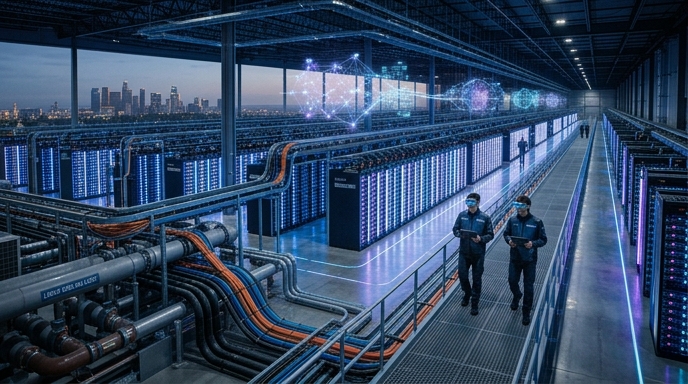
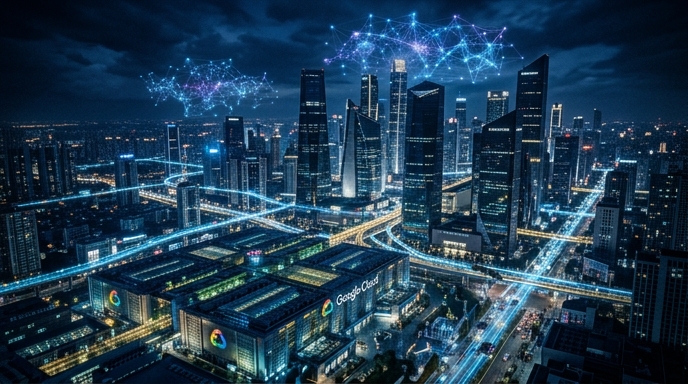
The artificial intelligence arms race has entered a new phase. Not the flashy chatbot phase. Not the “which model scored higher on a benchmark” phase either. This time, the battle is happening deep underground, inside sprawling data centers packed with power cables, liquid cooling systems, and custom silicon the size of dinner plates.
And now, Google Cloud and Blackstone have decided they want to own a huge chunk of that future together.
In May 2026, the two companies announced a major partnership focused on building AI infrastructure at massive scale. The deal centers around Google’s Tensor Processing Units, better known as TPUs, and Blackstone’s enormous financial muscle. The message was unmistakable: the AI boom is no longer just a software story. It is now a concrete, steel, energy, and infrastructure story.
The partnership arrives at a moment when the entire tech industry is running into the physical limits of AI growth. Training frontier models now demands staggering amounts of electricity, chips, cooling capacity, networking bandwidth, and real estate. OpenAI, Anthropic, Meta, Amazon, Microsoft, and Google are all scrambling for the same finite resources.
There is one uncomfortable reality everyone in Silicon Valley now understands: whoever controls compute controls AI.
Google and Blackstone are betting billions that they can become the landlords of the next technological era.
The Real Story Is Not the Models
Most people still think AI competition revolves around models like OpenAI GPT, Anthropic Claude, or Google DeepMind Gemini.
That view is outdated.
The true bottleneck in 2026 is infrastructure. Chips matter more than slogans. Electrical grids matter more than marketing campaigns. Data centers matter more than demos.
Training state-of-the-art AI systems has become brutally expensive. Some frontier training runs reportedly consume tens of thousands of GPUs or TPUs simultaneously for weeks or months. Power consumption alone can rival that of small cities.
That has created a dangerous imbalance in the market.
The biggest cloud providers have become gatekeepers. If you cannot secure enough compute, you cannot compete seriously in advanced AI. Period.
Google recognized this problem years ago. Unlike many rivals, it invested heavily in custom AI chips instead of relying entirely on NVIDIA GPUs. Those chips became the TPU family.
At first, TPUs looked like a niche experiment. Today, they look like one of the smartest bets Google ever made.
Blackstone noticed.
And when a private equity giant worth more than a trillion dollars notices a structural bottleneck, it usually means one thing: the spending spree is about to become enormous.
What Exactly Did Google and Blackstone Announce?
According to Google’s official announcement, Blackstone will collaborate with Google Cloud to expand AI infrastructure capacity using Google’s Cloud TPU technology.
The companies are launching what is effectively a massive AI infrastructure partnership designed to accelerate deployment of next-generation AI systems.
The key idea sounds simple. The execution is anything but.
Google supplies the TPU ecosystem, cloud expertise, networking technology, and operational capabilities. Blackstone supplies capital, real estate infrastructure experience, and the ability to move huge amounts of money quickly.
That combination matters because AI infrastructure now costs absurd amounts of cash.
Building hyperscale AI data centers is no longer comparable to opening traditional server farms. These facilities require advanced cooling systems, massive electrical upgrades, specialized networking architectures, and enough hardware to make older supercomputers look primitive.
The economics are staggering.
One modern AI data center can cost billions before it even becomes operational. Then come the ongoing energy cost, the maintenance. And then chip refresh cycles.
Very few companies can absorb those expenses comfortably.
Blackstone can.
That is why this partnership matters far beyond a single corporate announcement. It signals that Wall Street now sees AI infrastructure as one of the most valuable long-term investment categories on Earth.
Not apps. Not chatbots. Infrastructure.
TPU: Google’s Secret Weapon Finally Gets Its Spotlight
For years, Google’s TPU program existed in the shadow of NVIDIA’s GPU dominance.
That may be changing.
TPUs were originally designed specifically for machine learning workloads. Unlike general-purpose GPUs, TPUs focus heavily on tensor operations central to neural network training and inference.
Google has iterated aggressively on the technology across multiple generations. Internally, TPUs already powered much of Google’s own AI stack long before the public noticed.
Now Google wants the broader market to depend on them too.
That shift is strategic.
NVIDIA’s dominance has become almost absurd. Its chips are the lifeblood of the modern AI industry. Companies routinely wait months for hardware deliveries. GPU shortages have become standard operating procedure.
Google sees an opening.
If enterprises and AI startups become comfortable building on TPUs instead of relying exclusively on NVIDIA hardware, Google gains leverage. Massive leverage.
The Blackstone partnership helps accelerate that process by massively expanding deployment capacity.
According to reporting from SiliconANGLE, the collaboration focuses on scaling infrastructure fast enough to meet surging enterprise AI demand.
That phrase sounds corporate and boring. It is not.
Translated into plain English, it means companies are desperate for compute, and Google thinks demand is about to explode even further.
They are probably right.
AI Has a Power Problem Nobody Wants to Talk About
Every AI company loves talking about intelligence.
Few enjoy discussing electricity.
That omission is becoming impossible to sustain.
Modern AI systems consume extraordinary amounts of power. Training large models requires enormous computational intensity. Running those systems at scale adds even more strain.
The industry now faces a looming energy crisis tied directly to AI growth.
Data centers already account for a significant percentage of global electricity usage. AI expansion could push that dramatically higher over the next decade.
This creates political, economic, and engineering headaches simultaneously.
Electric grids were not designed for an AI gold rush.
Some regions already face infrastructure strain from hyperscale data center expansion. Utilities are scrambling to upgrade transmission systems. Governments are debating energy allocations. Environmental groups are raising alarms about emissions and water consumption.
Meanwhile, the AI companies keep demanding more compute.
Much more.
Google and Blackstone are entering this environment fully aware that energy access may become as important as chip access.
That changes the competitive landscape.
The winners in AI may not simply be the companies with the best models. They may be the companies capable of securing stable long-term electricity supply chains.
That sounds less like Silicon Valley and more like industrial manufacturing in the early twentieth century.
Because that is essentially what AI has become: industrial-scale cognition powered by industrial-scale infrastructure.
Why Blackstone Is Interested
Private equity firms do not invest billions because they are impressed by chatbot demos.
They invest because they see durable economic trends.
Blackstone sees AI infrastructure as the next great long-duration asset class.
From its perspective, the logic is straightforward.
AI demand is exploding.
Compute demand is exploding.
Data center demand is exploding.
Power demand is exploding.
And someone needs to finance the physical systems supporting all of it.
That creates opportunities for long-term returns through infrastructure ownership, leasing arrangements, partnerships, and cloud ecosystem expansion.
Blackstone already has substantial exposure to digital infrastructure investments. This partnership deepens that position dramatically.
It also reflects a broader financial industry shift.
Wall Street increasingly views AI not as a speculative software trend but as foundational economic infrastructure comparable to railroads, telecom networks, or electricity grids.
That comparison may sound exaggerated. It probably is not.
AI infrastructure is becoming essential to national competitiveness, enterprise productivity, military modernization, scientific research, and consumer technology.
Once investors believe something is foundational infrastructure, the capital floodgates open.
That is exactly what is happening now.
Google Is Playing Catch-Up in Cloud AI
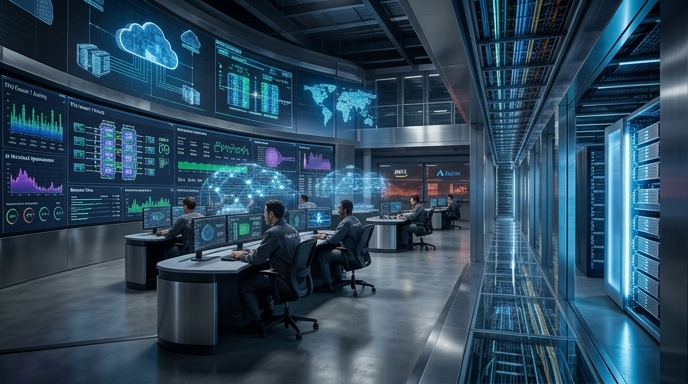
Despite Google’s AI research leadership, the company has often struggled to convert innovation into dominant market positioning.
That is one of the great recurring stories of modern tech.
Google helped pioneer transformer architectures.
Then Google helped drive foundational AI breakthroughs.
Google built astonishing research teams.
Yet companies like Microsoft and OpenAI captured much of the public AI narrative.
Cloud infrastructure became another competitive pressure point.
Amazon Web Services still dominates cloud market share globally. Microsoft Azure leveraged OpenAI partnerships aggressively. Google Cloud needed a stronger differentiator.
TPUs may become that differentiator.
Google cannot realistically outspend every rival indefinitely. But it can offer alternative infrastructure optimized around its own silicon ecosystem.
That matters for economics.
Custom chips can provide efficiency advantages, cost advantages, and tighter software integration. If Google succeeds, TPUs could become a serious alternative to NVIDIA dependency.
The Blackstone partnership effectively supercharges that strategy.
Instead of expanding cautiously, Google can accelerate infrastructure deployment using external capital support and operational collaboration.
That reduces friction at exactly the moment AI demand is skyrocketing.
The AI Gold Rush Is Becoming Physical
For years, technology discussions lived mostly in software.
Apps. Platforms. Social networks. Streaming services.
AI is dragging the industry back into the physical world.
Now everyone suddenly cares about:
- Semiconductor fabrication
- Power generation
- Cooling systems
- Fiber networks
- Land acquisition
- Construction timelines
- Electrical substations
- Water access
It feels almost surreal.
The world’s most advanced digital technology increasingly depends on very old industrial realities.
You cannot scale AI with vibes.
You need transformers. Turbines. Concrete. Copper. Cooling towers. Transmission lines.
This is partly why companies like Google are partnering with infrastructure-heavy financial firms instead of handling everything internally.
The scale has become too large.
According to the reporting from SiliconANGLE, the partnership aims to accelerate AI cloud expansion amid surging demand from enterprises building generative AI applications.
Again, that sounds understated.
What it really means is that corporations everywhere are panicking about missing the AI wave. Every large enterprise now wants AI capabilities integrated into operations, analytics, customer service, software development, cybersecurity, and automation.
That creates relentless compute demand.
And compute demand creates infrastructure demand.
NVIDIA Still Looms Over Everything
Even with Google’s TPU ambitions, NVIDIA remains the giant shadow hanging over the AI economy.
Its dominance is extraordinary.
The company effectively became the arms dealer for the AI revolution. Nearly every major AI breakthrough of the past several years depended heavily on NVIDIA hardware somewhere in the pipeline.
That dominance created immense pricing power.
But it also created vulnerability for the industry.
Dependence on a single supplier at global scale makes everyone nervous. Cloud providers want alternatives. Enterprises want alternatives. Governments want alternatives.
Google’s TPU ecosystem represents one of the few credible large-scale challengers.
Not the only one. But one of the most serious.
The Blackstone deal should therefore be viewed partly as an anti-concentration move. Google wants to weaken NVIDIA’s gravitational pull by making TPU infrastructure more accessible and scalable.
Will it work?
Possibly.
But inertia matters. Developers already know CUDA. Existing AI stacks heavily optimize around NVIDIA ecosystems. Switching infrastructure is expensive and technically difficult.
Google does possess one major advantage, though: it already runs some of the largest AI systems on Earth internally.
That gives it real operational credibility.
This is not a startup promising theoretical performance gains. This is Google betting on technology it already depends on daily.
The Bigger Picture: AI Is Becoming National Infrastructure
One of the most important aspects of this partnership has received surprisingly little public attention.
AI infrastructure increasingly intersects with geopolitics.
Nations now view advanced AI capability as strategically important. Governments worry about economic competitiveness, defense applications, intelligence analysis, and technological sovereignty.
Infrastructure therefore becomes political.
Who controls the compute, the chips?
And Who controls the cloud platforms?
Lastly Who controls the energy supply?
These questions no longer belong solely to tech executives.
They belong to policymakers, regulators, military planners, and national security officials.
The United States wants to maintain AI leadership against rivals like China. That requires enormous domestic infrastructure investment.
Partnerships like Google and Blackstone’s help reinforce American AI capacity at scale.
That does not guarantee dominance. But it strengthens positioning.
Meanwhile, other countries are racing to build their own AI infrastructure ecosystems. Europe wants more digital sovereignty. Gulf states are pouring billions into AI initiatives. Asian economies are aggressively investing in semiconductor supply chains.
The global AI competition increasingly resembles an industrial arms race.
Because in many ways, it is one.
What This Means for Businesses
Most businesses will never touch a TPU directly.
They will still feel the consequences.
More AI infrastructure capacity generally means:
- More available compute
- Faster AI deployment
- Lower long-term costs
- Greater enterprise adoption
- More aggressive AI integration
That matters because many companies remain stuck in experimentation mode. They want AI capabilities but struggle with pricing, scalability, or infrastructure access.
If Google successfully expands TPU cloud availability, it could make advanced AI services more accessible across industries.
Healthcare.
Finance.
Retail.
Manufacturing.
Media.
Logistics.
Everyone wants AI now.
Not eventually. Now.
The companies building the underlying infrastructure therefore occupy a critical position in the economic stack.
They are not merely supporting the AI revolution anymore.
They are shaping who gets to participate in it.
The Quiet Shift From Software to Utilities
There is another fascinating dimension to this story.
AI infrastructure increasingly resembles a utility business.
Think about it.
Massive capital expenditures.
Long-term contracts.
Essential service delivery.
Heavy energy dependence.
Infrastructure financing.
Scale economics.
That starts sounding less like a traditional software startup and more like electricity providers or telecom operators.
This shift may fundamentally reshape the tech industry.
For decades, software enjoyed relatively asset-light economics. AI changes that equation dramatically.
Now the biggest players need gigantic infrastructure footprints to stay competitive.
That reality favors incumbents with deep pockets.
Google has deep pockets.
Blackstone has almost unimaginably deep pockets.
Smaller companies may still innovate at the application layer, but frontier infrastructure increasingly belongs to hyperscalers and financial giants.
That concentration worries some analysts. They fear AI power could consolidate into a small number of dominant infrastructure providers.
They may be right.
But the capital requirements are so immense that concentration may be unavoidable.
Final Thoughts: This Is Bigger Than a Partnership
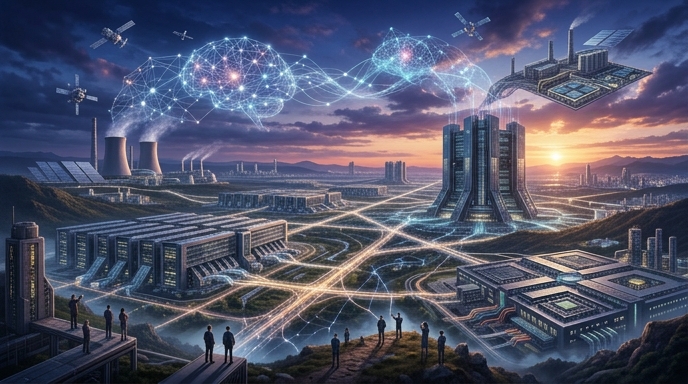
The Google-Blackstone alliance is not just another corporate collaboration announcement buried in a press release cycle.
It represents something larger.
The industrialization of artificial intelligence.
The AI conversation is shifting away from novelty and toward scale. Away from experimentation and toward infrastructure dominance. Away from consumer fascination and toward economic control.
That transition changes everything.
The companies winning the next decade of AI may not necessarily be the ones with the smartest chatbot today. They may be the companies capable of building and financing the colossal physical systems powering machine intelligence at global scale.
Google understands that.
Blackstone understands that.
Now the rest of the market is starting to understand it too.
And once Wall Street fully realizes AI infrastructure behaves like strategic industrial infrastructure, the spending frenzy may become almost unimaginable.
The AI boom was already massive.
This next phase could make the first one look small.
Sources
- Google Blog — Blackstone and Google Cloud TPU Infrastructure Partnership
- SiliconANGLE — Google and Blackstone Launch AI Infrastructure Joint Venture
The Kingy Brief
Get future Kingy Brief editions.
Source-checked AI changes, original tests and one practical thing to try.
Free · Choose your subjects · Double opt-in · Unsubscribe anytime
Regular sending is paused; no restart date is set.