Update, September 20, 2026: The app and website have closed; the API deadline is September 24. Read our Sora export checklist and workflow-based migration guide for what to save and where to move next.
The AI video revolution just hit a wall. Here’s everything that happened, why it matters, and what comes next.
The Announcement Nobody Saw Coming
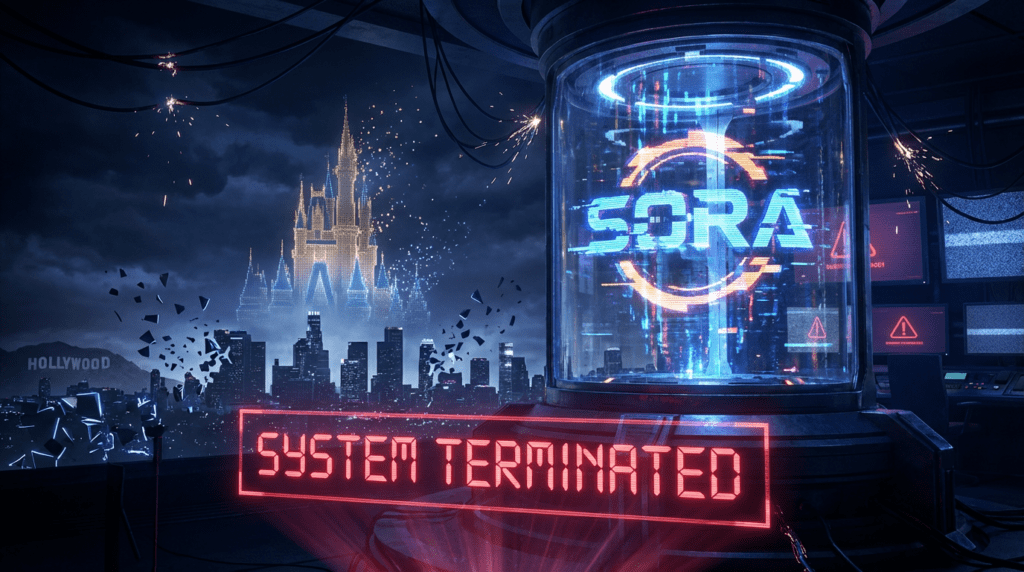
On March 24, 2026, OpenAI dropped a bombshell. No dramatic press conference. No lengthy blog post. Just a quiet social media update that read: “We’re saying goodbye to the Sora app.”
That’s it. That’s how one of the most hyped AI products of the decade got its eulogy.
Sora — OpenAI’s text-to-video generator, launched in fall 2025 with enormous fanfare. It hit number one on the App Store, It rattled Hollywood. It sparked a billion-dollar deal with Disney. A few months later, OpenAI announced its discontinuation.
The official reason? OpenAI needs to make “trade-offs on products with high compute costs.” Clean. Corporate. Vague. But if you look at the full picture, the story is a lot messier, and a lot more interesting, than that.
What Was Sora, Anyway?
Let’s back up for a second.
Sora was OpenAI’s bet on generative video. You type a prompt, it creates a short video clip. Think of it as ChatGPT, but instead of words, it spits out moving images. When OpenAI first unveiled the model in early 2024, they described it as a “world simulator”, a tool that could help train advanced AI and serve as a key step toward artificial general intelligence.
That’s a big claim. And for a while, it looked like they might actually pull it off.
Sora 2 launched in September 2025 and hit like a tidal wave. The platform let users generate realistic videos featuring well-known intellectual property, celebrity likenesses, and even politicians. Hollywood studios panicked. Unions like SAG-AFTRA were furious. The Japanese government stepped in, warning OpenAI to stop infringing on anime copyrights.
OpenAI scrambled to add guardrails. Studios and talent eventually got more control over their rights. But the damage was done. The controversy never fully went away.
Disney Bets Big — Then Loses It All
Here’s where things get truly wild.
In December 2025, Disney CEO Bob Iger announced a three-year, $1 billion deal with OpenAI. The plan was ambitious. Disney would invest in OpenAI, license its characters, Mickey Mouse, Luke Skywalker, Spider-Man, the whole roster, for use within Sora, and potentially stream AI-generated fan videos on Disney+. Disney employees would also get access to ChatGPT for internal use.
It was the kind of deal that made headlines around the world. The entertainment giant was going all-in on AI. The future had arrived.
Except it hadn’t.
Three months later, the deal is dead. According to The Hollywood Reporter, Disney pulled out of the partnership the same day OpenAI announced Sora’s shutdown. A Disney spokesperson offered a gracious exit: “As the nascent AI field advances rapidly, we respect OpenAI’s decision to exit the video generation business and to shift its priorities elsewhere.”
Diplomatic? Yes. Stinging? Absolutely.
What makes this even more jaw-dropping is that, according to Reuters, no money ever actually changed hands between OpenAI and Disney. The billion-dollar deal existed mostly on paper. But the reputational fallout? That’s very real.
New Disney CEO Josh D’Amaro now has to figure out where the company goes from here on AI. That’s not a small question.
The Real Reasons Sora Got Killed
OpenAI’s official explanation is thin. So let’s talk about what actually happened.
First: the app tanked. After a viral launch, Sora’s rankings in the app charts plummeted. Sam Altman himself said at launch that the app would be discontinued if it didn’t satisfy users. It didn’t. That was probably the deciding factor right there. OpenAI wouldn’t kill a product that was growing fast.
Second: compute costs were brutal. Running Sora required so much computing power that it was starving other teams of resources. OpenAI CFO Sarah Friar put it bluntly in a CNBC interview: “We just are facing a lack of compute. We’re having to make those really difficult decisions.” She added: “It’s not a ‘never.’ It’s just a, ‘We have to make hard choices.'”
Third: the competition got brutal. Chinese AI companies started releasing video models that outperformed Sora, at lower prices. And they largely sidestep Western copyright rules, giving them a structural advantage. Google, meanwhile, made serious progress with its Veo video models. OpenAI would have had to invest heavily just to keep up.
Fourth: legal pressure piled up. Copyright concerns never went away. Japanese studios objected loudly. Hollywood lawyers stayed busy. The content moderation challenges were enormous. Every viral video featuring a celebrity’s likeness was a potential lawsuit.
Put it all together, and the picture becomes clear. Sora wasn’t just struggling, it was a resource drain, a legal liability, and a competitive uphill battle all at once.
The “Code Red” Context
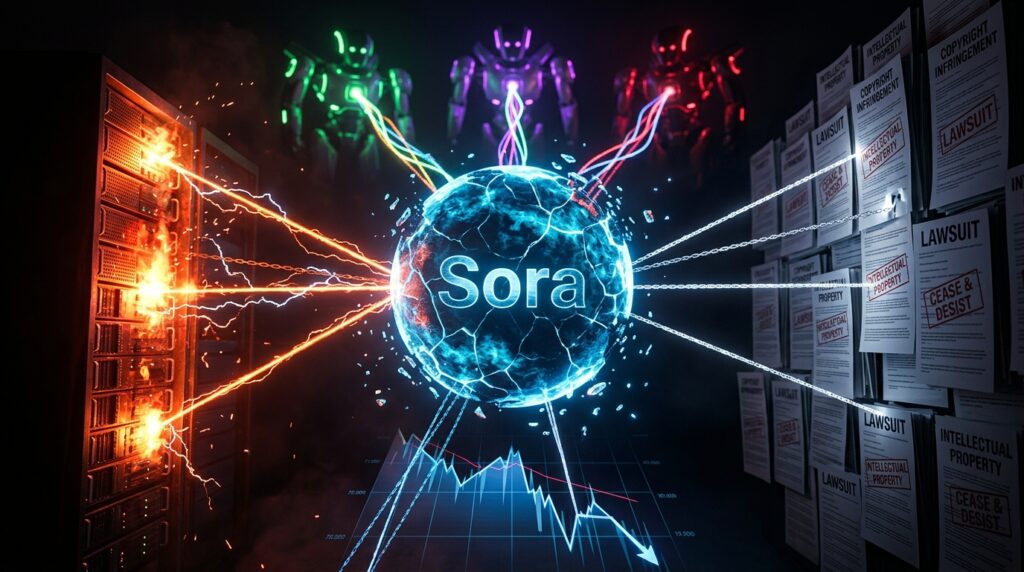
To really understand why Sora got axed, you need to know what’s happening inside OpenAI right now.
A few months ago, Sam Altman reportedly declared a “code red” over concerns that ChatGPT was losing ground to Google Gemini. That set off a wave of internal refocusing. OpenAI started cutting anything that wasn’t core to its mission.
According to The Wall Street Journal, OpenAI is now building a ChatGPT desktop “superapp” that combines ChatGPT, Codex, and its AI browser into one unified product. Executive Fidji Simo, who recently got a new title, “CEO of AGI deployment”, tweeted about the shift: “Companies go through phases of exploration and phases of refocus; both are critical. But when new bets start to work, like we’re seeing now with Codex, it’s very important to double down on them and avoid distractions.”
Translation: Sora was a distraction. Codex is the future.
And there’s more. On the same day OpenAI announced Sora’s shutdown, CFO Sarah Friar told CNBC that the company had raised an additional $10 billion from investors. This comes on top of the $110 billion fundraising round announced in February. OpenAI is clearly gearing up for a potential IPO, and investors want to see a focused, profitable company, not a sprawling product portfolio with expensive side projects.
What the Insiders Are Saying
Not everyone is buying the official story.
Medium writer Jesus Perez Mojica laid out a compelling alternative timeline. He points out that in the 30 days before the Sora shutdown announcement, several significant things happened at OpenAI, including a Pentagon contract and a suspicious amount of “freed up” compute. His argument: the official explanation is “almost comedically vague,” and the real story involves strategic resource reallocation that OpenAI doesn’t want you connecting the dots on.
Is he right? Hard to say definitively. But the timing is curious. And OpenAI hasn’t exactly been forthcoming with details.
What we do know is this: the announcement apparently caught OpenAI employees by surprise too. It came just one day after OpenAI posted publicly about Sora’s safety standards. That’s not the behavior of a company that had been planning this for months.
What Happens to the Research?
Here’s the part that actually matters for the long game.
When OpenAI first unveiled Sora, they described it as more than just a video tool. It was a world simulator, a system designed to understand physical reality by learning to simulate arbitrary environments. That research was supposed to be a stepping stone toward AGI.
Does killing the app mean killing that research? Not necessarily.
According to an internal memo seen by The Information, the Sora research team will now focus entirely on long-term world model research, specifically, “systems that deeply understand the world by learning to simulate arbitrary environments at high fidelity”, with the goal of “automating the physical economy.”
That’s a fascinating pivot. OpenAI is essentially saying: we don’t need to sell you a video app to pursue this research. We can do it quietly, without the commercial pressure, without the copyright headaches, and without burning through compute on consumer features.
It’s also worth noting that OpenAI edited its original farewell post. The first version said goodbye to “Sora” entirely. Then they changed it to “Sora app.” That distinction matters. The underlying model may not be dead, just the consumer-facing product.
Hollywood’s Complicated Relationship With AI
Sora’s rise and fall tells us something important about where AI and entertainment are headed.
Hollywood was terrified of Sora when it launched. Studios scrambled. Unions protested. The Japanese government issued warnings. And yet, Disney, one of the most powerful entertainment companies on the planet, still signed a billion-dollar deal with OpenAI just three months ago.
That tells you everything about the tension in the industry right now. Everyone is scared of AI. And everyone is also desperate not to be left behind.
Disney’s spokesperson made it clear the company isn’t done with AI: “We will continue to engage with AI platforms to find new ways to meet fans where they are while responsibly embracing new technologies that respect IP and the rights of creators.”
That’s not a company walking away from AI. That’s a company looking for a better partner.
What This Means for You
So what does all of this mean for regular people, the creators, the fans, the curious users who spent hours building communities around Sora?
OpenAI has now confirmed the dates and export route: the app and website closed April 26, 2026, and the API closes September 24, 2026. Request an export at sora.chatgpt.com/sunset.
For developers who built on the Sora API, the road ahead is uncertain. OpenAI hasn’t confirmed whether video capabilities will eventually land in ChatGPT. The Hollywood Reporter says it’s still the plan. The Information says the idea has been shelved. Pick your source.
What’s clear is that OpenAI is doubling down on productivity tools, enterprise software, and its core AI models. The era of experimental consumer apps, at least for now, appears to be over.
The Bottom Line
Sora’s story is a cautionary tale about moving fast in AI. It launched with massive hype, It signed a billion-dollar deal. It rattled an entire industry. OpenAI subsequently announced its shutdown.
The reasons are real: compute costs, competition, copyright headaches, and a strategic pivot toward profitability. But the speed of the collapse is still stunning.
OpenAI is betting everything on its core products now. The superapp is coming. The IPO is on the horizon. And somewhere in a research lab, the Sora team is quietly building world models that could power the next generation of AI, without the pressure of app store rankings or Disney deals.
Whether that’s the right call? We’ll find out soon enough.
Sources
- The Verge — OpenAI just gave up on Sora and its billion-dollar Disney deal
- Medium (Mr. Hotfix) — What Really Happened to Sora — And Why OpenAI Doesn’t Want You Connecting the Dots
- The Decoder — Disney pulls out of OpenAI partnership after Sora app and API gets killed
- Bleeding Cool — Disney’s $1B AI Deal Goes Bust as OpenAI Announces Sora Shutdown
- Times of Bangladesh — OpenAI discontinues Sora app as Disney pulls $1b deal
- IGN Middle East — OpenAI Shuts Down Sora Generative Video App, Disney Pulls Out of Investment and Licensing Deal
The Kingy Brief
Get future Kingy Brief editions.
Source-checked AI changes, original tests and one practical thing to try.
Free · Choose your subjects · Double opt-in · Unsubscribe anytime
Regular sending is paused; no restart date is set.