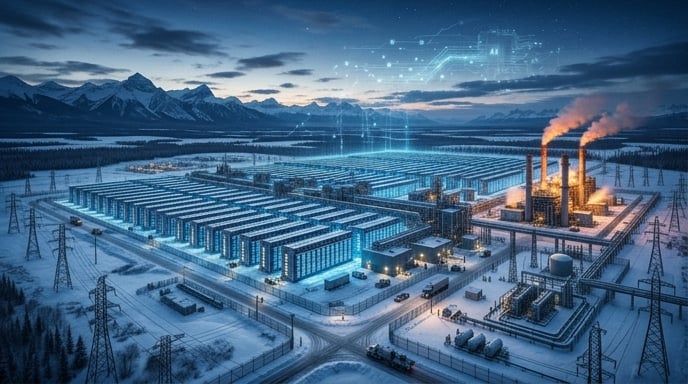
Meta’s AI Ambitions Are Heading North
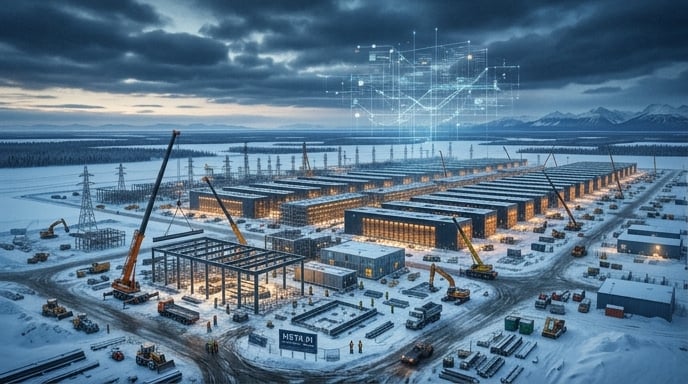
Meta has found a new home for one of its biggest artificial intelligence infrastructure bets. It comes with cold winters, abundant natural gas and enough planned computing power to make the average server room look like a cupboard with blinking lights.
The Facebook and Instagram parent announced that it will invest C$13 billion, equivalent to roughly US$9.1 billion, in its first data center in Canada. Meta plans to build the sprawling facility in Sturgeon County, Alberta, north of Edmonton. Once completed, it will also become the company’s largest data center outside the United States.
This is not a modest regional expansion. Meta says the facility will start with one gigawatt of computing capacity and could eventually scale to 1.8 gigawatts. That puts it in the category of industrial megaprojects rather than ordinary technology campuses. It will be Meta’s 33rd data center worldwide.
The project reflects a blunt reality about modern AI: clever algorithms are only part of the equation. Companies also need chips, cooling systems, transmission infrastructure and almost comical amounts of electricity.
Meta is racing to secure all four.
For Alberta, the announcement offers a chance to become a major hub in the AI infrastructure economy. For Meta, it provides access to comparatively inexpensive energy, cool weather and room to build.
For everyone else, it raises a slightly awkward question: just how much energy should society devote to making chatbots, recommendation engines and generative AI systems smarter?
The answer, apparently, is “roughly the output of a small power station.”
Why Alberta Won Meta’s Attention
Silicon Valley may design the AI models, but those models do not need to live in Silicon Valley.
In fact, placing giant data centers in expensive, congested technology hubs often makes little economic sense. The physical ingredients that matter most are available land, reliable power, fiber connectivity, manageable regulation and cooling conditions that do not require battling desert heat all year.
Alberta checks several of those boxes.
The province has spent years courting large technology companies and pitching itself as a destination for hyperscale data centers. Its biggest selling point is energy. Alberta holds extensive natural-gas resources, and local gas prices frequently trade below the main United States benchmark. That can reduce the operating cost of electricity-hungry facilities.
Then there is the weather. Alberta’s cold climate can make cooling servers more efficient. Computers enjoy winter considerably more than humans do. They do not complain about frozen windshields, either.
Provincial officials joined Meta executives in Calgary to announce the project. Alberta Technology and Innovation Minister Nate Glubish described the development as the first project of its kind and scale in the province, while predicting that more would follow. Several other gigawatt-scale data-center proposals are reportedly progressing through different stages of development.
That enthusiasm is understandable. A C$13 billion project creates construction work, infrastructure spending, demand for local suppliers and long-term commercial activity.
But Alberta did not win merely because it rolled out the ceremonial red carpet. Meta needed power on a massive scale. The province offered a route to produce it.
That route runs directly through natural gas.
This Data Center Will Consume Serious Power
The headline investment is enormous. The electricity requirement may be even more striking.
Meta’s Alberta campus will launch as a one-gigawatt data center. For perspective, the company says the completed facility could consume about as much electricity as 800,000 homes. The site could later expand to 1.8 gigawatts, although the announced comparisons generally refer to its initial planned scale.
That is what the AI boom increasingly looks like behind the polished apps and cheerful digital assistants.
Users see instant image generation, automated translations and chatbots that can write a sonnet about a toaster. Behind the screen, thousands of specialized processors perform calculations around the clock. They generate heat, They require cooling. They need backup systems, networking hardware and uninterrupted electricity.
Meta cannot simply plug a facility of this scale into Alberta’s existing grid and hope nobody notices.
The province already has about 20 small- and medium-sized data centers drawing electricity from a grid that is approximately 60% powered by natural gas. Officials have acknowledged that the grid cannot comfortably absorb multiple new hyperscale campuses without substantial new generation.
Alberta’s solution is straightforward: require or encourage large developers to secure their own power.
Meta says it will fully fund the new generation and grid infrastructure associated with its project. That reduces the risk that ordinary electricity customers will directly finance the company’s connection.
It does not, however, make the electricity demand disappear.
This distinction matters. “Privately funded” answers the question of who pays for infrastructure. It does not answer questions about emissions, fuel consumption or the opportunity cost of dedicating so much energy to one corporate facility.
Those debates are only beginning.
A New Gas-Fired Power Plant Comes With the Deal
Meta’s data center and its energy supply are effectively two halves of the same megaproject.
The company has partnered with Alberta-based Pembina Pipeline and other investors connected to the planned Greenlight Electricity Centre in Sturgeon County. The facility will use natural gas to generate electricity for Meta’s operations.
The Greenlight plant is expected to provide about 932 megawatts of capacity and begin operating during the second half of 2030. Meta has entered a long-term agreement tied to the plant’s output.
Until that dedicated generation becomes available, Capital Power is expected to supply up to 250 megawatts from its existing natural-gas fleet. Reuters reported that this interim arrangement could remain relevant for roughly the next decade as the site develops and the new plant comes online.
The project could require approximately 150 million cubic feet of natural gas per day, according to Pembina. That creates a major new source of demand for Western Canadian gas producers.
For Alberta’s energy industry, the logic is attractive.
Data centers can become dependable long-term customers. They operate continuously. Unlike households, they do not turn down the thermostat and leave for a long weekend. Unlike some industrial buyers, they are not necessarily tied to commodity production cycles.
The province can therefore convert its gas reserves into electricity and sell that electricity to one of the world’s largest technology companies.
It is a neat economic loop.
Environmentally, it is considerably messier.
Meta says it will invest in renewable and clean energy to offset the facility’s electricity use. The company has not yet provided enough public detail to determine exactly how those investments will alter the project’s total emissions profile.
Meta Wants to Build an AI Factory, Not a Digital Warehouse
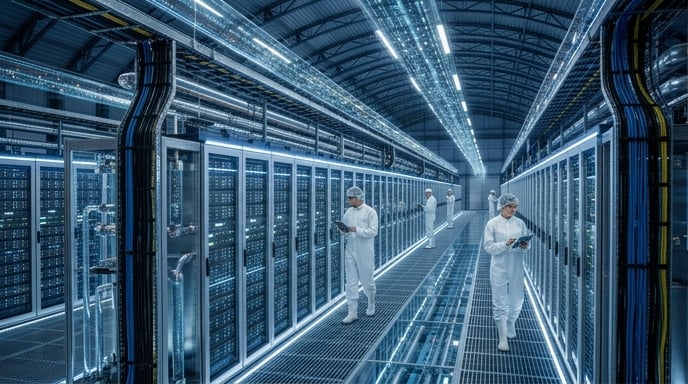
Calling the Alberta development a “data center” is technically correct, but the term can sound deceptively ordinary.
This will not merely store photos, messages and archived Facebook posts from your aunt’s holiday in 2013.
Meta is building infrastructure for advanced AI workloads. These facilities train and operate large models, process colossal datasets and supply computing power to services used across Facebook, Instagram, WhatsApp and Meta AI.
Traditional data centers often emphasize storage, web hosting and general cloud computing. AI facilities place heavier demands on high-performance processors. They pack expensive accelerators into dense clusters and connect those chips with extremely fast networks.
The result resembles a digital factory.
Electricity enters. Computation comes out.
Meta has pledged hundreds of billions of dollars for AI infrastructure, particularly in the United States. The Alberta campus extends that build-out beyond America while preserving access to the North American energy, technology and telecommunications ecosystem.
It also gives Meta geographic diversification. Concentrating every major computing site in one country would expose the company to power shortages, permitting delays, severe weather and regional infrastructure constraints.
Canada provides another base.
The Alberta facility could support the development and delivery of Meta’s AI products globally. However, Meta has not publicly specified which models or services will run there. Claims that the center will train a particular future version of Llama, for example, would be speculation.
What is clear is the strategic direction.
Meta expects AI computing requirements to keep growing. It is acting before demand arrives, because constructing power plants and hyperscale campuses takes years.
Software companies used to scale by adding servers.
AI companies now scale by reshaping regional energy systems.
That is quite the upgrade.
Cooling the Machines Without Draining Local Water
Power is only one resource consumed by data centers. Water has become another major flashpoint.
Large computing facilities generate tremendous heat. Many operators use water-based cooling systems, which can place pressure on local supplies, particularly in dry regions or during periods of drought.
Meta says the Alberta facility will use a closed-loop liquid-cooling system. In a closed-loop design, coolant circulates repeatedly through the system rather than being continuously withdrawn and discarded.
According to Meta, the facility will not draw cooling water from surrounding natural sources. Company executive Gary Demasi said its total water use should remain below that of a typical golf course. The Associated Press also reported that Meta plans to invest US$42 million in local infrastructure, including roads and water systems.
Those commitments address one of the most common objections to data-center development. Yet they do not eliminate the need for scrutiny.
“Closed loop” does not mean “zero water.” Facilities still require water for offices, maintenance, initial system filling and other operations. The golf-course comparison also depends on what type of course Meta uses as its benchmark, where that course sits and how its irrigation operates.
Still, the chosen cooling system appears less water-intensive than traditional evaporative designs.
Alberta’s climate provides another advantage. Lower ambient temperatures can reduce the energy required to remove heat from server buildings, particularly during the province’s long winters.
In other words, the weather that makes residents scrape ice from their cars can help Meta prevent billions of dollars’ worth of processors from cooking themselves.
Every cloud has a silver lining. In Alberta, that cloud may also contain snow.
The Economic Prize Comes With Important Caveats
A C$13 billion announcement creates enormous numbers and irresistible political photographs. Economic impact is harder to measure.
Construction will require workers, contractors, concrete, steel, electrical equipment and specialist engineering. Meta will also spend on roads, grid connections and related local infrastructure. Suppliers throughout Alberta could benefit.
Once the facility begins operating, however, employment will probably look different.
Data centers require skilled technicians, engineers, security staff and maintenance workers. Yet they typically employ fewer permanent workers than manufacturing plants of comparable investment value. Much of the capital goes into processors, electrical equipment and highly automated systems rather than huge workforces.
That does not make the project economically insignificant. It means governments should judge it using the correct metrics.
The key benefits may include tax revenue, construction activity, energy sales, telecommunications investment and the creation of a broader data-center cluster. Alberta hopes Meta’s arrival will encourage more technology companies to follow.
That could work.
Large anchor projects often attract suppliers and build confidence among other investors. A region that proves it can permit, power and connect one gigawatt-scale campus becomes more credible when bidding for the next one.
Yet competition between jurisdictions can also produce overly generous incentives. Public officials have not fully detailed every financial or regulatory concession connected to Meta’s development.
The strongest economic assessment will therefore depend on information that remains incomplete: tax arrangements, permanent employment, infrastructure liabilities and the eventual local value created beyond fuel sales.
For now, the investment is undeniably large.
Whether it becomes transformational—or simply a gigantic, fenced-off consumer of Alberta gas—will depend on how the surrounding economy develops.
Canada’s Clean-AI Narrative Just Became Complicated
Canada has promoted itself as a potential destination for cleaner AI infrastructure because much of its electricity comes from hydroelectric, nuclear and other comparatively low-emission sources.
Alberta is the awkward exception.
The province relies heavily on natural gas for electricity. Reuters reported that Alberta’s grid has an emissions intensity nearly five times the Canadian national average. Most proposed Canadian data centers are nevertheless clustering there because Alberta offers land, gas, a welcoming regulatory environment and the option to build dedicated generation.
That creates a contradiction.
Canada can advertise its clean national power mix. Meta can advertise renewable-energy investments. Alberta can advertise cheap, dependable gas.
All three statements may be individually true. Together, they do not magically turn a gas-fired power plant into a wind farm wearing a convincing fake moustache.
Environmental groups responded quickly. Greenpeace Canada called for a moratorium on mega-data centers until governments establish stronger environmental and human-rights protections around AI infrastructure.
Meta’s promise to invest in renewable and clean energy could reduce or offset some emissions. But offsets and procurement agreements are not always equivalent to directly powering a facility with zero-carbon electricity every hour.
The decisive questions remain unanswered.
Where will the clean energy projects be located? Will Meta add new generation or purchase credits from existing facilities? Will renewable output match the data center’s consumption hour by hour, or only on an annual accounting basis?
Those details will determine whether the Alberta campus represents a credible transition strategy or an enormous fossil-fuel project wrapped in AI branding.
The distinction is not cosmetic. At this scale, it involves millions of tonnes of potential emissions over the facility’s operating life.
The AI Race Is Becoming an Energy Race
The world’s largest technology companies once competed mainly through software, users and advertising platforms.
They now compete through power contracts.
Meta, Microsoft, Google, Amazon and other AI developers all face the same physical constraint. Advanced models demand more computing capacity. More computing capacity requires more electricity. Electrical grids, unlike software, cannot instantly scale after someone sends an enthusiastic message in a corporate group chat.
New power stations can take years to approve and construct. Transmission upgrades take longer. Turbines, transformers and grid equipment face manufacturing bottlenecks. Even wealthy technology companies cannot download a gigawatt from the cloud.
Meta’s Alberta strategy responds directly to that constraint.
Instead of relying entirely on spare grid capacity, the company is tying its data center to dedicated generation. This approach could become increasingly common as AI campuses grow beyond what local utilities can comfortably supply.
That trend will change how governments evaluate technology investment.
Officials will have to ask more than how many jobs a company promises. They will need to consider whether a project competes with homes and existing businesses for electricity, who pays for grid upgrades and whether the energy source aligns with climate targets.
Alberta has chosen a clear position. It sees abundant natural gas as a competitive advantage and wants to transform that resource into AI infrastructure.
Meta sees the same opportunity.
The partnership may prove commercially successful. It may also lock in substantial gas consumption for decades.
Both outcomes can occur simultaneously. Economic development and environmental damage are not mutually exclusive. Reality rarely organizes itself into a tidy corporate presentation.
A Landmark Project and a Massive Test
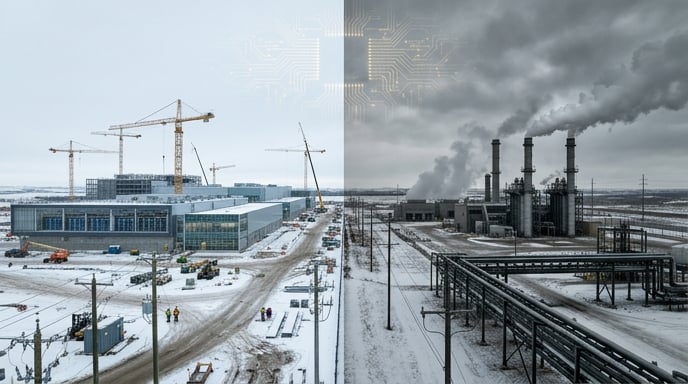
Meta’s first Canadian AI data center will give Alberta something provincial leaders have pursued for years: a flagship technology investment with global significance.
The numbers are difficult to ignore. C$13 billion in planned investment. One gigawatt of initial capacity. Potential expansion to 1.8 gigawatts. A dedicated gas-fired power project. Electricity demand comparable to hundreds of thousands of homes.
This is not just another building full of computers.
It is a test of whether Canada can capture economic value from the AI boom without allowing technology companies to overwhelm local energy systems or weaken national climate goals.
Meta has addressed some concerns early. It says it will finance the required power and grid infrastructure also It plans to use closed-loop cooling. It has promised local infrastructure spending and investments in renewable and clean energy.
Those measures matter.
They also deserve verification as the project moves from announcement to construction. Large corporate commitments can change. Timelines slip. Costs rise. Environmental claims often become foggier when examined closely.
The planned Greenlight power station is expected to begin operating in the second half of 2030, meaning the full project remains years away.
By then, AI models will probably be more capable, more widely used and even hungrier for computation.
Meta is betting that demand will justify the enormous build-out.
Alberta is betting that its energy resources can buy it a seat at the AI table.
Neither wager looks irrational. Neither comes without consequences.
The age of AI may feel weightless on a smartphone screen. In Sturgeon County, it will arrive as concrete, pipelines, turbines, cooling equipment and one very large electricity bill.
Sources
- Reuters — Meta to Build C$13 Billion Alberta Data Center, Its First in Canada
- Yahoo Finance — Meta Is Expanding Its Data-Center Build-Out to Canada
- SFGATE / Associated Press — Meta Plans Billions for First AI Data Center in Canada
- Investing.com / Reuters — Meta to Build C$13 Billion Alberta Data Center
The Kingy Brief
Get The Kingy Brief.
AI changes, original tests and one practical thing to try. Fridays at 09:00 Vancouver time.
Free · Double opt-in · Unsubscribe anytime
Sign up for The Kingy Brief on Beehiiv.
Signup help and newsletter schedule
Signup form provided by Beehiiv. After submitting, check your inbox for "Confirm your subscription to The Kingy Brief" and open its confirmation link. Check Spam or Promotions if you cannot find it.
Fridays at 09:00 Vancouver time: source-checked AI changes, original tests and one practical thing to try. The weekly restart begins October 9, 2026. We skip a week when there is not enough verified material. Free. Unsubscribe anytime.