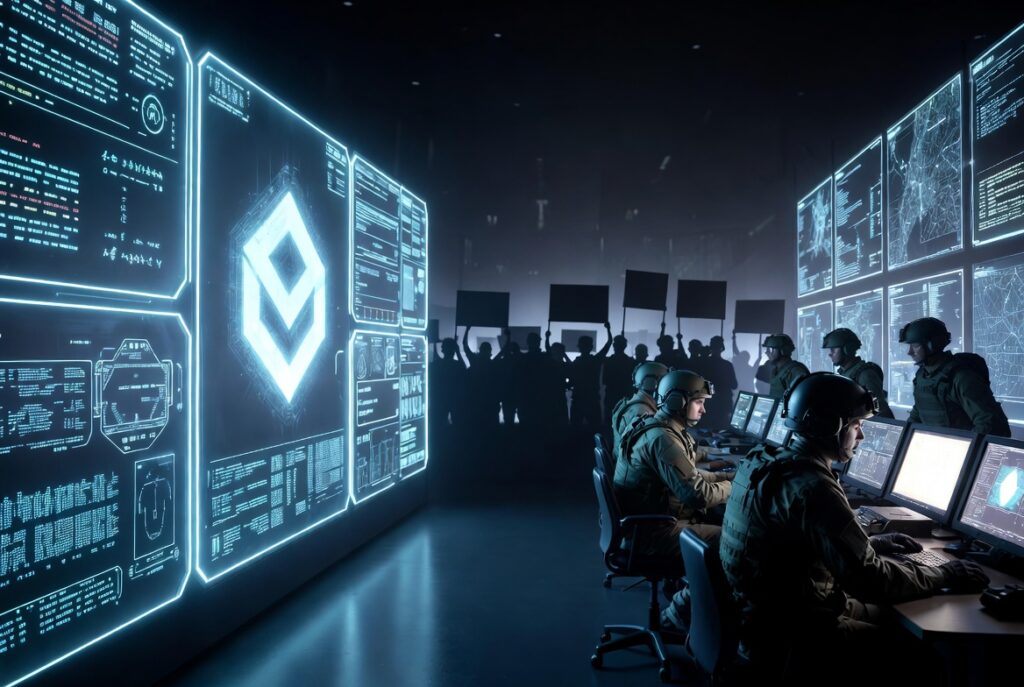
The AI deal that’s got Silicon Valley buzzing, the military excited, and hundreds of Google employees absolutely furious.
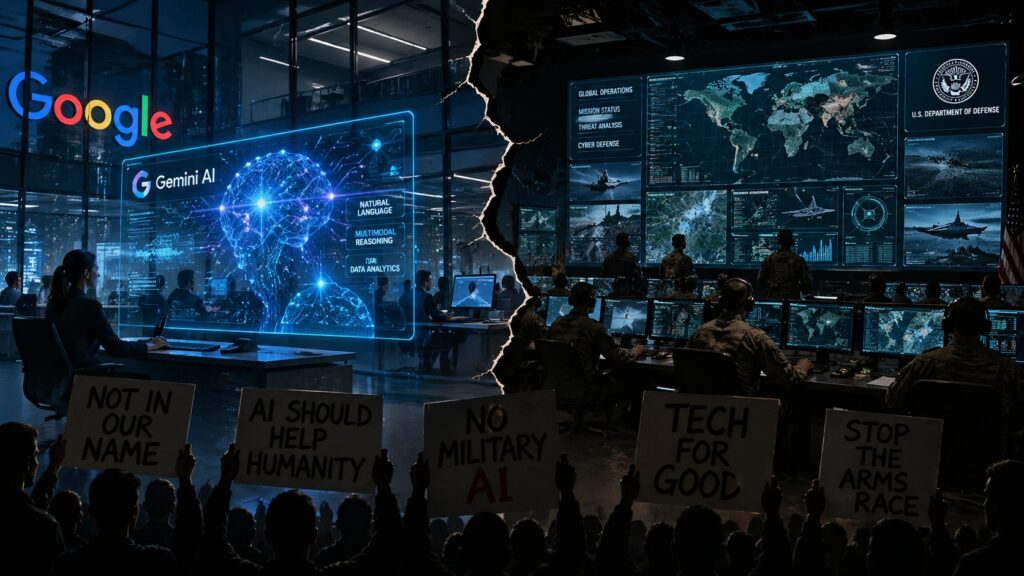
The Deal That Changed Everything
It’s official. Google and the U.S. Department of Defense are now partners, and not just for the boring, unclassified stuff. We’re talking classified military work. Real, top-secret, national-security-level AI deployment.
On April 28, 2026, CNBC confirmed that the Pentagon’s chief digital and artificial intelligence officer, Cameron Stanley, acknowledged the Department of Defense’s expanded use of Google’s Gemini AI model. The DOD is now using Gemini for classified projects. That’s not a rumor, that’s not a leak. That’s the Pentagon’s own AI chief saying it out loud on camera.
The Straits Times reported that Google amended its existing contract with the Pentagon, giving the agency direct API access to its commercial AI models. No custom model development. No bespoke military AI. Just Google’s commercial Gemini models, plugged straight into the U.S. defense machine.
“We believe that providing API access to our commercial models, including on Google infrastructure, with industry-standard practices and terms, represents a responsible approach to supporting national security,” a Google spokesperson said.
Simple. Clean. And wildly controversial.
Why Google? Why Now?
Here’s where it gets interesting. The Pentagon didn’t just wake up one morning and decide to call Google. This deal has a backstory and it involves a very public breakup.
Earlier in 2026, the DOD dropped Anthropic, the AI safety company behind the Claude model. The Pentagon designated Anthropic as a supply chain risk, a dramatic move that sent shockwaves through the AI industry. Anthropic had demanded contractual guarantees against mass surveillance and autonomous weapons. The Pentagon said no. Anthropic got blacklisted. Lawsuits followed.
So the DOD needed a new dance partner. Fast.
Enter Google.
Cameron Stanley didn’t mince words about the strategy. “Overreliance on one vendor is never a good thing,” he told CNBC. “We’re seeing that, especially in software.”
The Pentagon is now working with Google, OpenAI, and other vendors simultaneously. Diversification is the name of the game. And Google, with its powerful Gemini models and massive cloud infrastructure, was a natural fit.
What the Pentagon Actually Gets Out of This
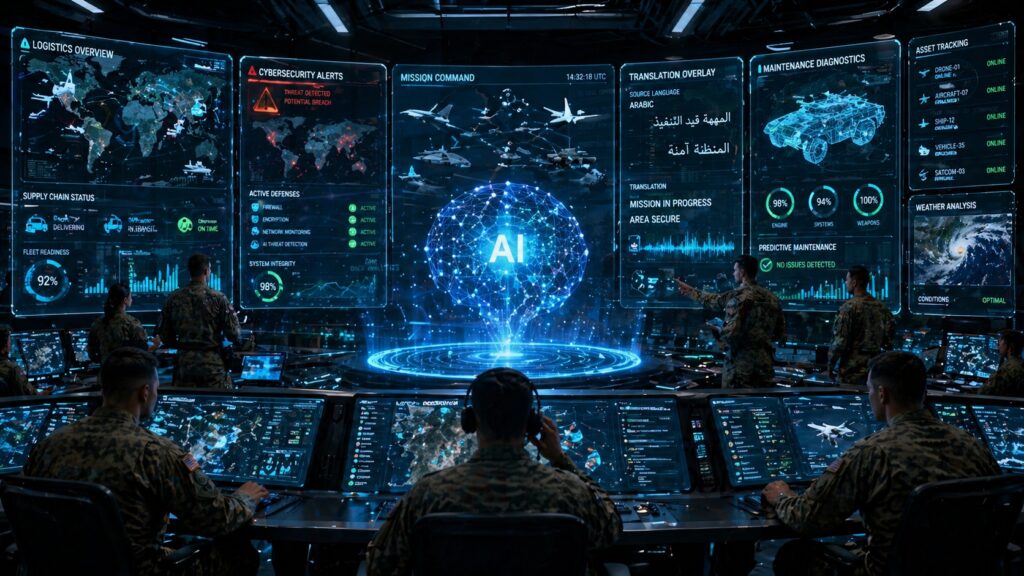
So what does the U.S. military actually do with Google’s AI? Stanley gave us a glimpse.
The applications span logistics, cybersecurity, diplomatic translation, and fleet maintenance. Google confirmed this in a statement, saying the company supports “government agencies across both classified and non-classified projects, applying our expertise to areas like logistics, cybersecurity, diplomatic translation, fleet maintenance, and the defense of critical infrastructure.”
The efficiency gains are staggering. Stanley said Gemini is already saving “thousands of man hours on a weekly basis.” Thousands. Every week. That’s not a small number. That’s a fundamental shift in how the military operates.
Think about it. Paperwork that used to take days now takes minutes. Translation tasks that required human specialists now happen in real time. Maintenance schedules that needed manual review now get flagged automatically. AI isn’t replacing soldiers, it’s freeing them up to focus on what actually matters.
Stanley put it colorfully: “You don’t cook a Thanksgiving turkey in the microwave. You need to have the right technology for the right use case to achieve the right outcome.”
Fair point, Cameron. Fair point.
The Fine Print Nobody’s Talking About
Here’s where things get a little murky, and a little alarming, depending on your perspective.
The Decoder dug into the contract language and found something worth paying attention to. The deal includes language stating the AI system “is not intended for domestic mass surveillance or autonomous weapons without appropriate human oversight.” Sounds reassuring, right?
Not so fast.
Legal experts say those words carry essentially zero legal weight. Charlie Bullock, a lawyer and Senior Research Fellow at the Institute for Law and AI, explained that the phrase “is not intended for, and should not be used for” simply signals that such use would be unwelcome, but it wouldn’t actually constitute a breach of contract.
It gets worse. The contract also explicitly states: “This Agreement does not confer any right to control or veto lawful Government operational decision-making.”
Translation? Google can’t stop the Pentagon from doing whatever it wants with the AI. The safety clauses are essentially decorative.
Amos Toh from NYU’s Brennan Center added that “appropriate human oversight” doesn’t necessarily mean a human has to stand between target identification and a fire order. The Pentagon has not ruled out fully autonomous weapons systems.
Compare that to OpenAI’s deal. OpenAI retained full control over its “Safety Stack” in its February agreement. Google, by contrast, committed to helping the government adjust its safety filters upon request. That’s a meaningful difference. And it’s one that hundreds of Google employees noticed immediately.
700 Employees Said “Absolutely Not”
The same day Google signed the deal, the same day, more than 700 Google employees sent an open letter directly to CEO Sundar Pichai. Many of them came from Google’s own DeepMind AI research lab. These aren’t random interns. These are the people who build the AI.
Their message was blunt. They urged Pichai to reject any classified collaboration with the Pentagon. “We want to see AI benefit humanity; not to see it being used in inhumane or extremely harmful ways,” the letter read, according to The Decoder.
Their core concern? Classified contracts make it impossible for Google’s own people to even know how the technology is being used. You can’t audit what you can’t see. You can’t flag misuse if you’re locked out of the room.
“The only way to guarantee that Google does not become associated with such harms is to reject any classified workloads,” the letter stated.
Google signed the deal anyway.
This isn’t the first time Google employees have pushed back on military contracts. Back in 2018, thousands of employees protested the company’s involvement in Project Maven, a Pentagon initiative using AI to analyze drone footage. The backlash was so intense that Google chose not to renew the contract and pledged never to use AI for weapons or surveillance.
That pledge? Google quietly dropped it last year.
A History of Flip-Flops
Let’s be honest, Google’s relationship with the military has been… complicated.
Project Maven launched in 2017. Google joined. Employees revolted. Google left in 2018. The company made big promises about ethical AI. Everyone moved on.
Then, slowly, quietly, things changed. The ethical AI pledges faded. The business opportunities grew. And now, in 2026, Google is back, not just with the Pentagon, but with a classified contract that gives the DOD access to its most powerful AI models.
Project Maven itself never went away. It’s now sold by Palantir and has been used for target selection in the Iran conflict, with support from Anthropic’s Claude model, according to The Decoder. The AI-in-warfare train left the station a long time ago. Google just decided to get back on board.
Interestingly, Google also dropped out of a $100 million Pentagon prize challenge to create technology for voice-controlled, autonomous drone swarms, after it was among the successful submissions. The decision followed an internal ethics review. Google officially cited a lack of “resourcing.” Make of that what you will.
What Comes Next?
The AI arms race inside the U.S. government is accelerating. Google is in. OpenAI is in. Elon Musk’s xAI holds a classified AI contract with the Pentagon too, according to The Decoder. Anthropic is out, for now, though President Trump told CNBC it’s “possible” there will be a deal allowing Anthropic’s models back into the DOD.
Cameron Stanley made the Pentagon’s philosophy crystal clear. The DOD wants multiple AI vendors. It wants competition. It wants options. And it wants the best technology available, regardless of who builds it or what their employees think about it.
The Anthropic situation was a wake-up call. Stanley pointed to Anthropic’s Mythos model rollout as a specific example, a powerful model with advanced cyber capabilities that was made available to only a limited number of companies due to its potential risks. The Pentagon is watching these developments closely. It wants to be prepared for “a whole raft of AI-enabled capabilities” in areas that pose serious challenges.
The bottom line? AI is now a core part of how America wages, and prepares for, war. That’s not speculation. That’s policy.
The Big Question Nobody Can Answer

Here’s the thing that keeps coming back. Google’s employees aren’t wrong to be worried. The contract’s safety language is weak. The oversight mechanisms are vague. And the history of AI in military contexts, from drone targeting to autonomous weapons research, doesn’t exactly inspire confidence.
But the Pentagon’s argument isn’t wrong either. America’s adversaries aren’t waiting. They’re building AI-powered military systems right now. Sitting on the sidelines isn’t neutrality, it’s a strategic disadvantage.
So where does that leave us? Somewhere uncomfortable. Somewhere without easy answers.
Google made its choice. The Pentagon got its AI. And hundreds of engineers who built that AI are left wondering exactly what it’s being used for, in rooms they’ll never be allowed to enter.
That’s the world we live in now. And it’s only going to get more complicated from here.
Sources
- CNBC — Pentagon AI chief confirms DOD’s expanded use of Google, says reliance on one model ‘never a good thing’
- The Decoder — Google signs AI deal with the Pentagon, ignoring protest from over 600 employees
- The Straits Times — Google allows Pentagon to use its AI in classified military work
- 4sysops — Google signs classified AI deal with the Pentagon
Continue Reading
- The Pentagon Just Went All-In on AI — And Not Everyone Got an Invite
- Project Thunderforge: The Pentagon’s Bold Move to Integrate AI into Warfare
- The AI That’s Too Powerful to Ignore — And Too Dangerous to Share
- Google’s AI Shift: Gemini 2.0 Launch & Policy Reversal on AI in Weapons & Surveillance
Compare
Latest News
Recent Launches
The Kingy Brief
Get the next Kingy Brief.
Source-checked AI changes, original tests and one practical thing to try.
Free · Choose your subjects · Double opt-in · Unsubscribe anytime