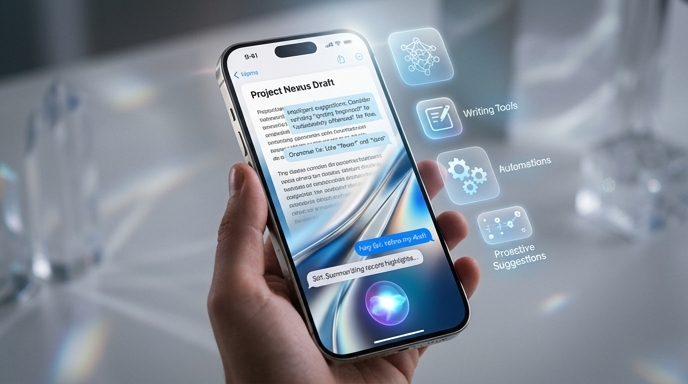
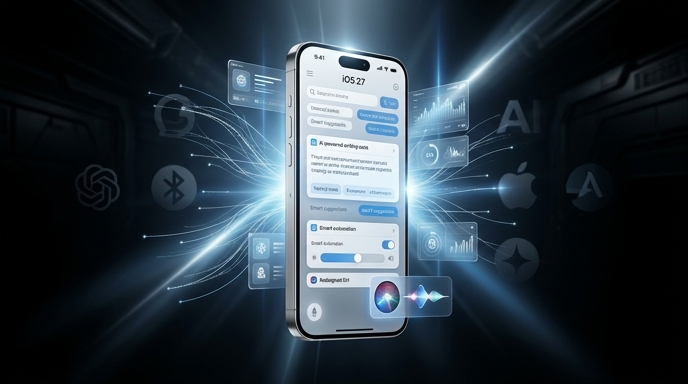
Apple has spent the last few years in a strange position. The company that once defined entire product categories suddenly found itself chasing the AI conversation instead of leading it. While rivals threw giant language models into everything from search engines to refrigerators, Apple moved cautiously. Sometimes painfully cautiously.
Now that may be changing.
A growing wave of reports suggests that iOS 27 could become Apple’s biggest artificial intelligence push yet. The rumored features are not flashy science-fiction gimmicks. They are more practical. More personal. More deeply tied to how people actually use their phones.
The leaks point toward AI-powered writing tools, automatically generated wallpapers, smarter shortcut creation, and even a standalone Siri application designed around large language models. If true, Apple is preparing something bigger than a routine yearly iPhone update.
And honestly? It has to.
The AI race already reshaped Microsoft, Google, Meta, and OpenAI. Apple cannot afford another year of “wait and see” mode while competitors turn AI into the center of modern computing.
According to reports from Android Authority, AppleInsider, Tech-Ish, FoneArena, and the Substack essay “Choose Your Character,” Apple appears ready to reposition AI around personality, utility, and privacy instead of pure spectacle.
That distinction matters.
Because right now, the tech industry has a serious identity problem.
AI Has Become Loud, Weird, and Exhausting
Modern AI products increasingly resemble attention machines.
Every company wants an assistant. Every assistant wants a personality. Every personality wants to become your friend, therapist, tutor, life coach, productivity guru, and emotional support chatbot at the same time.
The result feels chaotic.
One day an AI helps summarize your email. The next day it talks like a medieval wizard or flirts like a dating app. Somewhere along the line, Silicon Valley stopped asking a basic question:
What do normal people actually want?
The essay “Choose Your Character” from AI Central touches on this exact shift. The piece argues that AI systems are moving beyond tools and becoming customizable digital identities. Users increasingly expect assistants to match moods, behaviors, and communication styles.
That sounds fun. And sometimes it is.
But it also creates fatigue.
Most people do not wake up hoping their smartphone behaves like an improv comedian. They want fewer taps. Better organization. Faster workflows. Less friction.
That is where Apple might finally have an opening.
Apple rarely wins by launching first. The company wins when it simplifies chaos.
The original iPhone was not the first smartphone. The iPad was not the first tablet. AirPods were not the first wireless earbuds.
Apple’s strength has always been integration.
If iOS 27 succeeds, it will probably succeed for the same reason.
The New AI Writing Tools Could Matter More Than Siri
One of the most discussed rumors involves upgraded AI writing tools across iOS 27.
That may sound boring compared to humanoid robots or cinematic AI video generators.
It is not.
Writing is the hidden operating system of modern work.
People spend huge portions of their day responding to messages, drafting emails, fixing grammar, rewriting awkward sentences, summarizing notes, and translating ideas into text. AI already dominates this category through tools like ChatGPT, Grammarly, Claude, Gemini, and Microsoft Copilot.
Apple wants a piece of that ecosystem.
Reports suggest the company is developing smarter writing assistance capable of improving grammar, refining tone, and rewriting text with more contextual awareness. The key detail is integration.
Instead of forcing users to open separate apps, Apple appears focused on embedding AI directly into native workflows.
That changes behavior.
A built-in assistant always beats a separate destination.
If someone can instantly clean up an email inside Mail, rewrite a note inside Notes, or summarize a message thread without jumping between applications, adoption rises dramatically.
And unlike many current AI products, Apple reportedly wants these features to work with privacy protections and on-device processing wherever possible.
That matters more than tech enthusiasts admit.
Consumers love AI demos. They also increasingly distrust AI companies.
People worry about data scraping, surveillance, hallucinations, copyright lawsuits, and cloud dependency. Apple sees an opportunity to position itself as the “safe” AI company.
Whether that reputation fully holds up is another discussion.
But strategically, the move makes sense.
Siri Needs a Complete Rebuild — Not Another Patch
Siri has become the tech equivalent of a once-famous athlete hanging around long after the championship years.
Everybody remembers the promise.
Nobody remembers the last great performance.
For years, Siri lagged behind Google Assistant, Alexa, ChatGPT voice mode, and practically every major conversational AI system. The assistant often struggled with basic context, follow-up questions, and natural interaction.
Now reports suggest Apple may separate Siri into its own standalone app experience powered by more advanced AI systems.
That would be a major philosophical shift.
Traditionally, Siri existed as a background layer attached to iOS. You summoned it briefly. It handled simple requests. Then it disappeared.
Large language models changed user expectations completely.
Modern users increasingly expect continuous dialogue. They want memory. Context. Personality. Multistep reasoning.
They do not want command lines disguised as voice assistants.
According to rumors covered by FoneArena and AppleInsider, Apple may redesign Siri around conversational AI architectures more aligned with contemporary chatbot systems.
Frankly, Apple has little choice.
The old Siri model is obsolete.
The danger for Apple is not merely technological inferiority. It is relevance.
Young users increasingly interact with ChatGPT and similar tools as their default information layer. That weakens Apple’s position as the center of digital activity.
Once users leave the operating system layer for intelligence, platform loyalty becomes weaker.
Apple understands this.
That is why iOS 27 could become less about features and more about control.
Control over the interface.
Control over user attention.
Control over where AI interaction actually happens.
AI-Generated Wallpapers Sound Trivial. They Aren’t.
Tech journalists often underestimate personalization.
Consumers do not.
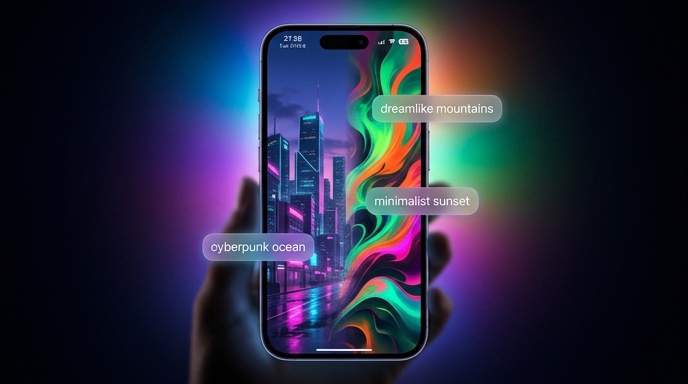
One rumored iOS 27 feature involves AI-generated wallpapers. On paper, this sounds like filler content for keynote presentations. In reality, it points toward something larger.
People increasingly expect software to adapt itself dynamically.
Spotify generates playlists.
TikTok generates feeds.
Netflix generates recommendations.
AI-generated wallpapers push the same principle into device identity.
Instead of selecting static backgrounds, users could generate unique visuals based on themes, moods, aesthetics, prompts, or even contextual information.
This matters because smartphones are no longer exciting hardware objects.
The annual smartphone upgrade cycle has slowed dramatically. Most modern phones already feel “good enough.” AI personalization gives companies a new way to create emotional attachment.
And Apple understands emotional attachment better than almost any company alive.
The iPhone is not merely a tool. For millions of people, it functions as an extension of identity.
That is why customization matters.
It also explains why Apple may increasingly frame AI as a creative collaborator instead of a productivity robot.
The company knows consumers respond emotionally to creativity.
Not spreadsheets.
Shortcuts Could Become Apple’s Secret Weapon
The most underrated rumor surrounding iOS 27 involves Apple Shortcuts.
This could become the genuinely transformative part of Apple’s AI strategy.
Right now, automation tools remain too complicated for most people. Creating workflows usually requires logic trees, trigger conditions, scripting knowledge, and patience.
Normal users abandon the process almost immediately.
AI changes that equation.
Reports indicate Apple may allow users to create shortcuts using natural language.
That is enormous.
Imagine saying:
“Create a morning routine that reads today’s calendar, starts my workout playlist, opens weather, and sends my ETA to work.”
Instead of manually building automation chains, AI assembles them automatically.
This represents the broader future of computing.
People increasingly want intent-based systems.
They do not want menus.
They want outcomes.
Natural language interfaces reduce technical friction. Suddenly, advanced automation becomes accessible to ordinary users instead of power users.
This is exactly where AI becomes truly useful.
Not as entertainment.
Not as viral demo bait.
As infrastructure.
And Apple has a massive advantage here because it controls both hardware and software simultaneously.
If AI-powered shortcuts integrate deeply across iPhone, iPad, Mac, Apple Watch, AirPods, and HomeKit devices, the ecosystem becomes dramatically stickier.
Leaving Apple then becomes harder because the intelligence layer itself becomes personalized.
That is the real strategy.
Not merely smarter phones.
Smarter ecosystems.
Apple’s Privacy Narrative Is About Business, Not Morality
Apple constantly frames privacy as a moral principle.
It is also a competitive moat.
That distinction matters.
Most major AI companies depend heavily on cloud computation and large-scale data collection. Apple has consistently pushed on-device processing whenever possible.
That approach gives Apple a unique marketing angle during an era of growing AI skepticism.
Consumers increasingly understand that AI systems require enormous data access.
Emails.
Messages.
Photos.
Voice recordings.
Documents.
Search history.
Daily habits.
The companies controlling AI assistants may eventually understand users better than users understand themselves.
That prospect unsettles people.
Apple sees an opportunity to present itself as the trusted intermediary.
Reports surrounding iOS 27 repeatedly mention privacy-conscious AI implementation. The company reportedly wants sensitive processing handled locally where possible instead of constantly routing requests through external servers.
Of course, there are limits.
Modern large language models still require immense computational power. Truly advanced AI features may still depend partly on cloud infrastructure.
But perception matters.
If Apple convinces users that its AI systems feel safer, adoption barriers fall.
And in technology, trust often becomes more valuable than innovation itself.
Just ask Meta.
The Real Competition Is Not Google
Most commentary frames Apple’s AI challenge as a battle against Google, Microsoft, or OpenAI.
That is only partly true.
The larger competition is behavioral.
AI is changing how people interact with information.
Traditional apps may eventually matter less than conversational layers sitting above them.
That possibility terrifies platform owners.
If users increasingly ask AI assistants to perform tasks directly, the importance of navigating individual apps declines. Search engines weaken. App stores weaken. Interfaces flatten.
The assistant becomes the operating system.
This is why Apple cannot afford another mediocre Siri cycle.
The company is defending the future relevance of iOS itself.
And unlike many competitors, Apple faces a unique challenge.
Its entire business depends on premium hardware margins.
Google can monetize attention.
Meta can monetize advertising.
OpenAI can monetize subscriptions.
Apple still monetizes devices.
That means AI must increase hardware desirability.
If consumers stop believing the iPhone delivers uniquely valuable experiences, Apple’s economic model weakens.
iOS 27 therefore carries unusual pressure.
It is not just another software release.
It may determine whether Apple remains central to the AI era or becomes an elegant hardware shell wrapped around other companies’ intelligence systems.
That is the real stakes here.
Apple Is Late — But Being Late Is Not Fatal
There is a lazy assumption spreading across the tech industry that Apple already lost the AI race.
That conclusion is premature.
History repeatedly shows that first movers often lose.
Friendster lost.
MySpace lost.
BlackBerry lost.
Nokia lost.
Being early matters less than building systems people actually keep using.
Right now, many AI products still feel unstable, fragmented, and exhausting. They impress users briefly, then disappear from daily habits.
Apple’s opportunity lies in consistency.
If the company can integrate AI invisibly into everyday workflows, consumers may adopt features without even thinking about them as “AI.”
That is powerful.
The most successful technologies often stop feeling like technologies.
Nobody marvels at autocorrect anymore.
Nobody celebrates GPS.
Nobody treats predictive text as science fiction.
Useful systems become invisible.
Apple excels at invisibility.
That does not guarantee success.
The company still faces serious risks.
If Siri remains weak, users will notice.
If AI features feel gimmicky, users will mock them.
If privacy promises collapse under technical limitations, critics will attack aggressively.
And if Apple moves too slowly, younger users may permanently shift toward platform-agnostic AI ecosystems.
But for the first time in years, Apple finally appears ready to fight.
Not with flashy promises.
With integration.
With ecosystem control.
With utility.
And possibly with something Silicon Valley forgot during the AI gold rush:
Restraint.
Final Thoughts
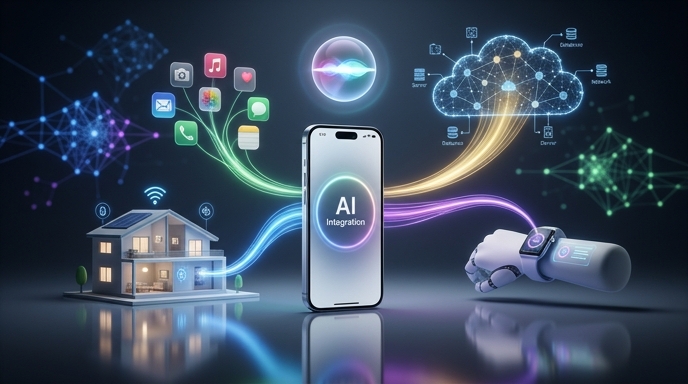
The rumors surrounding iOS 27 paint a picture of Apple attempting a strategic reset rather than a cosmetic update.
The company appears less interested in building the loudest AI and more interested in building the most usable one.
That may sound less exciting during keynote season.
It may also prove smarter.
Consumers already have access to astonishing AI models. What they lack are systems that fit naturally into daily life without becoming intrusive, confusing, or exhausting.
Apple’s rumored direction suggests the company understands that problem.
AI writing tools could streamline communication.
Smarter shortcuts could democratize automation.
Generated wallpapers could personalize devices dynamically.
A rebuilt Siri could finally modernize Apple’s assistant strategy.
Most importantly, Apple appears determined to keep AI anchored inside its ecosystem instead of surrendering the intelligence layer to outside platforms.
That battle may define the next decade of consumer technology.
Because the future smartphone war will not revolve around cameras, screen brightness, or titanium edges.
It will revolve around intelligence.
Who owns it.
Another question is who controls it.
Lastly who users trust.
And who disappears behind the interface entirely.
Apple spent years watching the AI revolution from the sidelines.
iOS 27 may be the moment it finally steps back onto the field.
Sources
- Android Authority — “Apple AI features rumored for iOS 27”
https://www.androidauthority.com/apple-ai-features-ios-27-3668409/ - AppleInsider — “Improved Writing Tools, generated wallpapers, easier shortcut creation rumored for iOS 27”
https://appleinsider.com/articles/26/05/18/improved-writing-tools-generated-wallpapers-easier-shortcut-creation-rumored-for-ios-27 - AI Central Substack — “Choose Your Character”
https://aicentral.substack.com/p/choose-your-character - Tech-Ish — “Apple iOS 27 AI grammar, shortcuts, wallpapers rumor”
- FoneArena — “iOS 27 AI writing, standalone Siri app rumor”
https://fonearena.com/blog/483006/ios-27-ai-writing-standalone-siri-app-rumor.html
Compare
- Apple Eyes OpenAI & Anthropic: Inside the Battle to Revive Siri’s AI Smarts
- Apple LLM Siri revamp: Why the Tech Giant Is Playing Catch Up
Recent Launches
- Why Apple is Taking Its Time on Siri’s AI Revolution
- Apple turns to Google Gemini to Power Siri’s Next AI Upgrade
- Apple’s $250 Million Siri Settlement: When Hype Meets Reality
Latest News
The Kingy Brief
Get The Kingy Brief.
AI changes, original tests and one practical thing to try. Fridays at 09:00 Vancouver time.
Free · Double opt-in · Unsubscribe anytime
Signup help and newsletter schedule
Signup form provided by Beehiiv. After submitting, check your inbox for "Confirm your subscription to The Kingy Brief" and open its confirmation link. Check Spam or Promotions if you cannot find it.
Fridays at 09:00 Vancouver time: source-checked AI changes, original tests and one practical thing to try. The weekly restart begins October 9, 2026. We skip a week when there is not enough verified material. Free. Unsubscribe anytime.