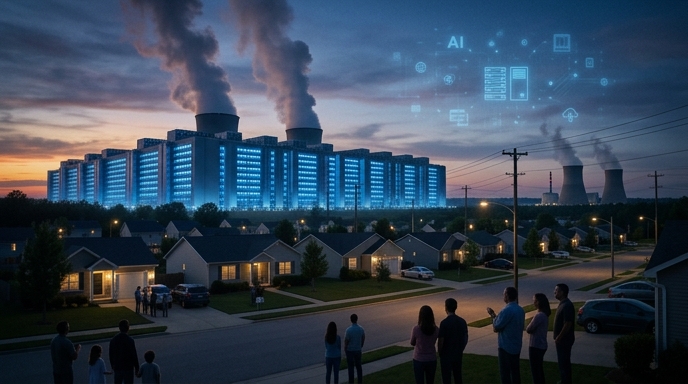
The artificial intelligence boom has a strange new villain. It is not robots, it is not mass unemployment, it is not even ChatGPT writing mediocre wedding speeches at 2 a.m.
It is the data center.
Massive. Loud. Power-hungry. Water-thirsty. Windowless. Often ugly. And increasingly unwelcome in American neighborhoods.
A new Gallup poll delivered a result that landed like a brick through the glass headquarters of the AI industry: Americans would rather live near a nuclear power plant than an AI data center. That sounds absurd at first glance. Nuclear plants carry decades of cultural baggage. Think meltdowns, think disaster movies. Think glowing green sludge in old cartoons.
Meanwhile, AI companies market themselves with sleek logos, smiling chatbots, and promises of “productivity.”
Yet public opinion has moved in the opposite direction.
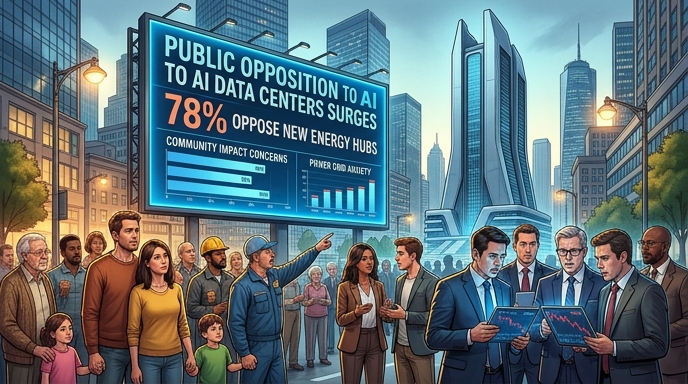
According to reporting from The Verge, roughly 70 percent of Americans oppose building AI data centers in their local areas. That is not mild skepticism. That is overwhelming resistance.
And the reasons are not irrational.
People see these facilities consuming staggering amounts of electricity. They hear warnings about water shortages. They watch tech giants demand more land, more subsidies, and more infrastructure while offering relatively few permanent jobs in return.
The AI industry spent years convincing the public that artificial intelligence was magical. Now the public is discovering the machinery behind the magic. And it turns out the machinery looks like a giant industrial warehouse sucking energy out of the grid like a science-fiction parasite.
That changes the conversation.
The Poll That Shocked the Tech Industry
The Gallup survey, covered by Gallup News, revealed deep opposition to data centers across demographic and political lines.
This matters because Americans rarely agree on anything anymore.
But on this issue? Broad resistance emerged from Democrats, Republicans, independents, urban residents, suburban homeowners, and rural communities alike.
That level of consensus is unusual. And dangerous for the tech industry.
The numbers become even more striking when compared with other forms of infrastructure. Americans viewed AI data centers less favorably than highways, manufacturing plants, solar farms, and yes, even nuclear facilities.
That last comparison grabbed headlines because it feels backwards. Nuclear plants once symbolized technological dread. AI companies were supposed to symbolize the future.
Instead, the public increasingly sees AI infrastructure as invasive and extractive.
The Decoder summarized the findings bluntly in its report, Americans would rather live next to a nuclear plant than an AI data center.
That sentence alone should terrify investors.
Because public opinion eventually shapes regulation. Regulation shapes construction. Construction shapes growth. And growth is the entire economic story behind the current AI frenzy.
Without endless expansion of data centers, the modern AI boom slows down dramatically.
No data centers means no giant training clusters. No giant training clusters means weaker models. Weaker models mean less competitive advantage.
The entire AI race depends on physical infrastructure.
And physical infrastructure has neighbors.
The Internet Has a Physical Body Now
For years, people imagined the internet as something weightless. Ethereal. Floating in “the cloud.”
That branding worked beautifully.
“Cloud computing” sounds soft and harmless. Like your photos are resting on a pillow somewhere above the atmosphere.
Reality looks different.
The cloud is concrete. Steel. Diesel generators. Fiber-optic cables. Cooling systems. Transmission lines. Industrial zoning battles.
AI turbocharged those demands.
Training large language models requires enormous computational power. Running them requires even more infrastructure over time. Every AI-generated image, chatbot response, or automated workflow ultimately traces back to physical machines burning electricity somewhere.
And people are beginning to notice.
According to coverage from Gizmodo, communities increasingly worry about environmental strain, grid reliability, and resource competition.
That concern is not paranoia.
Some AI facilities consume as much electricity as medium-sized cities. Others require millions of gallons of water annually for cooling operations.
The scale becomes hard to ignore once construction begins nearby.
A resident might tolerate a warehouse. They might tolerate a shopping center. But an AI data center often arrives with endless cooling fans, substations, transmission upgrades, backup generators, and industrial traffic.
It transforms landscapes.
And unlike factories of the past, these centers do not employ huge local workforces. A traditional manufacturing plant might provide thousands of jobs. A hyperscale data center often runs with surprisingly small staffing numbers after construction ends.
Communities look at that tradeoff and ask a brutal question:
“We give up our land, water, and power grid for what exactly?”
Silicon Valley has not produced a persuasive answer yet.
AI’s Appetite Is Becoming Impossible to Hide
The modern AI industry runs on scale obsession.
Every company wants larger models. More parameters. Bigger training runs. Faster inference. More users. Infinite growth.
That ambition collides directly with physics.
Physics is rude. Physics does not care about marketing decks.
AI requires energy. Huge amounts of it.
Researchers, utilities, and environmental analysts increasingly warn that AI could dramatically reshape electricity demand over the next decade. Utilities across the United States already struggle with grid pressures from population growth, electrification, and climate-driven heat waves.
Then AI arrived like a steroid injection for energy consumption.
Suddenly, tech giants began racing to secure power supplies. Nuclear partnerships appeared. Natural gas deals expanded. Renewable projects accelerated. Some companies even explored building small modular reactors specifically to feed AI infrastructure.
That sounds futuristic. It is also a warning sign.
When an industry starts contemplating dedicated nuclear reactors to sustain growth, the public naturally asks whether the technology is becoming too resource-intensive.
The explosion.com article, 70% of Americans oppose AI data centers near their homes, emphasized growing concern about energy strain and local environmental impact.
And honestly, the public is not wrong to notice the contradiction.
For years, tech companies positioned themselves as environmentally conscious innovators. Then AI arrived and suddenly everyone needed gigantic power consumption increases.
The optics are terrible.
A chatbot helping someone summarize emails does not intuitively feel worth the equivalent energy demand of thousands of homes.
That disconnect matters politically.
The Water Problem Nobody Wants to Talk About
Electricity dominates headlines. Water deserves equal attention.
Data centers generate heat. Massive heat.
That heat must go somewhere.
Cooling systems often rely heavily on water consumption, especially in large-scale facilities. In drought-prone regions, this creates immediate tension between tech expansion and local sustainability.
Residents understand this instinctively.
If a town already faces water restrictions during summer months, hearing that a nearby AI complex may consume millions of gallons annually tends to produce hostility very quickly.
And unlike abstract fears about “AI taking jobs,” water shortages feel immediate and personal.
People can visualize dry reservoirs.
They can understand rising utility costs.
They can grasp infrastructure stress.
That makes opposition emotionally powerful.
The AI industry has struggled badly with communication here. Many companies release sustainability reports full of polished corporate language while avoiding plain explanations of actual consumption levels.
That strategy backfires.
When companies sound evasive, communities assume the worst.
And sometimes the worst-case assumptions are not far from reality.
The more AI adoption grows, the larger the infrastructure footprint becomes. The public increasingly recognizes that artificial intelligence is not merely software. It is industrial-scale computing infrastructure with industrial-scale resource demands.
That realization changes the emotional framing of AI entirely.
Silicon Valley’s Messaging Problem
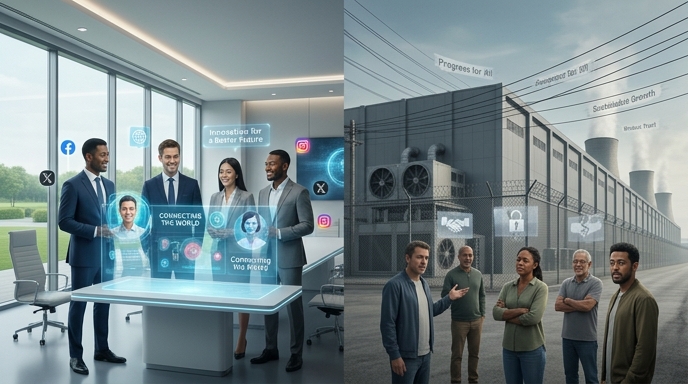
The AI industry made a strategic mistake.
It marketed artificial intelligence as frictionless magic while hiding the machinery behind it.
That worked during the novelty phase. Consumers played with chatbots. Investors celebrated stock gains. CEOs promised revolutionary transformation.
Meanwhile, ordinary people started seeing headlines about power shortages, land acquisitions, water consumption, and billion-dollar data center projects.
The contrast became jarring.
Silicon Valley talks about digital transcendence. Communities see giant concrete facilities.
Those narratives clash hard.
Tech executives often behave as if resistance comes from ignorance. That interpretation misses the point completely.
Most opposition is practical.
Residents worry about noise pollution. Property values. Environmental stress. Electrical reliability. Water access. Tax incentives benefiting corporations more than locals.
Those concerns are rational.
The industry’s public relations language frequently sounds detached from material reality. Terms like “accelerating human potential” or “democratizing intelligence” do not calm residents worried about infrastructure strain.
People care less about philosophical AI missions when a data center might reshape their local environment.
And the industry has another problem: trust.
Big Tech already suffers from credibility issues after years of controversies involving privacy, misinformation, monopolistic behavior, layoffs, and social media toxicity.
Now those same companies want communities to enthusiastically approve gigantic AI facilities.
That is a difficult sell.
Why Nuclear Power Suddenly Looks Better
The nuclear comparison deserves deeper analysis because it reveals something psychologically fascinating.
Nuclear plants scare people theoretically.
AI data centers annoy people concretely.
That difference matters.
Modern nuclear facilities occupy limited footprints and often provide substantial energy output with relatively low emissions. Many communities associated with nuclear plants also benefit from stable jobs and significant local tax contributions.
Meanwhile, AI data centers increasingly look like consumption engines rather than production engines.
They consume electricity instead of generating it.
Also they absorb water instead of supplying resources.
They require tax incentives while employing relatively few people.
In political terms, they can appear economically asymmetrical.
A community may tolerate environmental disruption if benefits feel proportional. But resentment grows when locals perceive corporations extracting value without meaningful local return.
That perception now shadows the AI sector.
Ironically, the nuclear comparison also highlights a larger truth: Americans may trust traditional industrial infrastructure more than opaque algorithmic systems.
People understand what power plants do.
AI remains murkier.
Many consumers still feel uncertain about what artificial intelligence actually contributes beyond hype, automation anxiety, and weird chatbot conversations.
That uncertainty amplifies resistance.
The Economic Stakes Are Massive
This issue extends far beyond zoning fights.
The AI boom depends on relentless infrastructure expansion. Companies including Microsoft, Google, Meta, and OpenAI require enormous computing capacity to remain competitive.
Wall Street currently prices these companies partly on assumptions of future AI dominance.
That dominance requires physical buildout.
If local opposition intensifies nationally, infrastructure deployment slows. Delays increase costs. Costs pressure margins. Margins affect investment enthusiasm.
Eventually, public resistance becomes an economic variable.
And resistance is growing globally, not just in the United States.
Communities in Europe, Latin America, and parts of Asia increasingly question whether hyperscale data infrastructure benefits ordinary citizens proportionally.
The AI industry now faces a dilemma familiar to earlier industrial revolutions:
How do you scale aggressively when the public begins associating your growth with declining quality of life?
Oil companies faced this.
Manufacturing giants faced this.
Railroads faced this.
Now AI companies face it too.
The fantasy that software companies operate outside physical politics is collapsing.
The “Invisible Infrastructure” Era Is Over
For decades, tech companies benefited from invisibility.
Most people never thought about server farms. They never cared where websites operated. Infrastructure remained distant and abstract.
AI destroyed that invisibility.
The infrastructure requirements became too large to ignore.
Communities now track proposed data center projects with the same intensity once reserved for factories, pipelines, or airports.
That shift marks a cultural turning point.
Artificial intelligence is no longer perceived purely as software innovation. It increasingly resembles heavy industry.
And heavy industry always generates backlash.
Especially when residents believe they shoulder the costs while corporations capture the rewards.
The political implications could become severe.
Expect future fights over zoning laws, environmental regulations, utility pricing, tax incentives, and energy allocation.
We can Expect lawsuits.
Expect activist campaigns.
Expect local politicians discovering that opposing AI facilities can become politically popular.
The Gallup poll may represent an early warning signal rather than a temporary reaction.
If public hostility hardens, AI infrastructure expansion becomes slower, more expensive, and more politically volatile.
That matters enormously because the current AI economy assumes near-limitless scaling.
Physics and politics may impose limits before technology does.
AI Has Entered Its Industrial Age
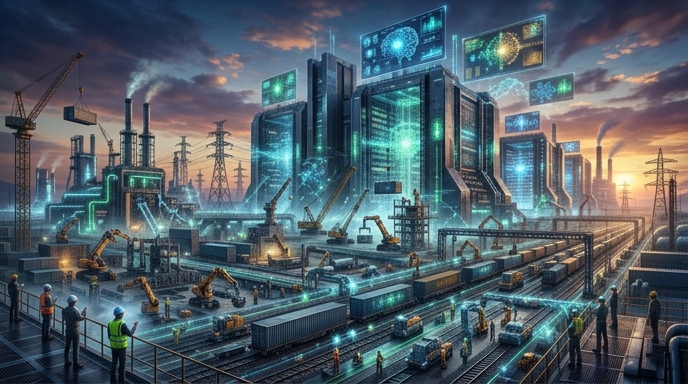
The romance phase of AI is ending.
The industrial phase has begun.
During the romance phase, people focused on capabilities. Funny chatbot responses. AI-generated art. Productivity tools. Wild predictions about the future.
Industrial phases are different.
Industrial phases involve land use battles. Resource allocation fights. Environmental reviews. Infrastructure financing. Political resistance.
Reality gets heavier.
Messier.
More expensive.
That transition now defines the AI industry.
The central question is no longer merely “What can AI do?”
Now the question becomes:
“What does AI cost the physical world?”
That question will shape the next decade of technological politics.
And right now, many Americans do not like the answer.
The tech industry still behaves as though public skepticism can be solved with better branding. That assumption looks increasingly naive.
People understand tradeoffs better than executives think.
They know electricity is finite. Water is finite. Land is finite.
And they are beginning to ask whether endless AI expansion genuinely improves their lives enough to justify the resource burden.
Silicon Valley may dislike that question.
But it cannot avoid it anymore.
Sources
- The Verge — “70 Percent of Americans Oppose AI Data Centers Near Their Homes”
- The Decoder — “Americans Would Rather Live Next to a Nuclear Plant Than an AI Data Center”
- Gallup News — “Americans Oppose Data Centers in Their Area”
- Explosion — “70% of Americans Oppose AI Data Centers Near Their Homes”
- Gizmodo — “Americans Would Rather Live by a Nuclear Power Plant Than an AI Data Center”
Related Guides
Compare
Latest News
The Kingy Brief
Get future Kingy Brief editions.
Source-checked AI changes, original tests and one practical thing to try.
Free · Choose your subjects · Double opt-in · Unsubscribe anytime
Regular sending is paused; no restart date is set.