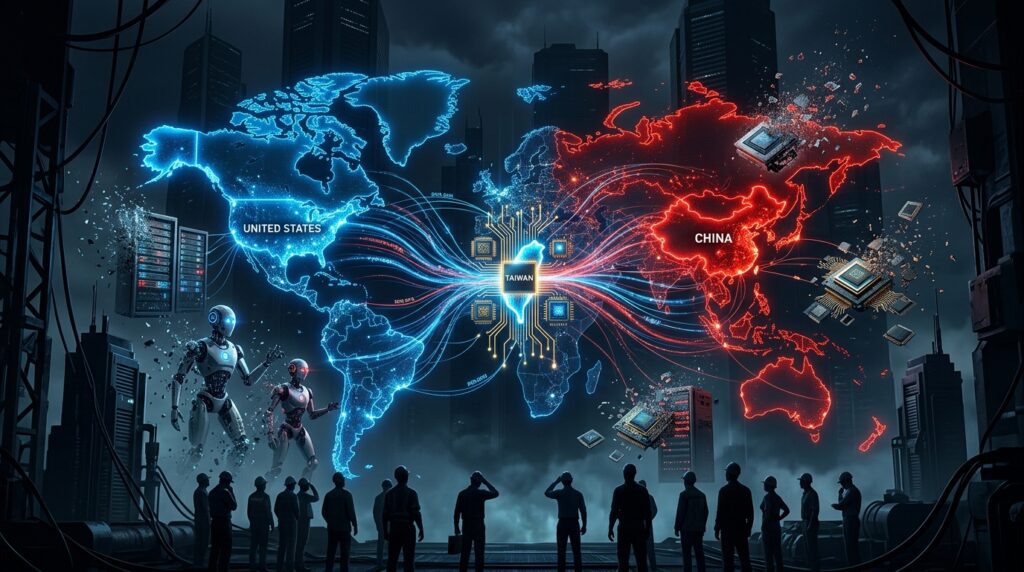
China is closing the gap fast. GPUs expire like groceries. And companies are firing people to look good on Wall Street. Here’s everything happening in AI right now — and why it matters.
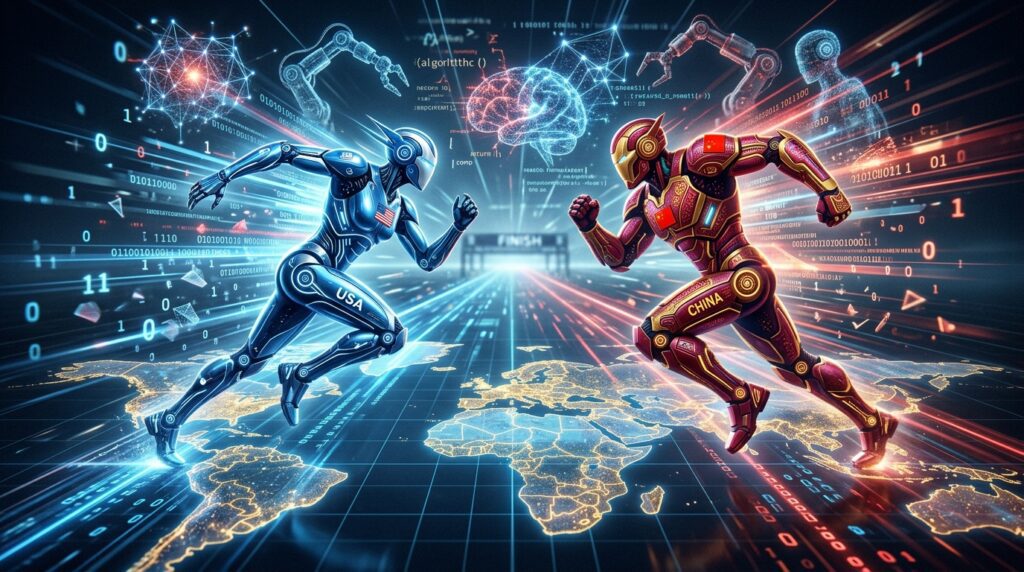
The Report That Shook Silicon Valley
Every year, Stanford University drops its AI Index report like a bomb. And the 2026 edition? It landed with a very loud boom.
The Stanford Institute for Human-Centered AI published its annual deep dive into the global state of artificial intelligence. Over 400 pages of data, charts, and cold, hard truths. The headline? America’s AI crown is slipping — and China is right there, ready to catch it.
For years, the US sat comfortably at the top. Bigger models. Better performance. More money. More everything. But 2026 is a different story. The gap between the US and China has effectively closed. That’s not a hot take. That’s Stanford saying it.
“For years, the US outpaced all other global regions on AI,” the report states. “But China emerged as an AI counterweight to the US, gradually gaining ground, and this year it appears to have nearly erased any US lead.”
Let that sink in for a second.
China’s Long Game Is Paying Off
Here’s the thing about China — they planned this. Way back in 2017, China’s state council published a sweeping AI strategy. The goal? Become the world’s AI leader by 2030. At the time, many dismissed it as ambitious government talk. Now, Futurism reports, it looks like a masterplan unfolding in real time.
China now leads the world in AI research publications and citations. Full stop. It deploys industrial AI-integrated robots at nearly nine times the rate of the United States. Nine times. That’s not a gap — that’s a canyon.
Then there are the patents. In 2024, China grabbed over 74 percent of the world’s AI patent grants. The US? A distant 12 percent. The EU? A paltry 3 percent. International economists note that America’s patent numbers are low partly because they’re “highly concentrated among a small set of large private firms.” In other words, a few big players hold the keys — and that’s a fragile position.
China’s approach is different. It spreads the work across universities, state-backed initiatives, and thousands of companies. Scale is the strategy. And scale is working.
The Performance Gap Is Almost Gone
Now, let’s talk about the actual AI models — the ChatGPTs and Claudes of the world. This is where things get really interesting.
The US still technically leads in model performance. But barely. According to the Stanford report, the top US model leads China’s best by just 2.7 percent as of March 2026. That’s it. Two point seven percent.
And it hasn’t been a steady lead. US and Chinese models have traded places at the top of performance rankings multiple times since early 2025. In February 2025, China’s DeepSeek-R1 briefly matched the top US model outright. The “substantial lead” America once had? The Stanford report admits it “shrank considerably.”
This is a big deal. The US spent around $258.9 billion on private AI investment in 2024. China spent $12.4 billion. The US is outspending China by more than 20 times — and still barely holding on to a 2.7 percent edge. That’s not a great return on investment, to put it mildly.
Taiwan: The Tiny Island Holding the Whole Thing Together
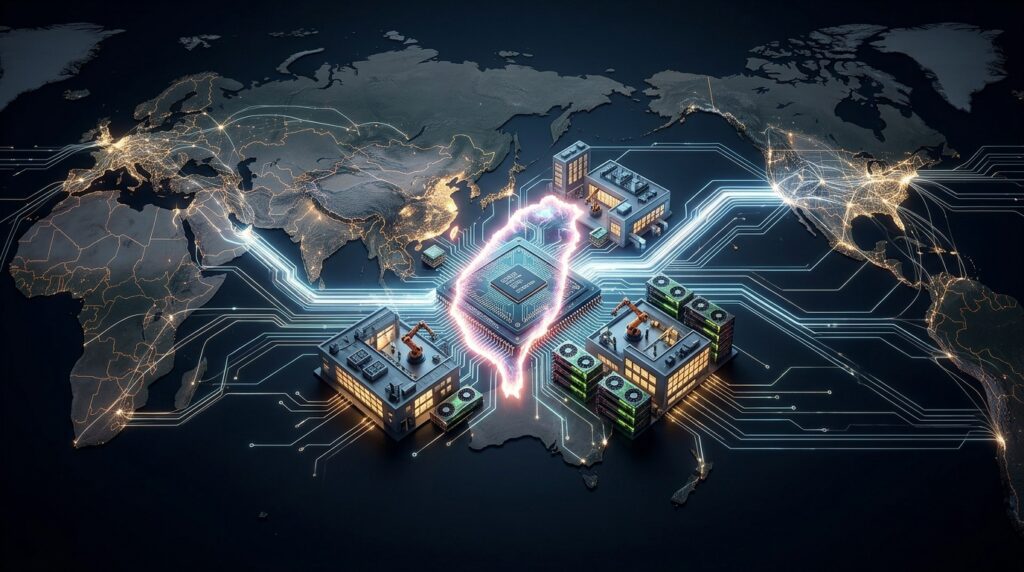
Here’s a plot twist most people don’t talk about enough. While the US and China battle it out for AI supremacy, there’s a small island that both of them desperately need: Taiwan.
The Taipei Times reports that Stanford’s 2026 AI Index places greater emphasis on Taiwan’s critical role in the global AI supply chain than any previous edition. And for good reason.
Nearly all cutting-edge AI chips — the ones powering every major AI model — are manufactured by a single company: Taiwan Semiconductor Manufacturing Co (TSMC). One company. One island. That’s the chokepoint for the entire global AI industry.
The computational power behind today’s leading AI models has grown at an average annual rate of about 3.3 times since 2022. It now equals roughly 17.1 million Nvidia H100 GPUs. Nvidia accounts for 60 percent of that computing power. And almost all of it runs through TSMC’s fabs in Taiwan.
The Stanford report calls this out directly — TSMC is a “single point of dependency” in the global AI supply chain. If anything disrupts Taiwan, the entire AI race grinds to a halt. For both sides.
Oh, and Taiwan’s industrial robot installations grew 33 percent year-on-year in 2024 — the highest growth rate in the world. The island isn’t just a chip factory. It’s becoming an AI powerhouse in its own right.
GPUs Expire Like Groceries — And That’s a Problem
Let’s talk about something that doesn’t get enough attention: the shelf life of AI hardware.
The Big Four tech companies — you know who they are — are spending hundreds of billions of dollars on AI infrastructure. Data centers. GPUs. Servers. The works. But here’s the catch, as 2nd Order Thinkers points out: these chips depreciate fast. We’re talking a 2 to 3 year useful lifespan before they’re outdated.
Think about that. These companies aren’t building factories that last decades. They’re restocking a supermarket shelf — constantly, expensively, and with no end in sight. The argument is that these companies aren’t investing to profit from AI. They’re investing to not lose their existing businesses. It’s defensive spending dressed up as innovation.
The US had a total of 5,427 data centers last year — more than 10 times any other country. That’s impressive. But if the chips inside them expire every two to three years, the cost of staying competitive is essentially infinite. And that’s before you factor in the geopolitical risk of depending on a single Taiwanese foundry for the hardware.
This is the AI infrastructure paradox. Spend more, fall behind faster. The treadmill never stops.
The Layoff Trap: AI Is Eating Jobs — And Itself
Now for the part that hits closest to home for a lot of people. AI isn’t just reshaping the competitive landscape between nations. It’s reshaping the workforce — and not always in the ways companies advertise.
Snap recently announced it was laying off 1,000 employees — 16 percent of its full-time staff. The reason cited? “Rapid advancements in artificial intelligence.” The company says 65 percent of its new code is now AI-generated. Expected savings: $500 million by the second half of 2026.
Sounds efficient, right? But 2nd Order Thinkers breaks down the uncomfortable truth: companies aren’t just automating because it’s smart. They’re automating because Wall Street rewards them for it. Fire 1,000 people, cite AI, watch the stock price jump. It’s a playbook now.
A study published in March 2026 titled “The AI Layoff Trap” proves this mathematically. It’s a Prisoner’s Dilemma. Every company automates because they’re scared their competitors will. But together, they end up destroying the spending power their own revenues depend on. Wages fall. Profits follow. Everyone loses — eventually.
Through April 2026, roughly 99,000 tech workers have been laid off. Nearly half — 48 percent — were explicitly attributed to AI. That’s not a rounding error. That’s a structural shift.
And then there’s Allbirds. Yes, the shoe company. They announced they’re abandoning footwear entirely to become NewBird AI — an AI compute infrastructure company offering GPU-as-a-Service. Their stock briefly jumped. Because of course it did. Adding “AI” to your company name is apparently still a viable business strategy in 2026.
The Bigger Picture: What Does This All Mean?
So where does this leave us? Let’s zoom out.
The Stanford 2026 AI Index tells a story of a world in transition. Generative AI has hit 53 percent population adoption. Organizational adoption reached 88 percent globally. AI is everywhere now. It’s not coming — it’s here.
But the report also flags something troubling. Corporate AI investment more than doubled. Yet responsible AI disclosure scores dropped nearly 20 percent. Documented AI incidents are up 50 percent compared to the year before. More AI, less accountability. That’s a combination that should make everyone a little nervous.
The US still leads in private investment — by a massive margin. It still produces more frontier AI models. It still has more data centers than any other country. But China leads in research output, patents, and industrial deployment. And the performance gap between their best models and America’s best is now measured in single digits.
This isn’t a race with a clear finish line. It’s more like a marathon where both runners keep changing pace, swapping leads, and occasionally tripping over their own shoelaces. The US trips over its concentration of power in a few private firms. China trips over questions of transparency and state control.
And Taiwan? Taiwan just keeps running — quietly, efficiently, and holding the entire track together.
The Bottom Line
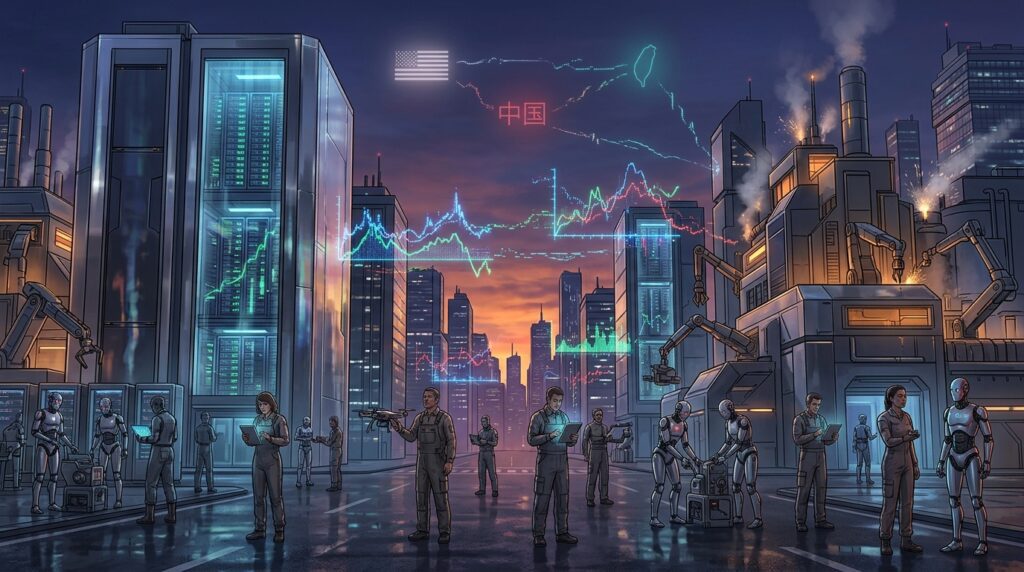
The AI race is real. It’s messy. And it’s moving faster than most people realize.
China isn’t catching up to the US anymore. It has, in many ways, already caught up. The question now isn’t whether America can maintain its lead — it’s whether it can redefine what “winning” even means in a world where the gap is 2.7 percent and shrinking.
Meanwhile, GPUs expire like milk. Workers lose jobs to algorithms. Shoe companies rebrand as AI firms. And a small island off the coast of China holds the fate of the entire global AI supply chain in its hands.
If that doesn’t make you want to read the full Stanford report, nothing will.
Sources
- Futurism — China Is Starting to Pull Ahead of US in AI Race
- Mana Telugu — US–China AI Gap Closes, Says Stanford University Report
- Quartz — Stanford’s Big AI Report Is Out: Here’s What to Know
- Taipei Times — Taiwan Critical to AI Hardware Resilience: Report
- 2nd Order Thinkers — The AI Layoff Dilemma: GPU Expires
- Stanford HAI — 2026 AI Index Report
US China AI Race
US AI Infrastructure
AI Supply Chain
China AI Policy
China AI Labor Market
AI Chip Competition
The Kingy Brief
Get the next Kingy Brief.
Source-checked AI changes, original tests and one practical thing to try.
Free · Choose your subjects · Double opt-in · Unsubscribe anytime