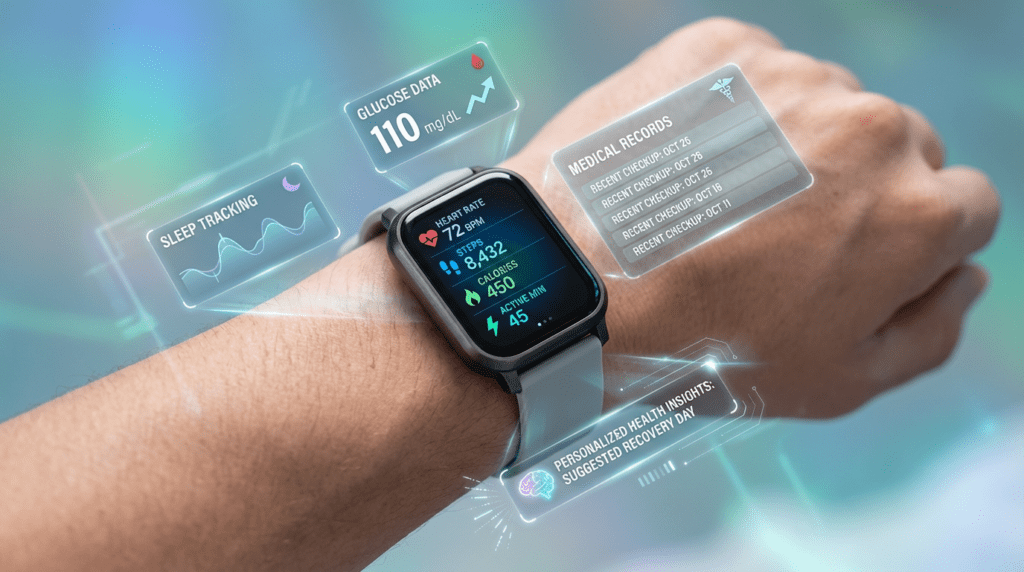
Google is going all-in on AI health coaching. Here’s everything that just changed and what you should know before handing over your health data.
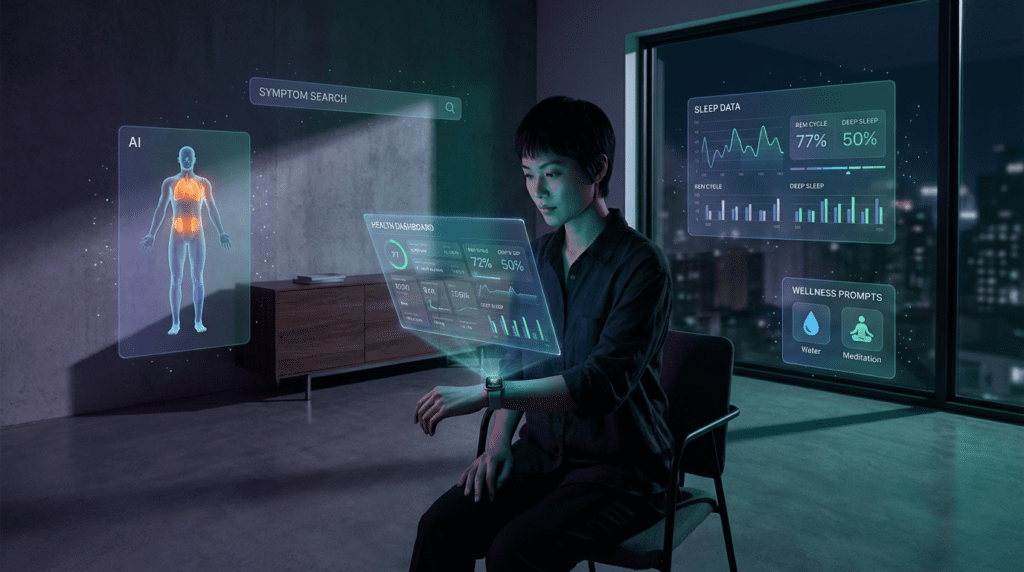
The AI Health Coach Era Is Here, Whether You’re Ready or Not
Let’s be honest. Most of us have Googled a symptom at 2 a.m. and convinced ourselves we had something terrible. It’s practically a rite of passage. But what if your fitness tracker could actually give you smart, personalized health advice based on your real medical history instead of sending you down a WebMD rabbit hole?
That’s exactly what Google is betting on. This week, the tech giant announced a sweeping set of upgrades to Fitbit’s AI-powered Personal Health Coach. And these aren’t small tweaks. We’re talking about three major improvements that could genuinely change how millions of people interact with their health data. Sleep tracking just got smarter. Glucose monitoring is joining the party. And — here’s the big one, your Fitbit will soon be able to read your actual medical records.
Yeah. Your medical records.
Take a breath. We’ll walk through all of it.
Sleep Tracking Just Got a Serious Glow-Up
Let’s start with the update that affects every single Fitbit user: sleep tracking. Google calls this their “most significant update yet” for sleep, and honestly, that’s not an exaggeration.
Here’s the problem the old system had. It couldn’t always tell the difference between you trying to fall asleep and you actually being asleep. So if you spent 45 minutes lying in bed scrolling your phone before finally drifting off, Fitbit might have counted all of that as sleep. Not exactly accurate.
The new algorithm fixes that. It uses more advanced machine learning to better distinguish between the two states. It now captures interruptions more accurately too, like when your cat decides 3 a.m. is the perfect time to knock things off your nightstand, or when you make a midnight trip to the kitchen. Those moments get logged correctly now, instead of being lumped in with your actual sleep.
Nap detection also got an upgrade. The system is better at recognizing short sleep sessions throughout the day, which matters a lot for people who work irregular hours or just love a good afternoon nap.
The result? A 15% improvement in sleep stage accuracy across REM, Light, and Deep sleep categories. That’s not a rounding error. That’s a meaningful jump.
But wait, there’s more. Fitbit is also rolling out a reimagined Sleep Score. The old score told you how much deep sleep you got. The new one tells you how long it took to get there. That’s a crucial distinction. You could sleep eight hours and still feel terrible if it took you two hours to actually fall asleep. The new score surfaces that kind of detail and gives you targeted coaching on what to actually fix.
The sleep tracking update is rolling out now. The new Sleep Score experience follows in the coming weeks for Public Preview users.
Glucose Monitoring Enters the Chat
Here’s something that flew a little under the radar in all the medical records buzz: Fitbit is also adding support for continuous glucose monitors (CGMs).
Starting next month, US Public Preview users will be able to connect a CGM through Health Connect. Once connected, you can ask the AI health coach how specific events, a workout, a meal, that slice of pizza you definitely didn’t regret, actually impacted your glucose levels.
This is a big deal. Glucose monitoring used to be something only people with diabetes worried about. But the wellness world has shifted. More and more people are using CGMs to understand how their bodies respond to food, exercise, and stress. Connecting that data directly to Fitbit’s AI coach means you can finally get answers that are grounded in your biology, not generic nutrition advice.
Think about it. You go for a run, eat a big carb-heavy meal afterward, and then ask your coach: “How did that pasta actually affect my blood sugar?” And it tells you. Based on your actual data. That’s genuinely useful.
Droid-Life called this one of the three big improvements, and it’s easy to see why. It’s the kind of feature that turns a fitness tracker into something closer to a real health companion.
The Big One: Your Fitbit Can Now Read Your Medical Records
Okay. Here’s where things get interesting, and a little complicated.
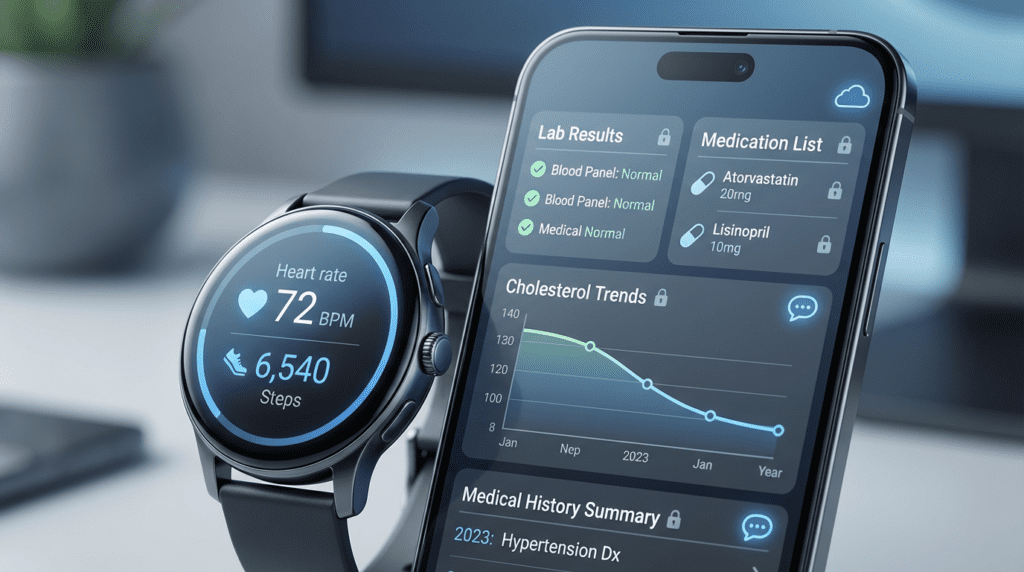
Starting next month in preview, US Fitbit users will be able to link their medical records directly to the Fitbit app. We’re talking lab results, medications, visit history, and more. All of it feeds into the AI health coach, which then uses that data to give you more personalized, relevant advice.
The Verge put it well: Google is hoping users are willing to trade their most sensitive data in exchange for more personalized health advice. And honestly? A lot of people probably will.
Here’s a concrete example of how it works. Say you want to improve your cholesterol. Instead of getting a generic response about eating less saturated fat, the coach can pull up your actual cholesterol labs, highlight notable values and trends, and give you advice that’s tailored to your numbers and your lifestyle patterns. That’s a fundamentally different experience than anything Fitbit has offered before.
Florence Thng, Google’s Health Intelligence product management director, explained it simply: “When your coach understands your medical history, its guidance becomes safer, more relevant and more personalized.”
To connect your records, Fitbit is partnering with b.well and CLEAR. You can search for your healthcare provider and link to their portal directly. Or you can verify your identity with CLEAR, just a selfie and a valid ID, and it will automatically locate and sync your records across different providers. The system uses IAL2-certified security standards, which is the same level of identity verification used in high-security government applications.
In the coming months, you’ll also be able to share your records and AI-generated summaries with family members or healthcare providers via a Smart Health Link URL or QR code. That’s a genuinely useful feature for people managing chronic conditions or coordinating care with multiple doctors.
But Wait — Should You Actually Do This?
Let’s pump the brakes for a second. Because handing your medical records to a Google-owned app is not a decision to make lightly.
ZDNET raised some important questions about this. Privacy is the obvious concern. Google says medical records are stored securely within Fitbit and are not used for ads. Users will have control over how their data is used, shared, or deleted. But Google hasn’t specified whether that data lives on-device or on Fitbit’s servers. That’s a meaningful distinction, and it’s one Google should probably clarify before the feature goes live.
There’s also the hallucination problem. AI chatbots sometimes make things up. That’s a known limitation of large language models. When the stakes are your health, that’s not a quirk you can just shrug off. Google acknowledged this directly in a statement to ZDNET: “We acknowledge that Large Language Models can have limitations, including potential inaccuracies and hallucination. To address this, we invest heavily in a validation process to enhance the quality of our models.”
That’s a reasonable answer. But it’s also a reminder that this is still a work in progress.
Google is also very clear about what the coach cannot do. It cannot diagnose conditions, it cannot treat them and it cannot monitor diseases. A small disclaimer in Google’s blog post urges users to consult a professional “before making changes concerning your health.” The coach will also remind users to see a healthcare professional when conversations drift too far into medical territory.
So think of it less like a doctor and more like a very well-informed friend who happens to have access to your health records. Helpful? Absolutely. A replacement for actual medical care? Not even close.
Google Is Playing in a Very Crowded Field
It’s worth zooming out for a moment. Google isn’t doing this in a vacuum. The race to build the ultimate AI health companion is heating up fast.
Oura, the smart ring company, uses a dedicated chatbot to personalize health advice. Whoop lets you upload medical records and query its AI directly. Amazon, OpenAI, and Microsoft are all making moves in the health AI space too. Even Anthropic and OpenAI explicitly encourage users to share health data with Claude and ChatGPT.
What makes Fitbit’s play interesting is the combination of factors: a massive existing user base, deep integration with wearable data, and now the addition of medical records and glucose monitoring. That’s a lot of data points feeding into one AI system. The potential for genuinely useful insights is real.
But so are the risks. Companies operating in this space walk a fine line with regulators like the FDA. Many AI health products aren’t available in regions with strict privacy laws like Europe. And experts consistently warn users to be careful about what they share — especially sensitive data like reproductive health information.
According to research cited by ZDNET, eight in 10 US adults go online to look up health information, and over two-thirds find that information reliable. People are already turning to digital tools for health guidance. The question isn’t whether AI health coaching will become mainstream, it’s whether companies like Google can do it responsibly.
What This All Means for You

So where does this leave the average Fitbit user? In a pretty exciting place, actually.
The sleep tracking improvements alone make the update worth paying attention to. More accurate data means better insights. Better insights mean you can actually make changes that improve how you feel. That’s the whole point of wearing a fitness tracker in the first place.
The CGM integration opens up a new dimension of health monitoring for people who want to go deeper on metabolic health. And the medical records feature, used thoughtfully, could genuinely transform how people manage their long-term health.
The key word is thoughtfully. Read the privacy settings. Understand what you’re sharing and with whom. Don’t treat the AI coach as a substitute for your actual doctor. But don’t dismiss it either. Used correctly, this could be one of the most useful health tools most people have ever had access to.
Google is moving fast. The sleep updates are rolling out now. The medical records feature and CGM integration arrive next month for Public Preview users. A new “Get care now” research study is also coming in the next few weeks, exploring how conversational AI can help users navigate their health during virtual visits.
The future of personal health is getting smarter. Your wrist is about to know a whole lot more about you.
Sources
- The Verge — Fitbit’s AI health coach will soon be able to read your medical records
- 9to5Google — Fitbit improves sleep tracking, new Sleep Score and health records coming
- ZDNET — Fitbit users: You can upload medical records now for AI advice – but is that safe?
- Droid-Life — Fitbit’s Personal Health Coach Gets 3 Big Improvements
The Kingy Brief
Get the next Kingy Brief.
Source-checked AI changes, original tests and one practical thing to try.
Free · Choose your subjects · Double opt-in · Unsubscribe anytime