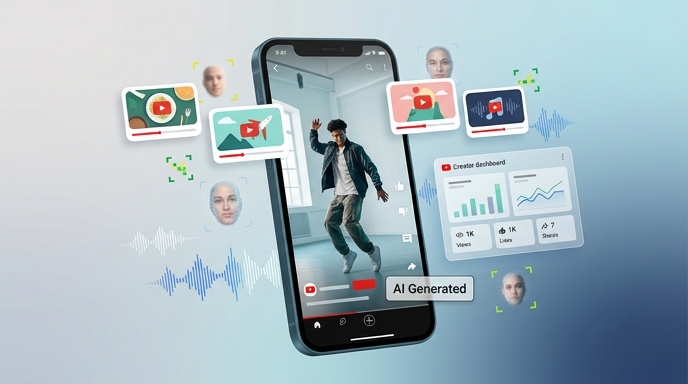
The Label Is Coming to the Main Stage
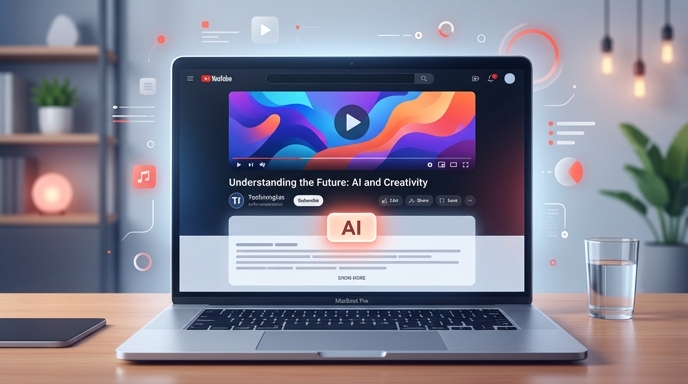
YouTube is changing how it tells viewers when a video uses realistic AI. The big shift is simple: the label is moving to places people might actually notice. For regular long-form videos, YouTube will place the AI disclosure directly below the video player and above the description. For Shorts, the label will appear as an overlay on the video itself. That matters because the old setup buried key disclosure details inside the expanded description, which is basically the internet’s equivalent of “check the glove compartment.” Most people never did.
The new label will use “AI” next to an information symbol. YouTube says this will become the single label format for photorealistic or meaningfully AI-altered or AI-generated content. Less realistic, animated, or lightly altered content will still get disclosed in the expanded description rather than being pushed onto the main video surface.
In plain English: YouTube wants the serious AI stuff out in the open. Not hidden, Not tucked away. Not waiting for a viewer with detective instincts and too much free time.
Why This Is Happening Now
AI video has stopped looking like a weird party trick. It can now mimic people, places, events, and polished camera work with enough realism to make viewers pause and ask, “Wait, did that actually happen?” That is the core problem YouTube is trying to manage. Since 2024, the platform has required creators to disclose when realistic altered or synthetic content could be mistaken for a real person, place, scene, or event.
The new update builds on that earlier system. YouTube says it has learned more about what viewers find useful in AI disclosures and now wants the process to feel more intuitive. That sounds corporate, yes. But the practical point is solid: a disclosure that nobody sees is barely a disclosure. It is more like a secret wearing a tiny hat.
This change also lands at a moment when AI-made content is flooding social platforms. The Decoder notes that YouTube is responding to a growing problem of low-quality AI content and synthetic media, including material with political overtones.
Automatic Labels Are the Bigger Deal
The visible label is useful. The automatic detection system is the spicy part.
Starting in May 2026, YouTube says it is rolling out “new internal signals” to help identify AI-generated content. If a creator does not disclose AI use, but YouTube’s systems detect significant photorealistic AI use, the platform can apply the label automatically.
That changes the power balance. Until now, YouTube’s system leaned heavily on creator self-reporting. The platform asked creators to say when they used realistic AI. Now YouTube is saying, in effect: “We would still love your honesty, but we brought a metal detector.”
NDTV Profit describes the move as automatic flagging of content YouTube deems photorealistically AI-generated, regardless of whether creators label it themselves. The Verge reports the same core update: creators must still disclose photorealistic AI, but YouTube may add a label if its systems detect significant use.
That is not a total AI dragnet. It focuses on significant photorealistic AI use. The word “significant” is doing heavy lifting here, and YouTube has not publicly defined every edge case.
Creators Still Get Some Control
YouTube is not saying its detection system will always be perfect. Good. It won’t be. Detection tools can misfire, especially when creators use AI for editing, cleanup, effects, dubbing, visual polish, or mixed production workflows.
So YouTube says creators can update the disclosure status in YouTube Studio if they believe their content was incorrectly identified as AI-generated. That gives creators an appeals-style path, though the exact friction of that process will matter in practice. A simple toggle is one thing. A bureaucratic maze guarded by a captcha goblin is another.
But some labels will not be removable. YouTube says disclosures will remain permanent for content made with its own AI tools, including Veo or Dream Screen. They will also remain permanent when C2PA metadata indicates the content was fully AI-generated.
That distinction is important. If YouTube’s own tools made the content, YouTube knows. If provenance metadata confirms full AI generation, YouTube has a technical basis to keep the label in place. For other material, creators may have more room to contest the label.
Shorts Get the Loudest Treatment
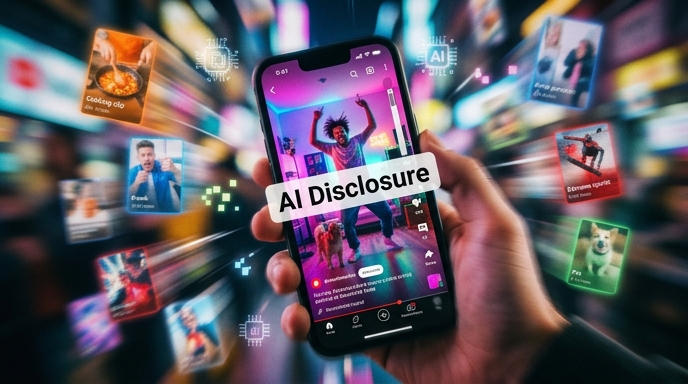
Shorts may benefit most from the update because short-form video moves fast. Viewers swipe, laugh, gasp, judge, and leave. Nobody is expanding descriptions while a 22-second clip sprints past them wearing roller skates.
YouTube says Shorts will show the AI disclosure as an overlay on the video itself. That puts the context directly in the viewing experience. The Verge notes that YouTube had already been testing a variation of the AI label on Shorts and had previously used an overlay for altered or synthetic content.
That makes sense. Shorts are where deceptive realism can spread quickly. A fake explosion, fake celebrity cameo, fake public incident, fake animal rescue, fake street interview, fake miracle gadget short-form platforms love this stuff because the format rewards instant emotion. AI makes the factory cheaper.
An overlay will not stop every misleading video. But it can slow the viewer’s first assumption. That matters. The first assumption is where misinformation pays rent.
What Counts as Disclosure-Worthy AI?
YouTube’s policy does not treat every AI-assisted workflow the same way. The platform’s 2024 guidance said creators needed to disclose realistic content that viewers could easily mistake for a real person, place, scene, or event. Examples included swapping a realistic person’s face, synthetically generating someone’s voice, altering footage of real events or places, or generating realistic fictional scenes involving major events. (blog.youtube)
But YouTube does not require disclosure for every tiny use of generative AI. The company has said creators do not need to disclose AI used for productivity tasks such as scripts, content ideas, or automatic captions. It also excludes clearly unrealistic content, animation, color adjustments, lighting filters, background blur, vintage effects, beauty filters, and other minor visual enhancements.
That distinction keeps the policy from becoming absurd. Otherwise, half the platform would need labels for thumbnail cleanup, caption tools, background blur, and “make my lighting less dungeon-like” filters.
The new prominent label focuses on photorealistic and meaningfully altered or generated content. That is the bucket where viewers most need context.
What the Label Does Not Do
YouTube says the disclosure label alone will not change whether a video gets recommended or whether it can earn money. That is a big line for creators. A visible AI label may affect viewer trust, but YouTube says the label itself does not automatically punish distribution or monetization.
This matters because creators often fear that any platform label is a scarlet letter. In this case, YouTube is framing the label as context, not a penalty. The company says the goal is to balance transparency with creator control.
Still, perception will do its own messy little dance. Some viewers may see an AI label and shrug. Others may treat it as a warning flare. Some creators may use it proudly. Others may avoid it like a wet sock.
The label will not decide the cultural meaning of AI content. Viewers will. YouTube is just moving the sign closer to their eyeballs.
The Trust Problem Is Bigger Than One Label
YouTube’s update is useful, but nobody should pretend it solves the synthetic media problem. Labels help only when viewers notice them, understand them, and care. That is a high bar on a platform where people watch tutorials at 1.5x speed while eating cereal over the sink.
Automatic detection also creates its own tension. If YouTube catches too little, bad actors keep slipping through. If it catches too much, legitimate creators get annoyed or mislabeled. Either way, YouTube will take heat. That is the joy of governing a giant video platform: every lever shocks someone.
The Verge has previously criticized YouTube’s AI labeling practices as inconsistent, and its latest coverage frames the new system as a chance for YouTube to finally stick to a clearer approach.
That consistency will matter. A label that appears sometimes, hides elsewhere, and changes wording across formats would only create more confusion. A single format for meaningful photorealistic AI content is the cleaner move.
The Real Target: Plausible Fakery
The update is not really about fantasy animation or goofy AI experiments. It is about plausible fakery. That includes videos that can make synthetic people look real, fake places look documented, or fictional events look like breaking news.
YouTube’s earlier policy specifically focused on realistic content viewers could mistake for real people, places, scenes, or events. The new update keeps that center of gravity. It does not ban this content. It labels it.
That approach fits YouTube’s larger balancing act. The platform wants creators to use AI tools. YouTube has its own AI tools, after all. But it also wants to avoid becoming a swamp of convincing nonsense. That is the tightrope: encourage creativity, discourage deception, and don’t accidentally flatten every legitimate use case with a policy hammer.
The best version of this system gives viewers context without treating every AI-assisted creator like a villain in a hoodie. The worst version becomes inconsistent, confusing, or easy to game.
The next few months will show which version YouTube actually built.
Why Viewers Should Care
Viewers do not need to become forensic media analysts. Nobody wants every casual scroll to feel like a courtroom exhibit. But people do need faster clues about what they are watching.
The new labels give viewers a quicker signal. On long videos, they appear under the player. On Shorts, they sit on the video. If YouTube’s systems detect significant photorealistic AI use and the creator did not disclose it, the label can appear automatically.
That means viewers may soon see AI context before they emotionally react, share, or argue with strangers in the comments section like it’s a civic duty.
Will people still fall for fake videos? Absolutely. The internet remains undefeated at turning confusion into a group project. But this update gives viewers a better shot at spotting synthetic realism before it does its little magic trick.
And that is the point. Not panic. Not perfection. Just a clearer warning label on the machine that makes “real-looking” easier than ever.
The Bottom Line
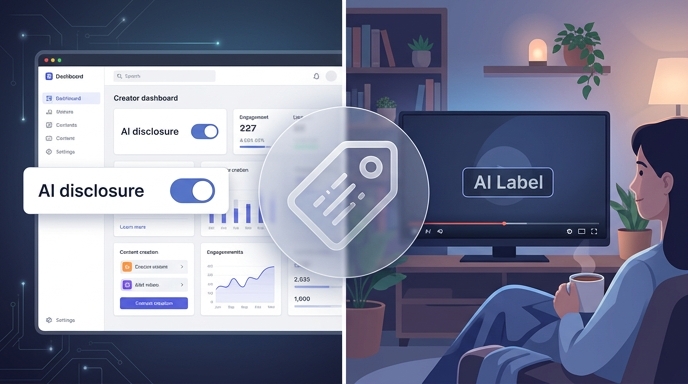
YouTube’s new AI labeling system moves the platform from passive disclosure toward active identification. Creators still need to disclose realistic AI use, but YouTube will now try to catch significant photorealistic AI use on its own. Labels will become more visible, especially on Shorts, and some disclosures will remain permanent when YouTube tools or C2PA metadata confirm AI generation.
That is a meaningful upgrade. It is not a silver bullet. Silver bullets are for werewolves, and this problem is more like glitter: once synthetic media gets everywhere, good luck cleaning it out of the carpet.
The smarter read is this: YouTube is acknowledging that self-reporting alone is not enough. The platform built a disclosure system, learned that hidden labels were too easy to miss, and now wants labels where viewers can see them.
That is not revolutionary. It is overdue. But overdue can still be useful.
Sources
- The Verge — “YouTube is putting AI labels where you’ll actually see them” (The Verge)
- The Decoder — “YouTube will try to automatically flag AI videos starting this month” (The Decoder)
- NDTV Profit — “No Disclosure? YouTube Preps For Automatic Labelling Of AI-Generated Content” (NDTV Profit)
- YouTube Official Blog — “Improving AI labels for viewers and creators” (blog.youtube)
- YouTube Official Blog — “How we’re helping creators disclose altered or synthetic content” (blog.youtube)
- Deadline — YouTube AI labels coverage
- Quartz — YouTube automatic AI detection labels coverage
- IGN Middle East — YouTube automatic disclosures coverage
YouTube AI Search
YouTube AI Creation
YouTube AI Dubbing
YouTube AI Shorts
YouTube AI Policy
The Kingy Brief
Get The Kingy Brief.
AI changes, original tests and one practical thing to try. Fridays at 09:00 Vancouver time.
Free · Double opt-in · Unsubscribe anytime
Signup help and newsletter schedule
Signup form provided by Beehiiv. After submitting, check your inbox for "Confirm your subscription to The Kingy Brief" and open its confirmation link. Check Spam or Promotions if you cannot find it.
Fridays at 09:00 Vancouver time: source-checked AI changes, original tests and one practical thing to try. The weekly restart begins October 9, 2026. We skip a week when there is not enough verified material. Free. Unsubscribe anytime.