Inside the OpenAI Deployment Company: a $10 billion private-equity-backed bet on Forward Deployed Engineers, the Tomoro acquisition, and the Palantir playbook coming to enterprise AI
On May 11, 2026, OpenAI took the biggest step yet beyond being a model maker. The company announced the launch of the OpenAI Deployment Company — internally referred to as “DeployCo” — a new majority-owned subsidiary built specifically to push frontier AI into the operating guts of the world’s largest businesses. It launches with more than $4 billion in initial investment, a $10 billion pre-money valuation, 19 founding investment and consulting partners, and an immediate acquisition: London-based applied AI firm Tomoro, which brings roughly 150 Forward Deployed Engineers (FDEs) and deployment specialists on day one.
This isn’t a product launch. It’s an industrial-scale distribution strategy — and according to The Next Web, it’s structured in a way “no normal venture-investing standard” has seen before, complete with a 17.5% guaranteed annual return to its private-equity backers over five years.
Here’s everything we know, why it matters, and why the announcement is much bigger than most people initially realized.
What exactly is the OpenAI Deployment Company?
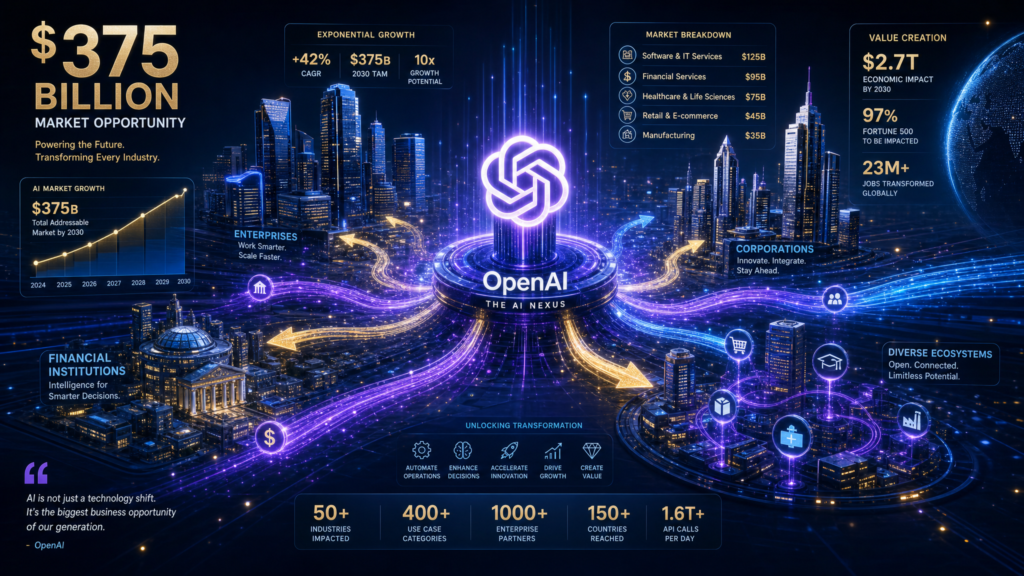
According to OpenAI’s official announcement, DeployCo is a standalone business unit, majority-owned and controlled by OpenAI, designed to “help organizations build and deploy AI systems they can rely on every day across their most important work.”
In practice, it does three things:
- Embeds Forward Deployed Engineers (FDEs) inside customer organizations to redesign workflows around frontier AI.
- Runs end-to-end deployments — from initial diagnostic, to selecting priority workflows, to building, testing, and operating production AI systems.
- Acquires and consolidates AI consulting and systems-integration firms to scale faster, starting with Tomoro.
Denise Dresser, OpenAI’s Chief Revenue Officer, framed it bluntly in the announcement: “AI is becoming capable of doing increasingly meaningful work inside organizations. The challenge now is helping companies integrate these systems into the infrastructure and workflows that power their businesses. DeployCo is designed to help organizations bridge that gap.”
OpenAI says more than one million businesses have already adopted its products and APIs, and the company has concluded that the next phase of enterprise AI will not be defined by who has the best model — but by who can actually get those models into production inside complex enterprises.
The 19 partners: a Who’s Who of finance and consulting
The Deployment Company’s investor list reads like a roll call of global capital. As detailed by Moneycontrol and Reuters via New Orleans CityBusiness:
- Lead investor: TPG
- Co-lead founding partners: Advent International, Bain Capital, Brookfield Asset Management
- Founding partners: B Capital, BBVA, Emergence Capital, Goanna Capital, Goldman Sachs, SoftBank Corp., Warburg Pincus, WCAS
- Consulting and systems integration partners: Bain & Company, Capgemini, and McKinsey & Company
OfficeChai reports that Brookfield alone has committed roughly $500 million to the venture. Together, the investment and consulting partners sponsor more than 2,000 portfolio companies worldwide and advise thousands more.
That distribution footprint is the entire point. Speaking on the deal, TPG CEO Jon Winkelried told Moneycontrol that “AI-driven enterprise transformation represents one of the most compelling growth opportunities in technology today.”
DeployCo will also work alongside OpenAI’s existing Frontier Alliance partners, which include Accenture and Boston Consulting Group, according to Moneycontrol’s reporting.
The Tomoro acquisition: 150 FDEs from day one
The other half of the announcement was the planned acquisition of Tomoro, a London-headquartered applied AI consulting and engineering firm founded in 2023 in alliance with OpenAI. Tomoro brings approximately 150 experienced Forward Deployed Engineers and Deployment Specialists to DeployCo from day one.
Tomoro’s existing client roster gives a window into the type of work DeployCo intends to scale — including Tesco, Virgin Atlantic, Supercell, Mattel, and Red Bull. The acquisition is subject to customary closing conditions and regulatory approval, with OpenAI confirming it is expected to close in the coming months. Financial terms were not disclosed.
OpenAI says Tomoro’s team will be critical in connecting OpenAI models to customers’ “data, tools, controls, and core business processes” — accelerating the move from use-case selection to production deployment.
Why this is the bigger story: the Palantir playbook, financialized
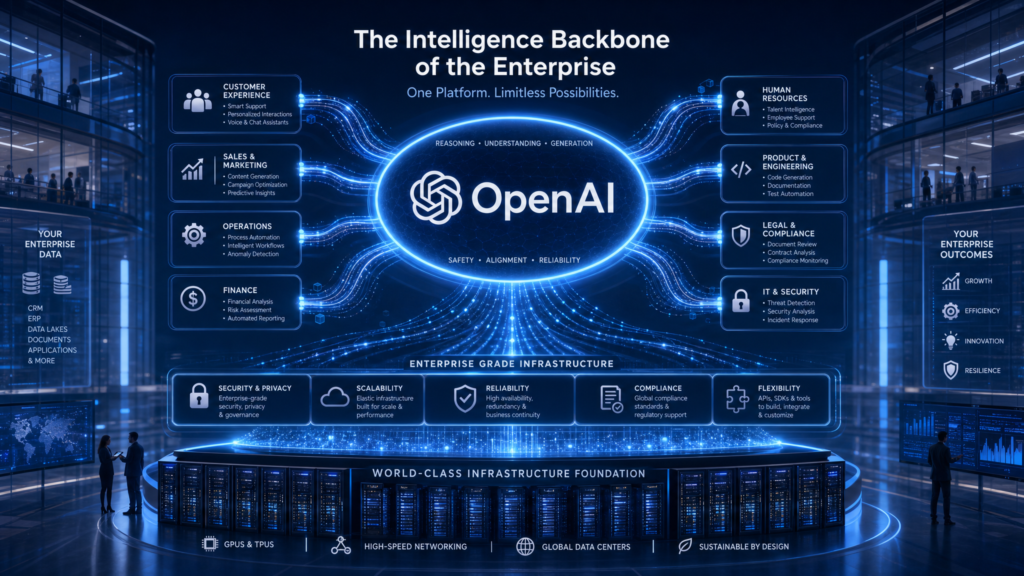
While the press release reads like a standard enterprise-services announcement, The Next Web’s reporting — corroborated by Yahoo Finance and Bloomberg via Tech Funding News — reveals just how aggressive the underlying financial structure is:
- The venture is anchored at a $10 billion valuation.
- OpenAI’s own commitment is up to $1.5 billion ($500m at close, with an option to add $1bn later).
- The PE consortium is putting in roughly $4 billion across a five-year window.
- OpenAI is guaranteeing its private equity backers a 17.5% annual return over five years.
- Strategic control sits with OpenAI through super-voting shares.
That guaranteed return floor is, as TNW puts it, “by any normal venture-investing standard, unusual.” Private equity firms don’t typically receive an explicit annualized return commitment from an operating partner. What OpenAI has effectively done is convert a slice of its growth optionality into a tradeable, capped, fixed-yield instrument that PE firms can underwrite the way they would a credit fund. In exchange, the PE firms agree to make their portfolio companies a captive distribution channel for OpenAI.
This is, almost beat-for-beat, the Palantir playbook that helped its stock triple: embed engineers into client companies, get those companies hooked on the underlying product, and end up with a customer for life. DeployCo just translates that pattern from one company’s sales motion into a private-equity-distributed industrial complex.
Why FDEs change the math
OpenAI’s announcement spends considerable time explaining why this work is hard — and why nothing about deploying agents resembles past tech upgrades.
Unlike moving on-prem CRM to cloud CRM, agents rewire the underlying business processes themselves. Every industry has its variants — marketing for a CPG brand differs entirely from marketing inside a healthcare provider. Bringing agents to sales in a B2B software company looks nothing like bringing agents to a car dealership. And inside every company, there are bespoke idiosyncrasies that make replicable, off-the-shelf rollouts almost impossible.
To make any of it actually work, organizations have to:
- Modernize infrastructure and data so it’s “ready for agents.”
- Re-map access controls, entitlements, and permissions for both humans and agents.
- Ensure agents have the right context to operate.
- Continuously evaluate and maintain agents through model upgrades.
- Drive the change management of figuring out which work humans do and which work agents do.
That’s an enormous body of technical and domain-specific work — and historically, that’s the role consulting firms have filled. DeployCo’s bet is that OpenAI is better positioned than any traditional integrator to do this, because its engineers can build for where frontier AI capabilities are headed rather than where they are today.
The Anthropic mirror image
OpenAI didn’t move alone. Within minutes of its announcement, Anthropic revealed a parallel structure — a $1.5 billion enterprise AI services firm anchored by Blackstone, Hellman & Friedman, and Goldman Sachs (each putting in roughly $300 million), with additional backing from Apollo Global Management, General Atlantic, Leonard Green & Partners, GIC, and Sequoia Capital.
Anthropic’s approach focuses on embedding Claude into the operations of mid-sized companies. As TNW notes, “Both companies have decided that the conventional enterprise-software sales cycle, deal-by-deal, contract-by-contract, is too slow to capture the next wave of AI adoption. Both have decided that buyout firms… are the most efficient distribution channel available.”
The two structures are mirror images. OpenAI’s is bigger in capital, more aggressively financialized, and more concentrated on PE’s portfolio universe. Anthropic’s is smaller and more anchor-led. The fact that two leading AI labs landed on the same private-equity-fueled distribution strategy within days of each other is itself a signal that this is now the default playbook.
The $375 billion market they’re targeting
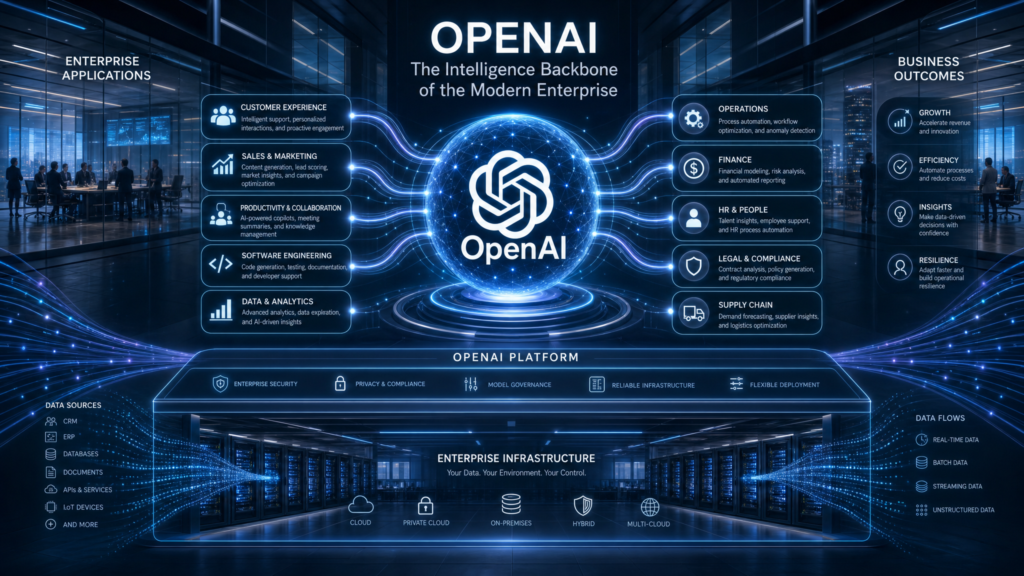
The strategic logic is straightforward. As Reuters reporting noted, enterprises typically spend roughly $6 on services for every $1 they spend on software. With the global enterprise software market continuing to grow rapidly under AI demand, the addressable services market sits around $375 billion — and it has historically belonged to Accenture, Deloitte, IBM Consulting, Capgemini, McKinsey, and Indian IT giants.
OpenAI and Anthropic are now charging directly at that pool — and bringing some of those very same firms (Bain & Company, McKinsey, Capgemini) along as partners rather than competitors.
Moneycontrol explicitly flagged that this could pose a “competitive threat to India’s $300 billion outsourcing industry, since it threatens commoditised layers of IT services built around supplying human labor at scale.”
Brad Lightcap, special projects, and the OpenAI org chart
OpenAI’s COO Brad Lightcap recently moved into a new role focused on special projects, reporting directly to Sam Altman, and is leading the company’s push through this new venture. That signals just how strategically important DeployCo is internally. This isn’t a side bet — it’s positioned alongside the model and product organizations as one of OpenAI’s three or four most important commercial vehicles.
Risks the structure raises
The novelty of the deal carries real risks, several of which TNW outlines:
- Regulatory exposure. A guaranteed-return commitment from an AI platform to the largest financial-services firms in the U.S. lives inside a regulatory frame that has not yet been tested. Read aggressively, it looks like a quasi-debt instrument with above-market yields backed by a fast-growing technology operator — exactly the kind of structure accounting and securities regulators eventually scrutinize.
- Execution risk. PE firms are typically better at financial restructuring than at operational technology integration. DeployCo’s thesis assumes portfolio companies will adopt OpenAI tools at sufficient pace and depth to justify the venture’s economics. Past large-scale enterprise software rollouts inside PE portfolios have a mixed track record.
- Strategic capping. By committing $1.5 billion and a 17.5% guaranteed return for five years, OpenAI has effectively capped the upside of its enterprise PE channel. If DeployCo over-performs, the sponsors capture disproportionately more economics. If it underperforms, OpenAI is on the hook for the floor.
What this means for the rest of the market
The DeployCo announcement closes one chapter of the AI commercialization story and opens another. The chapter that’s closing: AI labs as pure model-API businesses. The chapter that’s opening: AI labs as embedded operating layers inside the world’s most important enterprises, placed there by partners who agree to share both the cost and the benefit of that placement.
The OpenAI announcement itself acknowledges that DeployCo is built for large enterprises. As the announcement and external commentary both note, the vast majority of companies are not large — and they will need AI deployed inside their businesses too, at a different price point. That mid-market and SMB gap is enormous, and it’s almost certainly the next frontier for both OpenAI (likely through Frontier Alliance partners and Capgemini-style integrators) and Anthropic (whose own structure is more deliberately mid-market-focused).
For the consulting and outsourcing industry, the message is unambiguous: the model makers want a direct seat at the table where AI is implemented, not just sold. And they are willing to write nine-figure guarantee checks to private equity to make sure they get it.
For everyone else, the takeaway is simpler. As the Twitter analysis correctly noted: follow the money. In a single week, the two leading frontier AI labs have committed to embedding thousands of engineers into more than 2,000 of the biggest companies in the world. That’s not an enterprise software cycle — that’s an industrial replatforming. And the OpenAI Deployment Company is the most visible, most aggressively financialized expression of it so far.
The next 18 months of revenue figures will tell us whether $4 billion of PE capital, $1.5 billion of OpenAI capital, and a 17.5% guaranteed return was the right way to structure the bet. But the strategy itself — that frontier AI labs win the next decade by owning the deployment, not just the model — is now firmly the consensus.
The Kingy Brief
Get the next Kingy Brief.
Source-checked AI changes, original tests and one practical thing to try.
Free · Choose your subjects · Double opt-in · Unsubscribe anytime