For years, wearable tech has lived in a strange limbo. Fitness trackers became incredibly smart, yet somehow emotionally flat. They counted steps, they tracked sleep. They barked reminders. But the magic faded. The category turned into a sea of black wristbands serving up endless readiness scores while quietly dying from sameness.
Now Google is trying to reboot the entire experience.
The launch of the Fitbit Air marks one of the company’s most aggressive moves since it acquired Fitbit in 2021. But this is not merely another fitness tracker. Google appears to be building something far bigger: an AI-driven health ecosystem that blends coaching, predictive analytics, ambient computing, and subscription-based wellness into one tightly integrated platform.
And in classic Google fashion, the company is doing it while simultaneously dismantling parts of old Fitbit culture that longtime users genuinely loved.
The result is fascinating. Messy. Ambitious. Potentially lucrative. And deeply controversial.
According to reporting from The Verge, DC Rainmaker, Gadgets & Wearables, and others, Google is no longer treating Fitbit as a simple hardware brand. It is becoming the consumer-facing engine for Google Health’s AI ambitions.
That changes everything.
Fitbit Is No Longer Competing With Smartwatches
Google understands something the broader wearables industry has struggled to admit: most people do not actually want another tiny smartphone strapped to their wrist.
That market already belongs to the Apple ecosystem and high-end Garmin devices. Instead, Fitbit Air appears designed to attack an entirely different target.
Whoop.
The comparison keeps appearing across coverage for a reason. Fitbit Air removes the screen-heavy smartwatch philosophy and leans into passive health intelligence. It focuses on recovery, strain, readiness, sleep optimization, and continuous biometric monitoring rather than notifications and apps.
That shift matters.
The modern fitness consumer increasingly cares less about counting steps and more about actionable interpretation. Raw data has become cheap. Meaning is valuable.
Google knows this.
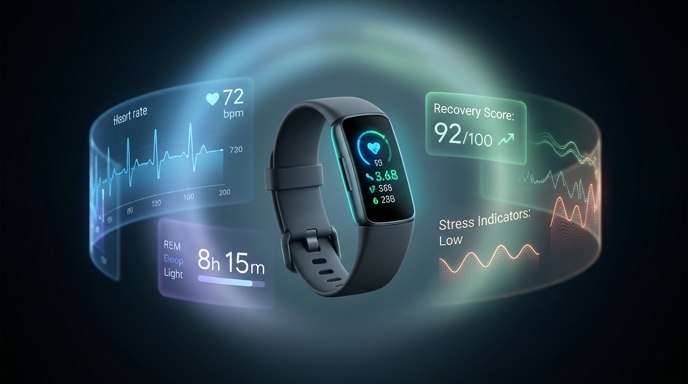
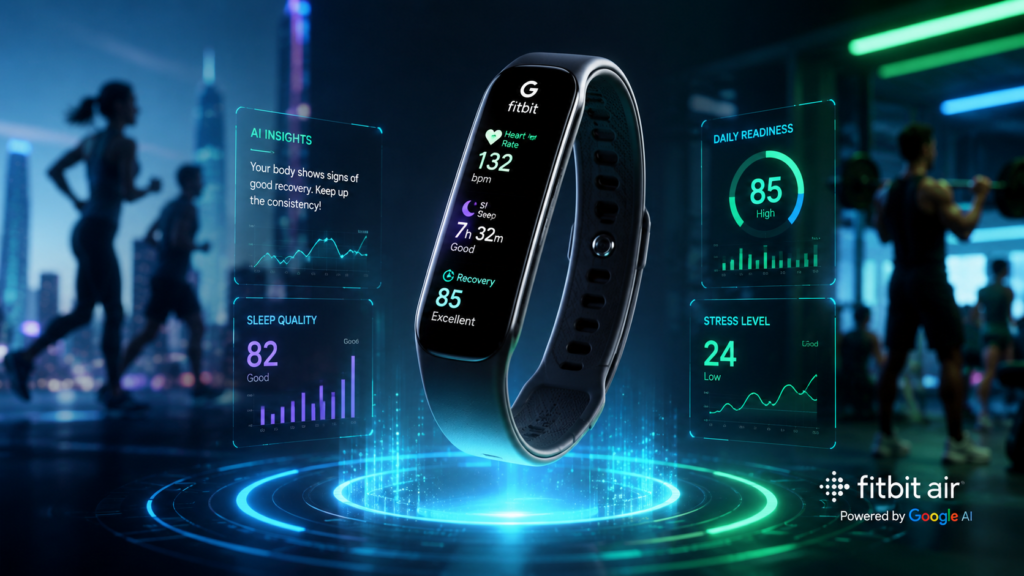
The Fitbit Air reportedly includes continuous heart-rate monitoring, skin temperature sensing, sleep analysis, stress tracking, recovery metrics, and AI-powered coaching layered on top of Google’s expanding health infrastructure. Instead of asking users to interpret charts themselves, the system aims to explain what the body is doing and why.
That sounds simple. It is not.
Most wearables dump oceans of numbers onto users who eventually stop looking. Google wants Fitbit Air to behave more like a health companion than a statistics machine.
And honestly, the industry has been heading here for years.
The Real Product Is Not the Hardware
The tracker itself matters less than the software surrounding it.
That may sound counterintuitive. It is also probably true.
Google’s strategy increasingly resembles what happened in cloud computing and smartphones: hardware becomes the delivery mechanism for services, subscriptions, and AI ecosystems. Fitbit Air is the latest node in that machine.
The device reportedly integrates deeply with the new Google Health platform, which centralizes wellness data across Android devices, Fitbit hardware, and AI systems. The company appears determined to create a persistent health graph around each user.
This is where things become both exciting and slightly unnerving.
The AI coaching component could eventually evolve into something genuinely transformative. Imagine a system that notices elevated resting heart rate trends, worsening sleep quality, increased stress markers, reduced recovery, and declining activity patterns — then proactively adjusts recommendations before burnout hits.
That is not science fiction anymore.
Google has the computational infrastructure, AI models, cloud architecture, and consumer reach to build this at massive scale.
But the tradeoff is obvious.
The more useful these systems become, the more intimate the data collection gets.
Health tracking already captures incredibly sensitive information. Sleep cycles. Cardiovascular behavior. Emotional stress patterns. Daily habits. Recovery trends. Potential illness indicators.
Fitbit Air pushes even deeper into that territory.
And unlike smaller wearable companies, Google sits atop one of the largest data ecosystems on Earth.
That reality will make some consumers uneasy no matter how polished the AI becomes.
Google Is Quietly Rewriting Fitbit’s Identity
The most emotionally charged reaction to Fitbit Air has not actually centered on the hardware.
It centers on what disappeared.
According to reporting from Blaze Trends, Google is phasing out several beloved Fitbit features including badges and Sleep Animals.
If you never used Fitbit, that may sound trivial.
It is not trivial.
Those small gamified features helped build Fitbit’s original identity. They gave the platform warmth. Personality. A sense of charm missing from many modern health apps.
Sleep Animals, especially, turned sleep analysis into something playful rather than clinical. Users became emotionally attached to them in the way people attach themselves to oddly specific digital rituals.
Google appears willing to sacrifice those elements in pursuit of a more serious, AI-centric health ecosystem.
That decision reveals a lot about the company’s priorities.
Old Fitbit emphasized motivation through delight. New Fitbit emphasizes optimization through intelligence.
Different philosophy entirely.
There is a risk here. A major one.
When companies over-optimize products, they often strip away the weird human quirks people actually love. Technology firms repeatedly underestimate emotional attachment to seemingly minor features. Google has done this before across multiple product lines.
Efficiency is not always the same thing as engagement.
Removing the playful DNA of Fitbit could alienate longtime users who never asked for an ultra-serious quantified-self experience.
Fitbit Air vs. Charge 6: A Battle of Philosophies
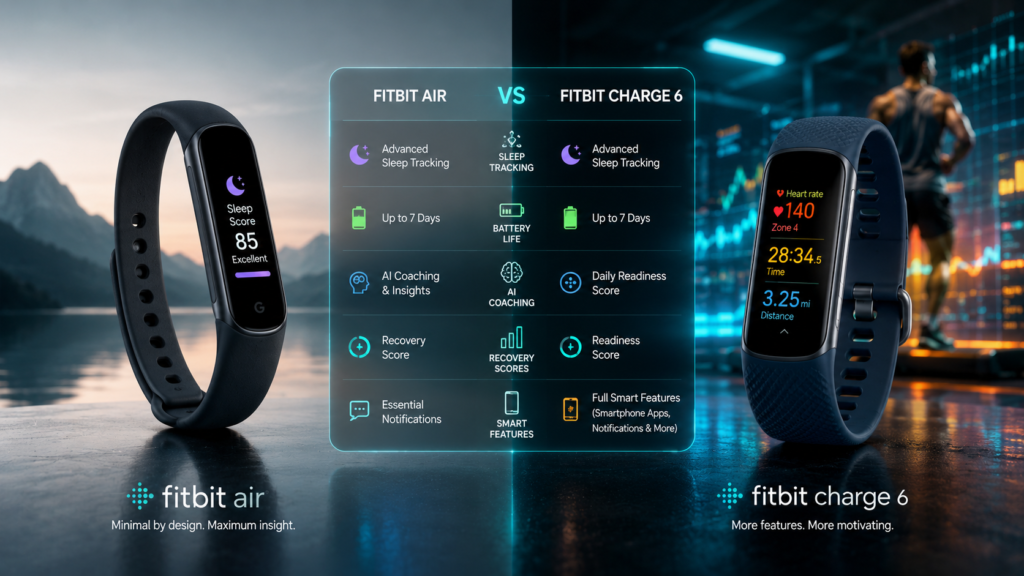
The comparison between Fitbit Air and the existing Fitbit Charge 6 reveals Google’s broader strategic shift.
As detailed by Gadgets & Wearables, the two products target different user mindsets despite overlapping functionality.
The Charge 6 still resembles the traditional fitness tracker formula. It includes onboard controls, familiar Fitbit features, and broader smartwatch-adjacent functionality.
Fitbit Air goes minimalist.
That distinction matters because the wearables market has fragmented into psychological tribes.
Some users want screens, metrics, apps, and constant interaction.
Others want invisibility.
The second group is growing fast.
Whoop proved consumers will pay premium subscription fees for devices that disappear into daily life while continuously monitoring the body. Oura did something similar with smart rings. Fitbit Air clearly enters that same arena.
And frankly, Google may have structural advantages here.
Unlike Whoop, Google controls Android integration, unlike Oura, it possesses gigantic AI infrastructure. Unlike Apple, it can position Fitbit Air as cross-platform wellness rather than luxury lifestyle hardware.
The strategy makes strategic sense even if execution remains uncertain.
But Google also faces a credibility problem.
Fitbit users have watched features disappear, services change, and ecosystems shift repeatedly since the acquisition. Trust erodes slowly, then all at once.
Consumers do not merely buy wearable devices. They buy into long-term ecosystems.
That commitment becomes risky when the parent company has a reputation for killing products.
AI Coaching Could Either Transform Fitness or Become Annoying Noise
The success of Fitbit Air probably hinges on one thing above everything else: whether the AI coaching is actually useful.
That sounds obvious. It is harder than it appears.
Most AI wellness systems today suffer from two major problems.
First, they state the obvious.
Second, they overwhelm users with generic advice.
Nobody needs artificial intelligence to announce that sleeping four hours and eating junk food might reduce recovery. Humans already understand basic cause and effect. The challenge lies in delivering recommendations that feel personalized, contextual, timely, and actionable.
Google may actually have a shot at solving this.
The company’s Gemini AI infrastructure gives it enormous capabilities in contextual reasoning and conversational interaction. If integrated effectively, Fitbit Air could evolve into a dynamic coaching system rather than a static analytics dashboard.
Imagine waking up to concise recommendations like:
“You slept poorly after elevated evening stress levels. A lighter workout today may improve recovery.”
That feels meaningfully different from “Readiness score: 63.”
Subtle distinction. Massive experiential difference.
But there is another possible outcome.
The AI becomes intrusive, repetitive, and emotionally exhausting.
Wearables already risk turning health into homework. Endless optimization loops can create anxiety rather than wellness. Some users become trapped in self-monitoring spirals where every biomarker fluctuation feels catastrophic.
The industry rarely discusses this openly enough.
A wearable that constantly evaluates your body can quietly reshape your psychology. Fitness becomes surveillance. Recovery becomes obligation. Sleep becomes performance.
Google will need to balance intelligence with restraint.
That is harder than building the sensors.
Subscription Fatigue Is the Elephant in the Room
The wearable industry increasingly runs on subscriptions.
Consumers hate this.
Companies love it.
Fitbit Air appears positioned within that same economic logic. Recurring revenue transforms hardware businesses from volatile purchase cycles into stable long-term income streams. Investors reward that model heavily.
But ordinary consumers are reaching saturation.
Streaming subscriptions. Cloud storage subscriptions. Productivity subscriptions. AI subscriptions. Gaming subscriptions. Meal subscriptions. Fitness subscriptions.
At some point the math breaks.
Whoop normalized high recurring costs in exchange for premium recovery analytics, but it remains a niche product relative to mainstream consumer electronics. Whether broader audiences will tolerate yet another monthly wellness bill remains uncertain.
Google may attempt to soften the blow by bundling Fitbit Air into larger ecosystem offerings tied to Android, YouTube, Google One, or future AI services.
That would be smart.
Still, subscription fatigue represents one of the biggest threats to the entire wearable sector. Consumers increasingly scrutinize whether these services genuinely improve their lives or simply recycle the same data through prettier interfaces.
And many users eventually realize a brutal truth:
Most fitness trackers tell you roughly the same things after six months.
The companies that survive will be the ones delivering sustained behavioral value, not just biometric novelty.
The Bigger Picture: Google Wants Ambient Health Computing
The real story here extends beyond Fitbit Air itself.
Google appears to be building toward ambient health computing.
That phrase sounds futuristic. In practice, it means health monitoring that fades into the background while continuously interpreting human behavior.
The wearable becomes less important than the surrounding intelligence network.
This aligns perfectly with where AI is heading overall. The next wave of consumer AI will not merely answer prompts. It will observe patterns over time, anticipate needs, and operate persistently across environments.
Health is an obvious application.
Google’s ecosystem already spans phones, watches, cloud AI, search behavior, location data, calendars, voice assistants, and smart home devices. Fitbit Air potentially plugs physiological data into that broader web.
That creates staggering opportunities for preventive wellness and personalized healthcare insights.
It also raises enormous questions about privacy, data governance, behavioral profiling, and corporate power.
Because once AI systems understand not just what you search for, but how your body responds emotionally and physically throughout the day, the informational asymmetry becomes extraordinary.
Most consumers still underestimate how valuable health prediction models could become.
Insurance companies understand it. Pharmaceutical firms understand it. Tech giants definitely understand it.
The companies controlling long-term biometric datasets may eventually wield immense influence over digital healthcare infrastructure.
Fitbit Air is not just a gadget launch.
It is another brick in that future.
Google Is Taking a Risk That Actually Makes Sense
For all the controversy, Google deserves credit for making a genuinely ambitious move in a stagnant category.
Most wearable launches today feel painfully incremental. Slightly brighter screens, slightly longer battery life. Slightly better sensors. Same product.
Fitbit Air at least attempts a philosophical reset.
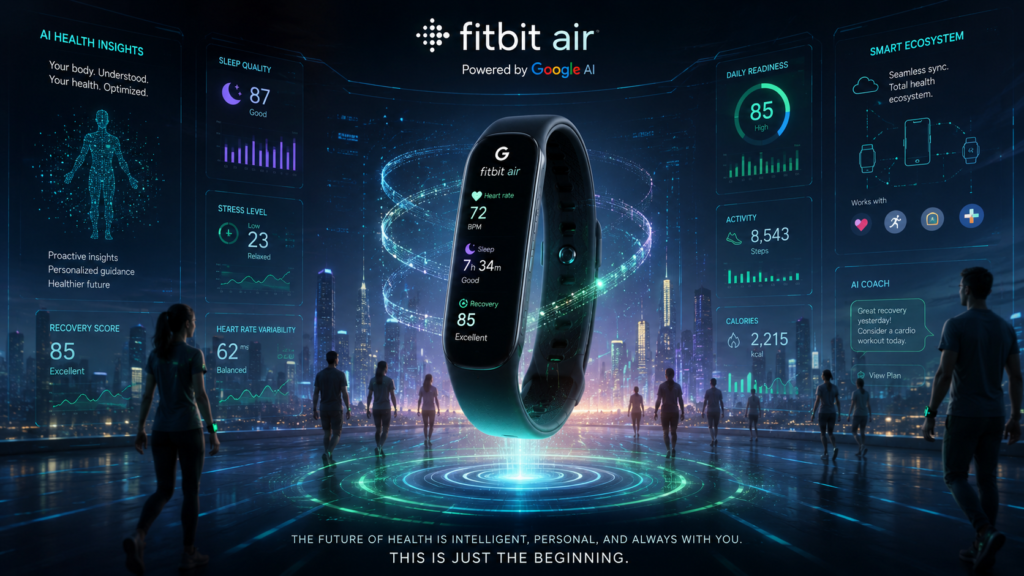
Google recognizes that the future of wearables likely belongs to passive intelligence rather than active gadget interaction. The company is betting people want systems that quietly improve health outcomes without demanding constant attention.
That thesis may prove correct.
But execution will determine everything.
If the AI coaching feels insightful, the subscription pricing stays reasonable, and the ecosystem remains coherent, Fitbit Air could become one of the most important wearable launches in years.
If Google overloads users with optimization theater while stripping away Fitbit’s original personality, the product could collapse into another sterile tech experiment.
Right now, both futures remain plausible.
One thing is certain, though.
The era of simple fitness trackers is ending.
The next generation of wearables will not merely count your steps.
They will attempt to understand your body, predict your behavior, shape your habits, and eventually influence your decisions in real time.
That future is arriving faster than most people realize.
And Google just made its move.
Sources
- The Verge – Google Health and Fitbit Air coverage
- DC Rainmaker – Fitbit Air deep dive and Whoop comparison
- Gadgets & Wearables – Fitbit Air launch report
- Blaze Trends – Removal of Fitbit badges and Sleep Animals
- Gadgets & Wearables – Fitbit Charge 6 vs Fitbit Air comparison
Fitbit AI
AI Health
Google AI
Related Companies
The Kingy Brief
Get the next Kingy Brief.
Source-checked AI changes, original tests and one practical thing to try.
Free · Choose your subjects · Double opt-in · Unsubscribe anytime