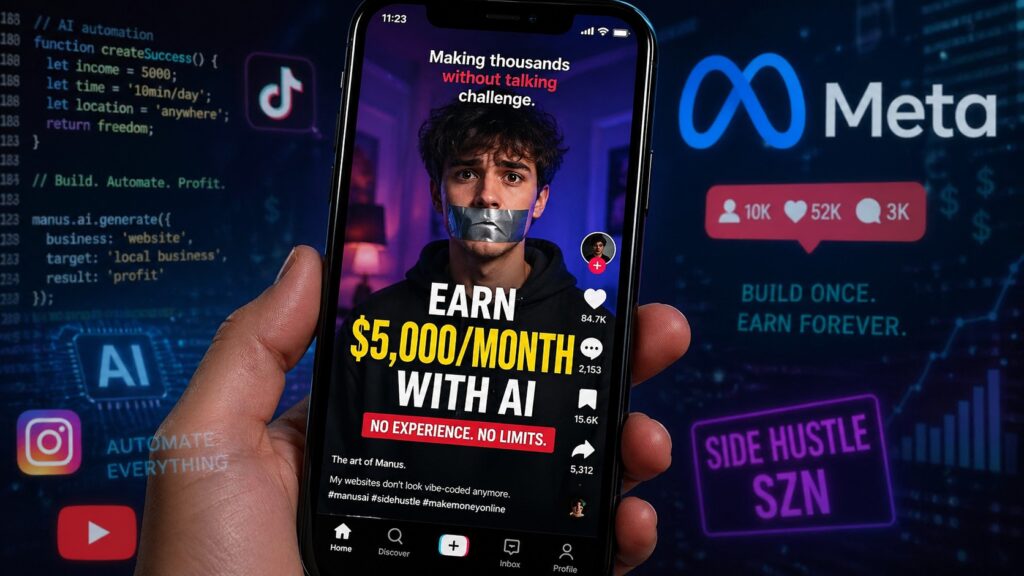
How Manus AI, a $2 billion Meta acquisition, built a shadowy creator network to sell you a dream.

Wait — Meta Is Doing What Now?
Let’s set the scene. You’re scrolling TikTok at midnight. A fresh-faced twenty-something pops up on your screen. They’ve got tape over their mouth. A caption reads: “Making thousands of dollars without talking challenge.”
Sounds wild, right? It gets wilder.
That video wasn’t just some random hustle bro chasing clout. It was a paid advertisement — one quietly funded by Manus AI, a company that Meta acquired for a cool $2 billion. And the whole thing? It was designed to sell you on the idea that AI can make you rich. Fast. Easy. No experience needed.
This story broke on The Verge on April 30, 2026, and it’s been turning heads ever since. Buckle up.
So, What Exactly Is Manus AI?
Before we dive into the drama, let’s talk about what Manus actually is.
Manus is an AI agent. Think of it as a super-powered digital assistant that can do complex tasks on your behalf — like building websites, writing code, and automating workflows. Meta acquired the company last year for $2 billion and has been integrating it into its broader AI ecosystem.
On paper? Pretty impressive tech.
In practice? The company decided the best way to market it was through a network of suspiciously similar social media accounts promising strangers on the internet that they could make $5,000 a month in under 10 minutes a day.
Yeah. We’ll get to that.
The “Easy Side Hustle” Playbook
Here’s how the scheme worked, according to The Verge’s reporting:
- Find a local business with a bad website — or no website at all.
- Use Manus AI to build them a shiny new one.
- Call them up. Sell it to them.
- Profit. Supposedly.
One video, posted by an account called “Manus AI by Meta,” called this an “Easy side hustle” that “absolutely anybody can do.” The pitch? It takes less than 10 minutes and can bring in a “potential $5k a month.”
The young creator in the video looked straight into the camera and said, “There is literally no limit.”
Except, of course, the number of local businesses willing to buy an AI-generated website from a complete stranger who cold-called them. That limit exists. It’s very real.
A Network of Copy-Paste Accounts
Here’s where things get genuinely fascinating — and a little creepy.
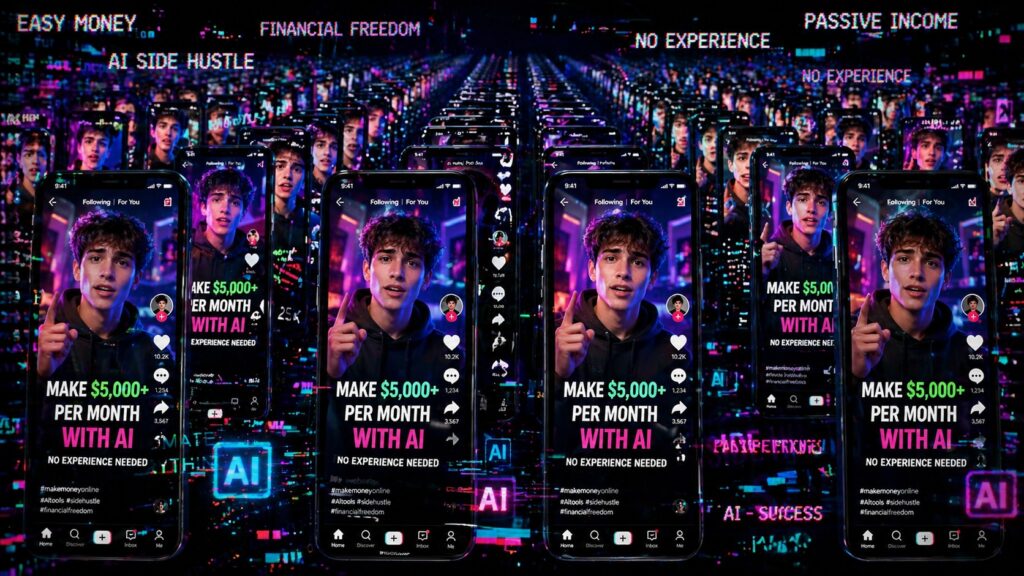
The Verge’s Robert Hart didn’t just find one or two of these accounts. He found a whole network of them. Across TikTok and Instagram, dozens of accounts were posting near-identical Manus content. Same language, Same format. Same promises.
They all used phrases like:
- “The art of Manus”
- “My websites don’t look vibe-coded anymore”
- “Don’t get a part-time job”
Most accounts were only a few months old, Most had only ever posted about Manus. Most were run by creators who appeared to be in their late teens or early twenties. And most posts had almost zero engagement — except for a handful that went genuinely viral, racking up tens of thousands of likes and shares.
As Let’s Data Science noted, this is a classic creator-driven amplification strategy. Companies trade narrative control for reach. The result? A flood of uniform, hard-to-trace promotional content that looks organic but isn’t.
The Disclosure Problem (A.K.A. The Legal Mess)
Here’s the part that has lawyers raising their eyebrows.
None of these accounts clearly disclosed that they were being paid to promote Manus. Some vaguely referenced “building with Manus” in their bios. A few listed real names that linked back to LinkedIn profiles identifying them as Manus contractors. But clear, upfront disclosure? Largely absent.
Meta, YouTube, and TikTok all require creators to clearly label paid promotions. That’s not a suggestion. It’s policy.
And it’s not just platform policy — it’s potentially the law.
VMVirtualMachine.com covered the story and highlighted the legal exposure. Advertising lawyer Sonal Patel Oliva of Fieldfisher told The Verge that British regulators “take a firm position on undisclosed commercial relationships in influencer marketing,” requiring incentivized content to be clearly labeled as an ad.
Law professor Alexandros Antoniou from the University of Essex was even blunter. Vague brand-adjacent language, he said, “won’t cut it” as a disclosure. The same broad principles apply across the EU and the US.
In short: this wasn’t just a PR problem. It was potentially a legal one.
Who Was Running This Operation?
Manus spokesperson Ronghui Li confirmed to The Verge that the company “works with third-party agency partners on paid UGC creator programs across platforms including TikTok, Instagram, and YouTube.”
Translation: yes, they paid creators. Yes, it was organized. Yes, it was a real program.
One LinkedIn profile Hart uncovered was particularly revealing. It belonged to someone hired by Manus in January as a contract “viral growth expert.” Their job? Lead a team of 10 to 20 content creators. Enforce “strict brand guidelines and quality benchmarks.” Coach creators on how to go viral. Guide them on “persona-specific content.”
This wasn’t a few rogue influencers going off-script. This was a coordinated, managed operation.
Meta’s Silence Speaks Volumes
Here’s the thing that stands out most in this whole story: Meta said nothing.
The Verge sent multiple requests for comment to Meta, asking whether the company was aware of the program and whether it complied with Meta’s own advertising policies. Meta did not respond.
Not once.
That silence is loud. Meta owned Manus throughout this entire campaign. The company had reportedly already begun integrating Manus’s systems into its own infrastructure. And yet, when asked directly whether it knew about a paid creator network making potentially misleading earnings claims on its own platforms — crickets.
Manus, for its part, said it does “not endorse exaggerated or misleading earnings claims” and was reviewing the flagged content. But Li declined to say whether the review covered the entire program — or just the specific posts The Verge highlighted.
The Platforms React (Sort Of)
After The Verge reached out, things started moving fast.
TikTok declined to speak on the record, but most of the Manus hype videos disappeared from the platform. Many of the accounts that posted them appear to have been banned. YouTube didn’t respond to a request for comment. Instagram accounts, however, remained live as of the time of reporting.
As Let’s Data Science pointed out, observers should watch whether platform ad transparency records change for these posts, whether additional accounts get retroactively labeled as paid content, and whether Meta or Manus make any public statements about their creator partnership policies going forward.
The story isn’t over. Not by a long shot.
The Bigger Picture: AI Marketing Gone Wild
Let’s zoom out for a second.
This isn’t just a story about one company running shady ads. It’s a story about how AI tools are being marketed to regular people — and the gap between the promise and the reality.
The pitch is always the same: AI will make your life easier. AI will make you money. AI is for everyone. And look, AI genuinely is powerful. Manus AI is a real product with real capabilities.
But “make $5k a month in 10 minutes”? That’s not a product pitch. That’s a get-rich-quick scheme wearing a tech hoodie.
The creator economy makes this worse. Short-form video is built for simple, repeatable, emotionally resonant messaging. “Don’t get a part-time job” hits differently than “our AI agent offers competitive workflow automation.” Companies know this. They exploit it.
And as Let’s Data Science noted, when AI tools get marketed this way, they attract users who lack context on the tool’s actual limitations and risks. That’s not just a marketing problem. It’s a trust problem for the entire industry.
What Happens Next?
There’s one more wrinkle in this story worth mentioning.
Meta now faces the prospect of having to unwind its Manus acquisition entirely. Chinese regulators have blocked the deal. Meta insists it complied with relevant laws and says it expects to reach a resolution with Beijing — but the outcome is far from certain.
So Meta spent $2 billion on an AI company. That company ran a questionable creator ad campaign on Meta’s own platforms. Meta apparently didn’t know — or didn’t say. And now the whole acquisition might fall apart anyway.
Wild times in the AI industry.
The Takeaway
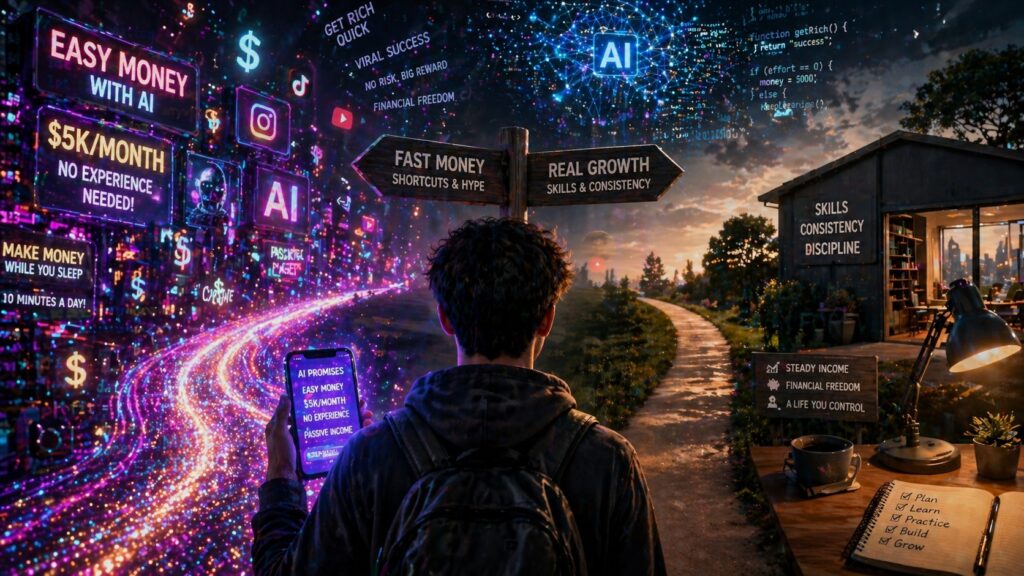
Here’s the bottom line. AI is genuinely transforming how we work, create, and earn. That’s real. But when billion-dollar companies fund networks of undisclosed influencers to sell you a dream of effortless riches, something has gone seriously wrong.
The tape-over-the-mouth challenge was catchy. The $5k-a-month promise was tempting. But the story behind it? That’s a cautionary tale about what happens when hype outpaces honesty in the AI gold rush.
Stay skeptical. Read the fine print. And maybe — just maybe — keep that part-time job.
Sources
- The Verge — Meta is running get-rich-quick ads for its AI tools (Robert Hart, April 30, 2026)
- VMVirtualMachine.com — Meta advertises its AI tools to get rich quick
- Let’s Data Science — Meta runs creator-funded ads promoting Manus AI
Manus and Meta
Meta Monetization
Meta AI Risk
Kingy Launch Brief
Put the week’s verified AI launches in your inbox.
The public Friday pilot has not sent its first issue yet. Join for a source-checked launch briefing with a clear try, watch or skip verdict, then check your inbox and confirm your address.
Free · Friday pilot · Double opt-in · Unsubscribe anytime