
How Copilot, Edge, and Windows 11 are quietly boxing out your browser choices — and why Mozilla is fighting back.
The Battle You Didn’t Know Was Happening
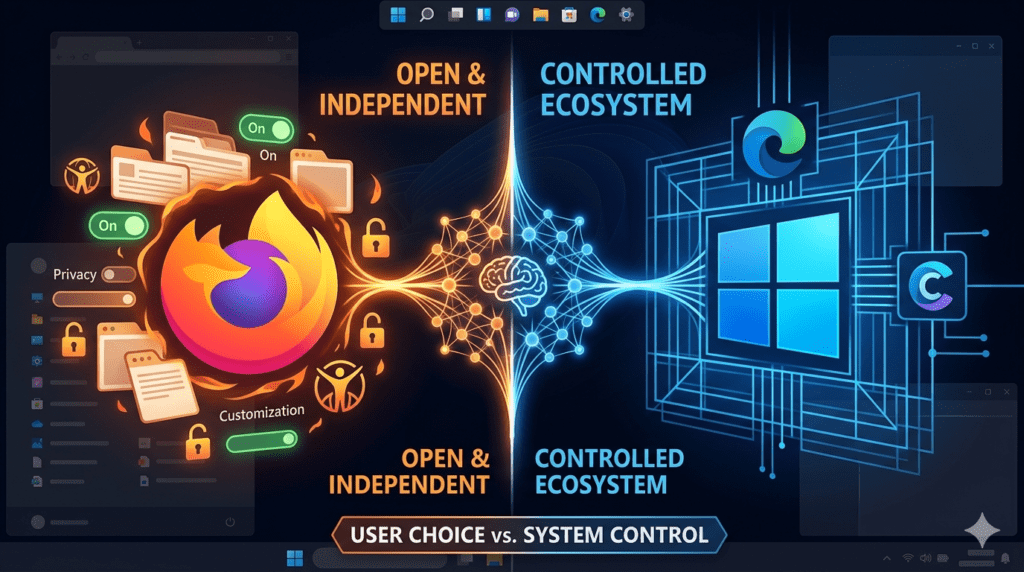
Picture this. You just bought a shiny new Windows 11 laptop You install Firefox. You set it as your default browser You feel good about yourself. You’re in control.
Then you type something into the Windows Search bar. Edge opens. You click a link in Outlook. Edge opens. You get a notification with a web link. Edge opens.
Sound familiar? You’re not imagining it. And Mozilla — the nonprofit behind Firefox — is done staying quiet about it.
In a fiery blog post titled “Old Habits Die Hard,” Mozilla has officially called out Microsoft for using what it describes as dark patterns — sneaky, manipulative design tricks — to push users into Microsoft’s own ecosystem. The target? Copilot, Edge, and the entire Windows 11 experience. The accusation? That Microsoft isn’t just competing. It’s rigging the game.
This isn’t a minor spat between two tech companies. It’s a fight over who controls your digital life. And it’s getting heated.
What Are “Dark Patterns” Anyway?
Let’s break it down. Dark patterns are design choices that trick or pressure users into doing something they didn’t consciously choose. Think of those cookie consent pop-ups where “Accept All” is a big green button and “Reject All” is buried in tiny gray text. That’s a dark pattern.
Mozilla says Microsoft has been running the same playbook — just on a much bigger scale.
According to Mozilla’s blog post, the company commissioned an independent research study that confirmed Microsoft uses these tactics to quietly eliminate user choice. The findings are pretty eye-opening.
Here’s what the research found:
- The Windows Search bar — embedded in the taskbar on both Windows 10 and Windows 11 — is hardcoded to open Microsoft Edge. Always. No matter what browser you’ve set as your default.
- Microsoft Outlook and Teams ignore your default browser setting entirely and open links directly in Edge.
- Windows doesn’t offer a simple “set as default” prompt that other browsers can trigger. Instead, Firefox has to redirect you to Windows Settings and hope you complete a multi-step process on your own.
- When you buy a new PC, Windows doesn’t migrate your app preferences and settings the way Android, iOS, or macOS does. It resets everything back to Microsoft’s defaults — including Edge as your browser.
Each of these choices, on its own, might seem minor. Together? They form a wall that keeps Firefox users from actually using Firefox.
Copilot Crashed the Party — Uninvited
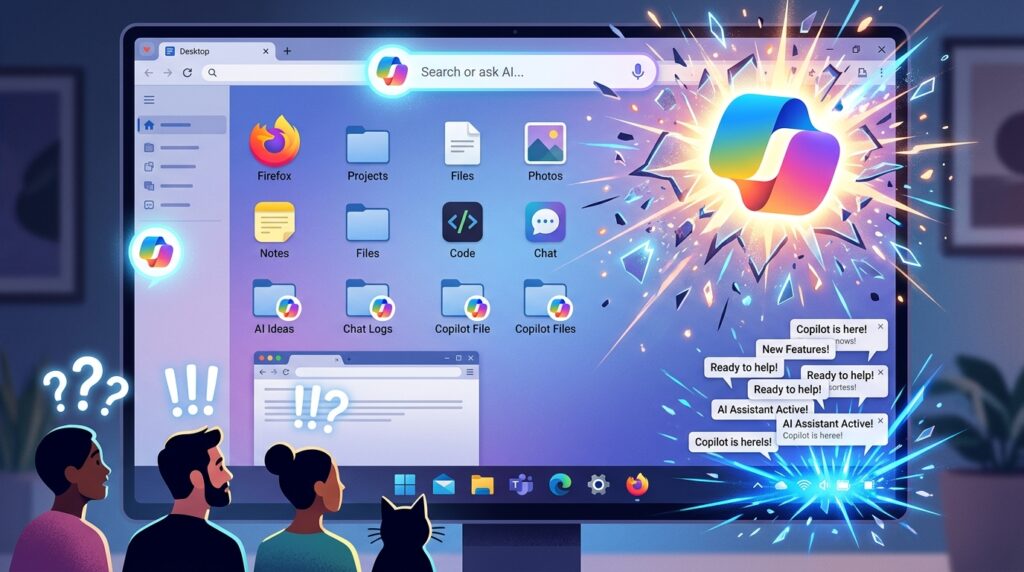
Now add Copilot to the mix, and things get even messier.
Microsoft didn’t just introduce Copilot as a cool new feature you could try out. It showed up everywhere, all at once, whether you wanted it or not It was pinned to the Windows taskbar. It got a dedicated physical key on new Copilot+ PCs. Microsoft even explored baking it into File Explorer, the notification center, and system settings.
And then came the move that really set Mozilla off.
According to Windows Central, the Microsoft 365 Copilot app began auto-installing on any Windows device running Microsoft 365 desktop apps — with no prompt and no consent. Users didn’t ask for it. They didn’t agree to it. It just appeared.
Mozilla’s response was blunt:
“The Copilot rollout followed the same playbook we’ve come to expect from Microsoft: use automatic installs, physical hardware, and default settings to force behaviors. In the most recent instance, they allowed their AI to learn and gather data as quickly as possible before people had a choice.”
That’s a serious accusation. Mozilla isn’t just saying Microsoft is aggressive with its marketing. It’s saying Microsoft deliberately rushed Copilot onto devices so it could collect user data before anyone had a chance to opt out.
Microsoft Blinked — But Mozilla Isn’t Impressed
Here’s where it gets interesting. Microsoft actually backed down. Sort of.
After a wave of user backlash, Microsoft paused the forced rollout of the Microsoft 365 Copilot app. It started rolling back some Copilot integrations. The latest Windows Insider update for Notepad even scrubbed mentions of “AI” and “Copilot” from various menus. Microsoft also pledged to bring back fan-favorite features like the vertical Taskbar and reduce Copilot’s footprint across the OS.
Sounds like a win, right?
Not according to Mozilla. As Neowin reported, Mozilla argues that Microsoft’s retreat actually proves the original sin. If you only walk something back when the backlash gets loud enough, you’re admitting you made the wrong call in the first place.
Mozilla put it plainly:
“They’re really admitting that they made repeated choices to serve their business over their customers.”
That’s a gut punch. And honestly? It’s hard to argue with the logic. A company that does the right thing only after getting caught doing the wrong thing isn’t exactly a champion of user rights.
Why This Matters More Than You Think
Okay, so Microsoft pushes Edge and Copilot. Big deal, right? Every company promotes its own products.
But here’s the thing — Windows isn’t just any product. It runs on roughly 72% of all desktop computers worldwide. When Microsoft makes a design decision in Windows, it affects hundreds of millions of people. That’s not a product choice. That’s infrastructure.
TechSpot explains it well: because Windows dominates the PC market, Microsoft’s design decisions have real commercial impact. Every time Windows channels a user into Edge instead of Firefox, that’s a search query Mozilla doesn’t get credit for.
And that matters enormously for Mozilla’s survival.
Mozilla is a nonprofit. It doesn’t sell hardware. It doesn’t run a cloud empire. Its primary revenue comes from search engine partnerships — deals with Google, Bing, and others that pay Mozilla every time a Firefox user performs a search. Fewer Firefox users means fewer searches. Fewer searches means less money. Less money means fewer engineers, fewer features, and a weaker browser.
It’s a slow bleed. And Microsoft’s design choices are holding the knife.
NERDS.xyz breaks it down clearly: when Windows nudges people toward Edge every time they click a link, the majority of users simply stay in Microsoft’s browser. They never experience Firefox. They never generate the search traffic that keeps Mozilla funded. The cycle feeds itself.
The Copilot Key: A Physical Reminder of Who’s in Charge

Let’s talk about the Copilot key for a second. Because it’s kind of wild.
New Copilot+ PCs now ship with a dedicated Copilot key on the keyboard. Right there, between Alt and the arrow keys. Press it, and Copilot opens. Simple. Instant. Unavoidable.
Think about what that means. Microsoft has literally put its AI assistant on the hardware. You can’t uninstall a keyboard key. You can’t set a different AI as the default for that button — at least not easily. It’s a physical manifestation of the same strategy Mozilla is complaining about: using control over the platform to make Microsoft’s products the path of least resistance.
It’s clever It’s also, depending on your perspective, a little alarming.
Mozilla sees it as part of a broader pattern. First, you embed your services in the software. Then you embed them in the hardware. Then you embed them in the AI layer that sits on top of everything. At each step, the alternatives get harder to reach.
Firefox Fights Back — With an AI Kill Switch
Mozilla isn’t just complaining. It’s also building.
Firefox version 148 introduced something genuinely cool: an AI kill switch. One toggle in settings that disables every single AI feature in the browser. No hunting through menus. No buried options. Just one switch, and all the AI goes away.
That’s a direct shot at Microsoft. Mozilla is essentially saying: “This is what user control actually looks like.”
And it goes further. Firefox’s AI features are opt-in by default. They don’t install themselves. They don’t turn on without your permission. And when you update Firefox, your preferences stay intact — they don’t reset to defaults the way Windows updates sometimes do.
Mozilla frames its entire AI philosophy around one idea: AI should work on your terms, not the company’s terms. Every feature is optional Every setting persists. Every choice is yours.
Compare that to Copilot auto-installing on your machine without a prompt, and the contrast is pretty stark.
The Bigger Picture: Who Controls Your Computer?
Here’s the question Mozilla is really asking. It’s not just about browsers or AI assistants. It’s about something more fundamental.
Who controls your computer?
When you buy a Windows PC, you own the hardware. But Microsoft controls the operating system. And increasingly, Microsoft is using that control to shape what software you use, what AI you interact with, and what data gets collected about you — often before you even realize it’s happening.
Mozilla warns that this creates a dangerous precedent. When a company with Microsoft’s reach controls users and only walks it back when the noise gets loud enough, it shapes what people expect from technology. It teaches users that their only real move is to complain until the company relents.
That’s not user empowerment. That’s managed dissatisfaction.
Windows Central’s coverage notes that Mozilla also makes it harder for alternatives to compete when a company uses its reach and control to steer people back into its own products. The playing field isn’t level. It never was. But it’s getting less level by the day.
What Happens Next?
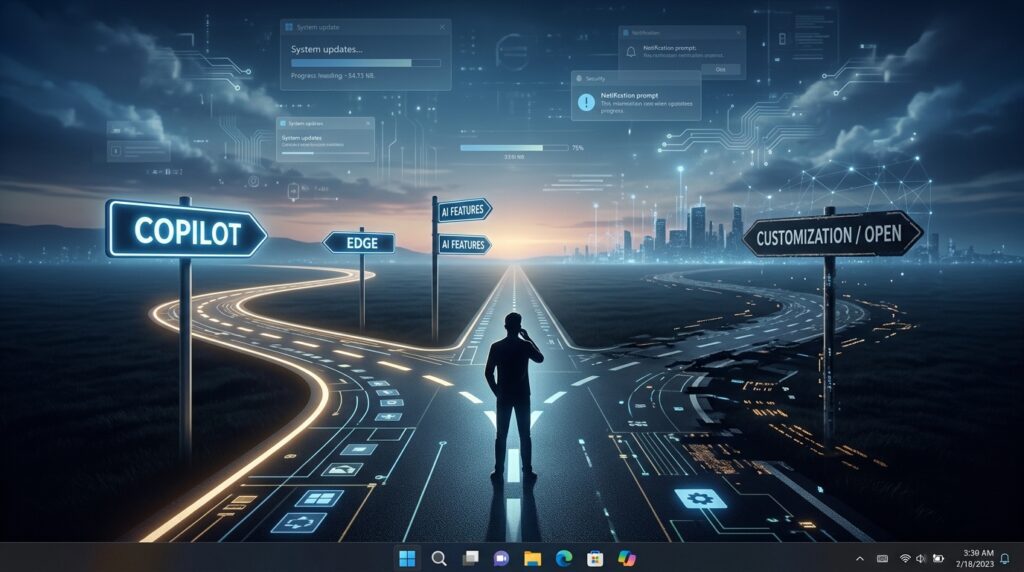
Microsoft says it’s listening. It’s rolling back some Copilot integrations It’s removing AI branding from Notepad. It’s promising more user control over Windows 11.
But Mozilla isn’t ready to celebrate. And honestly, neither should you.
The forced Copilot app rollout was paused — not cancelled. Copilot will still appear in the Windows 11 Start menu and be enabled by default. The Copilot key is still on new laptops. The Windows Search bar still opens Edge. Outlook still ignores your default browser.
The changes Microsoft made are cosmetic. The underlying architecture — the one that funnels users toward Microsoft’s products at every turn — remains intact.
Mozilla’s message is clear: don’t mistake a tactical retreat for a change of heart.
The fight for an open, user-controlled internet is ongoing. Firefox is still standing. Mozilla is still swinging. And the rest of us? We’re the ones whose choices are actually at stake.
Sources
- TechSpot — Mozilla says Microsoft is using Copilot and Edge to tighten its grip on Windows
- Windows Central — Mozilla accuses Microsoft of using ‘dark patterns’ to force its Copilot AI on Windows 11 users
- NERDS.xyz — Mozilla accuses Microsoft of sabotaging Firefox with Windows and Copilot tactics
- Neowin — Mozilla slams Microsoft’s attempts to force Copilot on customers
- Mozilla Blog — Old Habits Die Hard
The Kingy Brief
Get The Kingy Brief.
AI changes, original tests and one practical thing to try. Fridays at 09:00 Vancouver time.
Free · Double opt-in · Unsubscribe anytime
Signup help and newsletter schedule
Signup form provided by Beehiiv. After submitting, check your inbox for "Confirm your subscription to The Kingy Brief" and open its confirmation link. Check Spam or Promotions if you cannot find it.
Fridays at 09:00 Vancouver time: source-checked AI changes, original tests and one practical thing to try. The weekly restart begins October 9, 2026. We skip a week when there is not enough verified material. Free. Unsubscribe anytime.