The UK government is making a bold move into the future of public services. Anthropic, the AI company behind Claude, has been selected to build and pilot a dedicated AI-powered assistant for GOV.UK. This isn’t just another chatbot it’s an agentic system designed to actively guide citizens through complex government processes, starting with employment support.
The announcement, made by the Department for Science, Innovation and Technology (DSIT) on January 27, 2026, marks a significant step in the UK’s ambition to modernize how people interact with government services. But what does this really mean for everyday citizens? And why is this partnership such a big deal?
What Makes This AI Assistant Different?
Here’s the thing: most government websites are packed with information. But finding what you need? That’s a different story. You’ve probably been there clicking through endless pages, trying to figure out if you’re eligible for a benefit or how to apply for a program. It’s frustrating.
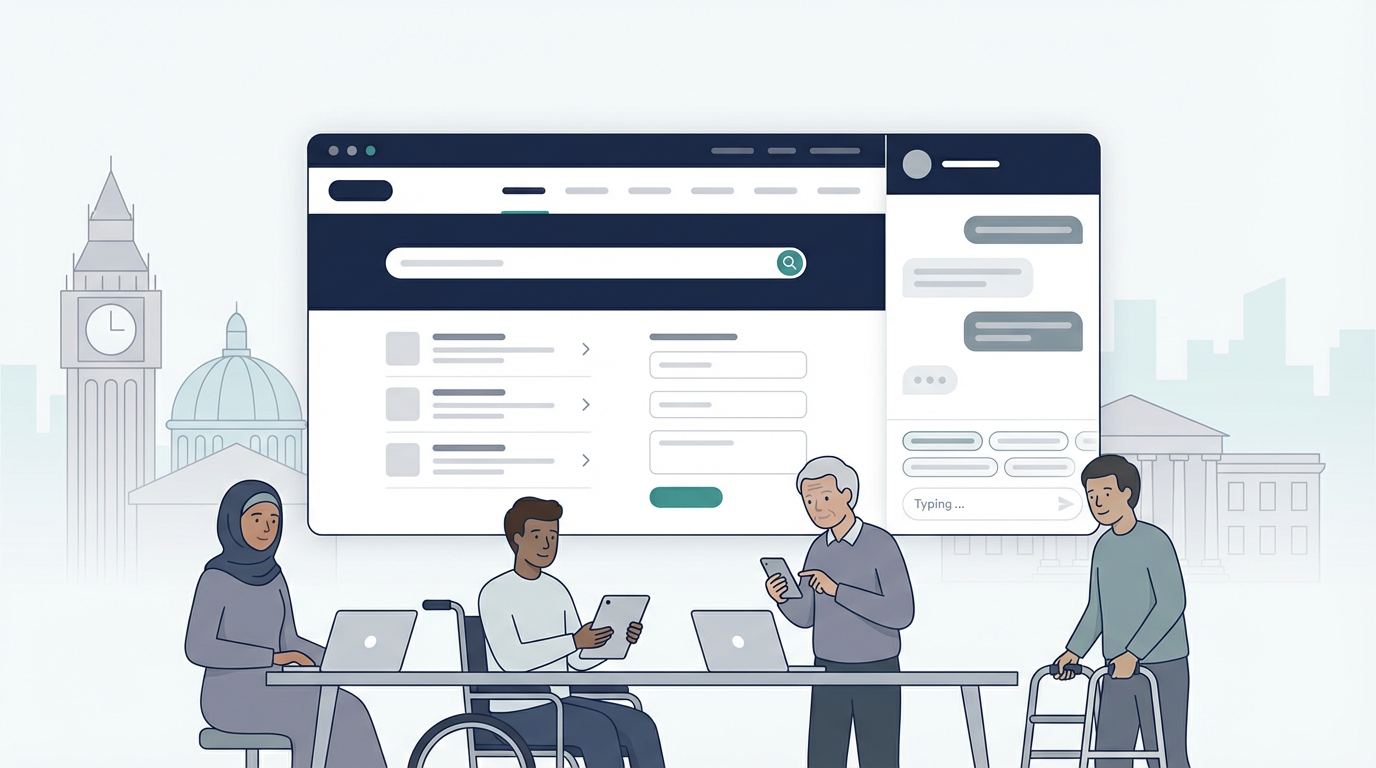
The Anthropic-powered assistant aims to change that. Unlike basic chatbots that simply answer questions, this is what’s called an “agentic AI system.” It won’t just tell you where to find information. It’ll actively walk you through multi-step processes, offering personalized recommendations based on your specific circumstances.
Think of it as having a knowledgeable guide who remembers your previous conversations. You won’t have to start from scratch every time you visit. The system maintains context across sessions, routes you to the right services, and explains eligibility requirements in plain language.
And here’s something important: you’re in control. All data handling follows UK data protection laws. Users can delete stored information or opt out entirely whenever they want.
Starting With Employment: Why This Focus Makes Sense
The pilot program will initially focus on employment services. That means helping people find jobs, access training programs, understand available benefits, and connect with the right government resources.
Why employment? It’s a smart choice. Job seeking is a high-volume, high-stakes area where efficiency gains can directly impact people’s lives and the economy. Plus, it’s complex. Finding work isn’t a one-time transaction it’s an ongoing process that requires multiple interactions with different services.
According to Blockchain.news, the system will help job seekers navigate employment resources, training programs, and available support. This makes it an ideal stress test for the AI’s ability to maintain context and remember previous interactions a crucial feature for workflows that unfold over days or weeks.
For someone who’s lost their job, this could be a game-changer. Instead of navigating a maze of websites and forms, they’d have an AI assistant that understands their situation and guides them step-by-step through available options.
Building AI Expertise Inside Government
Here’s where things get really interesting. This isn’t a typical outsourcing deal where a tech company builds something and hands it over. Anthropic engineers will work directly alongside civil servants and developers at the Government Digital Service.
Why does this matter? The UK government is thinking long-term. They want to build internal AI expertise so they can maintain and improve the system independently once the initial engagement ends. This addresses a common problem in government tech projects: vendor lock-in, where public bodies become dependent on external providers for core infrastructure.
As AI News reports, this co-working arrangement treats AI competence as a core operational asset rather than a procured commodity. It’s about knowledge transfer, not just technology transfer.
Pip White, Head of UK, Ireland, and Northern Europe at Anthropic, emphasized this collaborative approach: “This partnership with the UK government is central to our mission. It demonstrates how frontier AI can be deployed safely for the public benefit, setting the standard for how governments integrate AI into the services their citizens depend on.”
The “Scan, Pilot, Scale” Framework: A Cautious Approach
The UK government isn’t rushing into this. They’re following what DSIT calls a “Scan, Pilot, Scale” framework a deliberate methodology that forces iterative testing before wider rollout.
This phased approach makes sense when you’re dealing with government services that millions of people depend on. It allows the department to validate safety protocols and effectiveness in a controlled setting, minimizing the potential for compliance failures that have plagued other public sector AI launches.
There’s no announced public launch date yet. The phased approach suggests months of internal testing before citizens actually interact with the system. But that’s probably a good thing. Better to get it right than to rush it out.
Privacy and Trust: Non-Negotiable Requirements

Let’s talk about the elephant in the room: privacy. People are understandably cautious about AI systems handling their personal information, especially when it comes to government services.
The project takes this seriously. Data sovereignty and user trust form the backbone of the governance model. Anthropic has stipulated that users will retain full control over their data, including the ability to opt out or dictate what the system remembers.
All personal information handling aligns with UK data protection laws. Plus, the collaboration involves the UK AI Safety Institute to test and evaluate the models, ensuring that safeguards are built in from the start.
This safety-first approach isn’t just about compliance. It’s about building public trust. If people don’t trust the system, they won’t use it no matter how helpful it might be.
The Bigger Picture: UK’s AI Investment Strategy
This partnership doesn’t exist in a vacuum. It’s part of a much larger commitment to AI in the UK.
According to Blockchain.news, the UK government is committing £2 billion to AI investment between 2026 and 2030, with £137 million specifically allocated to its AI for Science Strategy.
But there’s more. The government recently announced that Meta is investing $1 million through the Alan Turing Institute (ATI) to boost public sector AI expertise. As Computer Weekly reports, this funding will support the ATI’s latest fellowship programme, placing AI experts directly within government institutions.
This aligns with the government’s CustomerFirst initiative, unveiled just last week. Led by Tristan Thomas (formerly of Monzo) and Greg Jackson (CEO of Octopus Energy), CustomerFirst aims to bring together top civil service operators and leading private sector transformation specialists. The goal? Rewire government services using AI and best practices from the private sector.
Mark Girolami, acting CEO and chief scientist at the Alan Turing Institute, put it this way: “AI has huge potential to help us anticipate risks, improve decision-making and boost productivity, strengthening the UK’s resilience and prosperity. The new fellows will play an important role in putting effective AI tools into the hands of our public servants to realise these benefits.”
What This Means for Anthropic
For Anthropic, this is a major win. The company, now valued at approximately $350 billion according to recent estimates, has been aggressively pursuing government partnerships globally.
Beyond the UK, Anthropic has launched national AI education pilots in Iceland and Rwanda. The company’s London office continues expanding across research, policy, and go-to-market functions. They already count the London Stock Exchange Group and WPP among their UK enterprise clients.
But proving that Claude can handle sensitive government interactions safely? That’s a significant credibility boost as competition with OpenAI and Google intensifies in the enterprise AI market.
Success here could open doors to additional government service integrations not just in the UK, but potentially establishing a template that other governments might follow.
From Proof-of-Concept to Real-World Deployment
Here’s a challenge that both public and private sector technology leaders face: integrating large language models (LLMs) into customer-facing platforms often stalls at the proof-of-concept stage.
The UK’s DSIT aims to bypass this common hurdle by operationalizing its February 2025 Memorandum of Understanding with Anthropic. That MOU laid the groundwork for how advanced AI systems could be introduced into public services without compromising safety, trust, or transparency. The GOV.UK assistant is one of the first tangible outcomes of that ongoing effort.
The decision to move beyond standard chatbot interfaces addresses a real friction point in digital service delivery: the gap between information availability and user action. Government portals are data-rich, but navigating them requires specific domain knowledge that many citizens lack.
By employing an agentic system, the initiative seeks to provide tailored support that maintains context across multiple interactions. This mirrors the trajectory of private sector customer experience, where the value proposition is increasingly defined by the ability to execute tasks and route complex queries rather than just deflect support tickets.
What Happens Next?
So what can we expect in the coming months?
First, extensive internal testing. The employment-focused pilot will go through rigorous evaluation before any public rollout. The UK AI Safety Institute will be testing and evaluating the models to ensure they meet safety standards.
If the pilot succeeds, we could see expansion to other government services. Employment is just the starting point. Imagine similar AI assistance for healthcare services, tax queries, benefits applications, or business registrations.
Ian Murray, minister for data and modern digital government, expressed confidence in the approach: “Having met the fellows, I know they will play a pivotal role in rewiring our healthcare, police, transport systems and more, to make sure hardworking people benefit from the opportunities that only technologies like AI can deliver.”
For citizens, the promise is simple: government services that are easier to navigate, more personalized, and less frustrating. Instead of spending hours trying to figure out which form to fill out or whether you’re eligible for a program, you’d have an AI assistant that understands your situation and guides you through the process.
Lessons for Other Governments
What can other governments learn from this approach?
First, the importance of knowledge transfer. Don’t just buy technology build internal expertise. The co-working arrangement between Anthropic engineers and government developers ensures that the UK won’t be dependent on external vendors indefinitely.
Second, the value of a phased approach. The “Scan, Pilot, Scale” framework allows for iterative testing and refinement before full deployment. This reduces risk and increases the chances of success.
Third, privacy and trust must be built in from the start. User control over data, transparency about how information is used, and compliance with data protection laws aren’t optional they’re essential for public acceptance.
Fourth, focus on high-impact areas. Starting with employment services makes sense because it’s a high-volume domain where efficiency gains directly impact people’s lives and the economy.
The Road Ahead
The partnership between Anthropic and the UK government represents more than just a technology deployment. It’s a vision for how AI can make government services more accessible, efficient, and user-friendly.
But success isn’t guaranteed. The system will need to prove itself in real-world conditions. It will need to handle the complexity and diversity of actual citizen needs. And it will need to maintain public trust while delivering tangible benefits.
As Times of AI notes, the Claude-powered GOV.UK AI assistant will guide users through government processes while offering personalized support based on individual needs. That’s the promise. Now comes the hard part: delivering on it.
For enterprise architects and technology leaders watching this rollout, the message is clear: successful AI integration is less about the underlying model and more about the governance, data architecture, and internal capability built around it. The transition from answering questions to guiding outcomes represents the next phase of digital maturity.
The UK is betting big on AI to transform public services. If this pilot succeeds, it could set a new standard for how governments worldwide integrate AI into the services their citizens depend on. And for millions of people trying to navigate complex government processes, that could make all the difference.
Sources
- Anthropic selected to build government AI assistant pilot – AI News
- Alan Turing Institute fellowship programme boosted by $1m from Meta – Computer Weekly
- Anthropic Wins UK Government Contract for AI-Powered GOV.UK Assistant – Blockchain.news
- Anthropic’s Claude-powered AI Assistant for GOV.UK Is Coming – Times of AI